Former Chief Justice of India DY Chandrachud has stated that bail before conviction should generally be a matter of right, but emphasised that courts must conduct a thorough examination in cases involving national security.
The statement comes almost two weeks after activists Umar Khalid and Sharjeel Imam were denied bail by the Supreme Court of India in the 2020 Delhi riots conspiracy case.
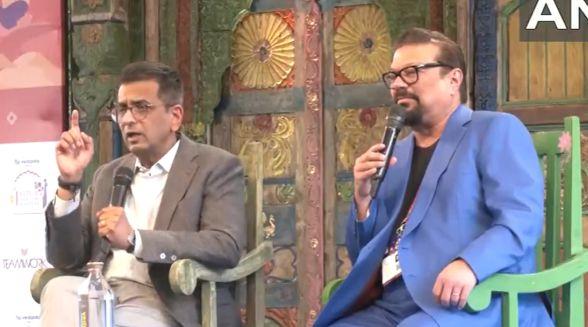
Responding to a question by senior journalist Vir Sanghvi during a session titled “Ideas of Justice” at the ongoing Jaipur Literature Festival, Chandrachud said: "They've been inside for five years. I'm not criticising my court...you can impose conditions to ensure that the conditions for bail are not abused, but you must necessarily take into consideration that they have the right to an expeditious trial. And if an expeditious trial is not possible under present conditions, then bail should be the rule and not the exception."
"During my period of 24 months, we disposed of about 21,000 bail applications. There are cases which people don't think about when they criticise the Supreme Court for not granting bail in a particular case. Congress spokesperson Pawan Khera was about to be arrested. He was boarding a flight, I believe, at Guwahati, and he was about to be arrested. The paramilitary forces had surrounded his aircraft. His lawyer came and mentioned before us, soon after we assembled after lunch, that he's about to be arrested for having said something. The lawyer said that this is unforgivable. It's uncivil. It's not a case for arrest. And we protected him against arrest. That was a leader of the opposition who had said something which was uncivil. But everything uncivil is not something which is an offence under our law. And we protected them against this."
"Example number two -- Teesta Setalvad was denied bail by the Gujarat High Court. But they gave her time until 12 midnight on a particular day to surrender... The matter came up to me as Chief Justice of India when I was attending a music recital... I said, this is a case where she's entitled to be heard whether she gets bail or not is for that court to decide. We constituted a bench at 9 o'clock at night and she was granted bail..."
 © 2026 Rediff.com - Advertise with us - Disclaimer - Privacy Policy - Sitemap - Feedback - About us - Terms of use - Grievances