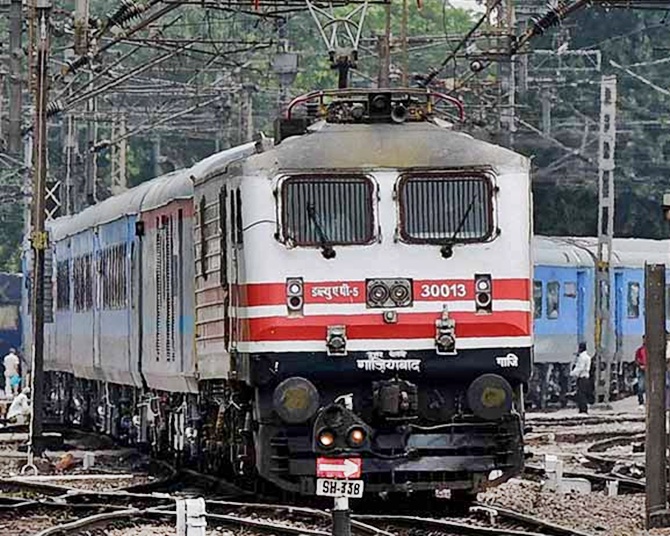
The Indian Railways is planning to conclude the electrification of the broad-gauge network by the end of this financial year, senior officials aware of the developments said.
The national transporter has so far electrified 95 per cent of the broad-gauge track network by 2023-2024.In 2021, the Union ministry of railways said in a Rajya Sabha answer that the Indian Railways is 'likely to electrify all broad gauge rail lines by 2023-24.'Officials said the target is in sight now. "The Indian Railways is rapidly progressing to accomplish 'Mission 100 per cent electrification' and become the largest green railway network in the world."
Around 7,188 km have been electrified in FY2023-24. This is the highest electrification ever in the history of the Railways,' a senior official said. Notably, the railways electrified only 3,306 km of tracks in the previous financial year by February. This renders the electrification done in March more than the previous 11 months combined.According to officials, electrification works of about 3,700 km were in progress by the beginning of March, and a large number of works are typically completed towards the end of the financial year.
"About 95 per cent of the broad gauge network is electrified. The electrification data also accounts for new lines, doubling/tripling, and multi-tracking of lines, which are currently in progress,' another senior official said in response to a query.
As of February 29, 14 states and Union Territories in India -- Chandigarh, Chhattisgarh, Delhi, Haryana, Himachal Pradesh, Jammu and Kashmir, Jharkhand, Madhya Pradesh, Meghalaya, Odisha, Puducherry, Telangana, Uttar Pradesh, Uttarakhand have been fully electrified. The network in these states and UTs aggregates to 24,383 route km.
For environmental and strategic reasons, rail electrification has been a key point on the Centre's agenda.
The line haul cost per thousand gross tonne kilometres (GTKM) is 2.25 times more expensive for passenger traffic and 3.05 times for freight traffic for diesel traction compared to electric, owing to better fuel cost and efficiency.
Moreover, electrified lines can handle heavier freight and longer passenger trains and reduce delays on account of traction change.
-- Dhruvaksh Saha/Business Standard
 © 2026 Rediff.com - Investor Information - Advertise with us - Disclaimer - Privacy Policy - Sitemap - Feedback - About us - Terms of use - Grievances