Besant, That Brave Britisher
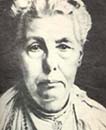 We Indians are an ungrateful brood. Petty, uncaring and forgetful, we have no qualms in taking help -- and once taken, calmly erasing the debt from
our minds.
We Indians are an ungrateful brood. Petty, uncaring and forgetful, we have no qualms in taking help -- and once taken, calmly erasing the debt from
our minds.
Else, how is it that the nation has forgotten October 1? How is it
that we have forgotten the birth anniversary which falls today? How is it that we have forgotten Annie Besant?
Today is her 150th birth anniversary. But are we aware of it?
Rediff On The NeT pays a tribute to
the brave Britisher who lent us a hand in unshackling the chains of colonialism.
Had she chosen to, Annie Besant could have
carved a niche for herself in British politics. She had all it took -- intelligence, charm, determination... and the unflinching dedication of a zealot, which differentiates the ordinary from the great.
But Besant opted for a different sort of public life. One which, fortunately, saw immense contribution to India and Indians -- in
education, religion and social activities and, of course, the Indian renaissance.
Besant was already a famed figure in her country when she left for India in 1893.
When Mahatma Gandhi was still a law student in London, she was a leading light of the Fabian movement who, along with
Charles Breadlaugh, Sidney Webb and Bernard Shaw, propounded
democratic socialism and self-determination for the colonies.
The message Besant brought to the Indians from across the seas was this:
''Your mother is not dead, she is sleeping. Awaken her.''
Her way of awakening was through education. In the next four decades, Besant tried to instill a sense of self confidence, self esteem and
sacrifice in the Indian masses. And succeeded to a remarkable extent, forcing the British to label her 'dangerous.'
The Benares Hindu university and Krishnamurti
Foundation owe their genesis to Besant. She also
heralded the scout movement and women's movement in the country and
literally mothered Jiddu Krishnamurti, one of the original
philosophers of this century. Later, under the influence of the enigmatic madam Blavatski, Besant joined the Theosophical Society.
In 1898, with help from the Maharaja of Banares and local intellectuals, she founded the Central Hindu School at Varanasi. The school
soon became a nucleus of nationalistic education. Besant herself
penned several books for the students, mostly on moral and religious
subjects.
She wrote a series on Indian heroes -- puranic as well as
contemporary -- exhorting the younger generation to follow their
path.
In the early 1920s, when the Indian National Congress was still a
closed-door debating body, Besant jumped into the political
arena. Her spirited campaign for Home Rule enabled the Congress to
have a grassroot impact. The government jailed her, but had to face
a vigorous movement demanding her release.
The high point of her political
career was in 1917 when she was elected the Congress president at the Calcutta session. Her address at the session was thought-provoking and visionary. The issues of dalit and woman upliftment
were mentioned forcefully for the first time.
However, in the subsequent years, she lost her prime position due
to a variety of reasons, one of them being her increasing
involvement with the Theosophical movement. When she raised
political and philosophical arguments against the open mass-movement
against British rule, she found herself pitted against Mahatma
Gandhi and others.
She died in 1933 at Adayar, Madras. Her ashes were brought to
Varanasi and immersed in the Ganga.
UNI
|