Born on April 28, 1937, to a poor family near the village of Tikrit, on the banks of the River Tigris, 100 miles northwest of Baghdad, Saddam's role model was Saladin, a 12th century warrior who captured Jerusalem from the Crusaders.
Ruling Iraq with an iron fist since July 1979, Saddam launched the war against Iran in 1980; it would last eight years and cost both countries dearly. In 1988, as Iraq tried to take stock of its wounds, Saddam attacked the Kurdish town of Halabja with chemical weapons, killing an estimated 5,000 civilians.
Two years later, he invaded Kuwait, and in 1991, dragged a bleeding, impoverished country into the first Gulf War, which it lost to US-led Allied forces and never quite recovered from.
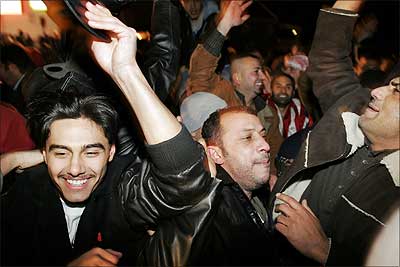
In a country divided sharply on sectarian lines, Saddam's actions only made the disparities worse. While Iraqi Shiites -- both in the country and in the US -- have been celebrating his execution, Sunnis have warned of disastrous consequences.
Image: Arab Americans celebrate the execution of former Iraqi dictator Saddam Hussein in Dearborn, Michigan.
Photograph: Bill Pugliano/Getty Images
Also see: Tikrit - The final frontier  Advertisement