



|
|
|
|
|
| HOME | NEWS | SPECIALS | |||
|
ELECTIONS '98
|

|
|
The Rediff Special/Who's Who in the PMO
Brajesh Mishra
A Vajpayee-loyalist, he is often wrongly described as a 'charter member' of the family. While it is true that Vajpayee trusts his judgement, the relationship is one of respect, not of blind affection. Mishra was a member of the 1951 batch of the Indian Foreign Service and has been India's permanent representative to the UN. After retirement, he took over as head of the BJP's foreign affairs cell, a post he had to resign when he rejoined the government. His friends say rumours of a rift between him and Jaswant Singh are exaggerated; his enemies say they are entirely accurate. Shakti Sinha
A charter member of Vajpayee's family. He is related to the Kauls, the PM's adopted family and is, by common consent, the one member of the PMO who understands the PM's mind perfectly. He was Vajpayee's private secretary during his first stint as prime minister and remained with him when he was leader of the Opposition. An IAS officer of the Union Territory cadre, he is one of the most low-profile private secretaries to the prime minister in recent memory and guards his privacy zealously, ducking from cameras and running from microphones. Such is his obsession with privacy that he changes his unlisted telephone number every ten days. Sinha can change his number which may stop the crank calls; but unless he keeps shifting houses, there is precious little he can do to stop the slightly risque mail that he gets! N K Singh
Yashwant Sinha wanted the revenue secretary thrown out. He was appalled when the dapper NK (Jermyn Street shirts and Italian suits are his style) landed up at PMO as secretary to the Prime Minister. Vajpayee inducted him for two reasons. One: even NK's worst detractors will concede that he knows how to manage the system brilliantly. And two: the PM was so unhappy with Sinha's running of the finance ministry that he wanted somebody to coordinate economic issues from the PMO. So far, NK has been just what the doctor ordered. The PMO is the centre of the economic action and Vajpayee has a new industry-friendly image. Ashok Tandon
When he took over as OSD, the joke was that he was an Officer in Search of Duty. As media adviser to the PM, Tandon's initial briefings ran along the lines of 'the Cabinet meeting lasted for two hours three minutes…. No, I can't tell you who was present, because if I forget some minister's name, I'll be in trouble'. That was when journalists started referring to him as 'Officer in Serious Difficulty'. However, of late, Tandon seems to have found his feet -- or else, he spends the better part of his time mugging up names of all the ministers present at a Cabinet meeting. Sudheendra Kulkarni
A man of many pats. A journalist-turned-bureaucrat. A Communist-turned-Hindutva advocate. An Advani-loyalist-turned-Vajpayee-speech-writer. Kulkarni is a largely marginal figure in the PMO with responsibility for juggling the paragraphs submitted by various ministries for inclusion in the PM's speeches. But his Advani links make him a useful channel for messages tot he Parivar: to tell Kushabhau Thakre to support the Insurance bill or to tell Govindacharya to belt up. Ashok Saikia Joint secretary in the PMO. His room is the one next to Brajesh Mishra's in South Block. His visitors share the same waiting room as those who go to meet the principal secretary or the prime minister. And if anyone is closer to Vajpayee than either Shakti Sinha or Brajesh Mishra, it is the mild-mannered, unassuming IAS officer from the Assam cadre. Saikia handles administration and agriculture in the PMO; but in reality he does much more than that. The prime minister looks for his view on almost every file that comes before him; what helps is that Saikia has known Vajpayee for the last three decades. Ashok Priyadarshi Joint secretary in the PMO. He was the district magistrate in Lucknow when Mulayam Singh Yadav was chief minister. Hence it was Priyadarshi who arrested Vajpayee during the height of the Ayodhya agitation. In return, Vajpayee just smiled and offered him sweets. Later, in 1991, Priyadarshi was the returning officer overseeing Vajpayee's election. This turned out to be a wise career move -- it was decided that Vajpayee's constituency be represented by a familiar face in the PMO. Priyadarshi is accessible, friendly and delivers. P P Shukla Those who say that the PMO is an extension of Vajpayee's dining table should love the irony: Prabhat Shukla is a remnant of the uncleared plates on Inder Gujral's dining table. An IFS officer, he was a hardcore Gujral loyalist, going so far as to advise him who his friends in the press should be. Vajpayee has let him be -- so far. Who can walk into the PM's room without an appointment? Shakti Sinha, Ashok Saikia and Brajesh Mishra. Who writes the prime minister's speeches? Sudheendra Kulkarni mostly, with inputs from various ministries. The draft is shown to Brajesh Mishra and then to the PM. Whom did Vajpayee bring in to the PMO-in the secretariat wing? He has retained most of Gujral's men except for filling up two vacancies with joint secretaries Ashok Priyadarshi and Ashok Saikia. And later, N K Singh was brought in as secretary. Who took the decision to go ahead with the nuclear tests? Brajesh Mishra and the PM in consultation with R Chidambaram and Abdul Kalam. The home minister, defence minister and Jaswant Singh were told about it later. Who is the one man the PM trusts implicitly? Ashok Saikia. Who are part of the 'prime minister's dining table'? Shakti Sinha is related to him through his adopted family; the prime minister has known Ashok Saikia since the days Saikia was studying history in Delhi's Ramjas College; and Brajesh Mishra is an invariable visitor at breakfast and dinner though not necessarily to dine with the PM. Will Naresh Chandra be brought in as principal secretary? Not in the short run. However, there are those who do not rule out the possibility of the prime minister bifurcating the post of principal secretary and the national security adviser (currently both posts are held by Mishra) in the long run. If you check the visitors's register at South Block, who gets the maximum amount of journalists as visitors? (Hint: It's not Ashok Tandon.) Ashok Priyadarshi and N K Singh. Who is N K Singh a little wary of? Brajesh Mishra. When Singh was brought into the PMO, he was warned by Mishra not to exceed his brief. Why are Cabinet meetings held at South Block rather than Race Course Road? Because the table at Race Course Road is too long. As a result, ministers seated at the end have difficulty in hearing the prime minister. Kind courtesy: Sunday magazine |
||
|
HOME |
NEWS |
BUSINESS |
SPORTS |
MOVIES |
CHAT |
INFOTECH |
TRAVEL
SHOPPING HOME | BOOK SHOP | MUSIC SHOP | HOTEL RESERVATIONS PERSONAL HOMEPAGES | FREE EMAIL | FEEDBACK |
||

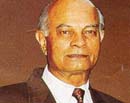 Principal secretary to the PM.
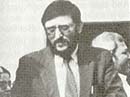 Private secretary to the PM.
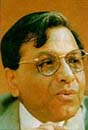 Special secretary in the PMO.
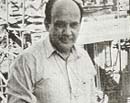 Officer on Special Duty.
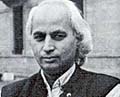 Director, communications and research.