The bride is seated near the Tulsi Katte (Tulsi plant) -- traditional Bunt houses have a mandatory Tulsi Katte in the courtyard of the house (Tulsi is considered to signify Goddess Laxmi). She is given a bath by the female elders with oil, turmeric and coconut milk. They then bless her. The entire process is guided by girl's aunt.
The bride is then dressed and taken to a decorated chair and seated. The bride will wear a Kachipuram sari, mallige (Mangalore jasmine-studded) plait, a gold patti around the waist, a gold vanki on the arm and a gold mundale on her forehead. A Hariyona (silver plate) is filled with raw rice mixed with haldi and kumkum (turmeric and vermilion) and coconut is kept on that which signifies the presence of Lord Ganapati. A tall kardeepa (wick lamp) is decorated with jasmine flowers and lit.
The bride's aunt puts the toe ring on the second finger of the bride's leg and also a vadungeela (V-shape finger ring). Then five sumangalis (five married female relatives) put red and green bangles in a sequence on the bride's hand. There is one black bangle to remove drishti. All the sumananglis will put Mangalore jasmine flowers in the bride's hair. Finally, they do aarti of the bride because she is considered the Laxmi of the house. They put haldi-kumkum and bless her. Elders and others present will also bless her. The function goes on for 45 minutes to two hours depending on the number of people present.
The groom will have a Murtha on the morning of the wedding, However, this is a very simple function and he wears a gold toe ring that he has to keep till the wedding.
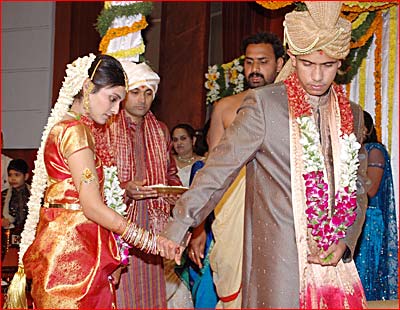
Image: After exchanging garlands, the bride and groom have to take seven rounds of the mantap.
 Advertisement