2007 saw increased funds for aid and infrastructure invested in Afghanistan, with the United States alone offering a $11 billion dollar package in January.
2007 also saw an influx of more US and North Atlantic Treaty Organisation forces in Afghanistan, from a combined 41,000 to nearly 45,000, and longer tours of duty were recommended for those soldiers already stationed.
But none of it seems to be working.
Afghanistan remains a war-torn nation desperately needing to reconstruct its educational system, health, and sanitation facilities, develop its legal agricultural sector and rebuild its road, energy, and telecommunications systems.
The economy, while showing some small signs of improvement, is still in a shambles.
Over 33 per cent of the nation's Gross Domestic Product comes from the illicit opium industry. Its production in Afghanistan soared to new heights in 2007, an increase of more than a third from 2006, according to the United Nations.
Insurgent Taliban forces have gained a foothold throughout the country and continue to threaten the Hamid Karzai government's sovereignty.
And on May 13, 2007, a series of armed skirmishes between the Afghani and Pakistani militaries shocked the world and threatened to upset the fragile balance of power driving America's war on terror.
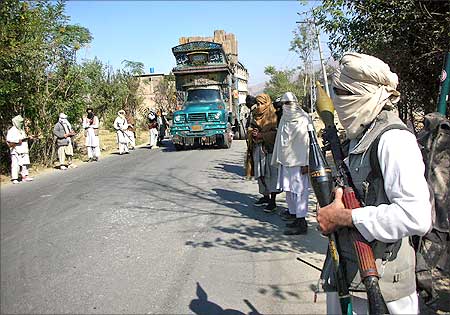
Image : Pakistani pro-Taliban militants stand with their weapons on a street in Manglor village, 10 km northeast of Mingora, the main town in Swat valley in the North West Frontier Province, October 30, 2007. Thousands of people have fled a scenic valley in northwest Pakistan despite a tense ceasefire between government forces and supporters of a firebrand Taliban-style cleric, residents said.
Photograph: STR/AFP/Getty Images
Also read: 'The Taliban have returned'
 Email this Page |
  Write to us
 Advertisement