
Capex, infrastructure development, and prudent fiscal management are the key focus areas in the Budget, says Nilesh Shah.

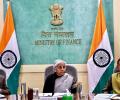
The need for a manufacturing policy, reining in food inflation and raising investment in the country were among key suggestions given by economists who met Finance Minister Nirmala Sitharaman and senior ministry officials in the first round of pre-Budget consultations on Friday.
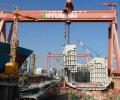
South Korea's HD Hyundai, one of the world's largest ship manufacturers, is planning to build a shipyard in Thoothukudi. The project may see an investment of around $2 billion, said a government source.

Ficci has suggested formulation of a 'manufacturing policy'. Such a policy will spell out guidelines for attaining a 12% growth of the sector annually. Guidelines will help in terms of incentives and subsidies; technology development; development of sustainable raw material base; regulatory and procedural reforms to the manufacturing sector. The manufacturing sector's profitability has been badly affected in the last few months & the government needs to intervene immediately.
India aims at increasing the share of manufacturing sector, which contributes over 80 per cent in the country's overall industrial production, from 16-17 per cent to 25-26 per cent of the gross domestic product by 2020.
The Budget assumes significance as it comes on the back of lower-than-expected growth numbers during the second quarter and geopolitical uncertainty.
A group of ministers, headed by Agriculture Minister Sharad Pawar, has been formed to resolve inter-ministerial differences stalling the national manufacturing policy which aims at giving a boost to the sector.
Commerce and Industry Minister Anand Sharma on Wednesday met Environment Minister Jayanthi Natrajan to resolve the inter-ministerial differences over a proposal to ease environment laws in the manufacturing policy.
China's emergence as a manufacturing hub is due to a combination of favourable circumstances and astute policies; India should adopt a strategy that is in consonance with its own realities.
At present, the NMP states a series of fiscal incentives, including tax sops, will be offered but only to small and medium enterprises.

American tech billionaire Elon Musk on Saturday said his proposed visit to India has been postponed due to "very heavy Tesla obligations". The electric carmaker Tesla CEO -- who was expected to be in India on April 21 and 22 and scheduled to meet Prime Minister Narendra Modi -- wrote on X that he is looking forward to coming to India later this year.
The new four-wheeler (4W) electric vehicle (EV) policy may spur the entry of global majors. The manufacturing policy cuts Customs duty to 15 per cent, given a minimum investment commitment. It calls for a minimum investment of Rs 4,150 crore (about $500 million) for making electric four wheelers (e-4Ws), with manufacturing to commence within three years of approval.
Secunderabad-born and raised Dr Sridhar Kota, 52, professor of mechanical engineering at the University of Michigan, Ann Arbor, has become American President Barack Obama's point man for developing policy on manufacturing in the White House.
In a major initiative, the government is set to approve on Thursday a new policy to boost manufacturing by reducing compliance cost for the industry and making the labour laws flexible.

The company is planning to invest Rs 1,100 crore in the new mobile phone manufacturing facility.

The ongoing key reforms such as sops for manufacturing, easier labour laws, wooing FDI inflows and privatisation will help improve productivity and support long-term growth at 7.5-8 per cent levels, which if played out well, can help India contribute 15 per cent of global GDP growth by FY2026, says a report. According to a report pencilled by the India economist at UBS Securities, Tanvee Gupta Jain, the country has the lowest manufacturing costs among peers, even though China retains significant ecosystem advantages and despite that India and Vietnam appear most likely to benefit from a shift out of China.

The prime minister also visited the Ram Manohar Lohia Hospital in New Delhi after the milestone was achieved and interacted with hospital officials.

But it may come with a downside risk of further rise in prices of several products.

Manufacturers said they expect the growth of manufacturing sector to be less than 7 per cent.
NIMZ is conceptualised as integrated industrial townships with all-important elements to help the growth of infrastructure, clean and energy efficient technology, simplified business regulations and the necessary social and institutional infrastructure.
Services cannot create enough jobs that will match the skill sets of the bulk of the work force, says Nirvikar Singh.

It has become common for our trade pundits to make emphatic claims that India is set to become the next major global manufacturing hub.

The new American Ambassador to India, Nancy J Powell, flagged off these concerns at what was her first public address in India after she presented her credentials to President Pratibha Patil on Tuesday.

Efforts should be made to nurture the talent and make sure that the skill development programme matches the growth requirement of the industry, the former Finance Minister said.

"Look at the policies of world around, we are far less protectionist than any other country in the world. There is no question of India becoming protectionist," Indian Telecom Minister Kapil Sibal said here on Monday.
These policies aim to raise revenue of both the sectors to $700 billion over the next eight years.

"It will be ensured that such agreements (free trade agreements) do not have a detrimental effect on domestic manufacturing in India," according to the National Manufacturing Policy (NMP), cleared by the Union Cabinet on October 25.

India's infrastructure financing requirements and the new manufacturing policy being finalised will open up $1 trillion opportunities for global investors over the next five years.
India needs to create 220 million jobs in the next 15 years and this is only possible by implementing the National Manufacturing Policy, launched recently by the government, says Arindam Bhattacharya, managing director, The Boston Consulting Group (BCG) India Pvt Ltd.
While the special economic zones have seen several labour laws being by-passed within their geographical confines, that is not the case with the NMP.

Size seems stuck at a low when compared with other developing economies, with various issues dogging growth.

Some US prominent lawmakers have urged the American government to follow suit as it is believed that the short video-sharing app is a major security risk to the country.

India needs to rapidly generate gainful employment for millions of young men and women expected to join the workforce in the coming decade.

On December 21, MHA promulgated a draft Arms and Ammunition Manufacturing Policy, which allows the Department of Industrial Policy & Promotion (Dipp) to issue licence to large private companies that are capable of producing advanced weapons, and invest over Rs 50 crore (Rs 500 million), to manufacture arms and ammunition to be "primarily supplied to the Central Paramilitary Forces, Defence and state governments on tendering basis".
"The report of the committee will form basis for the country's manufacturing policy," National Manufacturing Competitiveness Council Chairman V Krishnamurthy, who is also member of the panel, told reporters. Prime Minister Manmohan Singh had announced setting up of the high-level committee in 2006. Its mandate included looking into macro-economic issues stifling the growth and competitiveness of the manufacturing sector.

The DTH industry has to pay entertainment tax to state governments and service tax to the central government.

Expected to offer Gripen NG fighter aircraft or a possible joint collaboration in manufacturing single engine light combat planes.
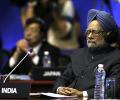
Industry is displeased over the failure of the National Manufacturing Policy, which has failed to invite any sizeable investment since it was launched more than two years ago.
 © 2026 Rediff.com - Advertise with us - Disclaimer - Privacy Policy - Sitemap - Feedback - About us - Terms of use - Grievances