The National Payments Corporation of India (NPCI) has deferred the implementation of a 0.4 per cent Merchant Discount Rate (MDR) on Person-to-Merchant UPI transactions above Rs 2,000. Originally set for October 15, the new date will be announced after Diwali, providing relief to users and merchants, especially during the festive season. The decision came amidst opposition concerns about the levy burdening consumers.

The National Payments Corporation of India (NPCI) has deferred the implementation of a 0.4 per cent Merchant Discount Rate (MDR) on Person-to-Merchant (P2M) UPI payments above Rs 2,000, originally set for October 15, until after Diwali.

Sanju Samson smashed 56 off 22 balls to join India's 100-six T20I club as the team became the second nation to cross 2,000 sixes in the format.

Abhishek Sharma joined India's 2,000-run T20I club with a blistering 69 off 30 balls, equalling Suryakumar Yadav's calendar-year sixes record and registering his seventh powerplay fifty.

'These limits will change. Very soon restrictions, restrictions will come.'
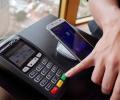
The Indian government has confirmed there will be no rollback of the 0.4 per cent Merchant Discount Rate (MDR) charges on Unified Payments Interface (UPI) transactions exceeding Rs 2,000, effective from October 15. Despite opposition, officials state the decision aims to make the UPI ecosystem self-sustainable and secure, with charges applying only to merchant payments, not person-to-person transactions.
Tax experts clarify that merchants will pay 18% GST on Merchant Discount Rate (MDR) for UPI payments exceeding Rs 2,000, effective October 15. However, registered merchants can claim Input Tax Credit (ITC), mitigating the tax burden. This move is expected to generate significant GST revenue for the exchequer while funding payment infrastructure.
The Reserve Bank of India (RBI) has endorsed the introduction of a Merchant Discount Rate (MDR) on UPI transactions exceeding Rs 2,000, effective October 15. This move, which levies a 0.4 per cent fee on merchant payments above the threshold, aims to bolster the long-term sustainability and growth of India's digital payments ecosystem. The RBI clarified that person-to-person (P2P) transactions and small person-to-merchant (P2M) payments below Rs 2,000 will remain free for users, ensuring no direct charge on customers.
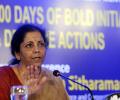
A high-level committee, including representatives from banks and payment associations, is set to decide on Merchant Discount Rate (MDR) for UPI transactions exceeding Rs 2,000 to merchants. While person-to-person and person-to-merchant transactions up to Rs 2,000 remain free, the move follows a recent amendment to the Payment and Settlement Systems Act, sparking debate and clarification from the Finance Minister that only certain high-value merchant transactions might incur charges.

Indian wicketkeeper-batter Sanju Samson has surpassed 2,000 international runs, achieving the milestone with an explosive 57 off 22 balls against Afghanistan at Arun Jaitley Stadium. This performance marks a significant return to form for Samson, who has also had a stellar year in T20Is, including a 'Player of the Tournament' award in the T20 World Cup.
A Public Interest Litigation has been filed in the Supreme Court challenging the Centre's decision to impose a 0.4 per cent Merchant Discount Rate (MDR) on UPI person-to-merchant transactions exceeding Rs 2,000. The plea argues that the levy was introduced without adequate statutory safeguards, transparency, or public consultation, and questions its constitutional validity and potential adverse effects on merchants and consumers.
Merchants will be subject to an 18 per cent Goods and Services Tax (GST) on the Merchant Discount Rate (MDR) for UPI payments exceeding Rs 2,000, but can mitigate this burden by claiming input tax credit (ITC), according to tax experts.
The Indian government has introduced a 0.4% Merchant Discount Rate (MDR) on UPI person-to-merchant (P2M) transactions exceeding Rs 2,000, effective October 15. This move ends nearly six years of fully free UPI payments, though person-to-person (P2P) transfers and small P2M payments remain free. The charges aim to bolster investment in UPI infrastructure, with specific exemptions and caps for essential sectors.

'My parents were crying because they were so excited that I was on screen, that it was an YRF film, and it was opposite Rani Mukerji.'

How the Indian Air Force's strategic deployment of Mirage 2000 jets and precision laser-guided bombs during Operation Safed Sagar delivered a 'decisive and crushing blow' to the enemy, playing a pivotal role in India's victory in the 1999 Kargil War.

The Congress party has questioned the Modi government's decision to defer the Merchant Discount Rate (MDR) on UPI transactions, alleging a potential "U-turn on the U-turn." Congress general secretary Jairam Ramesh highlighted previous denials by the finance minister regarding MDR imposition, only for it to be announced later and now deferred. He expressed concerns about future charges on UPI transactions.

Punjab & Sind Bank MD and CEO Swarup Kumar Saha clarified that merchants cannot pass on Merchant Discount Rate (MDR) charges to customers for UPI payments, ensuring consumers only pay the displayed price. The new MDR structure, effective October 15, applies a 0.4% charge on P2M transactions above Rs 2,000, with specific flat rates for certain sectors, but small-value transactions remain free.

Former Indian cricketer Cheteshwar Pujara has lauded Abhishek Sharma for becoming the fastest batter to reach 2,000 T20I runs, comparing his explosive ability to Chris Gayle. Pujara also highlighted Sharma's growing maturity and Ishan Kishan's crucial role at number three for the Indian team in the shortest format, emphasising his powerplay maximisation.

Following Jharkhand Chief Minister Hemant Soren's decision to cancel the JSSC-CGL exam and other recruitment tests due to alleged irregularities, approximately 2,000 successful candidates now fear losing their jobs, demanding a CBI probe and a fair opportunity to defend themselves.

Glimpses of Indian Air Force aircraft flying in formation during Exercise Tarang Shakti 2026 in Jodhpur on Wednesday, October 7, 2026.

A veteran White House reporter has revealed that the Clinton administration used a decoy aircraft during President Bill Clinton's high-risk visit to Pakistan in 2000, a security measure disclosed to journalists off-the-record due to the significant dangers involved.

Raipur is set to host all three matches of the India-Zimbabwe women's T20I series from October 16 to 20 at the Shaheed Veer Narayan Singh International Cricket Stadium, with ticket sales opening on October 12.
A report by IIT Bombay suggests that the proposed Merchant Discount Rate (MDR) framework for Unified Payments Interface (UPI) transactions needs rationalisation before implementation to safeguard public trust in the digital payments system, highlighting that UPI's long-term economic benefits outweigh potential incremental income from merchant fees.

A Delhi court has ordered the framing of corruption charges against Ved Pal, a former Municipal Corporation of Delhi (MCD) assistant sanitary inspector. He is accused of demanding and accepting bribes from a sweeper, Naresh, who provided audio-video recordings as evidence. The court found a "prima facie case" under the Prevention of Corruption Act.

GE Aerospace is set to significantly increase its supply chain spending in India, targeting USD 400 million by 2030, up from USD 200 million in 2025. This expansion reflects the company's commitment to India's burgeoning aviation market, driven by substantial aircraft orders and the strategic importance of its manufacturing and technology centres in Pune and Bengaluru.

The Jammu and Kashmir assembly has passed a resolution demanding the immediate restoration of full statehood, a move that saw protests and a walkout by BJP legislators. Chief Minister Omar Abdullah questioned the Centre's repeated assurances of restoration at an 'appropriate time'.
A report by IIT-Bombay professors recommends reducing the Merchant Discount Rate (MDR) on UPI transactions from 0.40 per cent to 0.08 per cent. It suggests that banks should fund the UPI ecosystem using their net interest margins from CASA deposits, rather than relying on MDR. The report also addresses transaction costs, credit card MDR, and ATM withdrawal allowances, aiming to ensure UPI's long-term sustainability and public trust by proposing remuneration only from large merchants.

The Supreme Court has refused to grant an interim stay on the imposition of Merchant Discount Rate (MDR) on UPI person-to-merchant transactions exceeding Rs 2,000, which is set to take effect from October 15. The court has agreed to examine the challenge to this new fee and has issued notices to the Centre, RBI, and NPCI, seeking their responses within four weeks. A Public Interest Litigation (PIL) argues that the levy lacks statutory safeguards, transparency, and public consultation, and could adversely affect merchants and consumers.
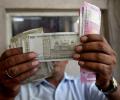
Government sources clarify that the 0.4% merchant discount rate (MDR) on UPI transactions above Rs 2,000, effective October 15, will not be passed on to consumers. The charge, paid by merchants, aims to create a sustainable revenue framework for the digital payments ecosystem, with funds shared among banks and UPI entities. Small merchants using QR codes for up to Rs 1 lakh monthly are exempt.

The Anti-Corruption Bureau (ACB) in Rajasthan has arrested a home guard driver and a court reader in Banswara for allegedly accepting a bribe of Rs 40,000. The bribe was reportedly demanded to prevent a complainant's bail cancellation and ensure assistance in a pending court case. Both accused are currently being questioned.
The All India Mobile Retailers Association (AIMRA) has announced a nationwide 'No UPI Day' protest on October 2 against the proposed 0.4 per cent Merchant Discount Rate (MDR) on UPI transactions exceeding Rs 2,000. Retailers argue that this charge will burden small businesses and impact their already thin profit margins, urging policymakers to withdraw the proposal.
The International Monetary Fund (IMF) has increased India's growth forecast to 7 per cent for 2026-27, up from 6.4 per cent, attributing this robust outlook to resilient domestic demand and strong services activity, positioning India as one of the fastest-growing major economies.
The GST Council is set to discuss the application of GST on merchant fees for UPI transactions exceeding Rs 2,000. This comes as a new Merchant Discount Rate (MDR) of 0.4% (capped at Rs 300) is effective from October 15 for such transactions, which, as a service, would typically attract an 18% GST levy. The Council's decision is anticipated to consider consumer interests, with merchants potentially able to claim Input Tax Credit.

When the Ambanis celebrate Indian craftsmanship, you can expect a masterclass in all things heritage, handwork and high fashion.
UPI transactions saw a 27% volume increase and 20% value increase in the first half of the current fiscal year. Despite a slight moderation in September, the digital payment system is set to implement a 0.4% merchant discount rate on transactions over Rs 2,000, aiming for a sustainable revenue model. Small merchants and person-to-person payments remain exempt, and UPI's global presence continues to expand.

Mobile phone retailers across India, represented by AIMRA, are protesting the 0.4% Merchant Discount Rate (MDR) on UPI transactions exceeding Rs 2,000 for merchants. They plan to observe 'No UPI Day' on October 2, 2026, arguing that this fee will significantly impact their income and burden small businesses, advocating for a continued Zero MDR structure for UPI merchant payments.

Ticket sales for the historic Big Bash League (BBL) opener between Melbourne Renegades and Perth Scorchers, set to be played in Chennai on December 12, will commence on Saturday, with prices ranging from Rs 1500 to Rs 6000.

Economic think tank GTRI has urged the Indian government to withdraw the proposed UPI charges, set to begin on October 15, arguing that the digital payment system should remain free for merchants and consumers. GTRI warns that these charges could lead to higher prices, reduced earnings for small businesses, and weakened household demand, while also benefiting international card networks by eroding UPI's price advantage. The think tank also called for an independent audit of UPI's running costs.

From playing the quietly determined Lata Mehra in Mira Nair's A Suitable Boy to stepping into the supernatural world of Tooth Pari: When Love Bites, Tanya Maniktala has built a career around characters that are anything but alike.
Finance Minister Nirmala Sitharaman clarified that the proposed Merchant Discount Rate (MDR) on select high-value UPI transactions is not a tax or cess, and its collections will not go to the government. She explained that MDR is a charge within the digital payments ecosystem, shared among participants to maintain infrastructure, and will not be passed on to consumers. The NPCI's new framework, effective October 15, applies a 0.4% MDR on person-to-merchant UPI transactions above Rs 2,000, with most transactions remaining free and small merchants exempt.
