
This would be India's largest crowd-funded programme to help patients with a particular disease.

Amid opposition unity talks, Congress leader Rahul Gandhi on Wednesday attacked the Trinamool Congress, alleging that it was fighting elections in Meghalaya to ensure the Bharatiya Janata Party comes to power in the state, drawing a sharp reaction from the Mamata Banerjee-led party.

So which sectors are likely to do well in 2022? Should you focus on domestic economy-related sectors or export-oriented ones?

Among the many exits from the billionaire's club in 2022 are D Uday Kumar Reddy of Tanla Solutions (net worth down 66 per cent), Sushil Kanubhai Shah of Metropolis Healthcare (down 65.7 per cent), Vijay Shekhar Sharma of One97 Communications (down 66 per cent), and C K Birla (down 43.4 per cent).
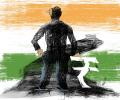
It said the recovery is constrained by ongoing human and economic cost of Covid-19 pandemic and negative impact of food price inflation on private consumption. The report said India, which experienced a contraction of 7 per cent in 2020, showed a strong quarterly growth of 1.9 per cent growth in the first quarter 2021 on the back of the momentum of the second half of 2020 and supported by government spending in goods and services.

The severity of the second wave of COVID-19 infections in India poses a key challenge for the FMCG industry and the spread of the virus to rural areas on a relatively higher scale as compared to the first wave is also expected to weigh on industry growth outlook, according to ITC Ltd. There is heightened uncertainty around the timing and shape of the recovery trajectory of overall economic growth in India due to the virus, the company said in its Annual Report for 2020-21. In terms of consumption, urban-led recovery may be relatively muted compared to the first wave as consumers switch to precautionary savings mode and rising healthcare costs eat into household spending, while rural demand may also be blunted by the large-scale spread of the virus to the hinterland in the second wave.

The panel also stated that without the lockdown the country would have witnessed a peak of over 140 lakh cases.
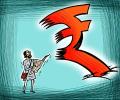
Equity investors became poorer by over Rs 8 lakh crore in five days of market plunge. The BSE benchmark has lost 2,062.99 points or 4 per cent in five trading sessions. On Thursday, the 30-share BSE benchmark tanked 585.10 points or 1.17 per cent to close at 49,216.52. Following the bearish trend, the market capitalisation of BSE-listed companies declined by Rs 804,216.71 crore to Rs 2,01,22,436.75 crore in five days.

The job market saw an uptrend in the March quarter (Q1), with job interviews increasing 13.71 per cent quarter-on-quarter (QoQ) to over 30 million, according to Apna.co, India's largest jobs and professional networking platform. It recorded a 42 per cent QoQ growth in its employer base. As a result of the second wave of Covid-19 last year, sectors such as healthcare, delivery, and e-commerce were booming while others had fairly low employment.

On the Sensex chart, IndusInd Bank was the top gainer, rallying over 11 per cent, followed by ICICI Bank, SBI, HDFC, M&M and Axis Bank. On the other hand, Dr Reddy's, Tech Mahindra and TCS were among the laggards.

The government has created a comprehensive budget with sharp focus on sustaining economic activity and investment but more clarity is needed on areas like taxation framework for adopting remote working on a long-term basis, IT body Nasscom said on Monday. The industry association noted that the IT/ITeS (Information Technology-enabled Services) industry has been a key driver of growth and jobs in 2020 and there is an opportunity to significantly accelerate it further. "For the IT sector, one of the biggest needs ahead of us is the development of future business models, with hybrid working becoming a reality. "We look forward for the government to provide clarity on providing a framework in direct taxes and indirect taxes for the industry to adopt WFH/remote working on a long-term basis," Nasscom said in a statement.

Mumbai's Saturday Covid count is the highest since the 5,888 cases witnessed on April 24 this year during the second wave, the official said. The death toll increased by one to reach 16,377. Delhi's tally of coronavirus cases was 51 per cent higher than the figures registered a day before.
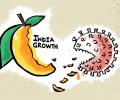
Those hardest hit by the second wave of the pandemic have been blue-collared workers, doctors and healthcare workers, law and order and municipal personnel, individuals eking out daily livelihood, and small businesses. And there should be more measures taken to alleviate their pain, the Reserve Bank of India (RBI) said on Monday. The report also indicated that the RBI's growth numbers might have to be revisited as the central bank's real GDP growth projection of 26.2 per cent given in the MPC's resolution of April 7 for the first quarter of 2021-22, were "made before the full fury of the resurgence." Nevertheless, the "resurgence of COVID-19 has dented but not debilitated economic activity in the first half of Q1: 2021-22.

IndusInd Bank was the top gainer in the Sensex pack, rallying over 7 per cent, followed by SBI, ICICI Bank, HDFC twins, Axis Bank, Bajaj Finserv and UltraTech Cement. NSE Nifty soared 245.35 points to 14,923.15.

He said in the last 8-10 days, the active cases in the state stood in the range of 5,000-6,000.

'What accounts for the huge difference in death tolls between the most advanced countries and the relatively poorer countries?' mulls Virendra Kapoor.
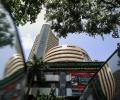
The S&P BSE 500 index, which accounts for 94% market capitalisation of BSE listed companies, has gained 45% from its March 24 low. However, out of the BSE 500 index stocks, 225 have underperformed the index by gaining less than the broader index during this period.

Investors became richer by over Rs 6.34 lakh crore on Monday as markets gave a big shout-out to the Budget 2021-22, which analysts termed as 'unprecedented' against the backdrop of the pandemic-induced slowdown. Cheering the Budget proposals, the BSE benchmark Sensex zoomed 2,314.84 points or 5 per cent to close at 48,600.61. During the day, it jumped 2,478.63 points to 48,764.40. This was the best Budget-day gain for the markets since 1997, analysts said. Following the extremely positive market sentiment, the market capitalisation of BSE-listed companies rallied Rs 6,34,069.67 crore to Rs 1,92,46,713.70 crore.

'They can shift to dynamic asset allocation funds to automatically rebalance their equity exposure.'

After winning accolades for its 'Kerala model' of combating the contagion about a year ago, the state is now seeing daily fresh cases between 12,000 to 15,000 with no end in sight to the 'prolonged surge', as some experts put it.

Investors with high risk appetite must stay invested while risk-averse investors can consider profit booking.

'We know, from our experience of this virus, that there's something known as long COVID-19, where you have this persistent fatigue and some people have lost their neurological acuteness and they are not as sharp as they used to be.'

60-65 per cent of the FMCG industry's overall sales come from urban areas; 35-40 per cent from rural areas.

'It is important that students not focus on the remuneration that the job fetches in the first year, but look at the next 5 year journey with that job role.'

'Someone may have diabetes, but at what level the disease qualifies as a comorbid condition is something a doctor will decide upon and certify accordingly.'

With decline in number of fresh COVID-19 cases and easing of restrictions, the country's gross domestic product (GDP) will grow at 8.5 per cent in FY2021-22, according to credit rating agency Icra Ratings. It expects the gross value added (GVA) at basic prices (at constant 2011-12 prices) to grow at 7.3 per cent in FY2022. "The impact of the second wave of COVID-19 and the ensuing state-wise restrictions was seen across a variety of high frequency indicators in April-May 2021.

The cumulative tests conducted so far for detection of coronavirus infection in the country has increased to 3,26,61,252.

'The markets seem apprehensive and that explains why the markets have been feeling slightly uncomfortable ahead of the Budget.' 'After the event, when all the concerns are resolved and clarity emerges, markets will decide what to do next.'

ONGC was the top loser in the Sensex pack, shedding around 5 per cent, followed by Sun Pharma, PowerGrid, Bajaj Finance, IndusInd Bank, Dr Reddy's and Maruti. On the other hand, Reliance Industries, Titan, HDFC Bank and ITC were the gainers.

'In the medium to long term mid-caps tend to generate higher returns, albeit with increased volatility.'

Harsh Vardhan said that 51 crore COVID-19 vaccine doses will be made available by July and 216 crore more between August and December.

'The state government is putting Maharashtrians in danger by letting people escape institutional quarantine mandate for the sake of their personal vasuli'

Companies which have been dropped from the list include Tata Motors, Hindustan Unilever, MRF, Glaxo SmithKline Consumer Healthcare, Pfizer, Dr Reddy's Labs, Glenmark Pharmaceuticals, HDFC and Kotak Mahindra Bank

A guide to post-COVID care to be followed at home.

The COVID-19 case fatality rate has reduced from around 3.33 per cent in mid-June to 2.25 per cent.

"In 47 years, Joe did none of the things of which he now speaks. He will never change, just words!" Trump tweeted his first reaction to Biden's acceptance speech on Thursday.

The World Bank on Sunday said the coronavirus outbreak has severely disrupted the Indian economy, magnifying the pre-existing risks to its outlook. In its 'South Asia Economic Update: Impact of Covid-19', the World Bank estimated the Indian economy to decelerate to 5 per cent in 2020 and projected a sharp growth deceleration in fiscal 2021 to 2.8 per cent in a baseline scenario.

Sector-wise, the study revealed that the core industries have witnessed virtually negative growth in headcount, with crude oil just about maintaining the employment level.
HCL Tech was the top gainer in the Sensex pack, rising over 4 per cent, followed by HDFC Bank, Infosys, NTPC, Nestle India, TCS and HUL. NSE Nifty surged 337.80 points to 14,845.10.

The COVID-19 pandemic has not only affected outpatient services, but also led to deferment of elective surgeries, and resulted in the loss of medical tourism, all of which would hit the FY21 financials.
 © 2026 Rediff.com - Investor Information - Advertise with us - Disclaimer - Privacy Policy - Sitemap - Feedback - About us - Terms of use - Grievances