

'Was the five-day pause ever meant to hold, or was it simply another instrument of signaling, of positioning, of buying time in a war where even the pauses are tactical?' asks Prem Panicker in his must read daily blog on the Gulf War.

Some wars escalate in bombing raids, and erupting fires and body bags, others in signals.
The last 24 hours was a mix of both.
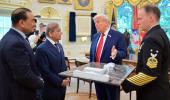
The most consequential move came when Donald Trump unilaterally, and abruptly, announced a five-day cessation (external link) of attacks on Iran.
The justification was vague: He said talks had taken place over the previous two days, progress was being made, diplomacy was alive.
Within hours, Tehran flatly denied that any such talks were underway.
This is a familiar pattern in this war: Parallel realities, each curated for its own audience.
Key Points
- Israel continues aggressive strikes, widening the conflict geographically while resisting any imposed diplomatic pause from the United States.
- Markets reacted sharply to war signals, with oil volatility and suspicious trades suggesting possible foreknowledge and financial opportunism.
- Iran is expanding retaliation beyond its borders, targeting regional infrastructure while maintaining conditional openness to negotiations.

US-Iran Ceasefire Signals
What The New York Times has since reported adds texture to that picture.
American officials themselves described the contacts as 'early stage and not substantive'.
What Trump was doing, in effect, was using even a minimal opening as an offramp from his own 48-hour ultimatum (external link): A threat to strike Iran's power plants, targets that are forbidden under most circumstances under the Geneva Conventions.
Iran had vowed that in retaliation, it would take out all electricity and desalination plants across the Gulf. [New York Times (external link)]
The pause was Trump's exit ramp.
Iran's Foreign Minister Abbas Araghchi, who has been in direct contact with Trump's envoy Steve Witkoff, made Tehran's terms clear: Not a temporary ceasefire but a sustainable peace, with guarantees against future attacks and specific sanctions relief plus reparations in billions for the damage Iran has sustained.
These are not terms anyone is close to meeting.
The timing, though, is what raises eyebrows.
The pause was announced just before markets opened on Monday morning.
Oil dipped. Risk assets rallied. And unknown someones, whose trade patterns indicate foreknowledge, made millions in a matter of minutes. [An X post, with chart tracking the whiplash swing (external link)] [Financial Times (external link)]

Oil Prices and Market Volatility
By design or coincidence, the five-day window runs neatly through the trading week, ending after Friday's close.
In a conflict where energy infrastructure is both target and leverage, the line between geopolitics and market choreography is growing thinner by the day. And oil prices are rising again. [Reuters (external link)]
If Trump's announcement was meant to impose a pause, Israel either did not get the memo, or chose to ignore it.
Within hours of Trump's announcement, Israeli strikes hit major Iranian oil infrastructure again, as reported in The Guardian (external link).
Live coverage from Al Jazeera (external link) captured the immediacy, recording multiple explosions across the Iranian capital and what officials described as an "unprecedented" wave of attacks.
By way of retaliation, Iran hit Kuwait's electricity infrastructure, resulting in a blackout (external link) in a large swathe of that country.

More crucially, Benjamin Netanyahu categorically states (external link) that it is not for the US to decide when this war ends -- it is the IDF that will make this call.
What this unambiguous, openly expressed stance does for the prospects of the proposed US-Iran talks is, at this moment in time, anyone's guess.
Israel is now actively widening the theatre.
Even as strikes on Tehran intensified, operations in Lebanon have escalated in parallel: Airstrikes in Beirut, ground actions, even reports of captured fighters.
Inside Israel, there are now open calls to push north to the Litani River, to convert what began as retaliation into territorial depth.
The war, in other words, is acquiring edges that may outlast its trigger.

Israel Expands War Theatre
Meanwhile, Reuters reporting underscored both the sensitivity of some targets, including areas near nuclear-linked infrastructure (external link), and Iran's tit for tat retaliation doctrine (external link).
Echoing an earlier moment in this conflict when attacks on energy assets blindsided Washington publicly, and prompted Trump to post that he did not know Israel was going to do it.
Iran's response suggests a matching expansion.
Strikes on Kuwait's transmission infrastructure (external link) mark a shift.
Kuwait is a node in the Gulf's energy and logistics network, and therefore a pressure point.
Tehran appears to be signaling that if its own infrastructure is fair game, so too is the broader ecosystem that sustains its adversaries.
At the same time, it is widening its diplomatic signaling in quieter ways -- offering Sri Lankan vessels safe passage, even assistance, in recognition of Colombo's stance. [Business Standard (external link)]

Meanwhile, the diplomatic track continues to take shape without ever quite solidifying.
Washington is signaling that us Secretary of State Marco Rubio may lead talks, with Pakistan positioning itself as potential host and mediator; Trump reportedly has spoken direct (external link) to Pakistan's army chief Asim Munir.
That alone is a geopolitical marker worth underlining.
Pakistan is looking to seize the opportunity to position itself as a bridge State in a fractured region, running shuttle diplomacy while maintaining working ties across rival blocs.
Global Diplomacy Without Anchor
The Rubio signal carries its own subtext.
He was, by most accounts, a stronger backer of the war than Vice-President Vance.
That puts him at the centre of the action, but it also leaves him more exposed if things go haywire.
One source close to Trump has been quoted calling it a potential career-ender.
For Rubio, finding an exit that can be dressed up as the win Trump wants is more than a diplomatic imperative; it is now an existential need. [The Economist (external link)]
Iran, for its part, is hedging.
Officials say they have received backchannel proposals outlining a possible ceasefire framework and are 'studying' them, a phrase that usually indicates that the intent is to buy time.
Egypt, notably, is said to have reached out not just through civilian channels but directly to the IRGC.
Many talks in many places at many levels, but still no table.

What is becoming clearer is who is not at the table.
India's absence from ongoing diplomatic efforts is striking.
Even as RSS chief Mohan Bhagwat asserts that India is uniquely placed to mediate, the diplomatic choreography tells a different story.
External Affairs Minister S. Jaishankar's call with Rubio (external link), ending with the anodyne 'we agreed to keep in touch', is suggestive.
As one commentator remarked on X, India had chosen sides in this conflict, but the side it chose hasn't chosen India.
While on this, I came across an Economic Times report that says OMCs are planning to supply less LPG in cylinders meant for household use: Your 14.2kg cylinder will now only contain 10 kg of gas.
Prices will be cut accordingly, the report says -- but the catch is, the cylinder will get over faster, requiring quicker refills.
However this plays out, the story is a useful pointer to counter government claims that all is well. [Sanjeev Choudhary, Economic Times (external link)]
In contrast to India's problems, smaller states are finding sharper ways to signal alignment and extract assurance, as in the Sri Lanka and Pakistan examples above.
It underlines a tenet of diplomacy: influence cannot be claimed from the pulpit; it needs to be earned.

Layered over all of this is a quieter but equally consequential shift: The war is becoming fully economic.
Gulf States are beginning to act not just as bystanders but as participants, tightening financial channels linked to Iran even as energy disruptions ripple outward into inflation fears and central bank calculations.
The markets, in other words, are rapidly becoming a theatre of war.
Beneath all this manoeuvring, the cost is accumulating.
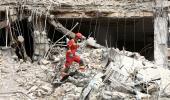
Civilian casualties in Iran are rising into the thousands, with growing scrutiny over proportionality and intent.
In Washington, too, questions are surfacing: About authorisation or lack thereof, about end goals, about how a war that may have begun with visions of a decisive decapitation has settled into something far murkier.
Even within the administration, the narrative appears unsettled, with hints of disagreement over how this path was chosen.
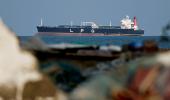
In unintended irony, the US now says that reopening the Strait of Hormuz is the end goal of this war.
As more than one commentator has pointed out, the Strait was wide open until the US and Israel embarked on this military adventure.
So the war, with all its increasing associated costs, was merely to restore the status quo ante?
Strait of Hormuz Stakes Rise
When you step back from all this, the pattern sharpens.
The war is now financial (timed announcements, market swings), infrastructural (oil fields, transmission grids), geographical (Lebanon, the Gulf), and diplomatic (competing backchannels with no single anchor).
The United States appears to be probing for an off-ramp, or at least a pause it can control.
Israel is prosecuting a campaign that resists such pauses and seems designed to keep the US from finding an exit.
Iran is expanding the theatre while keeping the door to negotiation ajar, but only on the most stringent terms: A sovereign guarantee that there will be no more attacks, the ending of sanctions, reparations in billions for all damage caused.
Over all of this hangs a more uncomfortable question: Was the five-day pause ever meant to hold, or was it simply another instrument of signaling, of positioning, of buying time in a war where even the pauses are tactical?
In this connection, it is worth pointing out that US marines are headed to the theatre of war and will likely reach the conflict zone before this latest deadline ends.
Trump, asked on Monday who would control the Strait of Hormuz once it reopened, mused: 'Maybe me? Me and the ayatollah. Whoever the ayatollah is.'
That last clause, throwaway as it sounded, may be the most consequential question of the week.
If the last 24 hours are any indication, the conflict is entering a phase where what is said matters almost as much as what is hit, and neither can be taken at face value.

Three weeks in, the outlines of a quagmire are visible.
The asymmetry is the key: For the US to win, it must achieve expansive and ambiguous goals; for Iran, victory may simply mean survival.
The escalation options, such as seizing Kharg Island, and/or sending ground forces into Isfahan for the uranium stockpile, have been examined and found wanting.
The case for a limited exit, declared on Washington's own terms before the costs compound further, is made here with clarity. [Ilan Goldenberg, Foreign Affairs (external link)]
Simon Flowers of Wood Mackenzie, with four decades of experience, walks through the stages of disruption: The Strait closure, the insurance freeze, the tanker bottleneck, the nine million barrels a day now shut in across the Gulf producers.
The Qatar LNG strike which knocked out a sixth of capacity, with repairs estimated at up to five years, takes it, in Flowers' words, 'to another level'.
The number that should concentrate minds: If Brent averages a hundred dollars a barrel this year, major Western economies including the US could slip into recession in the second half.
And there is a sting in the tail: Even if Trump declares victory and calls off the war, insurance companies may still refuse to cover Strait traffic until all three parties provide guarantees they find credible.
The economic disruption, in other words, could easily outlast the shooting war. [John Cassidy, The New Yorker (external link)]
In AEI, Hal Brands writes that the persistent myth of Trump as isolationist is exactly that -- a myth.
What is actually underway is a superpower-on-steroids strategy: Remaking the global economy, renegotiating alliances, transforming regions, wielding force to decapitate hostile regimes, and pursuing land and resource grabs.
The dual-edged conclusion is worth thinking about: Trump's foreign policy is simultaneously strengthening and weakening America, and the outcome depends on which edge cuts deeper. [Hal Brands, AEI (external link)]
In The National Interest, Suzanne Loftus applies a useful corrective to the view that rising oil prices and American distraction give Russia a free hand.
The argument here is that a successful US degradation of Iran weakens the CRINK coalition (China, Russia, Iran, North Korea) that has helped Moscow sustain its war in Ukraine.
The Ukraine angle is pointed: Kyiv, now expert at countering Iranian-designed Shahed drones, is lending that expertise to Gulf States, quietly improving its own diplomatic position in the region. [Suzanne Loftus,The National Interest (external link)]
Why is Beijing not doing more to support Tehran, asks Ali Wyne in TIME.
The answer begins on a practical note: It is unclear what China could provide that would meaningfully help in the short term.
It then deepens into a structural one.
China's military modernisation remains overwhelmingly oriented toward Asia: Taiwan, the South China Sea, the border with India.
Beijing regards American entanglements in the Middle East as a cautionary tale, not a template.
The closing observation is worth noting: When the dust settles, China expects to capitalise, economically and diplomatically, on the ruins of American overreach.
And it can do that by just sitting back and watching. [Ali Wyne, TIME (external link)]
Azadeh Moaveni for The New Yorker produces the most richly reported piece in today's collection, on Reza Pahlavi and what the war has done to his prospects.
The analytical spine is the ancient Persian concept of farr: Kingly charisma divinely bestowed, but forfeitable if the king endangers the empire or invites foreign predation.
No monarch in two-and-a-half millennia of Persian history has invited a foreign power to attack the land of Iran.
That is Pahlavi's predicament.
Trump's own aides have taken to calling him the 'loser prince'.
The implicit counterpoint: Mohammad Ghalibaf, Iran's parliament speaker, IRGC veteran of the Iran-Iraq War, and now arguably the most consequential figure in a regime that has survived three weeks of bombardment -- a man with institutional depth and roots that Pahlavi cannot match. [Azadeh Moaveni, New Yorker, on Reza Pahlavi (external link); Haaretz on Mohammad Ghalibaf (external link)]
In war, Clausewitz wrote, everything is simple, but the simplest things are difficult.
In this ongoing war, nothing is even simple.
Back tomorrow, with whatever the next 24 hours brings.
- EARLIER BLOGS: The New Fog of War
- Has US Repeated Its Iraq Mistake?
- Hormuz Crisis Threatens Global Economy
- Iran War Exposes Washington's Strategic Chaos
- Iran Plays Hardball With India's Hormuz Requests
- Trump Is Caught Between Two Bad Options
- Iran Rewrites Rules of War
- Why Did Israel Kill Ali Larijani?
- Trump's War Has Crossed Energy Rubicon. And There's No Turning Back
- War Exposes Cracks in US-Israel Alliance
- Gulf War: Hormuz Is Becoming The Central Battlefield
Photographs curated by Manisha Kotian/Rediff
Feature Presentation: Ashish Narsale/Rediff







 © 2026