

Fight on toward goals that keep receding, or exit with most objectives unmet.
Trump is agitated, his poll numbers falling below the Plimsoll line, his base fractured between those who back the war and those who remember that he campaigned on ending them.
Prem Panicker continues his must-read daily blog on the war in the Middle East.

There is a lesson that great powers keep having to relearn, usually at critical moments in history: Allies are not retainers.
You cannot spend years treating them as an afterthought or, worse, as an adversary, and then expect them to come to your aid the moment you need help.
Key Points
- Donald Trump's criticism of NATO and allies has strained diplomatic relationships as he now seeks help reopening the Strait of Hormuz.
- Closure of the Strait threatens global oil shipments, forcing Washington to seek naval support from reluctant allies.
- The crisis traces back to the US withdrawal from the Iran nuclear deal and the subsequent 'maximum pressure' policy.
- Escalating drone warfare, regional strikes and geopolitical tensions are expanding the conflict with no clear resolution in sight.
US President Donald Trump has spent the better part of his second term telling NATO that it is worth nothing to him.
He threatened to take Greenland by force from a member State.
He erased (external link) two decades of history in Afghanistan when, apropos of nothing, he said the soldiers of NATO nations were never on the frontlines of that conflict.

Trump's Rift With NATO Allies
Less than a week ago, he told British Prime Minister Keir Starmer not to bother (external link) sending aircraft carriers to the Gulf because 'We don't need them any longer. We don't need people that join wars after we've already won.'
Worse, he turned the alliance's foundational premise of collective security into a billing dispute, accusing NATO nations of being "freeloaders".
Now he stands waist deep in a quagmire of his own making and calls on NATO and other allies to send ships to open the Strait of Hormuz.
He promises to 'help A LOT' (external link).
Even as the silence from European capitals grows heavier and his own desperation more obvious, he reshapes his offer: NATO should do the heavy lifting, he says (external link).

Khasab, Oman, the main city sitting on the tip of the Musandam Peninsula, sits only 65 km from the Iranian city of Bandar Abbas.
The rocky limestone mountains of the peninsula rise as high as 6,500 feet (2,000 metrEs) above sea level and create fjord-like inlets along the coast.
Musandam is an exclave of Oman, separated from the rest of the country by the United Arab Emirates. Photograph: Kind courtesy MODIS Land Rapid Response Team, NASA GSFC/wikipedia.org/Creative Commons
Strait of Hormuz Shipping Crisis
When one NATO nation after another declines (external link) to put its warships in harm's way, the old Trump reflex kicks in: There will be consequences, he warns (external link); not coming to his aid will be very bad for NATO's future. (In unintended irony, he is also now asking China to help reopen the Strait of Hormuz -- which underlines just how little he thinks of anything other than his own worldview, because China is the one country totally unaffected by the closure of the Strait.)
It is worth pausing to consider the audacity of that stand.
His message, stripped of verbiage, is: Help me out of the hole I dug for myself, or I will remember that you didn't.
But the hole he dug itself deserves examination.
The Iran crisis that now requires allied warships to resolve did not arrive out of the blue.
In 2018, as part of Trump's bid to destroy everything that the Barack Obama administration had done, he withdrew the United States from the Joint Comprehensive Plan of Action, a nuclear deal that had taken years of painstaking multilateral diplomacy to construct, and which America's European allies had begged him to preserve.
He reimposed sanctions, throttled Iran's economy, and pursued a policy of maximum pressure that he said would force Tehran into a better deal. It did not.

Iran Nuclear Deal Fallout
What it did was methodically dismantle the architecture of restraint that had kept Iranian nuclear ambitions in check.
The Europeans watched all of this, dissented loudly, and were ignored.
Now Trump is asking those same Europeans to send their sailors into a strait made dangerous by the consequences of that decision.
It takes a particular kind of audacity to call this a test of allied solidarity.

Media Pressure Over War Coverage
The insults, too, deserve to be named plainly, because they were not policy disagreements such as you expect among even the most committed allies. Trump's insults were personal.
The Greenland episode was a stated willingness to use force or economic coercion against Denmark, a NATO founding member, to satisfy a territorial appetite.
The message received in Brussels, Berlin and Paris was that American commitment to the principle of territorial sovereignty, which is the bedrock of the post-war order NATO exists to defend, could be sacrificed to American self-interest.
- MUST READ! The New Fog of War
- Has US Repeated Its Iraq Mistake?
- Hormuz Crisis Threatens Global Economy
- Iran War Exposes Washington's Strategic Chaos
- Iran Plays Hardball With India's Hormuz Requests

The Afghanistan riffs cut just as deep.
Thousands of European soldiers served in that campaign. Hundreds died.
To have that sacrifice waved away, to be told that allied troops had kept to the rear while Americans did the real fighting, was not merely historically illiterate.
It was a deliberate erasure of the sacrifices America's allies had made, again in a war not of their making.
That is the kind of hurt that does not fade when the news cycle moves on.

History offers lessons to powers that operate in such high-handed fashion.
When Britain and France launched their Suez adventure in 1956, they did so without consulting Washington and found themselves abandoned by the very ally whose support they had assumed.
That humiliation marked the moment both nations understood that their relationship with the US was only as special as American interest allowed.
America itself learned a version of this lesson after the First World War, when its retreat into isolationism hollowed out the League of Nations, left Europe to its own increasingly lethal devices, and eventually required a second, far costlier war to repair.
Great powers that disengage or view alliances through the lens of their own self-interest, tend to find that the world does not wait patiently for them to re-engage on their own terms.
Alliances are relationships constructed over time, built on reciprocity, on demonstrated solidarity, on the credibility that comes from being present when it costs you something.
Big-power status has never meant the freedom to disrespect your partners and still bank on their loyalty.
History is littered with the wreckage of leaders who confused the two.
Trump needed friends in the Hormuz.
He spent years making sure he wouldn't have any when it mattered.

The War They Don't Want You to See
There is a scene familiar from the history of American wars, and from the books and films that later enshrined them in public memory, where the official version and the ground truth begin to diverge so visibly that the government stops trying to close the gap and starts trying to close the reporting instead.
The Pentagon Papers [National Archives (external link)] were, at their core, a document of that divergence: decades of classified internal assessments showing that American administrations knew the Vietnam War was unwinnable while continuing to tell the public the exact opposite.
It took Daniel Ellsberg's conscience and the US supreme ourt's backbone to get that truth into print.
(For those who need a refresher, the Neil Sheehan et al book The Pentagon Papers (external link); the memoirs of then Washington Post executive editor Ben Bradlee (external link) and then publisher Katherine Graham (external link) and the 2017 movie The Post (external link), directed by Steven Spielberg and starring Meryl Streep and Tom Hanks, are all worth your time.)
We are not there yet, but the directional signals are worth noting.
Trump has now called on the American media to stop reporting (external link) Iranian-inflicted losses.
Such reporting, he says, harms the United States. Stripped of its patriotic wrapping, the message is simple: The actual cost of this war is damaging his image, and he would prefer that it not be discussed.
This is not a new instinct for this administration.
Last week, US Defense Secretary Pete Hegseth delivered an extended complaint about war coverage, singled out (external link) CNN for particular attention, and expressed the view that the sooner Trump-aligned billionaire David Ellison completes his takeover of the network, the better.
The goals of the administration are clear: Discredit the coverage, intimidate the outlets, and wait for a friendlier owner to arrive.
It is not censorship in the statutory sense. It is more ambient and, in some ways, more insidious: An attempt to make honest war reporting feel, to journalists and their employers, like a professionally and commercially dangerous act.
History has a long memory for this kind of management.
The administrations that tried it in Vietnam succeeded only in deepening the public's eventual disillusionment when the truth arrived anyway, as it always does.
The images from the Gulf are already circulating: the flag-draped coffins, the fire and smoke from destroyed assets.
The only question is whether American journalism has the institutional nerve, in this political climate, to keep telling it.
PS: A great companion read is David Halberstam's The Best and The Brightest, which tells the story of the gap between the official narrative and the ground truths in Vietnam.

Reading List:
'At a meeting in the Oval Office last week, a frustrated Mr Trump pressed Gen. Dan Caine, the chairman of the Joint Chiefs of Staff, about why the United States could not immediately reopen the Strait of Hormuz.
'The answer was straightforward: Even one Iranian soldier or militia member zipping across the narrow neck of the strait in a speedboat could fire a mobile missile right into a slow-moving supertanker or plant a limpet mine on its hull.'

That quote comes from a piece by David Sanger et al in The New York Times, which presents a comprehensive situational map of where the war stands at the two-week mark.
Trump is caught between two bad options: Fight on toward goals that keep receding, or exit with most objectives unmet.
The Strait remains closed despite all the military.
The nuclear fuel stockpile sits untouched in tunnels under Isfahan.
The body count is rising -- 13 Americans killed, over 1,300 Iranian civilians dead.
And the US-Israel partnership is showing strain: Netanyahu bombed the Tehran oil depots against direct American advice, triggering the retaliatory drone strikes on Gulf infrastructure that followed.
The most arresting line belongs to US Secretary of State Marco Rubio, on the nuclear fuel: 'People are going to have to go and get it.'
That sentence alone tells you how far this war still has to go. [New York Times (external link), paywalled]
In The Guardian, Simon Tisdall provides a scorching assessment of where the war stands as it enters week three: Trump without a plan, Israel reeling from strikes on its capital and on its military assets, Iran bloodied but unvanquished, the Strait still closed, and the financial cost running at over $11bn a week.
Tisdall's sharpest point is that the central problem that supposedly triggered all this, Iran's nuclear programme, remains unresolved.
Facilities bombed twice over, yet the enriched uranium stockpile and the scientific knowhow survive. [The Guardian (external link)]
Will Weissert of Associated Press points to the domestic political fallout.
Trump is agitated, his poll numbers falling below the Plimsoll line, his base fractured between those who back the war and those who remember that he campaigned on ending them.
Democrats, still bruised from 2024, have found their first coherent attack line: He promised to bring prices down, and now gas is pushing the price of everything else up.
The Russian sanctions waiver, which is intended to ease the oil shock, has thanks to the rising price of oil handed Moscow a windfall and infuriated Ukraine and European allies simultaneously.
And the coalition-building is going nowhere: Trump says he's spoken to 'about seven' countries, won't name them, and has no timeline.
The line that captures his bind most precisely is his own, from a Kentucky rally: 'We won. In the first hour, it was over.' The Strait is still closed. [AP (external link)]
The Institute for the Study of War provides the most granular operational update of the day. Three details stand out.
First, Ukraine's Zelenskyy says he has intelligence confirming Iran is using Russian-produced Shahed drones, with Russian components, against US bases in the Gulf.
If confirmed, this marks a significant escalation: Russia moving from sharing tactics and targeting intelligence to providing actual materiel.
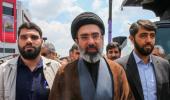
Second, the new Supreme Leader Mojtaba Khamenei is reportedly wounded and the IRGC is effectively running the war, which means the most hardline element of the Iranian state is now in the driver's seat, with no moderating hand on the wheel.
Third, and most telling on the diplomatic front: Trump says Iran wants a deal but the terms aren't good enough; Iran's foreign minister says Iran has requested neither ceasefire nor negotiations and will fight 'as long as it takes'.
Both sides are performing toughness for domestic audiences, and the Strait stays closed while they do. [ISW (external link)]
While the Indian media celebrates every tanker docking in Indian ports (three, so far, with more expected), Minister for External Affairs S Jaishankar says there is no 'blanket arrangement with Iran for India-flagged ships', and that every ship movement is an 'individual happening'.
In other words, do not hold your breath waiting for dozens of tankers to dock at Indian ports -- getting each one through the war zone is a discrete act of diplomacy and negotiation. [The Hindu (external link)]

Hamidreza Azizi (external link) (via X), says the most strategically significant development here is the India-Iran bilateral passage deal: Tehran allowed Indian ships through the Strait in exchange for New Delhi releasing seized Iranian oil tankers.
It is a small transaction with large implications: if other nations follow, Iran achieves de facto recognition of its leverage over the world's most critical oil chokepoint, which is precisely what Washington is trying to prevent.
The second thread to watch is the Houthis: A Houthi official has stated on Iranian state TV that the decision to enter the conflict has already been made.
If they activate, both Hormuz and Bab el-Mandeb come under simultaneous pressure, and the US navy has to cover two chokepoints at once.
Azizi also flags hardline Iranian proposals to institutionalise control of the Strait: transit tariffs, denial of passage to US-allied vessels, keeping it closed until American forces withdraw.
What began as a wartime disruption is quietly being reframed in Tehran as a permanent strategic asset.
US Senator Chris Murphy (external link) is worth following on X, mostly because he is one of the senators privy to confidential briefings on the course of the war. (Also worth keeping in mind, when you follow him, that it is also midterm season and opposition spin cannot be ruled out.)
That caveat noted, his thread is structured and specific enough to take seriously.
He identifies four compounding crises: The Strait cannot be secured by naval escorts alone: 100 tankers need escorting daily, and the mines and drones that threaten them threaten the escorts too.
Iran's drone arsenal is effectively inexhaustible and cheap, Gulf state interceptor stocks are being depleted, and the oil infrastructure of the entire region is increasingly exposed.
Iranian proxies in Lebanon and Iraq are widening the war, with Israel now threatening a ground invasion of Lebanon. And the Houthis, so far quiet, have the Red Sea within reach.
Murphy's sharpest point is the endgame problem: A ground invasion means thousands of American dead; a declared victory means Iran's new hardliners simply rebuild.
Trump, he says, blundered into a drone war without ever watching what drones did to Russia in Ukraine. The lesson was there, but he just didn't care.
John F Burns, 1944-2026: The New York Times foreign correspondent who spent four decades walking into places most journalists walked away from -- Sarajevo under siege, Kabul under the Taliban, Baghdad under Saddam and then under American occupation -- died last week.
He won two Pulitzer Prizes, but the awards barely capture what he actually did, which was to report, and refuse to sanitise.
He was among the handful of Western journalists who documented Saddam Hussein's Iraq from the inside, at considerable personal risk, and his dispatches from the early days of the American invasion remain some of the most clear-eyed writing produced from that catastrophe.
Burns belonged to a school of war correspondence that believed the reporter's job was to bear witness without flinching and without grandstanding, to let the human cost of conflict speak, and to hold it in the reader's face until they could not look away.
On a day when we are reading fragmentary dispatches from yet another war fought in fog and spin, his passing is worth more your attention. Here is the NYT obituary (external link), and also from the NYT, links to some of his most memorable stories (external link).
While Burns is one of those rare war correspondents who did not memorialize his work in books, read Dexter Filkins'The Forever War covers much of the same ground as Burns (Afghanistan and Iraq).
The Rorschach of war
Donald Trump said this undeclared war would take three or four days. That was three weeks ago.
What he got instead is what experts who have watched asymmetric warfare up close could have told him he would get: a conflict that does not respect timelines, does not respond to air dominance metrics, and does not stop because one side declares it over.
As experts like Professor Pape have repeatedly pointed out, asymmetric wars have a particular quality that conventional military planning struggles to accommodate: they find the cracks.
You can destroy a navy but can do nothing against a lone man in a speedboat carrying a mine. Iran has no air force left to speak of.
But it has, apparently, an inexhaustible supply of cheap drones, and an expanding list of targets.

Drone Warfare Reshapes Gulf Conflict
Fuel tanks at Dubai international airport were struck (external link), suspending flights in the region's premier business hub. (Iran's Foreign Minister Araghchi says (external link) that his country is willing to sit with others in the region to investigate such incidents, and adds that he has information that the US and Israel are carrying out false flag attacks on Arab countries to blame Iran).
The ink blot of war is spreading, and no one -- not the Pentagon's most sophisticated modellers, not the ISW analysts tracking every strike -- can tell you with confidence what its final shape will be.
The diplomatic picture is no cleaner. France's Macron has refused, categorically, to send French warships to bail Trump out, but in the same breath has warned Tehran that any strike on French personnel or assets will be treated as a hostile act.
It is a precise and pointed position: Europe will not be conscripted into America's war, but it will not be a casualty of Iran's either.
Meanwhile the war's unintended beneficiaries are doing rather well.
China is receiving all the Iranian oil it needs thanks to bilateral arrangements, quiet diplomacy, and the kind of patient statecraft that makes no headlines.
Russia, already the surprise winner of the sanctions lottery, finds itself further enriched.
Putin did not fire a shot in this war, but he is the one collecting the jackpot.
Into this picture arrive 2,500 US Marines, headed for the Strait of Hormuz.
What exactly they are to do there, how they are to enter a waterway that is mined, drone-patrolled and effectively closed, remains moot.
Their deployment seems, at least to me, more of a gesture than the outcome of planned strategy.
The week ahead may matter more than most.
Both sides are performing resolve for domestic audiences while reportedly declining, through intermediaries, to come to the table.
But wars have their own metabolism, and the signals from the Gulf suggest that the current tempo cannot hold indefinitely without something breaking in a new direction.
Whether that break leads toward an exit ramp or to a further escalation is the only question that matters right now.
If they are being honest, everyone involved will tell you that there are no clear answers, no way to forecast the immediate future.
No one knows the answer, least of all the man who started all this because he had a feeling.
- MUST READ! The New Fog of War
- Has US Repeated Its Iraq Mistake?
- Hormuz Crisis Threatens Global Economy
- Iran War Exposes Washington's Strategic Chaos
- Iran Plays Hardball With India's Hormuz Requests

Photographs curated by Manisha Kotian/Rediff
Feature Presentation: Ashish Narsale/Rediff







 © 2026