

Prime Minister Narendra Modi stayed calm, avoided public confrontation, and focused on India's long-term interests to steady ties with the United States.

Key Points
- Government chose restraint despite pressure to publicly counter President Trump.
- Direct conversation between PM Modi and President Trump proved decisive.
- Piyush Goyal handled trade negotiations whereas S Jaishankar led strategic engagement.
- The US 'system' was largely supportive during the crisis.
Why India Chose Silence Over Confrontation
It was Prime Minister Narendra Modi's patience and confidence that clinched the trade deal with the United States, says a senior source in the government who was a part of the negotiating team.
For the last six months, critics of the government had mounted tremendous pressure on Prime Minister Modi to engage in a verbal duel with US President Donald Trump whenever he spoke recklessly affecting the bilateral relationship.
The Phone Call That Reset the Relationship
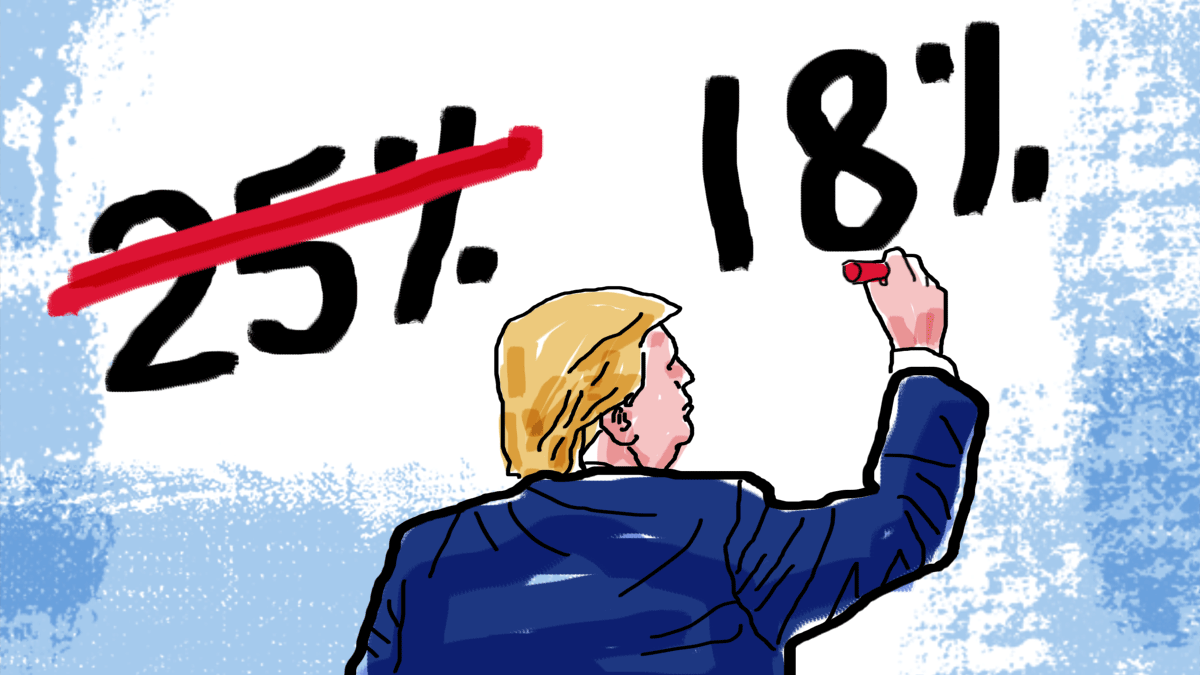
But PM Modi and his team focused on protecting India's strategic and business interests. The focus was on minimising the impact of the heavy US tariffs and finding new areas to do businesses, a source adds.
The most important thing that changed the course of the relationship was the call made on Monday between PM Modi and President Trump, the source informs, adding that the deal would not have been possible without both speaking to each other directly.
Trade, Strategy, and the Power of Institutions
External Affairs Minister S Jaishankar and Commerce Minister Piyush Goyal have been working on the bilateral relations for six months.
Goyal handled the bilateral trade negotiations while Jaishankar focused on the strategic aspects.
A member of the government team explains that the "bilateral relationship at the worst of times never lost steam. The National Security Strategy document, which was published in November 2025 in Washington, gave an idea how the Trump administration views India."
"It was encouraging," the official adds. "This crisis showed us that India and US bilateral relations have bipartisan support in America and they all came forward to help."
After the crisis in the bilateral relationship, the official adds the most important thing to note was that the "American system" has not been adversarial to India. "The 'system'," he asserts, "was very much with us."
Why Markets, Not Pressure, Will Decide Oil Choices
When asked who broke the ice between New Delhi and Washington, the source avoided a detailed response and merely says, "it was a set up that made conversation between the two leaders possible."
When asked if there is American pressure on India to stop buying Russian oil, the source says, "India started buying Russian oil only when we were offered an attractive discount in 2022. It's not an old oil trade convention. Under all circumstances India will import oil that is affordable and profitable for India."
The government is looking at an American offer to buy oil from America and Venezuela as an "expansion of choices". After all, the source adds, the "market" will prevail.
Energy, AI, and the New Convergence
In view of the inequal tariff structure announced on Monday night by President Trump many companies will divert their area of businesses away from America.
With European and the Gulf region turning friendly with their respective trade deals Indian buyers and sellers will buy and sell where and what suits them.
When asked which were the major driving forces on both sides for the 'patch up' after the great rupture, the Indian side states that, "when you put pieces together of the changing global theatre there emerges a big picture that compelled us to work together."
"Just to give an example. India doesn't want to left behind in AI research and application. India wants the data centres. The data centres will consume huge energy. Nuclear energy will supplement our need."
"The American companies and its investments can help India get there. Such convergence of interests are possible in many, many fields."
"The world of strategic interests works differently," the source adds, "it's not a stock market."
Feature Presentation: Rajesh Alva/Rediff







 © 2026