
The first national flag in Independent India was hoisted at Fort St George in Madras, not at Delhi's Red Fort.
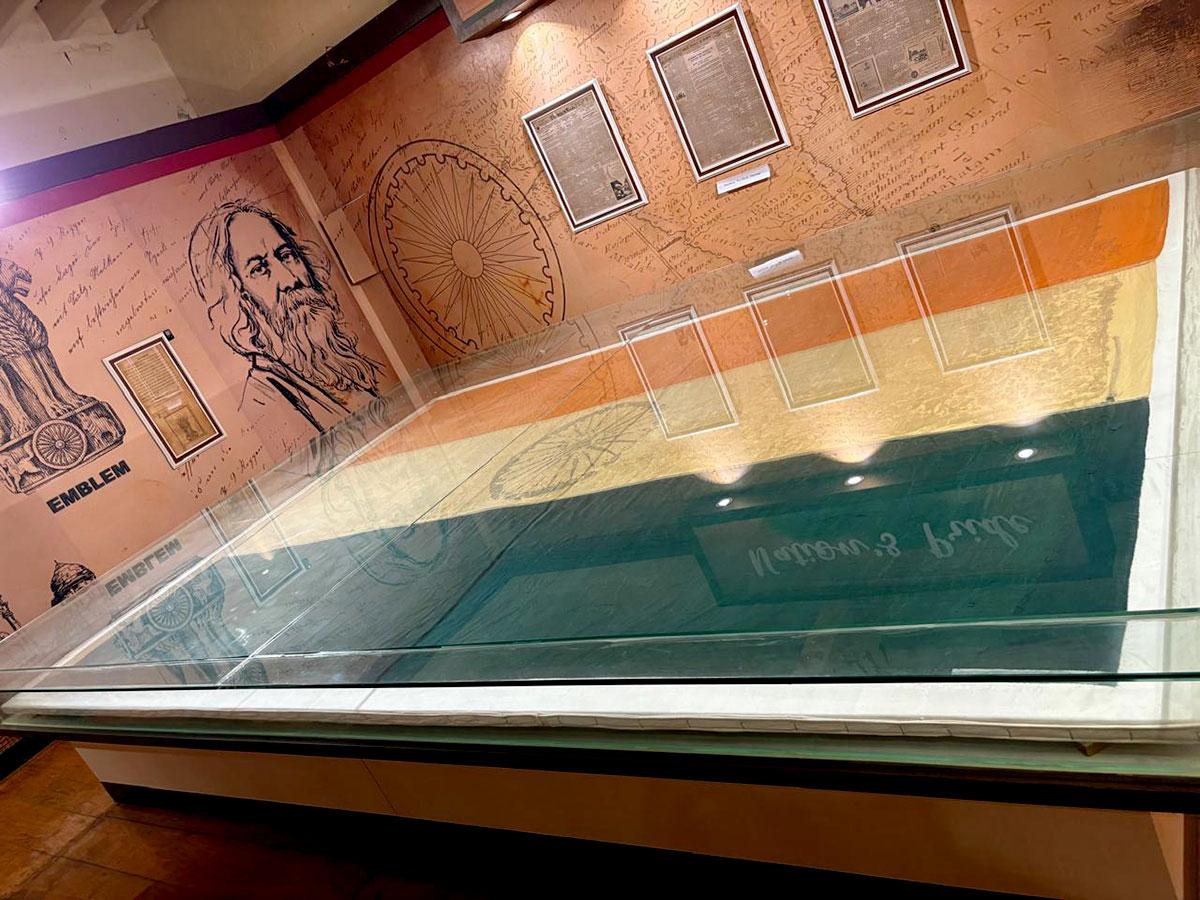
On the top floor of India's oldest colonial precincts, up a sweeping wooden staircase winding past large windows in Chennai's Fort St George, rests India's oldest surviving Tricolour.
The flag is displayed in a massive glass case as the pride of the museum. Buying the Rs 20 ticket to enter the museum included the process of scanning QR code, punching in your Aadhar number and making digital payment.
The deft security guard at the entrance offered to help us complete the process on our phone, his fingers flying on the keys with practice of having done it for scores of visitors [he was helping three groups of visitors at the same time.]
There was no ticket window to buy a physical ticket. The winding down of old style 'give money buy ticket' process which would then be kept as a souvenir is a wee bit sad, but capturing memories on mobile phone cameras sort of makes up for it.
Fort St George is the seat of the Tamil Nadu government. What was once built to protect the trading interest of the East India Company, now houses the state assembly and secretariat.
The first fortress constructed by the British in India in 1644, it is only apt that it was here that Independent India's first national flag was hoisted.
The national flag measuring 3.5x2.40 metres was hoisted after lowering the Union Jack on August 15, 1947 at 5.05 am, much before the official raising of the flag in Madras city or at the Red Fort in New Delhi that evening.
The fort was under the control of the Indian Army at that time.
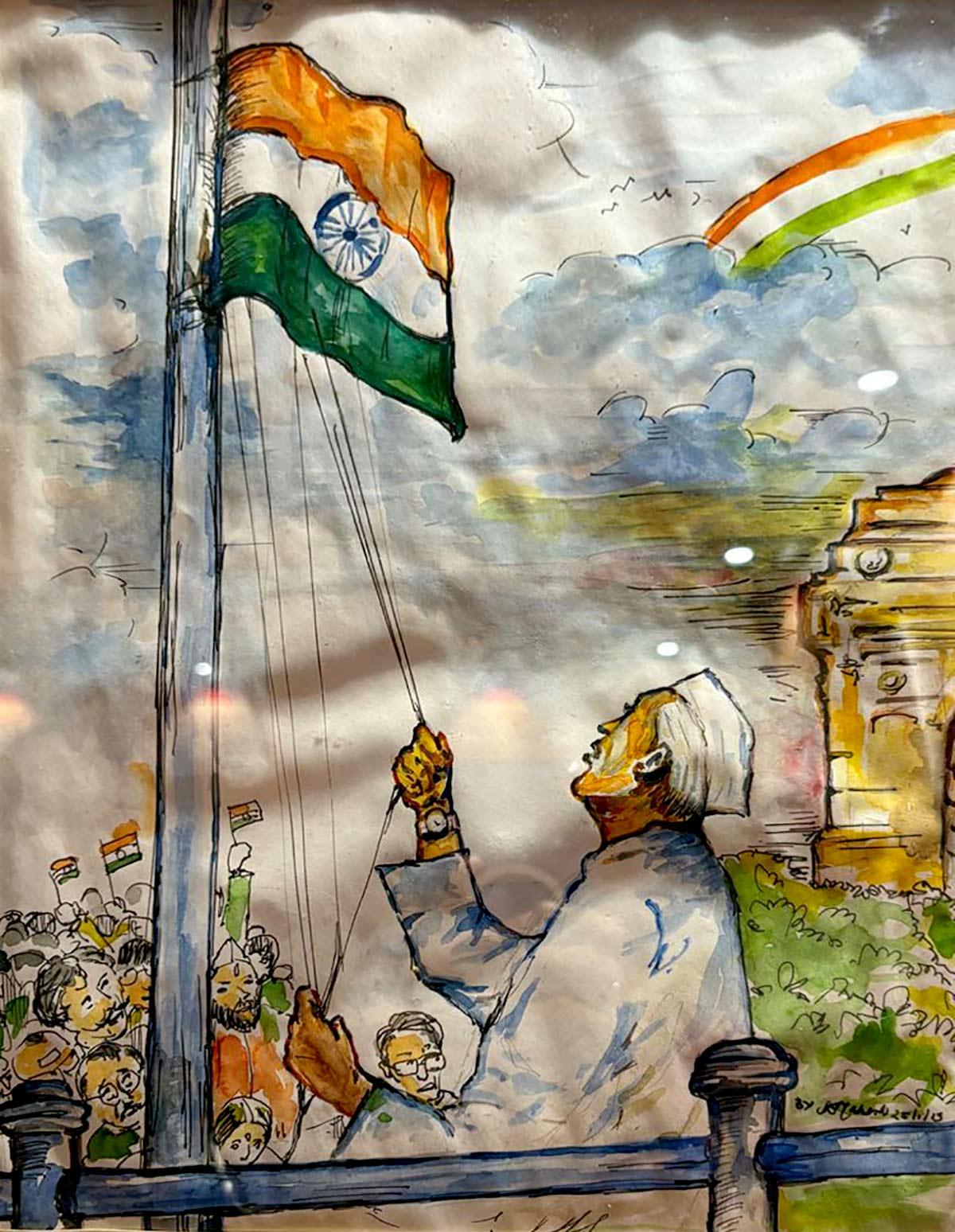
The majestic flag post must have lasted nearly 400 years and was made of teakwood recovered from a shipwreck. It was replaced by a steel mast in 1994-1995 because the wood had become weak and ravaged.
This is the oldest surviving flag in the entire nation says the information in the museum.
It is made of silk, not khadi as one would expect. It was kept in the reserve collection of the museum due to its fragility and only exhibited in 2013.
The flag was later conserved by providing adequate mesh support and encased in a specially designed showcase by the Archeological Survey of India.
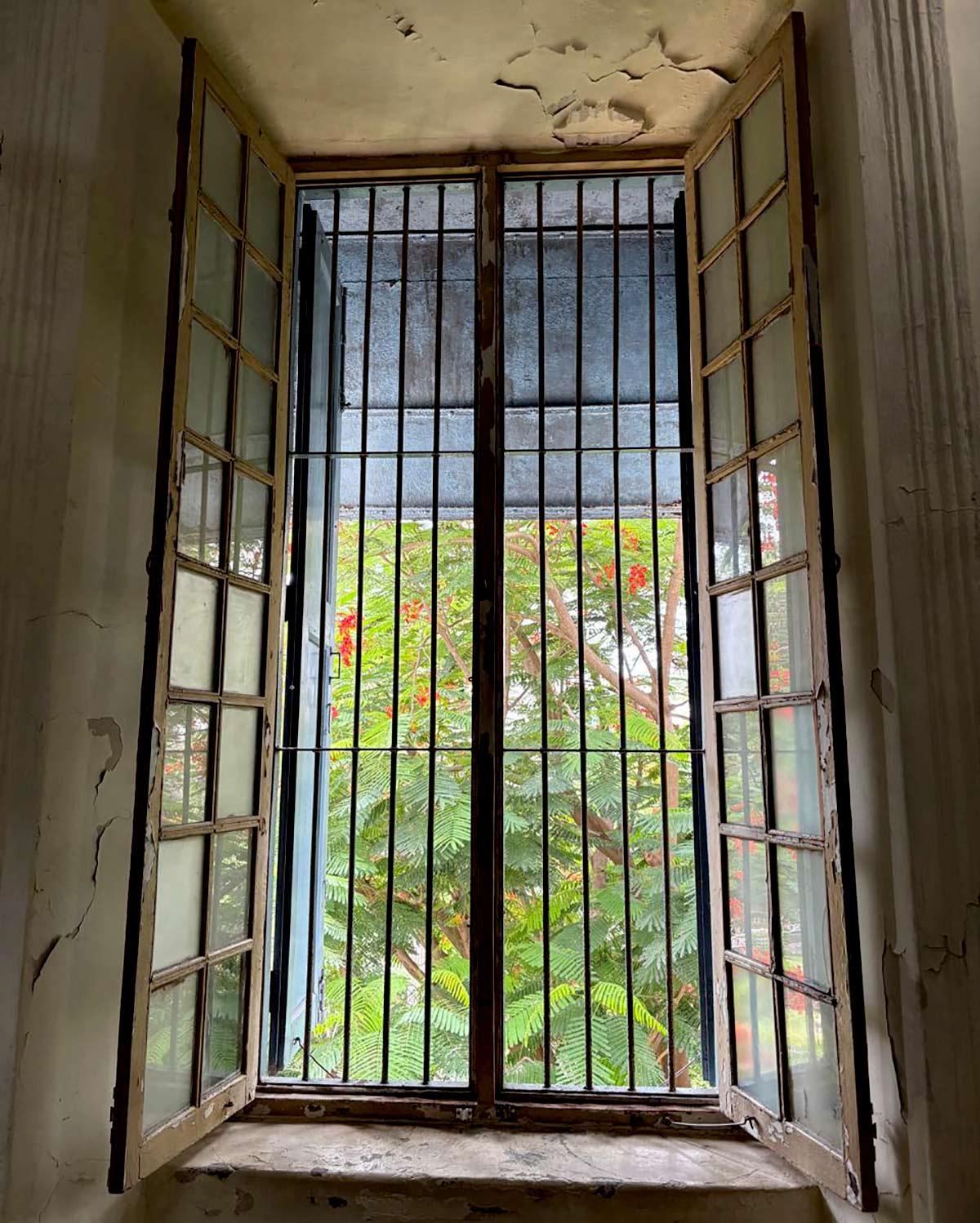
The ASI office next door is situated inside what used to be Robert Clive's house. The house is opposite St Mary's Church believed to be the oldest building in India and the only bomb-proof structure in the fort at that time.
The slabs of the church graveyard were used to mount guns when Hyder Ali, the ruler of Mysore, attacked Madras in 1782.
Clive's wedding was solemnised in this church.
While in Madras, he even attempted suicide and eventually killed himself by slitting his throat in England aged 49 in 1774.
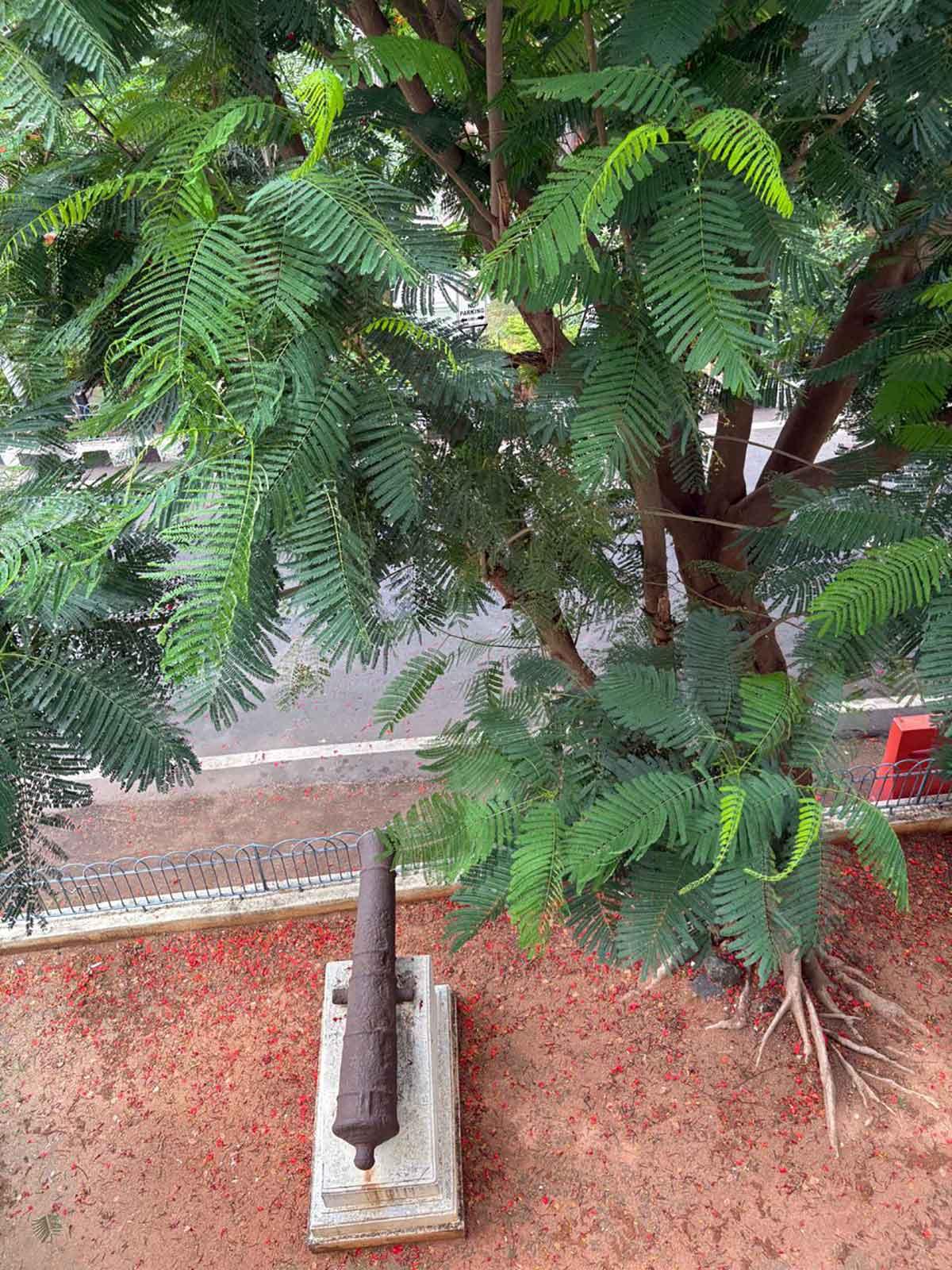
To enter the museum which is located inside the erstwhile Exchange Building one has to cross a moat. Rusted cannons still line the fort which had six metre high walls and withstood many assaults by local rulers and the French throughout the 18th and early 19th centuries.
It is these impregnable walls that artist, sculptor, freedom fighter Arya K Bashyam scaled to sneak into Fort St George the night before January 26, 1932 [proclaimed by Gandhiji to be observed as Independence Day].
He climbed the rampart, holding still each time the light house beam came to rest on him. He spent nearly a couple of hours on the pole to lower the Union Jack and hoist the Tricolour.
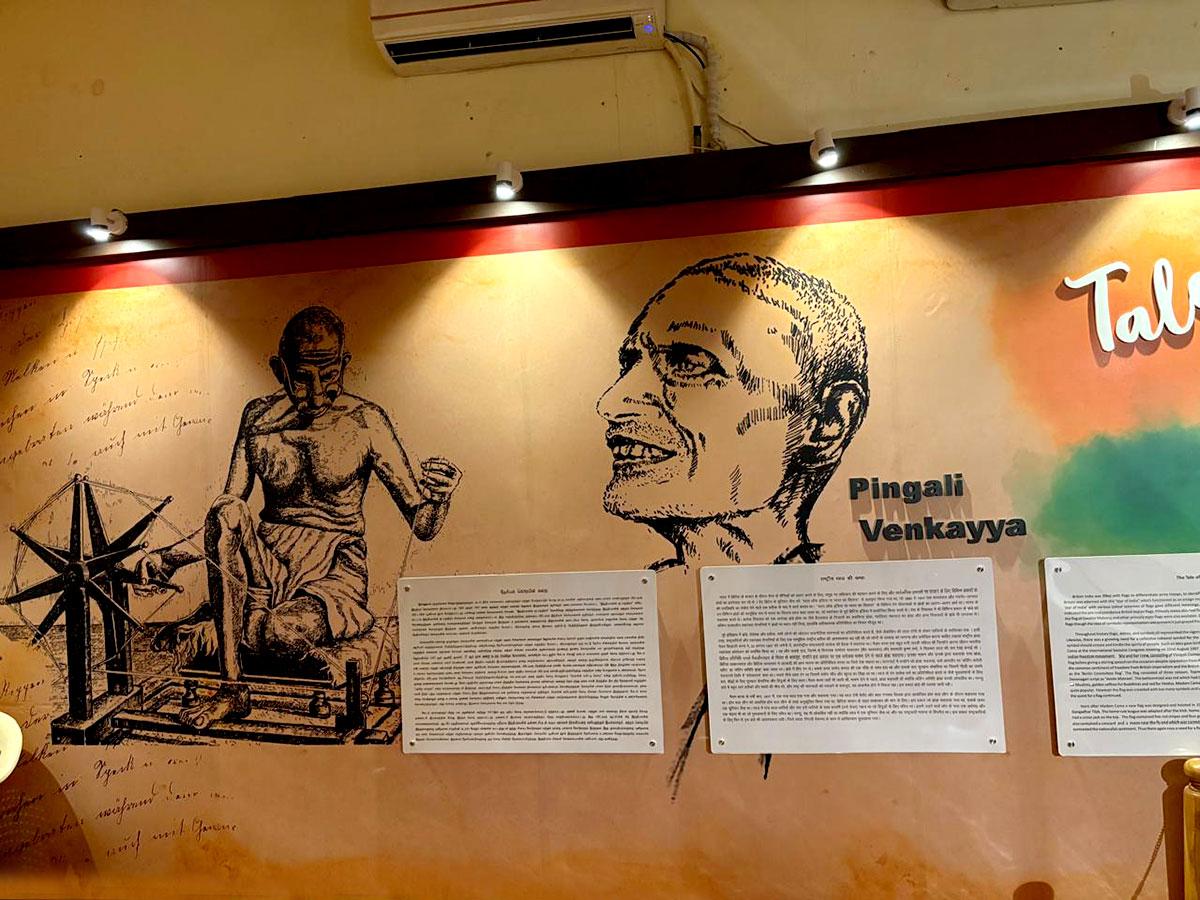
In another account of the incident by V C Rukmini in the book Freedom Fighters Remember, Bashyam climbed the 400 feet wireless tower in the fort and unfurled the Congress flag [tricolour with the charkha].
The flag was 40 feet higher than the Union Jack on the adjacent flag post.
The news spread like wildfire and people gathered to see it.
The British had to call in the fire brigade to lower the Tricolour.
Arya Bashyam who also spearheaded attacks on foreign goods was imprisoned in Madras. In jail, he met Netaji Subhas Chandra Bose and was greatly influenced by him.
While in prison in Bellary, he beat up the jailor with chappals for flogging Mahabir Singh, an associate of Bhagat Singh.
Bashyam was given 30 lashes as punishment. To every lash he said 'Fear not, fear not', he recounted in the chapter dedicated to him in the above mentioned book.
Mahabir Singh was later transferred to the Cellular Jail in the Andamans to serve a life sentence. He went on a hunger strike and was killed while being force fed. The prison doctor put a knee on his chest and pushed a tube down his nose to pour milk.
The tube entered his lung instead of the stomach resulting in the freedom fighter's cruel death.
Bashyam passed away in 1999 aged 93. He refused the pension for freedom fighters after Independence.
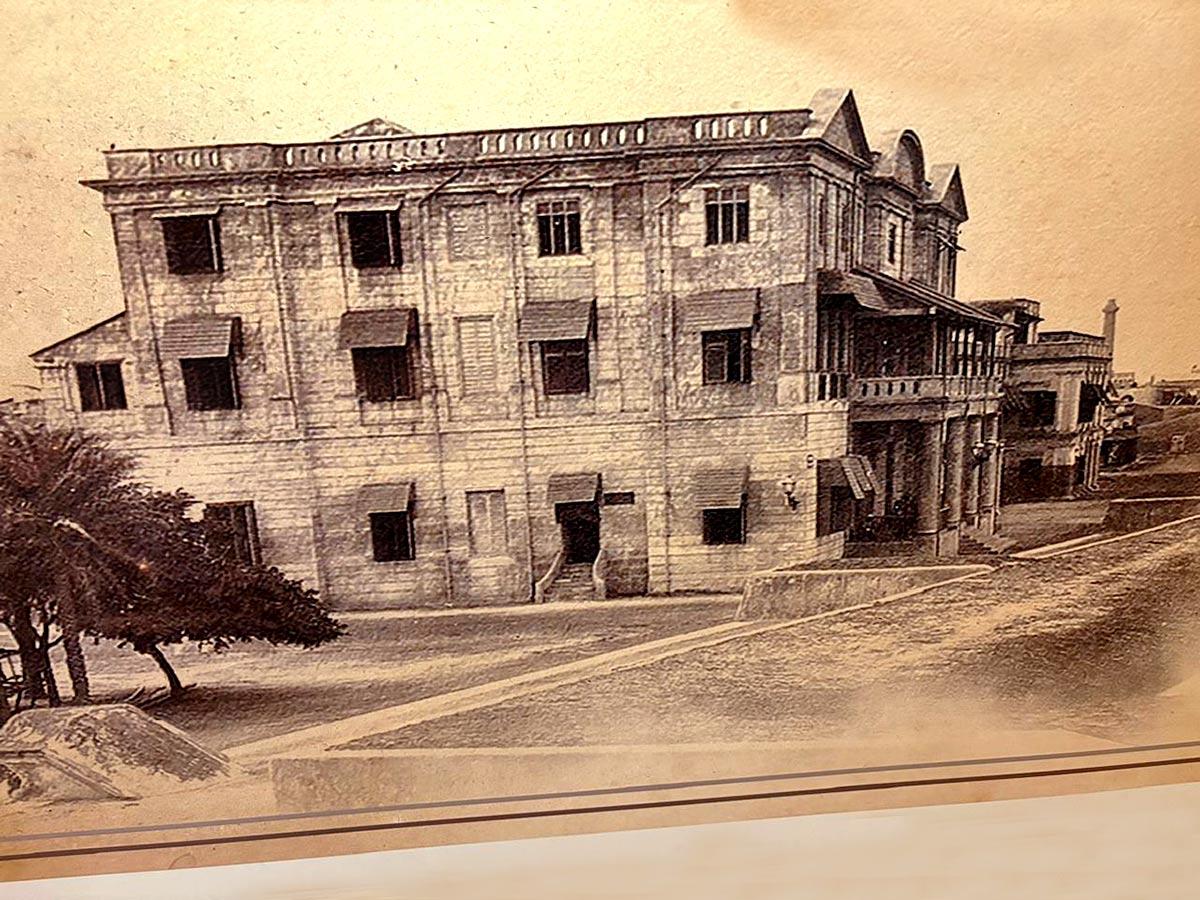
The man who first mooted the idea of a national flag is also fittingly honoured in the flag gallery at the Fort St George Museum.
Pingalli Venkayya created a booklet in 1916 with different designs of the flag.
The Cambridge educated, well-versed in languages, young man had served with Gandhi in South Africa in the Second Boer War.
On his return, he dedicated his life to the designing the flag. The design had two colours red representing Hindus and green Muslims.
Gandhiji suggested white to incorporate other religions. The three bands had a spinning wheel at the centre.
After Independence the charkha or spinning wheel was replaced by the Ashok Chakra.
The idea and drawing of the Ashok Chakra was given by civil servant Badruddin Tyabji and his wife Surayya Tyabji.
The flag in the present form was accepted by the flag committee headed by Dr Rajendra Prasad just 20 days before Independence.
It is said Pingalli Venkayya died in penury in 1963.
That morning in Fort St George there was much to learn for a ticket that cost just Rs 20.
Photographs curated by Manisha Kotian/Rediff
Feature Presentation: Aslam Hunani/Rediff




 © 2025