
The rising tide of Indian nationalism meant that the people of princely states now were keen to become a part of a united and integrated India rather than remain subjects of a princely state.
The Congress too supported the people's wish and it fell upon Patel to get the princes to agree.
He did so magnificently, using every trick available, whether it was sweet talk or coercion; the rulers buckled and Patel earned the eternal gratitude of the entire nation.
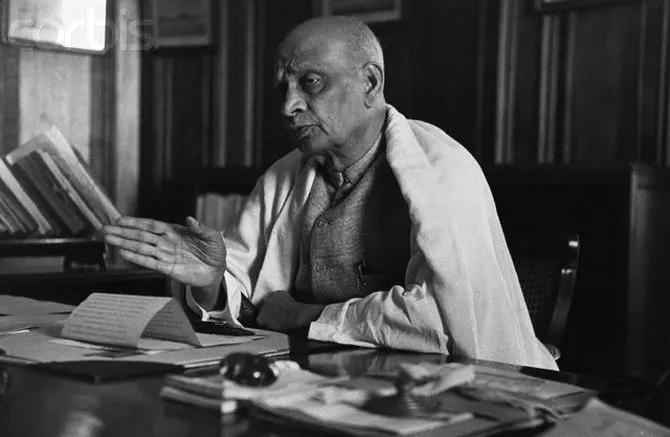
October 31, 2025, is Sardar Vallabhbhai Patel's 150th birth anniversary.
Among the troika of India's top leaders during the Freedom Struggle, Patel has carved a niche in the hearts and minds of most Indians for his immeasurable contribution towards the making of India.
It is impossible to encapsulate the life of this legend in a short read, so this piece will seek to highlight some key aspects of his amazing life and journey.
Patel's exact birth date remains unknown. It was not noted down by his family.
Patel chose October 31, 1875, while filling up his matriculation form, and which date later appeared on his matriculation certificate.
Anyone drawing up his kundalini is doing so on a mythical date!
Coincidentally, this year will also mark Patel's 75th death anniversary; he passed away on December 15, 1950, just 45 days after turning 75.
One of the favourite and perennial 'What if...' questions that haunts the minds of historians and conspiracy theorists in equal measure is the query: What if Patel had become the first prime minister of India rather than Jawaharlal Nehru?
Many, especially in recent years, are convinced that Mahatma Gandhi was both partial towards Nehru and prejudiced against Patel, though, like most conspiracy theories, actual evidence for such claims is sorely missing.
And that India suffered as a result of this decision, especially since Patel had a far more realistic outlook concerning politics as compared to the utopian Nehru.
But that is a question for another article.
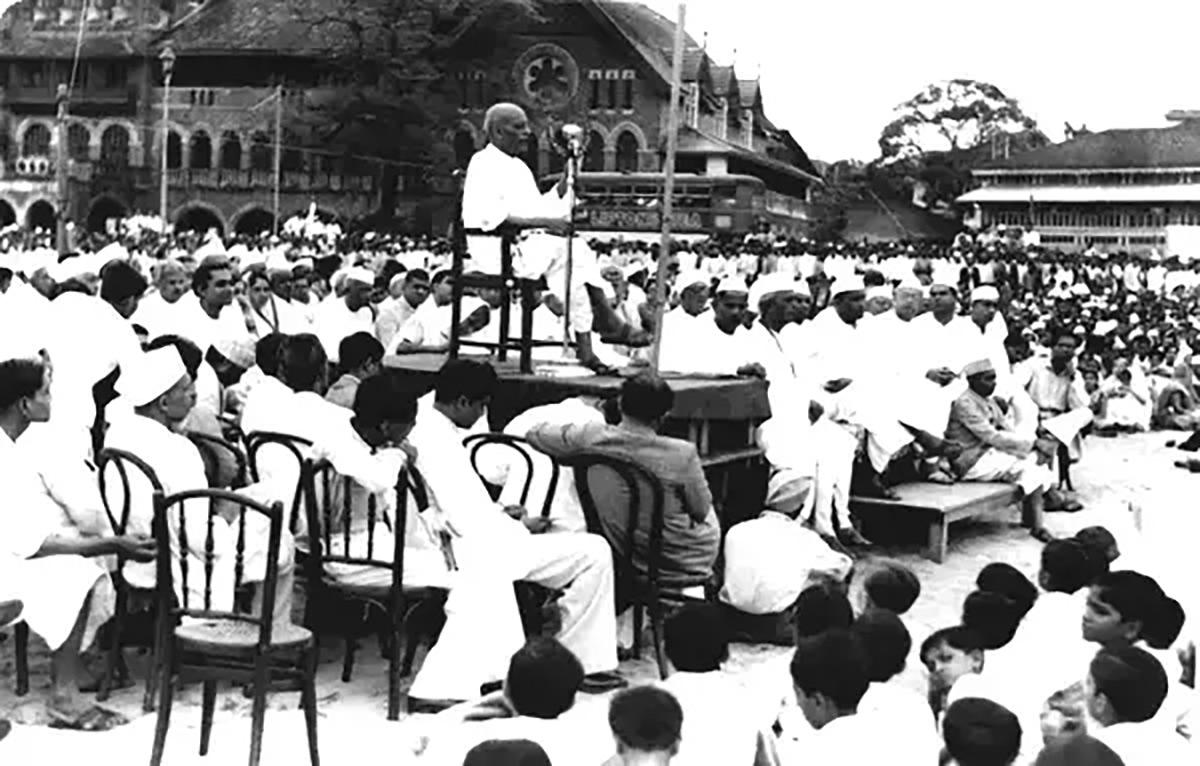
Early years
Vallabhbhai Jhaverbhai Patel was born in Nadiad, a town that lies halfway between the large cities of Ahmedabad and Vadodara.
He hailed from the Leva Patidar community, an agriculturist caste that had already experienced upward mobilisation and increased prosperity.
His father was a farmer, who chose to educate his children.
But hailing from a family of a caste that, in that era, did not prioritize education meant it was slow progress.
Patel matriculated (completed high school) in 1897, at the age of 22. He had married Jhaverben four years earlier.
Unlike others of his ilk back then, Patel was determined to study further and he studied law, becoming a lawyer by 1903 and setting up practice in Godhra.
His wife joined him and they soon had a daughter, Mani, born in 1903, and son, Dahya, born in 1904.
Patel was a skilled lawyer and soon became prosperous. He also earned an enviable reputation for stoicism: While arguing a case in court, he received a telegram informing that his ailing wife had passed away.
He read the telegram, thrust it in his pocket, finished his arguments, and then headed home to mourn his wife's demise in 1909.
He also refused to marry again, and his family raised his children.
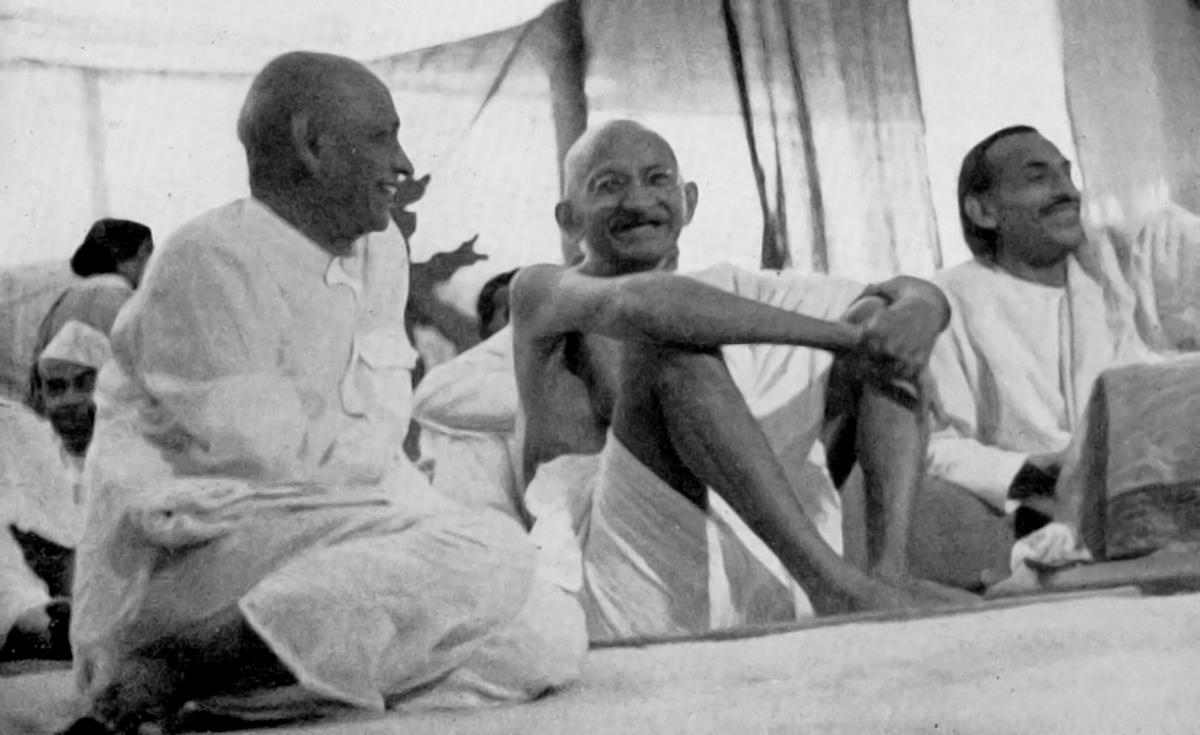
Sacrifice and Sardar
Patel was desirous of bettering himself and wanted to become a barrister, which, back, then required studying in London.
He scrupulously saved up his money and soon gained admission.
But here comes a twist. In 1910, the letter informing him of his admission was addressed to 'Mr V J Patel, Pleader', and was received by his elder brother, Vithalbhai Patel, also a pleader (junior lawyer).
Vithalbhai insisted that he would go, saying it would look odd if the younger brother studied ahead of the elder brother!
Vallabhbhai demonstrated a characteristic trait that would be displayed again decades later: Sacrifice for the greater good of the family (or nation).
Instead of being bitter at his brother's emotional and unfair behaviour, he let his elder brother go ahead of him.
A year later, 36-year-old Patel went to London to achieve his dream of becoming a barrister. He lived frugally, walking to the library, about 17 km away, every day and back in the evening.
Completing his three years' course ahead of schedule, on the day he received his bar, he took another long walk... to the docks to book his ticket home.
Back in India in 1913, Patel shifted his practice to Ahmedabad and as a barrister, soon became a wealthy man, wearing fancy suits and playing cards at an exclusive club in the evenings.
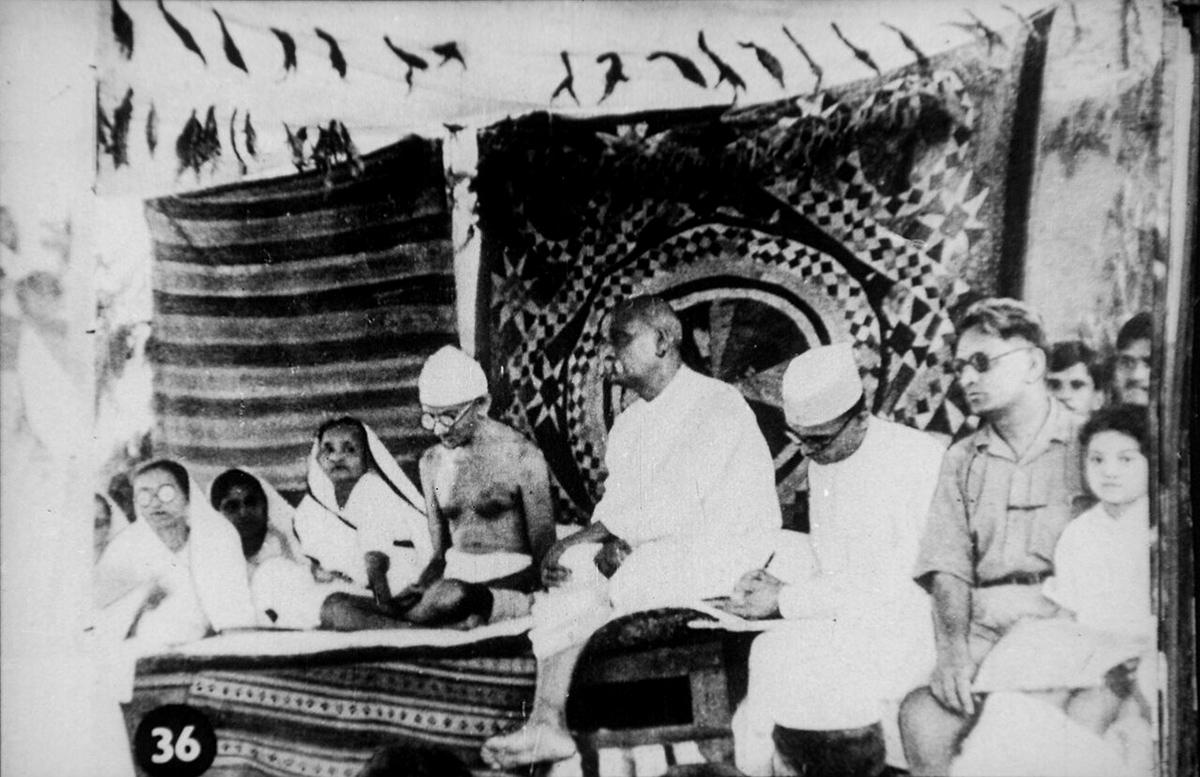
In 1915, Gandhi returned to India from South Africa and plunged into political activity, starting from his native Gujarat.
Patel attended the Political Conference 1917 and was impressed sufficiently by Gandhi, especially the notion that wrongs must be righted (as a lawyer, it was the very thing Patel sought to do).
He entered politics, winning the election to become the sanitation commissioner of Ahmedabad in 1917.
He also became secretary of the Gujarat Sabha.
A famine struck the Kheda region, not far from Nadiad, in 1918 and farmers were struggling to pay their taxes.
Gandhi organised a satyagraha in Kheda and was delighted when Patel joined him to lead the struggle.
The Kheda satyagraha was a success and Patel's immense contribution was noted.
In today's India, it is easy to assume that a wealthy man joining politics retains his lifestyle or even grows wealthier. Back then, that was utterly not the case.
Patel did not come from a wealthy family; every paisa was earned by him.
Giving up his career as a barrister to join politics meant a huge financial sacrifice that today is even difficult to imagine. Patel embraced that sacrifice!
Patel junked his suit-boot and took to wearing only khadi dhoti-kurta with sandals, and by which image the world recognises him today.
Patel's inspirational leadership soon became visible beyond what is now Gujarat. In 1923, the British passed a law banning the raising of the Indian 'flag' in Nagpur.
The Congress asked Patel to lead the movement defying this ridiculous rule and he did so successfully.
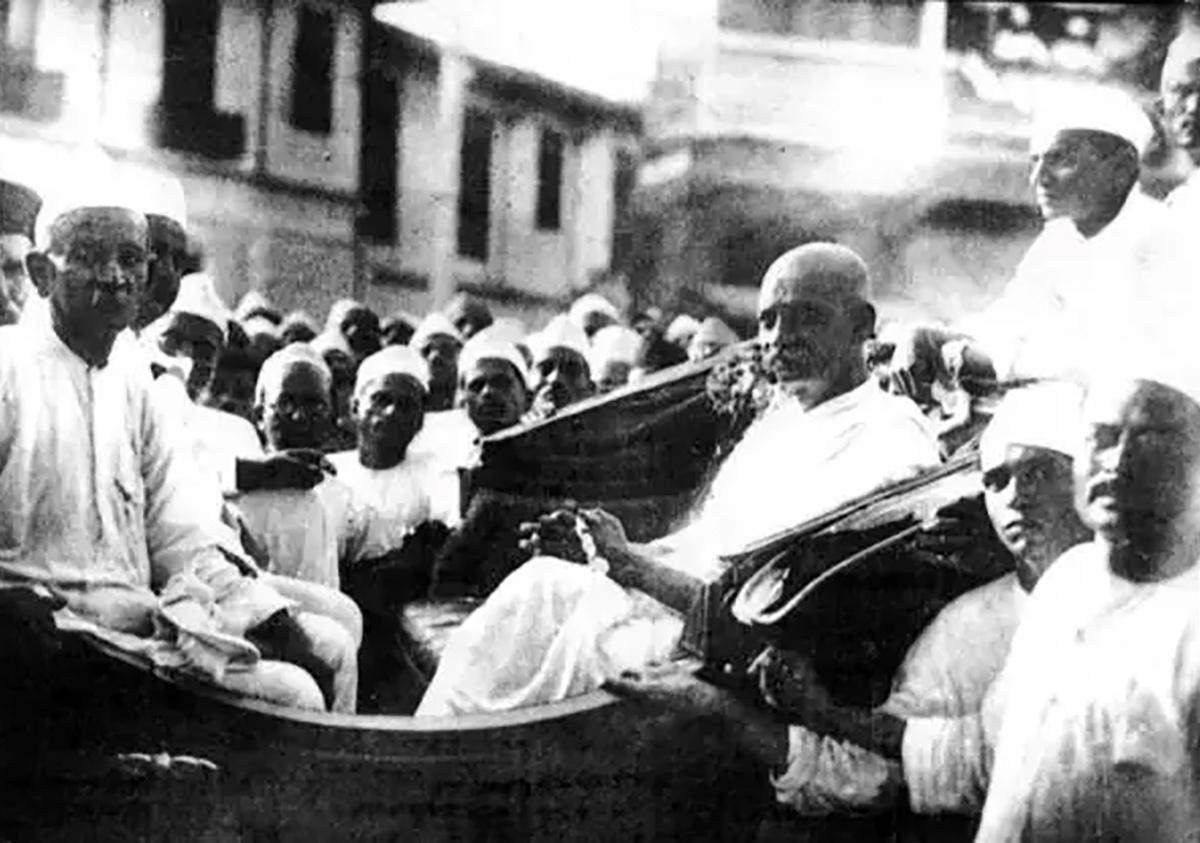
The same year, the government levied a tax on the people of Borsad taluka (near Vadodara) to pay for the deployment of the police to catch a local dacoit, Devar Baba.
Patel and his supporters discovered that the police were in cahoots with the dacoit.
He organised the people, and led them in refusing to pay the extra levy. The government buckled and revoked its order.
The year 1928 was a name-changer. The people of Bardoli, located just east of Surat, were suffering under famine conditions and the government's decision to hike its revenue by over 20%, and in some villages, by over 50%.
The Congress launched a satyagraha and the people simply refused to pay. This fightback caught the nation's attention.
Patel was one of the main organisers of this struggle led by Gandhi. The government gave in to all the demands -- no hike in revenue, reinstating officials dismissed from service, and returning the confiscated lands.
Hereinafter, Patel was referred to as Sardar (leader), a moniker that defined his stature, which was by now hailed across India.
Independence and Integration
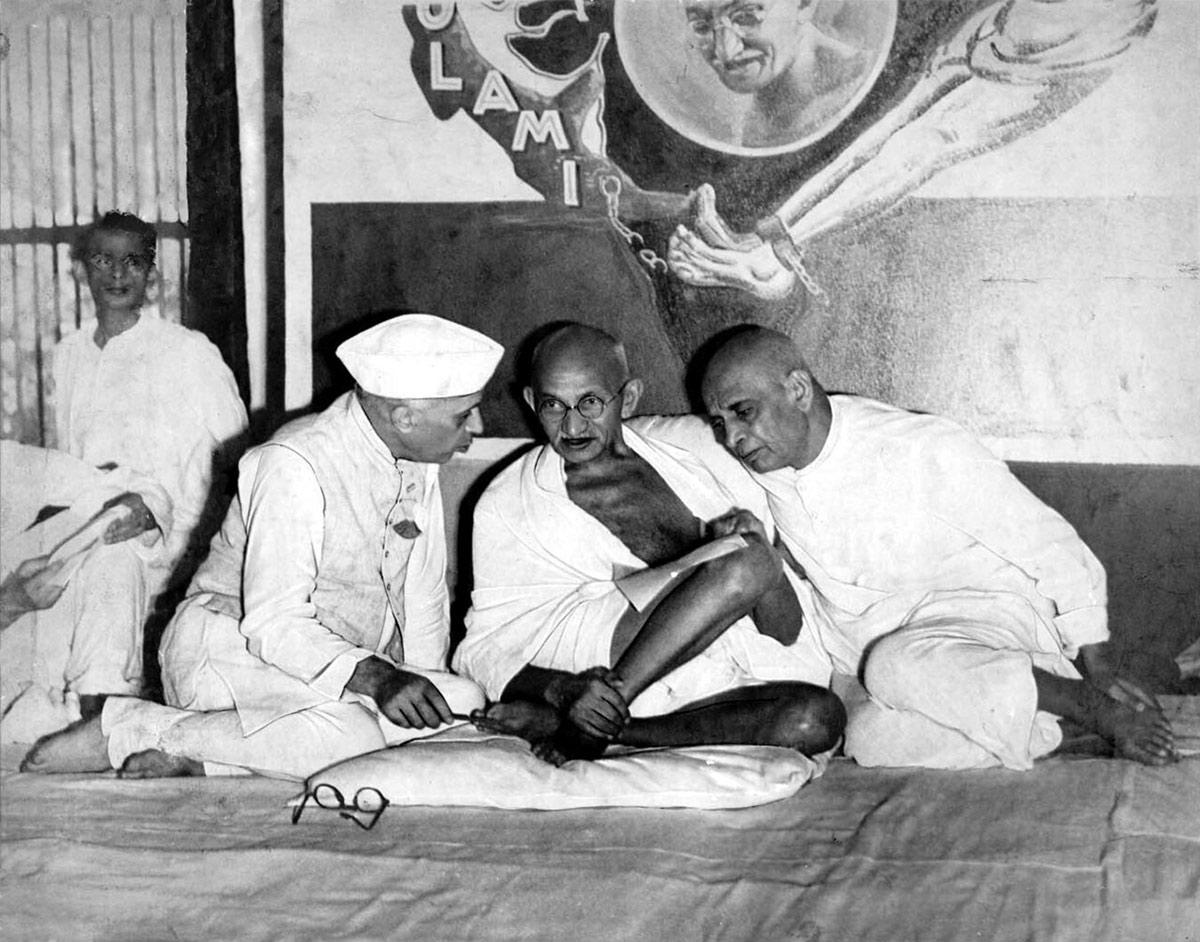
As the Freedom Struggle intensified, Patel and Gandhi grew closer to each other and he soon became a trusted lieutenant of Gandhi.
They would disagree (they were just six years apart and Patel did not hesitate to speak his mind), but Patel trusted Gandhi's instincts and decisions.
For instance, when Subhas Chandra Bose opposed Gandhi's non-violence initiatives in 1938, it was Patel who organised the Congress workers to stand by Gandhi.
In 1942, as Indians grew increasingly restless with continued British rule at a time when Britain was on the backfoot in World War 2, Patel pushed Gandhi to push for a movement against the British.
The Quit India Movement was launched and Patel was promptly jailed, securing a release in 1945.
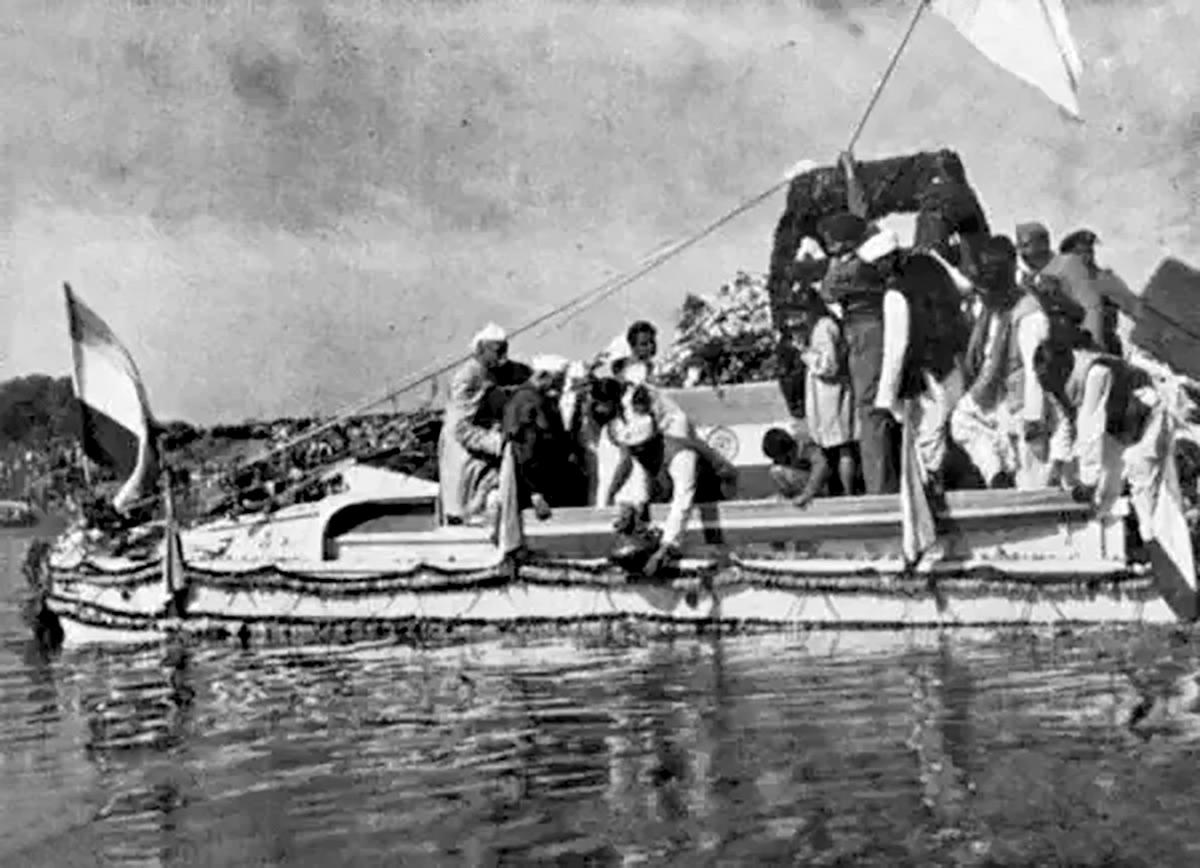
When India became Independent, Patel was sworn in as India's first Deputy Prime Minister and Home Minister, in charge of integrating the 562 princely states of India.
Here, it must be understood that as the British conquered India, the many erstwhile rulers and entered into individual treaties and alliances with the British.
They were nominally sovereign, acknowledging the suzerainty of the British.
Not surprisingly, many believe that the departure of the British meant that they could become rulers once more without British overlordship.
But the rising tide of Indian nationalism meant that the people of these princely states now were keen to become a part of a united and integrated India rather than remain subjects of a princely state.
The Congress too supported the people's wish and it fell upon Patel to get the princes to agree.
He did so magnificently, using every trick available, whether it was sweet talk or coercion; the rulers buckled and Patel earned the eternal gratitude of the entire nation.
Patel also kept the Congress party intact despite his growing differences with Nehru, by refusing to break away and form another party.
He was aware that doing so just after Independence could harm the country.
As he had done in the past, he sacrificed his own sentiments to serve his larger family - the nation.
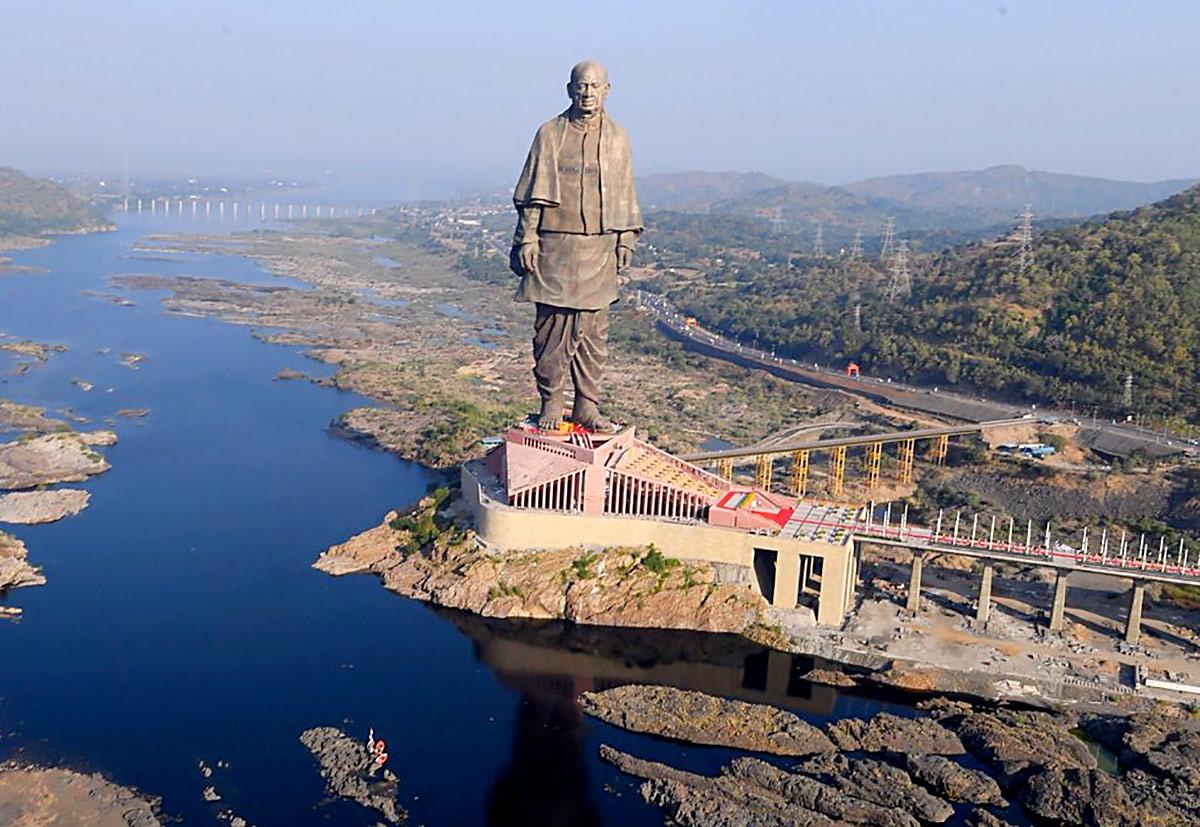
Honouring Patel's pivotal role integrating India, the government of Gujarat built a statue of Patel at Kevadia, southeast of Vadodara, and which was inaugurated on October 31, 2018.
This Statue of Unity is at present the world's tallest statue at 182 metres.
In the hearts and minds of Indians, Patel's will always be taller.
Photographs curated by Manisha Kotian/Rediff
Feature Presentation: Aslam Hunani/Rediff





 © 2025