

The foremost lesson for India today is to beef up its air defence to cater for multiple drone attacks.
As seen in Operation Sindoor, we have come a long way, but there's room for getting better.
We must develop a robust and almost impregnable air cover over ourselves, asserts IAF veteran Air Commodore Nitin Sathe (retd).
Elon Musk at a talk to United States air force personnel a few years ago had remarked, 'The fighter jet era has passed... Locally autonomous drone warfare is where it's at, where the future will be.'
At that point in time, his words seemed exaggerated and too futuristic to many. Today, the rapid revolution of drone and AI technology has proven Elon prescient.
In the past few years, drone technology has leapfrogged at lightning speed, and we have seen systems of which we only dreamt of in real life.
This, coupled with rapid advancements in AI has made concepts once confined to sci-fi movies a reality.
Driverless Tesla cars are already in use, pizzas and burgers are being delivered at your doorstep-not by a man on a motorcycle but by a small drone piloted by someone sitting in his bedroom far away.
We have seen how ObL was tracked by US intelligence using unmanned vehicles, how terrorist targets in Afghanistan were taken out by drones controlled far away in the US, how alnost daily news comes in of attacks by unmanned aerial vehicles during the Russia-Ukraine war.
Also on display recently was extensive use of drones for the first time in an India-Pakistan military clash.
I was first exposed to the UAV, or remotely piloted aircraft (RPA) as we called it, during my command of a frontline base in the northern sector almost a decade-and-a-half ago.
It was the most hi-tech equipment that I had encountered in my tenure in the Indian Air Force.
What was fascinating and a new learning for me was the quality of intel that these machines could gather and how it could be used to plan for future conflicts.
In just a decade, drones have become an inseparable and integral part of any armed conflict.
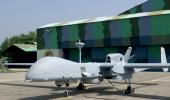
Drones, or UAVs as the military calls them, have redefined how nations conduct surveillance, gather intelligence, and engage in combat.
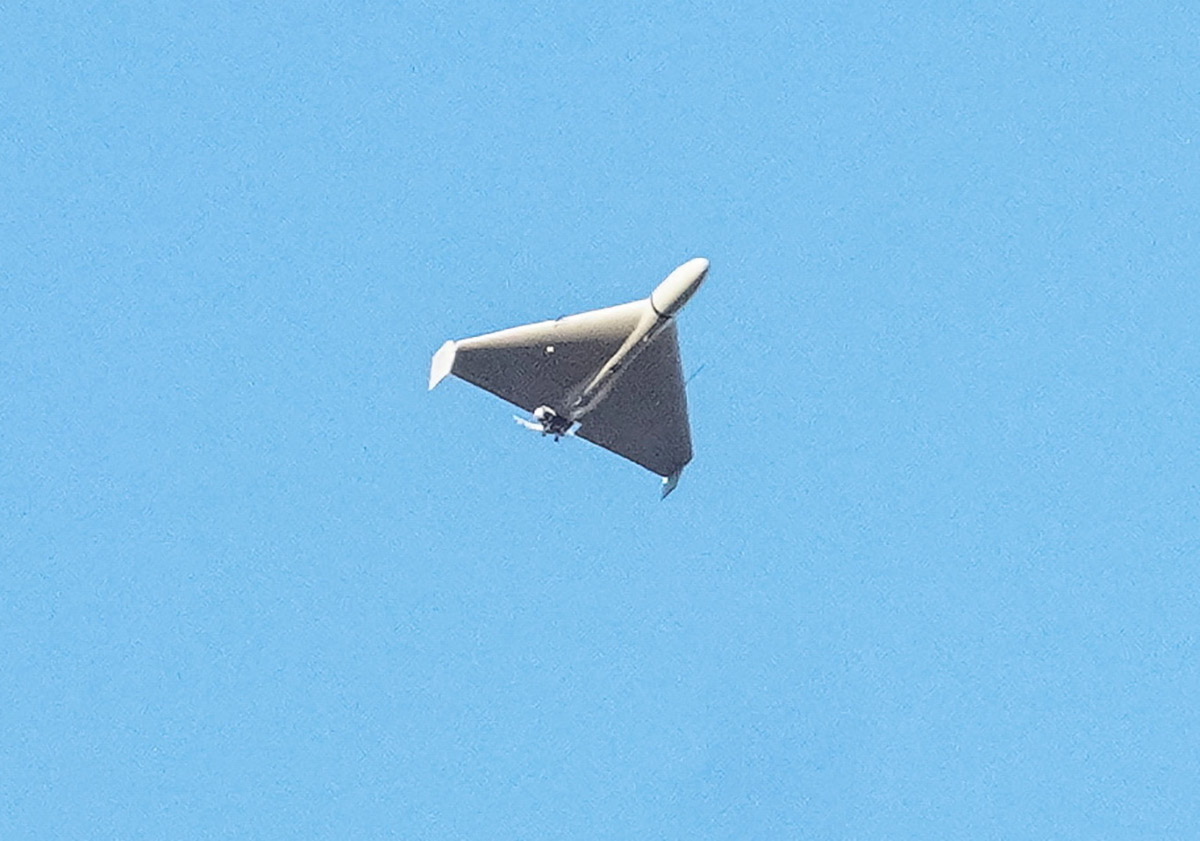
Drones can be of two types based on what they are designed to do.
Eye In The Sky
The surveillance drone has cameras that can even see through darkness and give you a clear picture of enemy deployment.
They can also pick up electromagnetic radiation transmitted by the adversary and give us an idea of the electronic orbat (E-Orbat) of the enemy which can be used later to jam or home onto these emitters.
As our eye in the sky, they are used to direct combat missions onto their targets.
The drone 'lases' (uses LASER) to mark the target and the munition released from any platform then homes onto the target to destroy it.
Other than that, the inputs from the drone are linked to the ground based command centres or to other aircraft or drones flying in the air by data-links leading to reduction of the fog of war and also shortening the 'OODA' (cycle of Observe, Orient, Decide, and Act) loop for the commanders in the field.
Besides being an eye in the sky, drones can be used for quick delivery of logistics to the soldier, evacuation of wounded, and other multifarious functions in the battlefield.

The Offensive Platform
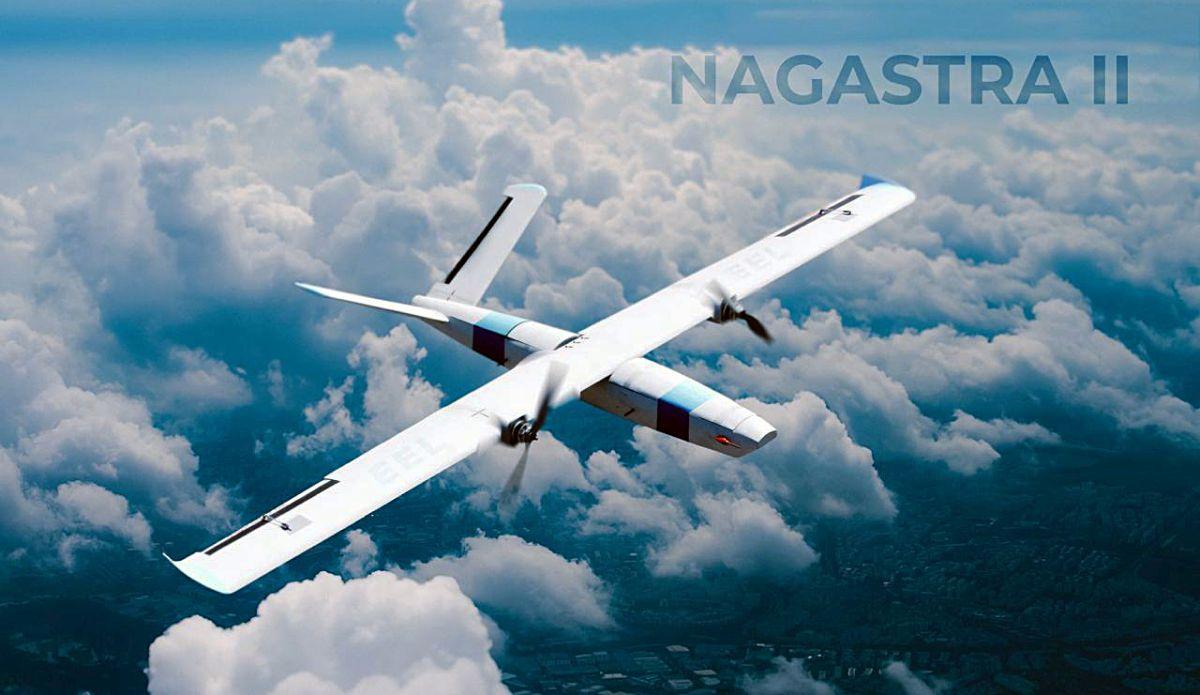
Imagine an explosive laden UAV loitering over the battlefield for 15 to 20 hours looking for a target.
Once it finds its kill, it simply folds its wings and becomes a high speed missile, destroying the target with pin-point accuracy.
Known as loitering munitions, they mimic the kamikaze tactics of World War II, but with precision and automation.
Use of UAVs in direct firing offensive roles appears to be the flavour of new conflicts. They carry long range ammunition to fire at strategic targets deep inside enemy territory.
One of the defining moments during the Russia-Ukraine war was Ukraine's use of Bayraktar TB2 drones in the early stages of the war. These drones successfully targeted Russian tank columns, radar systems, and SAM sites.
Their success was both military and symbolic -- videos of these strikes became powerful tools of information warfare.
Drones specifically designed for military warfare may require a fair amount of time and money to be spent on their R&D.
The small drones used by adventure enthusiasts and photographers at weddings are now finding their way into the battlefield.
These are available off the shelf, are cheap and expendable, and can be used for various roles in conflict situations.
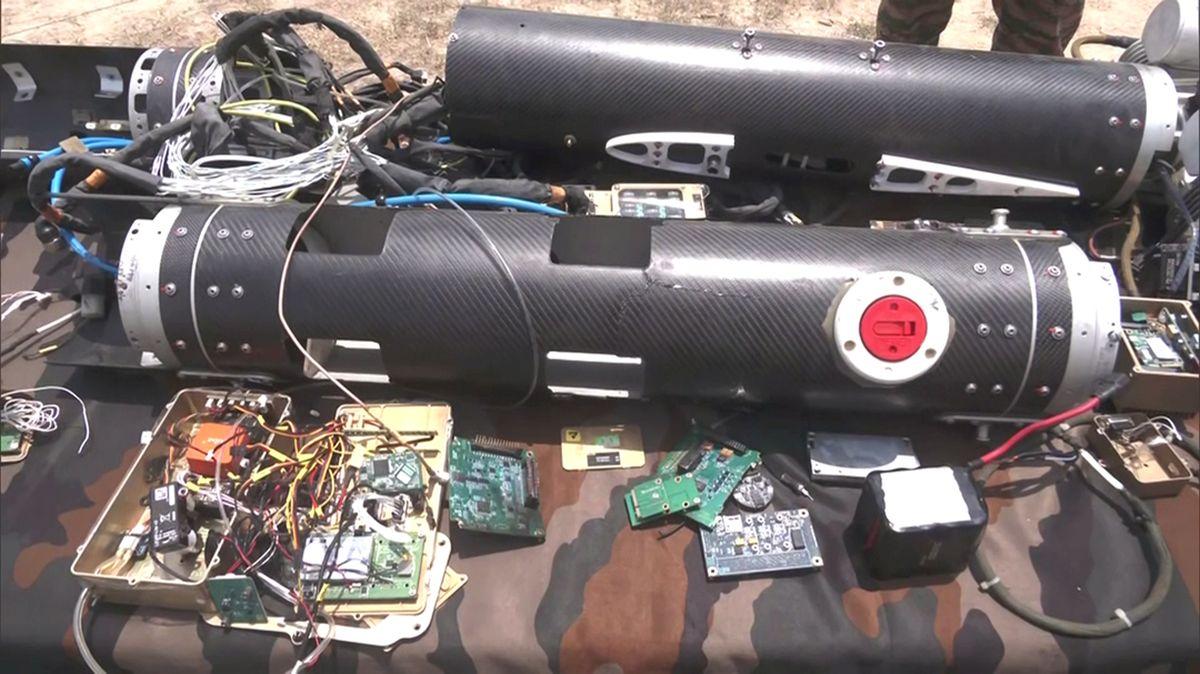
In the recent India Pakistan standoff, Pakistan is known to have used swarms of small Turkish drones to probe into our territory.
These had cameras and other sensors which looked around our vital military installations to gather information and pass it on in realtime to their base stations.
More than the 'terror effect' and its irritating value, these drones are small and difficult to target, and compel the enemy to open up their sensors.
Swarm attacks can also choke or overload air defence systems by their sheer volume.
The Future
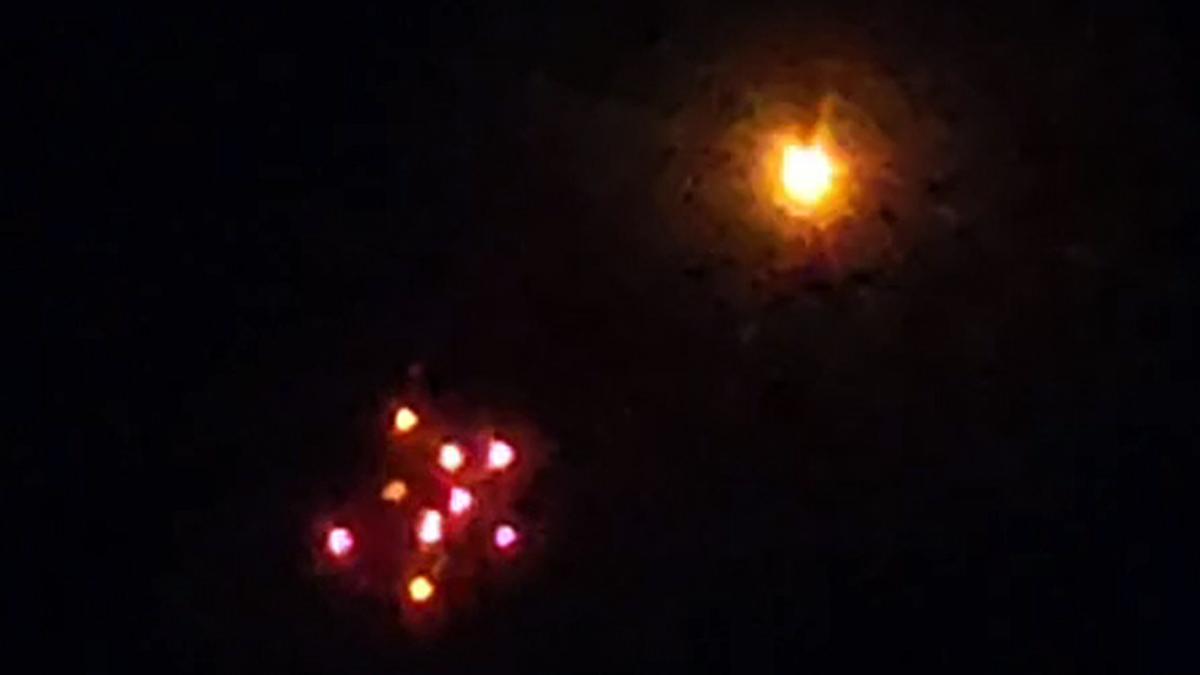
In future conflicts, 'swarm drone' technology is most likely to be used by adversaries in good measure.
Using AI and other integration tools, these drones will operate like multiple kites in the air, their strings controlled by a master drone or an aircraft operating well inside enemy lines.
These, predictably, are future tools of mass destruction in the making.
The Indian AMCA project also features a Tejas fighter controlling two or more drones that have taken off from different airfields; controlling them to take on multiple targets; the trials of which have already commenced.
Using expensive anti-aircraft munitions to neutralise small drones would be akin to using a hammer to kill a mosquito, a fact the commander in the field is well aware of.
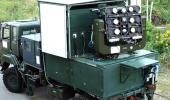
As we speak, all over the world, research is in full swing on effective and cheaper counter drone measures.
Remote control makes drone operations cheaper and safer. Moreover, it removes the pilot from the cockpit to the ground and uses AI for faster decision making.
Obviously, drones have become more important than the many other combat equipment available to the commander.
Micro/Nano drones are a reality today being used in anti-terrorism and policing duties in urban areas.
A drone as big as a beetle can get you pictures of what is happening behind closed doors and in terrorist hideouts in real time.
Just imagine the cost savings. Pilots are difficult and expensive to train and are non-expendable commodities.
Losing men and going through the ignominy of loss of morale would soon be a thing of the past.
The classic infantry man-to-man close combat, armoured columns going across vast swathes of enemy land etc, may not come into the picture since objectives/closure will be achieved much before we come to the stage of face to face fighting with conventional weapons.
It is not to say that boots on ground, sailors on ships and airmen in the sky will not be required at all.
They are important; and armies must be maintained for various other reasons. We also need them to project our gross national power.
One may argue that with the use of drones in warfare, we may be able to reduce body-bags.
This may not hold true with precision munitions able to achieve kills through small window openings many hundred kilometres away.
Drones will, at best, lead to an increase in 'no-contact' or 'standoff' battles.
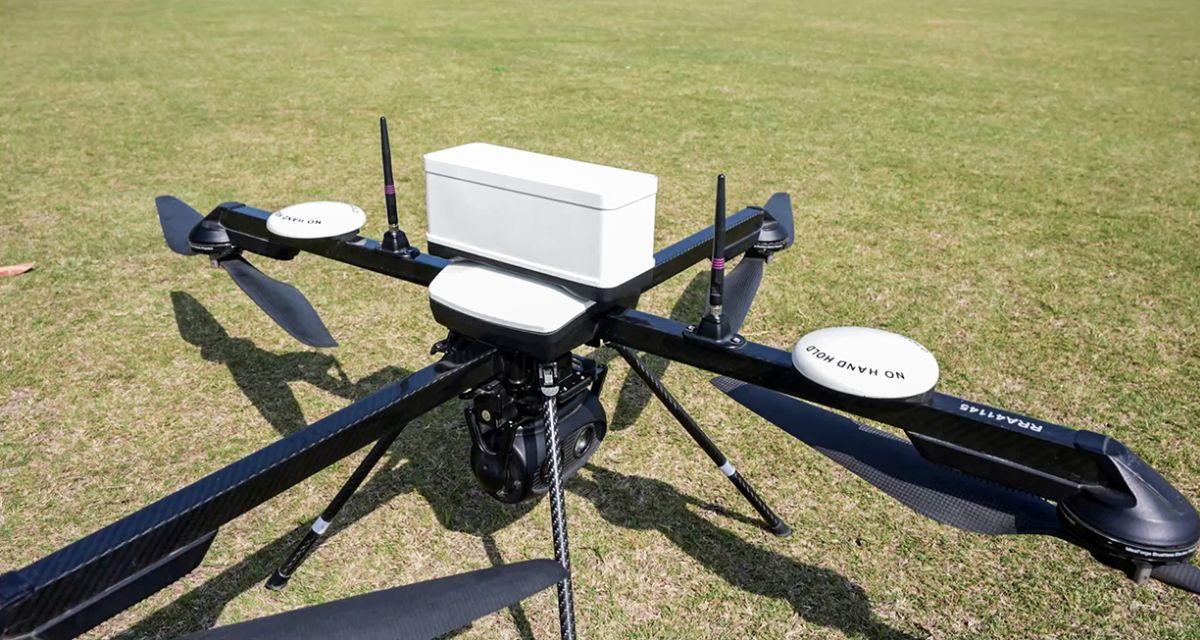
The use of drones in battle has added a new rung to the escalatory ladder.
Following political and diplomatic signalling, perception warfare through traditional and social media, and cyber operations, drone warfare has now emerged as the likely first step in the armed conflict phase of warfighting.
It would, therefore, be correct to say that, in future 'standoffs' that threaten to burst into an all-out conflict, drone technology and drone warfare will play a major role, helping nations to achieve 'virtual' victories.
It would be rather premature to analyse lessons learnt in the recent India-Pakistan conflict. What it has achieved for sure is that we have joined other nations in the quest for supremacy in drone technology, and hopefully, with the brains we have in our country, the outcomes will outclass the others in this game.
The foremost lesson for India today is to beef up its air defence to cater for multiple drone attacks.
As seen in the recent conflict, we have come a long way, but there's room for getting better.
We must develop a robust and almost impregnable air cover over ourselves.
Advanced AI and drone technology are a strategic asset capable of tipping the balance in modern warfare.
In some ways, drones are democratising air power -- leveling the playing field, even for countries without sophisticated air forces.
We need to invest wisely for our future.
A helicopter pilot who served the Indian Air Force for 35 years, IAF Veteran Air Commodore Nitin Sathe is a frequent contributor to Rediff.com.
You can read his earlier articles here.
Feature Presentation: Aslam Hunani/Rediff





 © 2026