
'I need 3-4 lakhs for the wedding. All prospective grooms demand a motorcycle which costs 1 to 1.5 lakhs, then you have to also give a bed, cupboard, utensils, fridge,' says Kamala, her wrinkled forehead furrowing with despair.
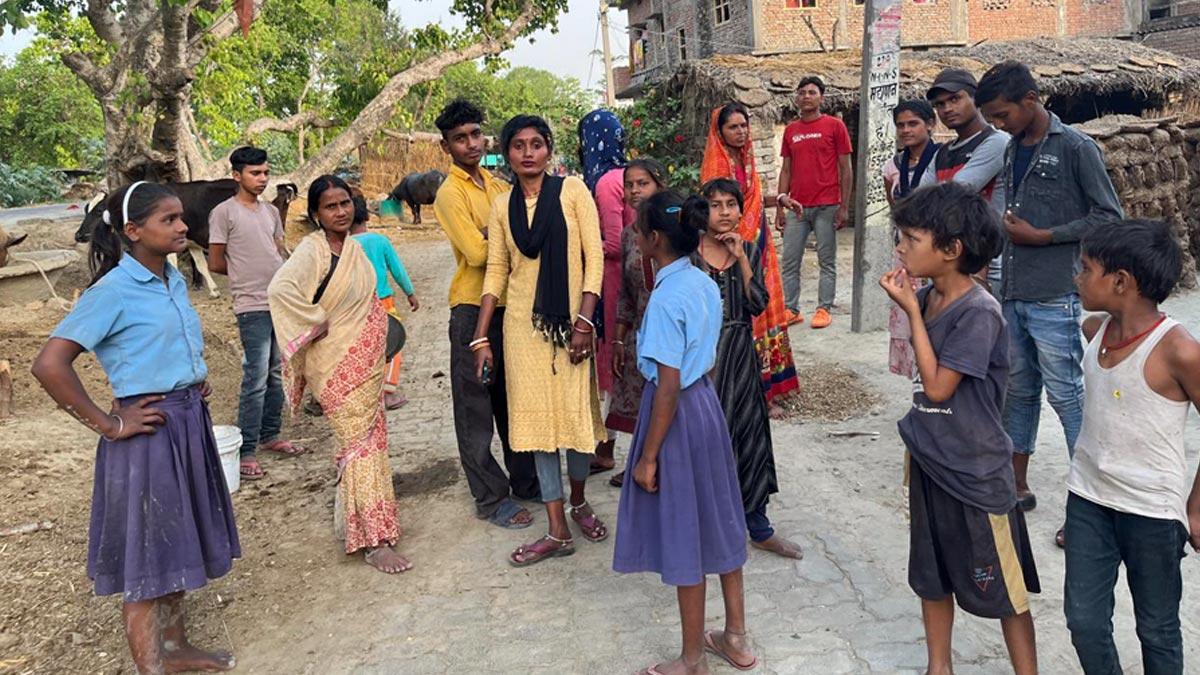
The story of an Indian election is not about netas, social media campaigns, mass rallies or screaming television debates -- it is about ordinary people who queue up to vote on polling day.
The common folk of Bharat ki mitti who keep the wheels of the nation turning -- farm labourers, migrant workers, sweepers, cooks, rickshaw pullers, garbage collectors, courier walas, street sellers... people from India's underbelly whose hard labour is the base on which the country stands every day.
It is these ordinary Indians who are the soul of the Indian election.
Their commitment to vote is admirable -- a duty they take most seriously.
"Hamara adhikar hai [It is our right]."
"Hamesha vote diye hai" [We vote in every election]."
"Doosre rajya mein kaam karte hai par vote dene aate hai [We come home to vote from other states where we are employed]."
Pose the question 'do you vote' to any adult in the hinterland and you are guaranteed these responses.
Uma Devi [name changed], a sweeper in Bihar's Saran district, is bewildered to be even asked this question.
"Vote to dena hi hai na? [Aren't we all supposed to vote?]", she retorts in response.
Like in many homes across rural Bihar, Uma Devi is the woman holding her household together.
Bihar Chief Minister Nitish Kumar's liquor ban policy -- implemented in 2016 -- has sadly failed in her homestead.
It was meant to protect women from domestic violence, safeguard household income and improve public health, but the underground illegal liquor business has plunged Uma Devi into an abyss of distress.
Her husband is employed by the government since 2005. A chronic alcoholic, he has put the family in perpetual debt.
"He earns a good salary. 60,000 per month, but 50,000 goes away in paying off money lenders. He started borrowing as soon as he began this job, back even when his salary was 5,000. It never stopped," says Uma Devi, the mother of four boys and a married daughter.
She cleans shops, private streets, school compounds, toilets and homes earning around Rs 25,000 a month. Her day begins at 6 am up till 2 pm and then resumes from 4 pm to 7 pm.
On the days she takes ill or is unable to show up for work, she loses a day's salary.
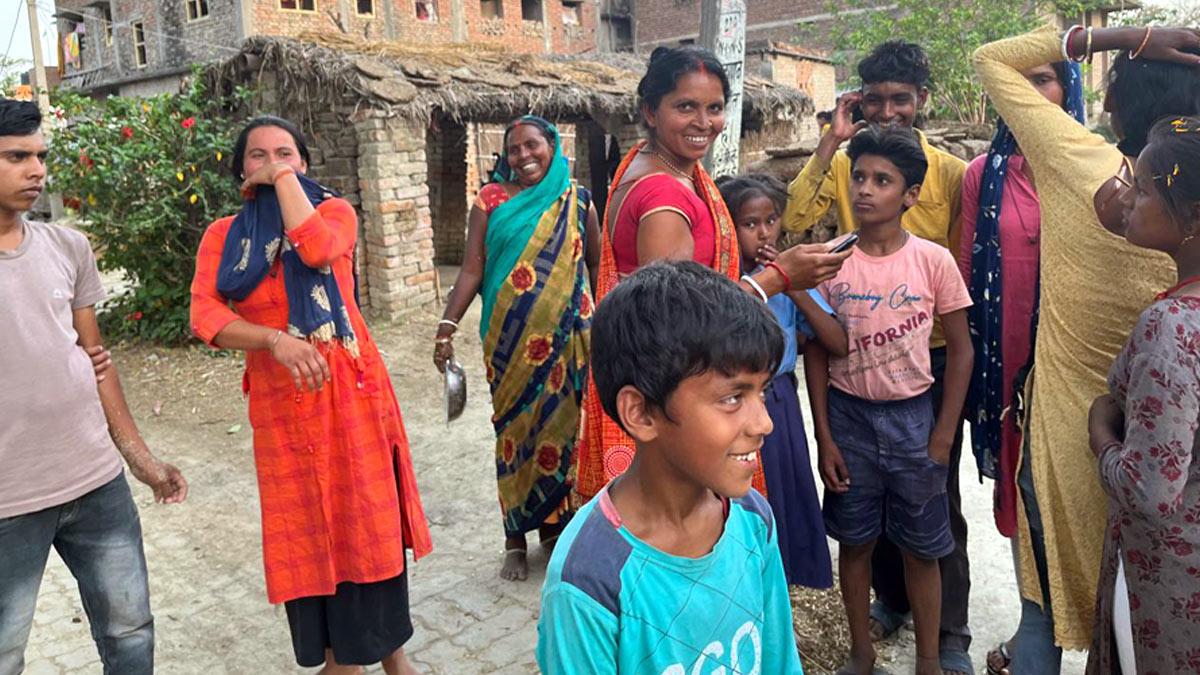
Alcohol has reduced him into a shadow of the man he was. Foul-mouthed, he routinely subjects family members -- wife, daughter-in-law and sons -- to physical and verbal abuse when his food is delayed or when he is short of money to buy a drink.
"We have no money to build a house and will have no place to live after he retires in 10 years. There is no way out of this debt trap he has landed us. It just keeps sucking us in deeper," says Uma Devi, her voice steady even in anguish.
Local money lenders readily give loans at steep interest rates; paying the compounding interest alone has broken the family. Repaying the principal amount seems an impossible distant dream.
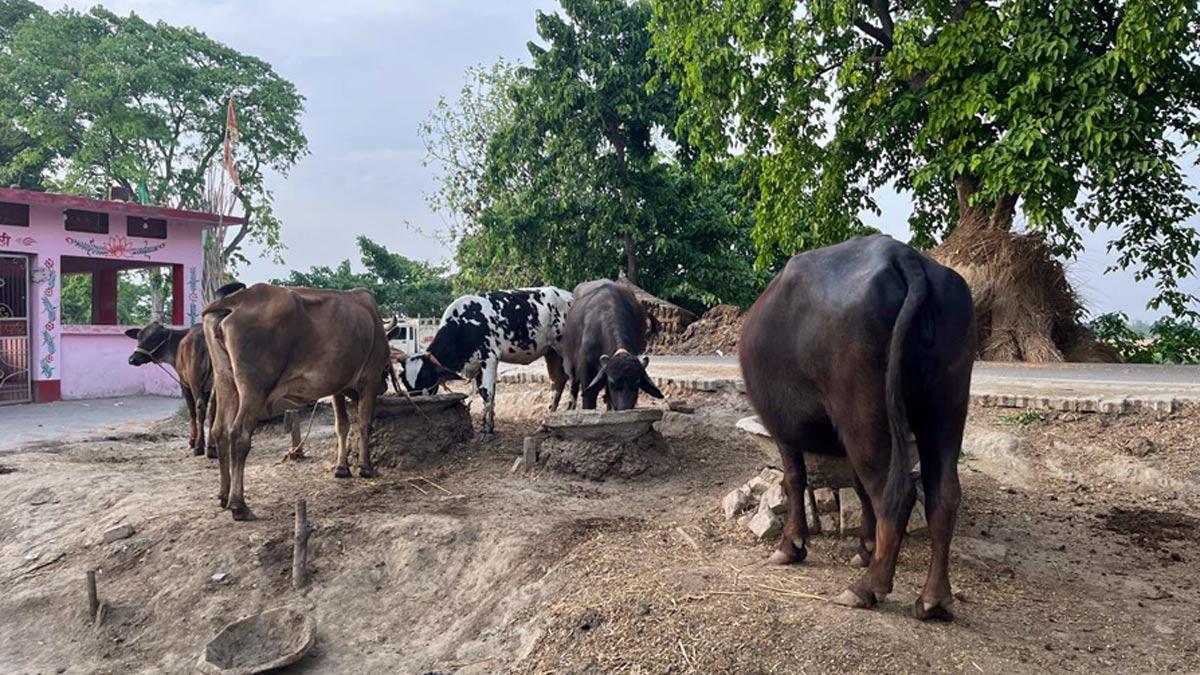
A few days away from voting day, Uma Devi says she has no expectation from the government for herself -- her expectation is for her younger boys who are enrolled in the government secondary school.
"What can I want? I have lived my life; most of it is behind me. All I want is that my sons should get jobs."
Saran district where Uma Devi lives is one of Bihar's hotspots for the sale of illegal liquor. Last year nearly 35 people were killed in Saran and neighbouring Siwan due to consuming poisonous alcohol.
In 2022, 73 died after consuming spurious liquor in the district in what was the worst incident since prohibition was enforced.
Aimed at improving the lives of women, prohibition prevented around 24 lakh daily and weekly instances of liqour consumption and 21 lakh cases of domestic violence according to The Lancet Regional Health - Southeast Asia journal.
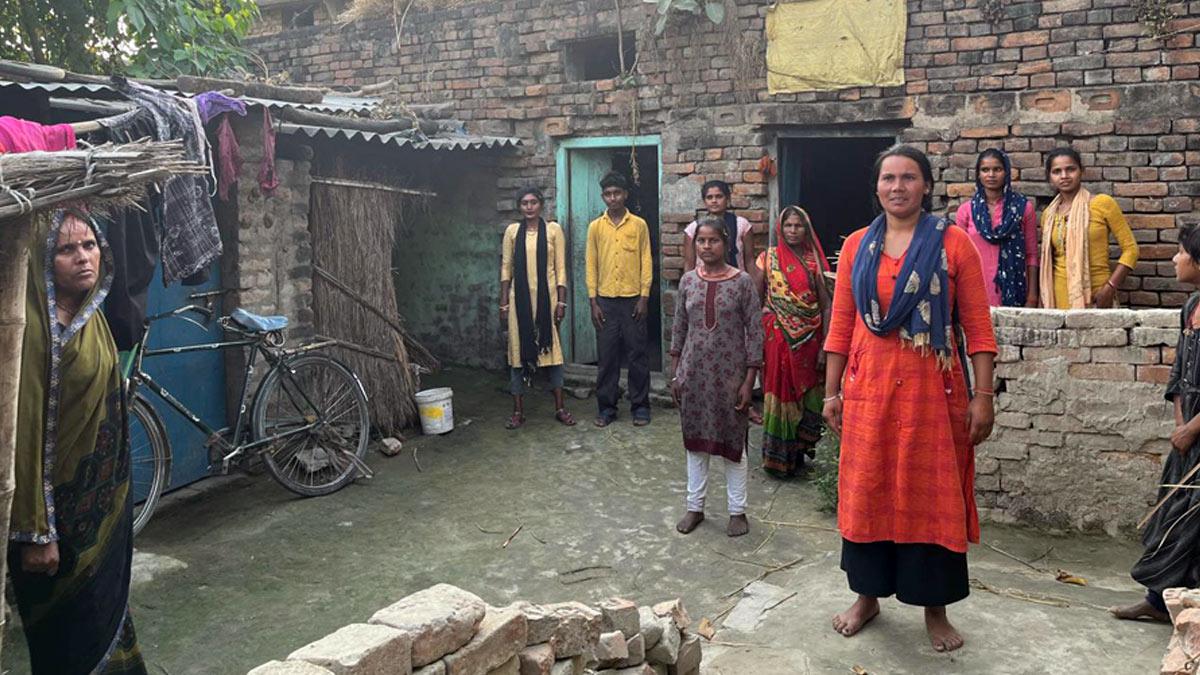
But women are still bearing the brunt of their husband's alcoholism.
Kamala's husband took to drink after she lost both her in-laws about a decade back.
"Illegal liquor is freely available. My husband used to often lie down intoxicated on the terrace. Sometimes he would drive me out of the house in drunken stupor," says the mother of two daughters, aged 16 and 20.
"As long as my in-laws were alive they held our home together. My husband worked in the fields with my father-in-law and we were able to get by on their earnings. But alcohol destroyed my husband and he stopped working after their death," says Kamala (name changed) who suffers from an advanced cataract condition that has impaired her vision.
Her friend got the operation done free of cost at the Ramakrishna Mission ashram, but Kamala hasn't gone yet.
Maybe she will in the winter, she says.
After her husband gave up working the fields, taking to drink, the burden of running the house was taken up by Kamala.
She found a job as a school helper, looking after little children from 7.30 am till 2.30 pm.
Just that morning she had taken her husband to the district hospital when he took ill. For a subsidised rate of just Rs 2, she was able to get him treated though it took the entire day to see the doctor.
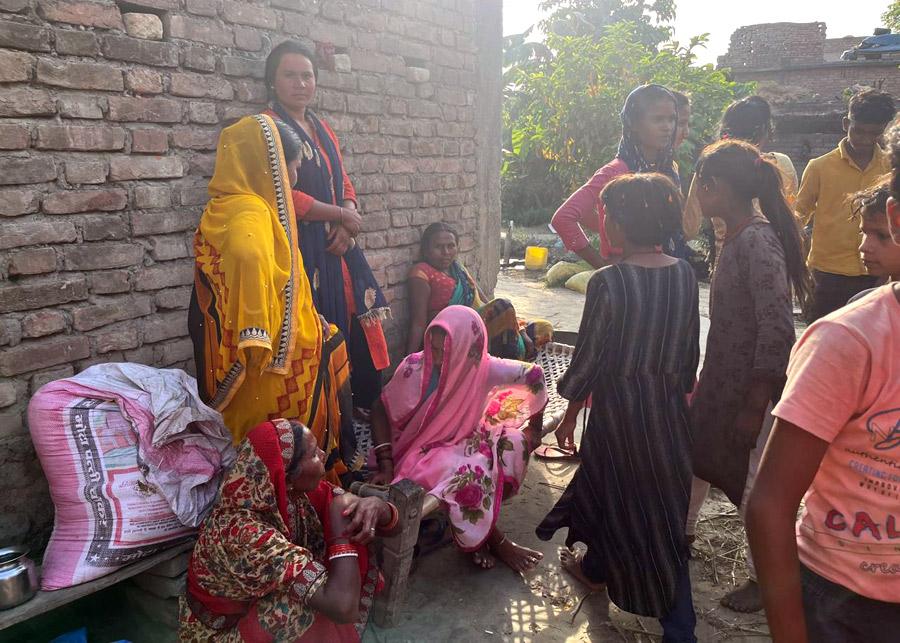
Three months ago, she told her husband she would no longer give him any money to drink, and stopped him for going to the local market from where he procured alcohol.
"I told him I will feed you, clothe you, provide you medicine and your khaini [tobacco], but I will not allow you to drink anymore. It is the drink that ruined him like it has so many others," says Kamala.
Three years ago, she received a subsidy of Rs 150,000 under the central government housing scheme for the economically weaker section. She took an additional private loan of 2 lakh and built a house. The loan has been repaid from her income as a school maid. Her elder daughter who also works in nearby houses contributes Rs 2,000 to the family income.
Her husband receives an old age pension of Rs 1,100.
Kamala has found some reprieve now that her husband has stopped drinking, but the stress of not having funds to marry off her daughter is a constant worry.
"I need 3-4 lakhs for the wedding. All prospective grooms demand a motorcycle which costs 1 to 1.5 lakhs, then you have to also give a bed, cupboard, utensils, fridge," says Kamala, her wrinkled forehead furrowing with despair.
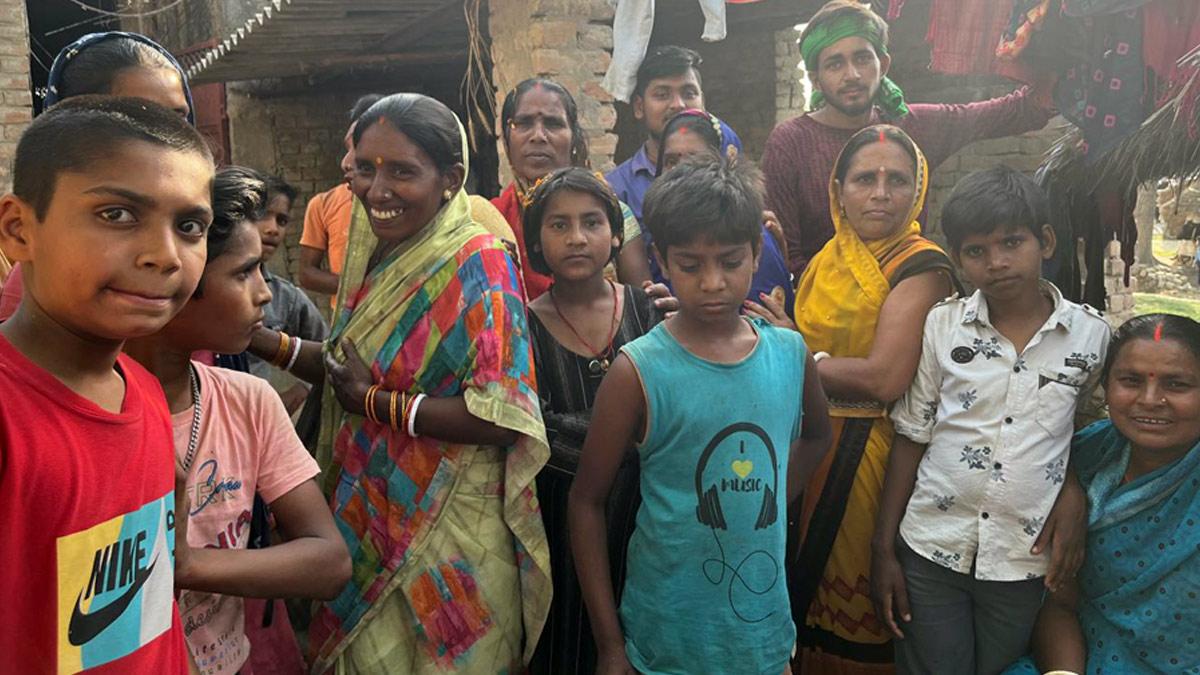
Dowry is illegal in India and Bihar led an aggressive campaign against dowry a few years ago, but dowry is entrenched in the social structure.
"I have not been able to get my daughter married because I don't have money. Lakshmiji [the goddess of wealth] has not showered her blessings on me," she says.
"My wish is that I can marry her and she can make a family life."
Now that voting day is near, a hand pump was fixed outside her house just a few days before the election was announced.
But all she wants is some assistance from the government for the poor for marrying their daughters.
"Netas only want our vote. What do they do care about our lot?" she asks.
Photographs curated by Anant Salvi/Rediff
Feature Presentation: Aslam Hunani/Rediff









 © 2025