
Shubhanshu Shukla's first seven days in space have combined science, ceremony, and moments of levity.
The name 'Shux'. Orbital flight number 634. Sleeping quarters: Dragon. And on the menu: Gajar Ka Halwa, Moong Dal Halwa, and Aam Ras.
These personal details, both technical and cultural, could soon take their place in history books as symbols of India's return to human spaceflight, after a 41-year break.
Orbiting some 400 kilometres above Earth's surface at a speed of 8 kilometres per second, completing 16 orbits a day, Shubhanshu Shukla -- 'Shux' to his crewmates -- is now firmly embedded in the rhythms of life aboard the International Space Station (ISS).
His first seven days on the Axiom Mission 4 (Ax-4) have combined science, ceremony, and moments of levity -- from critical biomedical research to lighthearted exchanges over Indian sweets with the ISS Expedition 73 crew, and a nationally significant conversation with Prime Minister Narendra Modi.
Shukla's journey began on June 25 with a launch from Nasa's Kennedy Space Center in Florida.
He flew aboard a SpaceX Falcon 9 rocket in a Dragon capsule, as part of Ax-4.
On June 26, the capsule docked with the ISS.
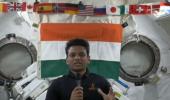
A few hours earlier, the crew participated in an in-flight event from orbit, during which Shukla -- one of the astronauts chosen for India's own human space flight programme, the Gaganyaan -- described his excitement at seeing Earth from above while flying over Europe.
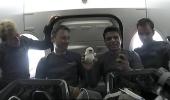
When Dragon finally latched onto the orbiting laboratory, Nasa's Expedition 73 team welcomed the Ax-4 crew with a ceremonial flourish.
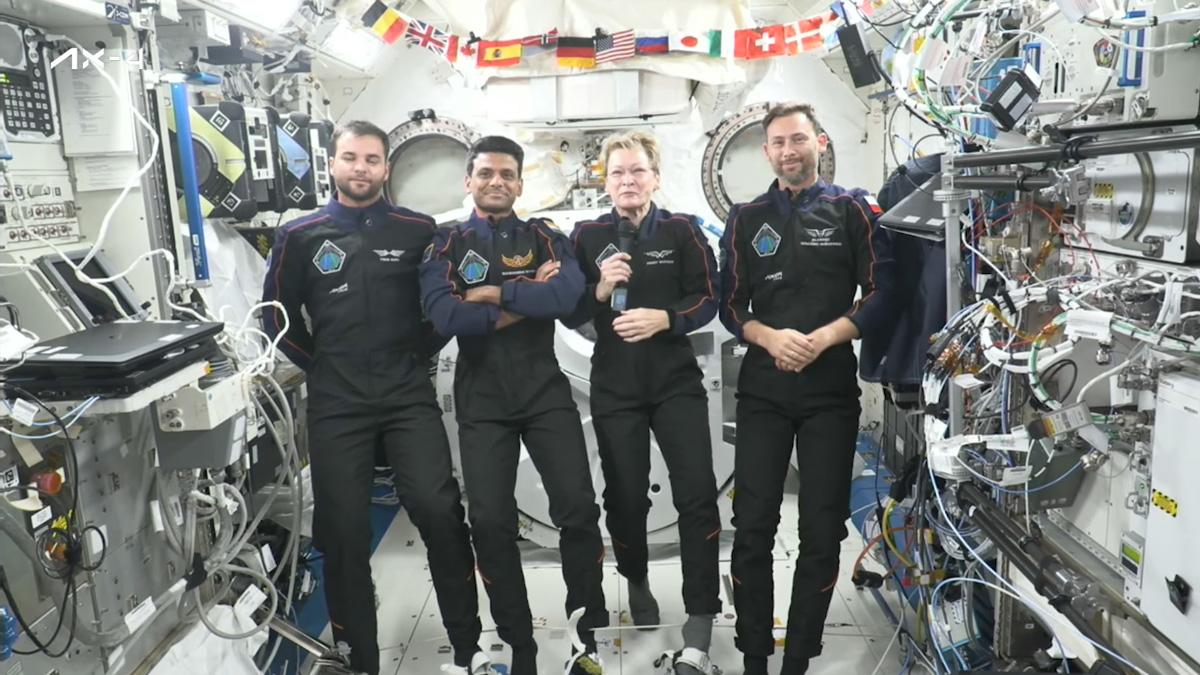
Ax-4 Commander Peggy Whitson presented astronaut lapel pins and assigned orbital flight numbers.
Shukla received the golden pin in recognition of having flown to space and was designated orbital flight number 634 -- making him the 634th person to travel around Earth in a spacecraft.
India's first astronaut, Rakesh Sharma, held flight number 138, while Kalpana Chawla, the first woman of Indian origin to fly to space, was 366.
After the ceremony, Shukla began adapting to life in microgravity.
He helped unpack cargo in Dragon and settled into his sleeping quarters there, while other crew members were assigned to modules such as Columbus and JEM (the Japanese Experiment Module).
In a gesture that added a personal and cultural touch to the mission, Shukla shared traditional Indian sweets -- Gajar Ka Halwa, Moong Dal Halwa and Aam Ras -- with the Expedition 73 crew.
By Day 3 of the mission, the focus shifted to crew integration and readiness.
Shukla participated in training on emergency procedures and handover protocols to ensure smooth coordination between the Ax-4 and Expedition 73 crews.
The team also transferred high-priority cargo, including safety gear and essential supplies, between Dragon and the ISS.
Shukla also began preparations for a suite of scientific studies: Seven microgravity experiments developed by Indian scientists, part of a larger set of 60 experiments during the mission.
On Day 4, Shukla commenced scientific operations by working in the Life Sciences Glovebox (LSG) on the myogenesis experiment, designed to explore the biological mechanisms behind skeletal muscle degradation in microgravity.
The research is aimed at developing targeted therapies that could mitigate muscle loss during long-duration space missions, while also informing treatment for muscle-degenerative conditions on Earth.
Later that day, Shukla participated in an online conversation with Modi, an interaction that freshened up the memories of Sharma's historic conversation with then prime minister Indira Gandhi in 1984.
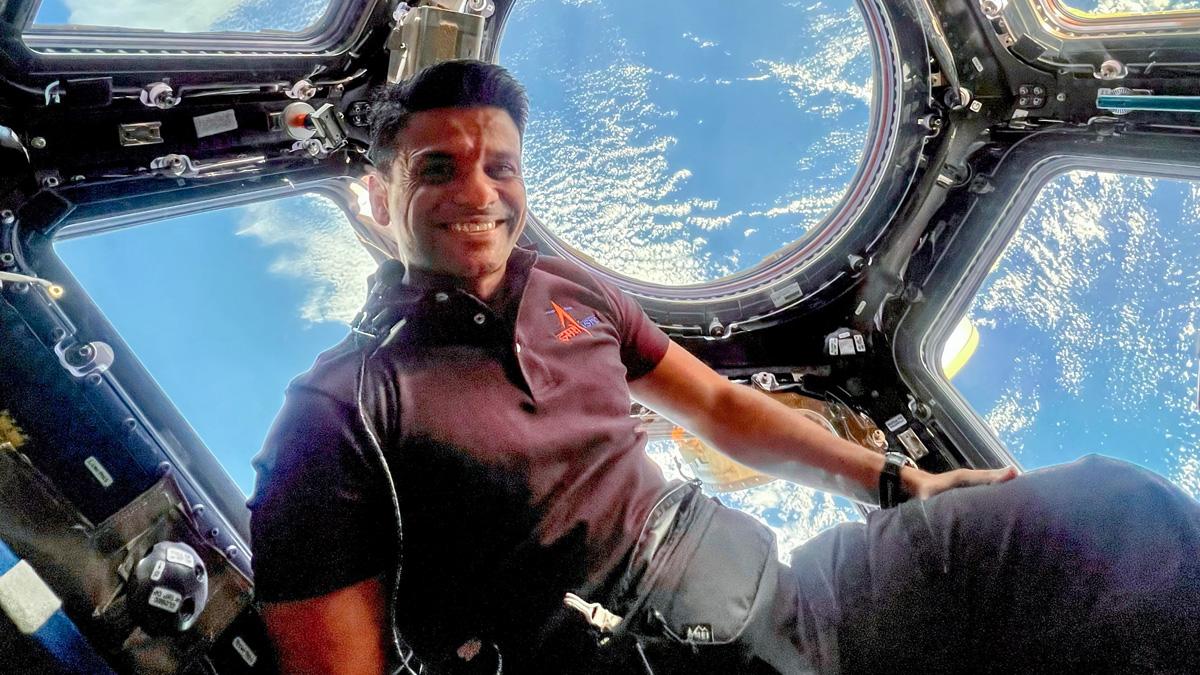
The photo-op from the panoramic observation module Cupola was the highlight of an action-packed third day for Shukla on the ISS and the fifth day of the mission.
His scientific focus for the day was the space microalgae experiment, in which he deployed sample bags and documented the growth of algae strains being studied for their potential use as sustainable food sources in long-term missions.
He also took part in the meuro-motion VR project, which involves astronauts wearing virtual reality headsets while performing cognitive tasks, with brain activity monitored via functional near-infrared spectroscopy (fNIRS).
The experiment aims to understand the effects of microgravity on cognitive and motor functions.
The sixth day of the mission involved continued work on the Myogenesis study.
Shukla once again operated in the LSG, gathering data to help scientists identify the molecular pathways responsible for muscle dysfunction in space.
The broader implications of the research extend beyond spaceflight, with the potential to improve therapies for ageing and immobility-related conditions on Earth.
On July 1 -- Day 7 -- Shukla turned his attention to the cyanobacteria growth experiment, led by the Indian Space Research Organisation.
This study compares two strains of photosynthetic bacteria to assess how they grow and function in microgravity.
These microbes could play a critical role in future life support systems by helping to recycle air and water aboard spacecraft.
That same day, Shukla also worked on the space microalgae investigation.
He deployed and stowed samples of three algae strains being grown in microgravity.
The aim is to compare their growth, metabolism, and genetic behaviour against algae cultivated on Earth.
The findings could contribute to the development of algae-based systems for food, fuel, and atmospheric recycling in space habitats.
As Shukla entered the eighth day of his 14-day mission, the significance of his presence on the ISS was already being felt: Shux had already become part of India's and the world's space story -- revolution by revolution.
Feature Presentation: Ashish Narsale/Rediff







 © 2025