
'When the BJP wanted the election to focus on 'ghuspathiya' and promises that look like pies in the sky, we forced them to talk about jobs, giving free 125 units of power, and addressing women's indebtedness.'
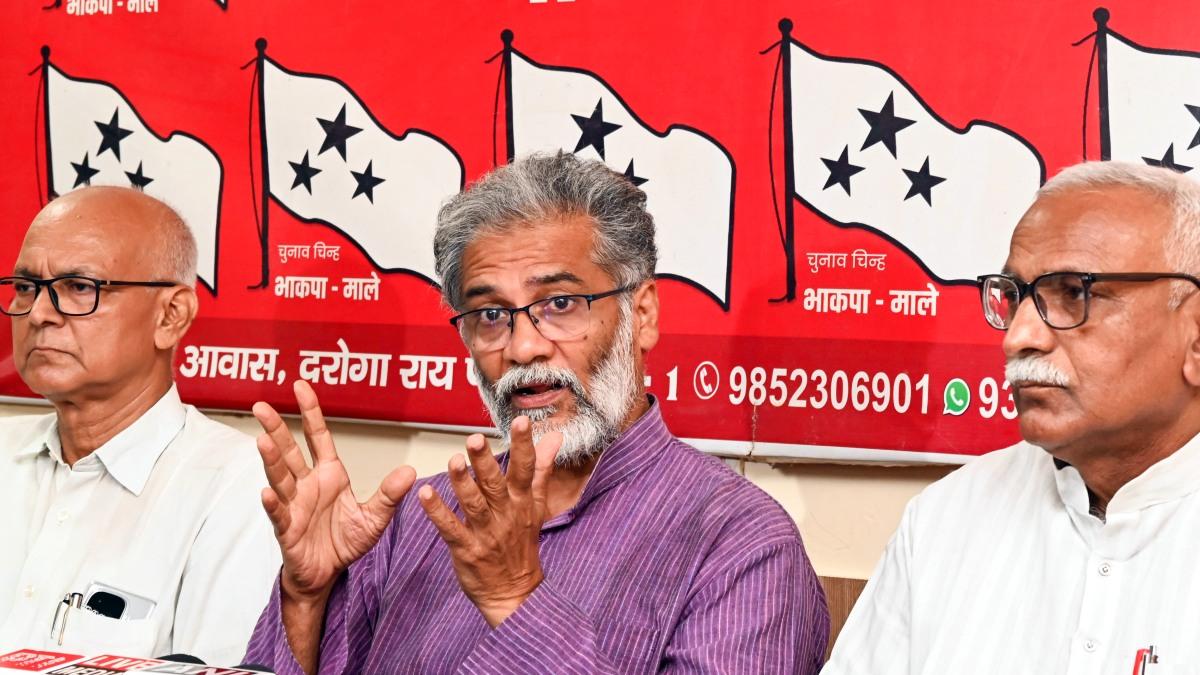
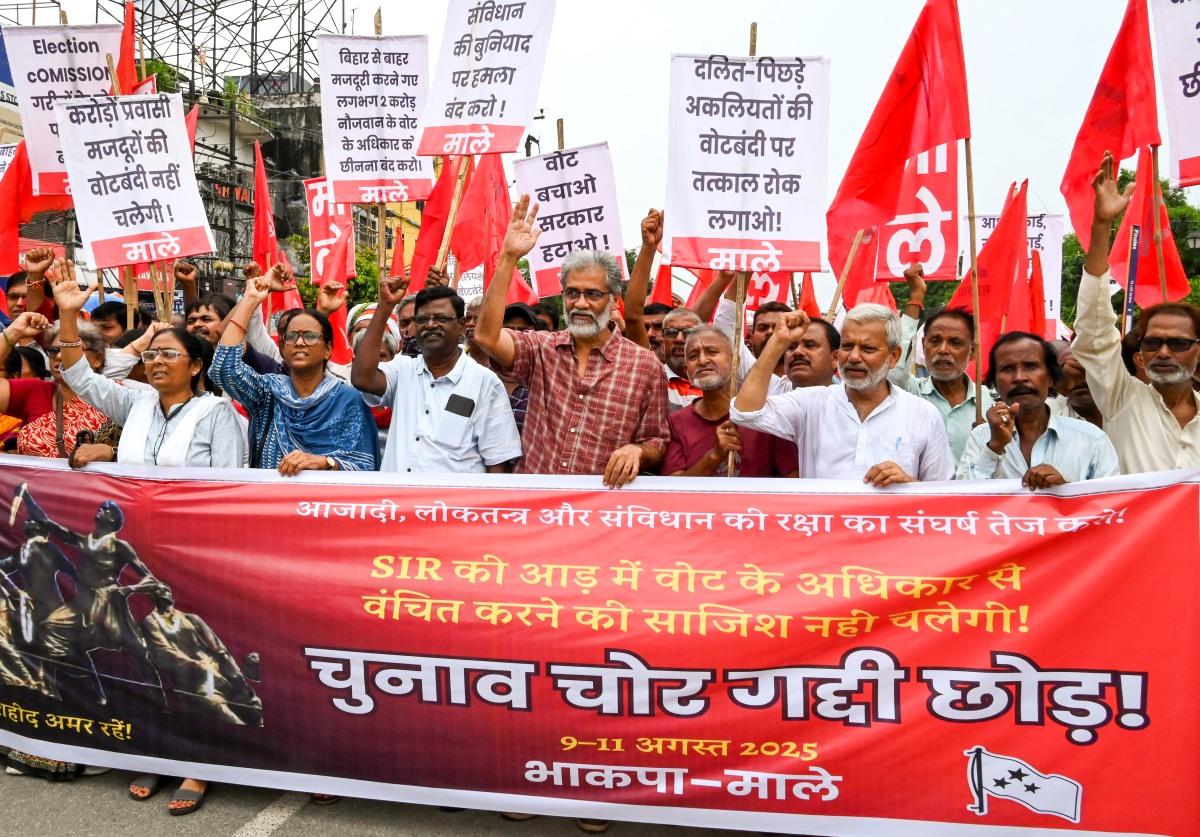
The 2025 Bihar Assembly polls are a pivotal test for the 'jhande par teen tara party, as 'Bhakapa Maalay' or 'Maalay, the Communist Party of India (Marxist Leninist) Liberation, has increasingly come to be known on the ground in the state.
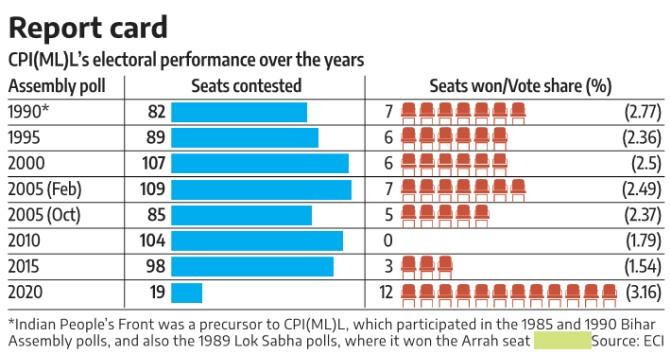
The CPI(ML)L, or simply 'ML', is not merely under pressure to repeat the impressive strike rate -- it won 12 of the 19 seats it contested -- it notched up in the 2020 assembly polls.
It also carries the weight of the expectations of the Left movement in the country as it marks the centenary year of the founding of the Communist Party of India in Kanpur a hundred years ago, especially when the Communists are currently at their weakest electorally.
A far tougher challenge, ML's 64-year-old chief Dipankar Bhattacharya tells Business Standard on his way to one of almost nine or 10 small meetings that he addresses on the campaign trail daily, is how his party's legislators and candidates are being "framed in fake cases" to ensure they do not contest.
ML has termed it a 'systematic attack on its struggle against feudal interests'.
In Bhorey, where its candidate Jitendra Paswan lost by a mere 300 votes in 2020, the party withdrew his candidature at the last minute after he was implicated in 'fake cases' and fielded former Jawaharlal Nehru University Students Union president Dhananjay instead.
The party alleges that its Agiaon (in Arrah) legislator Manoj Manzil was convicted in 'fake cases' and disqualified. The party's Shiv Prakash Ranjan won the seat in a by-poll in 2024 and is contesting again.
During the campaigning, Bhattacharya and ML candidates focus on reaching out to people on foot and addressing small public meetings.
"In elections, what matters is not the show of strength, which big rallies are, but persuasion, and whether you get the time to speak to people, have a conversation with them, and address questions in their minds so that they are equipped to fight the propaganda, Bhattacharya says, as his convoy, consisting of a mere two cars, reaches a Musahar tola in Babhanpura in the Phulwari assembly constituency, where the party's sitting legislator Gopal Ravidas is contesting again.
Unlike several other parties, the onus of organising resources, food for cadres, plastic chairs, a small shamiana, loudspeakers, and durries for the meeting, is on the ML's local committee, not the candidate.
Ravidas arrives at the meeting ground in a convoy of four vehicles, including a couple of security personnel that the government has provided him.
Local party leaders, such as 53-year-old Rajeshwar Mochi, who holds a post in the panchayat, complain about how Ravidas could have done more for the area with his Member of Legislative Assembly local area development fund.
The fact that the Janata Dal-United has fielded Shyam Rajak, who has won the seat on six occasions since 1995, has made things harder for Ravidas.
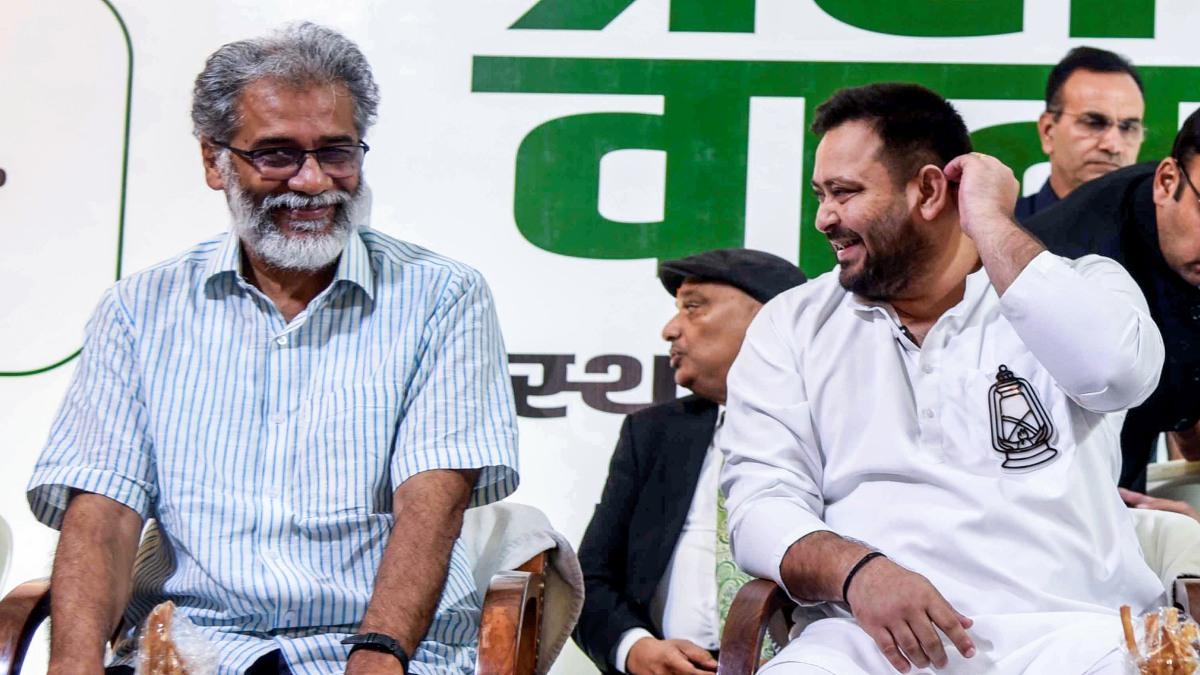
He looks forward to the arrival of Rashtriya Janata Dal's Misa Bharti to address the meeting. The RJD's support is crucial for Ravidas as it is for ML's other candidates.
ML sources concede that the party is facing anti-incumbency, not just in Phulwari but also in a couple of other seats it won the last time, but the party is confident of repeating its 2020 performance, having lost a couple of seats by thin margins.
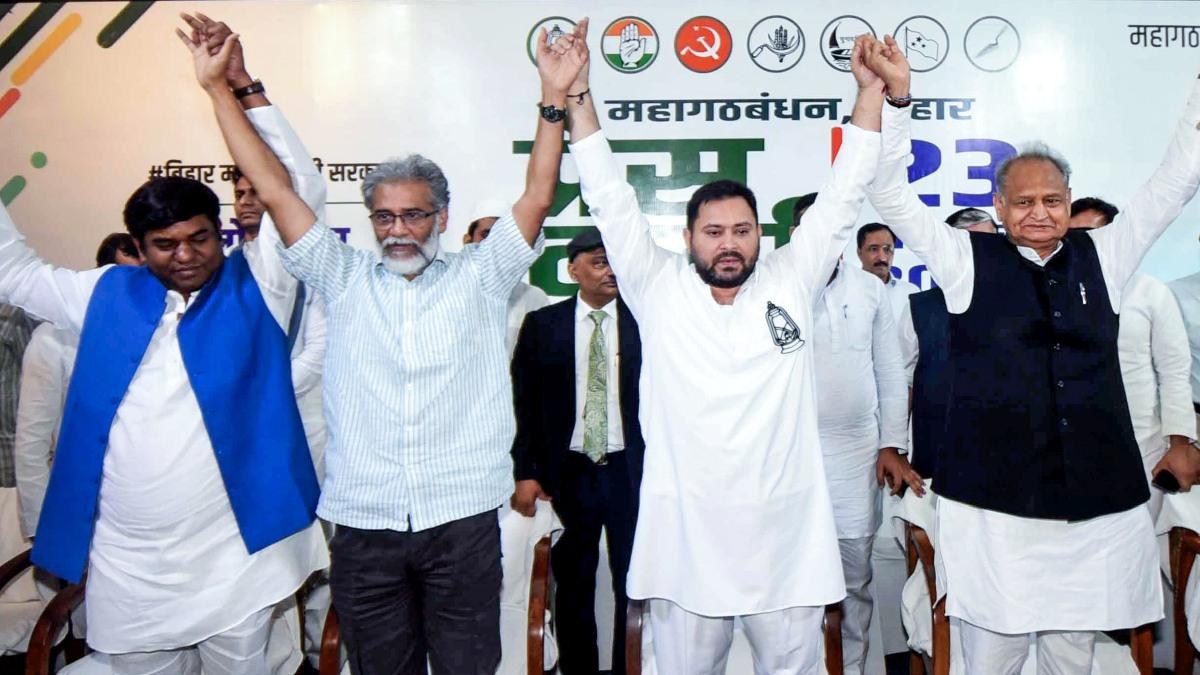
The ML followed its 2020 assembly poll performance by winning two of the three seats it contested in the 2024 Lok Sabha polls as a constituent of the INDIA bloc.
In the 2024 Jharkhand assembly polls, the ML won two of the four seats it contested as part of the INDIA bloc.
The ML's electoral success has revived hopes that it could replicate the appeal of the CPI in the undivided Bihar of the 1970s and 1980s.
In 1972, the CPI contested 55 seats, winning 35, and in 1985 it secured almost 9 per cent of the total votes polled.
But for Bhattacharya, his party has already succeeded in a significant respect. He said ML, and the INDIA bloc, have exposed the "flyover-bypass model" of development in Bihar and "set the agenda".
"When the Bharatiya Janata Party wanted the election to focus on 'ghuspathiya' and promises that look like pies in the sky, we have forced them to talk about jobs, giving free 125 units of power, and addressing women's indebtedness," he says, but bemoans the "design" to keep Bihar "poor".
At another public meeting at Kalyanpur, Bhattacharya asks the women among those gathered how many of them had received ₹10,000. Four hands go up, but others say they are confident of getting the money in the weeks to come.
"This is a desperate attempt by the BJP to address the frustration among women because of indebtedness (by microfinance institutions)," he says, conceding that it has had an impact on the women electorate.
At his public meetings, Bhattacharya urges women to pocket the ₹10,000 and continue to demand a loan waiver, flags the "maha jungle raj" as talks about the Mokama incident, and appeals to the people to defeat the BJP's "attempt at feudal restoration" in Bihar.
The ML's success in Bihar has much to do with its participation in movements fighting for the rights of the poorest, as well as the rootedness of its party leadership.
Bhattacharya continues to live out of his party's offices and the government bungalows of the party's legislators, which function as party offices.
Its candidates are a mix of commitment to the party's causes and products of movements.
The party has fielded candidates that are a mix of student leaders, people who have quit their government jobs, and those drawn from backward castes, especially Dalits and Economically Backward Classes (EBCs).
Qayamuddin Ansari, an EBC and ML's candidate from the Arrah seat, is the flavour of the election season after local media newspapers published how he had only ₹5,000 in his bank account when he filed his nomination.
The party's candidate from Pipra in Supaul, Anil Kumar, quit his government job as an agricultural scientist, while Dhananjay from Bhorey is pursuing a doctorate.
Madan Singh Chandravanshi from Tarari seat spent nine years in jail for his political activism, Sandeep Saurav from Paliganj, also a student leader, did not take up his government job to pursue political activism, while Diva Gautam, the party's candidate from Digha, quit her Bihar government job.
Bishwanath Chaudhary, the party's Rajgir candidate, is a retired chief engineer, and Ranjeet Kumar Ram from Kalyanpur spent months in jail in 2003 for waving black flags at the then Union home minister L K Advani.
The party also succeeded in, if only partially, getting the INDIA bloc's manifesto to address the issues raised in the Bandyopadhyay Commission report on sharecroppers and has proposed identifying and registering them.
Bhattacharya is confident that the Mahagathbandan will form the government and says the question of his party joining the government remains open.
He also makes a distinction between the BJP and Bihar Chief Minister Nitish Kumar in his public meetings, acknowledging the latter's role in contributing to social justice, but saying that Nitish has been reduced to a "signboard" and is no longer the "centre of power".
Along with Nitish Kumar, Bhattacharya had prepared the first draft of the putative INDIA bloc in February 2023, and he drops enough indications in his interactions that Bihar's politics could see more twists and turns after November 14.
Feature Presentation: Rajesh Alva/Rediff








 © 2025