
For both polishing unit operators and diamond merchants, the US is still the biggest export destination: Three in every 10 diamonds polished in India end up in American stores.
In Surat, 37-year-old Anant Patel currently earns more in a single day ferrying passengers in his cab through the city's tangled traffic than others do shaping diamonds, once considered too exorbitant.
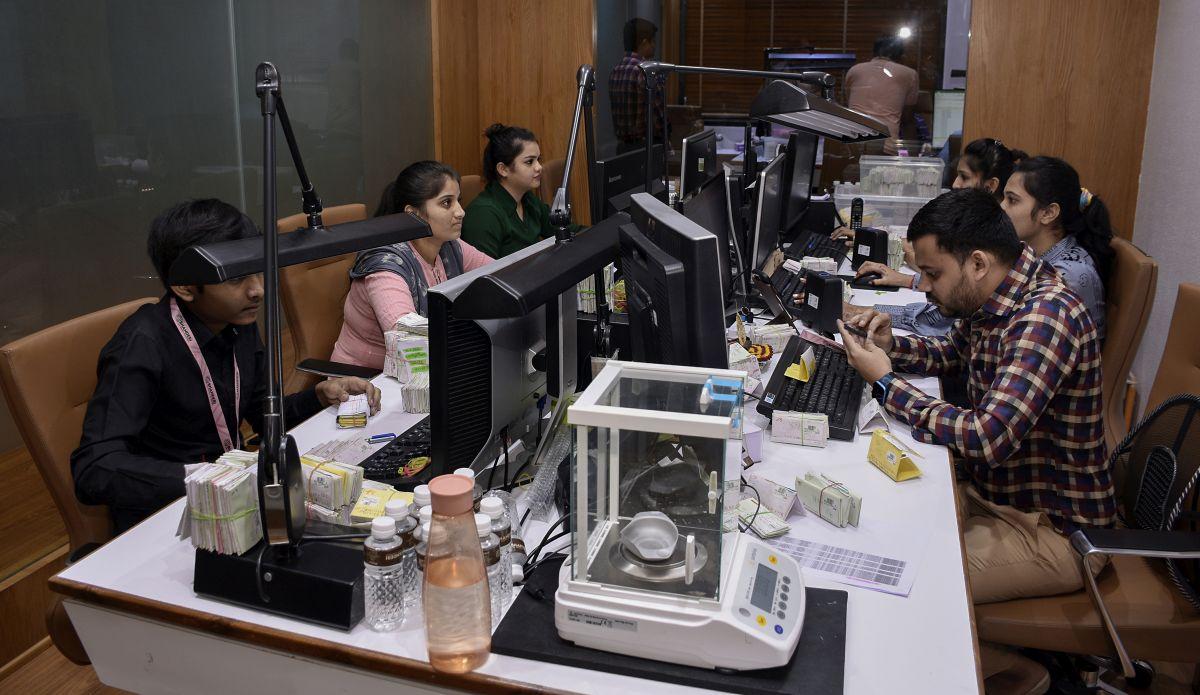
Patel knows the grind of diamond polishing well -- he once sat hunched over a table under harsh lights, coaxing brilliance from rough stones.
But he counts himself lucky for having walked away years ago. Now, as the weight of high US tariffs bears down on India's diamond capital, the future of the trade looks clouded.
His peers remain in the storm's eye, facing uncertainty over pay as demand for diamonds falters.
Operators of polishing units are drawing up cost-cutting plans after Diwali, battered by a collapse of more than 40 per cent in demand since the US slapped 50 per cent tariffs on Indian exports in August.
Salaries, they warn, may reduce by Rs 5,000 to Rs 10,000 a month, around 10 to 20 per cent of income for each worker.
"There is no other option than cutting monthly payouts," says a diamond polishing unit owner, who employs 50 people.
"We are already scaling down operations with so little work. We will not fire skilled workers since rehiring them is a major challenge."
Surat is the world's diamond finishing hub, where over nine in 10 stones are polished by nearly 800,000 artisans across around 5,000 units.
For both polishing unit operators and diamond merchants, the US is still the biggest export destination: Three in every 10 diamonds polished in India end up in American stores.
Following the double tariff whammy in August, the average effective American levy on gems and jewellery has climbed to 55 per cent.
For Indian gems and jewellery, base MFN rate ranges from 0 per cent to 7 per cent, depending on the specific item.
Gold eclipses diamonds
The domestic market cannot plug the gap, say merchants, as pricing pressures mount.
For Gauravbhai Patwa, who is running diamond operations for three decades, this is the "worst-ever" downturn. He has just secured an order for a necklace worth Rs 3.5 lakh.
"The necklace has Rs 2.5 lakh in gold, Rs 15,000 in labour, and only Rs 35,000 worth of diamonds," he says.
"You can't change gold prices. Labour charges are fixed. Even if I take a 100 per cent mark-up on diamonds, I could make just Rs 17,000."
This underscores the imbalance: Gold now outweighs diamonds.
Gold itself is on a tear: 10 grams of 24-carat currently cost around Rs 1.20 lakh. That volatility squeezes margins further.
"In Surat, you cannot mark up diamonds by 100 per cent because every second person deals in diamonds, offering a competitive price. Also, when the pricing quote was delivered to the client, gold was at Rs 110,000. Today, the same is over Rs 117,000. The profit goes down due to volatility in prices," he explains. (This report was filed before gold prices further increased.)
According to another operator, he crafted a gold ring studded with lab-grown diamonds. The price of diamonds was just Rs 910, the lowest he has seen in decades.
"It's like giving diamonds away for free, with costs covered only by gold and labour," he sighs.
Looking elsewhere
Exports tell a stark story. India's gems and diamonds brought in $28.67 billion globally in FY25, down 11 per cent from $32.29 billion a year earlier.
US demand alone slipped 6 per cent to $9.24 billion. The UAE and Hong Kong markets too shrank by 3 per cent and 32 per cent, respectively.
"The US is the main market. The high tariff is not sustainable," says Dinesh Navadia, chairman of the Indian Diamond Institute.
"Even if we try to absorb some of the tariff costs, liquidity is tight everywhere."
Yet Navadia sees a glimmer of hope: Lab-grown diamonds.
"It is a good thing that lab grown diamonds have entered the market, which can help the industry," he explains, adding, polishing lab-grown diamonds requires the same skill as natural stones.
"Demand for lab-grown diamonds has been increasing in India and that's why workers are not complaining that they aren't getting any jobs."
"Turnover is not as good as with natural stones," he concedes.
The industry is now exploring newer markets in the Gulf, Europe, and China. And for now, workers still have jobs but the question is how long Surat can keep its sparkle.
Feature Presentation: Aslam Hunani/Rediff










 © 2025