

The Lancet study revealed that the HbA1c test is erroneous in populations with anemia and other hemoglobin-related deficiencies in India.

For most doctors and patients, the gold standard for testing blood sugar was the HbA1c test.
This crucial test measures average blood sugar levels over the past two to three months by checking the percentage of hemoglobin coated with glucose.
A normal range is below 5.7 per cent, while prediabetes is 5.7 per cent to 6.4 per cent, and diabetes is greater than or equal 6.5 per cent.
HbA1c test reliability in India
However, a study published in the Lancet Regional Health: Southeast Asia on February 9, 2026, revealed spurious results in the HbA1c test in populations with anemia (endemic in India), hemo-globinopathies and red blood cell enzyme (G6PD) deficiency.
The Lancet, incidentally, is a prestigious peer-reviewed general medical journal founded in England.
Lancet study on diabetes diagnosis
The study led by Professor Anoop Misra, MD-Chairman, Fortis C-DOC Center of Excellence for Diabetes, Metabolic Diseases and Endocrinology, New Delhi, questioned the reliance on HbA1c as the sole monitoring tool for Type 2 diabetes in South Asia.
Other co-authors included Dr Shashank R Joshi, Department of Endocrinology, Joshi Clinic, Mumbai; Dr Shambo Samrat Samajdar, Department of Out-Patient Clinic, Diabetes and Allergy-Asthma Therapeutics Specialty Clinic, Kolkata and Dr Naval K Vikram, MD, Professor of Medicine, All Indian Institute of Medical Sciences, New Delhi.
Anemia impact on HbA1c results
The reason this test is now seen as unreliable is because it primarily reflects the glycation (attachment of sugar to a protein) of hemoglobin.
Therefore, any condition that affects the quantity, structure or lifespan of hemoglobin --such as anemia, hemoglobinopathies, or other red blood cell disorders -- can distort HbA1c values and lead to misleading results.
Hemoglobin disorders and G6PD deficiency
The study used publicly available data in MEDLINE (online biomedical literature), Scopus (a scientific database) and Google Scholar from January 1990 to October 2025 to select studies, randomised controlled trials, national survey reports and clinical guidelines for the final results.
Prediabetes misclassification risk
"Relying exclusively on HbA1c can result in misclassification of diabetes as some individuals may be diagnosed later than appropriate," Professor Anoop Misra says, "while others could be misdiagnosed."
Oral glucose tolerance test (OGTT) push
What makes this study important to India is that it has a high number of diabetics, estimated at over 100 million, and with over 136 million pre-diabetics.
A comprehensive analysis of 157 studies between 1995 and 2023 reported an overall anemia prevalence of 53 per cent among adults aged 19-59 years, with substantial regional variation -- 64 per cent in the northern region to 39 per cent in the north-east.
States such as Madhya Pradesh, Chhattisgarh and Maharashtra report higher incidence of these disorders, particularly among the tribal populations.
Continuous glucose monitoring (CGM)
In fact, the link between glucose regulation and hemoglobin glycation was established in 1976 and the HbA1c test became the gold standard for assessing glycemic control.
In 2010, it was also proposed for diagnosis of prediabetes and diabetes due to its convenience (no requirement for fasting blood).
Laboratory standardisation gaps in India
Despite this, the utility of HbA1c as a diagnostic and monitoring tool was questioned.
Glucose levels during the preceding 30 days account for approximately 50 per cent of the HbA1c value, while the rest 50 per cent reflects glycemia over the prior 90 to 120 days.
Data from the Diabetes Prevention Program showed that fasting glucose often under-represents glycemic burden, whereas postprandial glucose, particularly after lunch, correlates more closely with HbA1c.
This suggests that HbA1c may under- or over-estimate mean glucose levels.
One of the reasons for this discordance is variation in red blood cell lifespan and regulation of hemoglobin modification.
Such discordant results may lead to misclassification of diabetes status, especially in those with coexisting conditions like anemia.
There are many causes for such divergent results.
These include genetic blood disorders such as sickle cell disease and thalassemia, enzyme deficiency or anemia.
In some regions of India, over 50 per cent of the population has iron deficiency anemia.
Reliance on HbA1c alone could delay diagnosis by up to four years in men with such deficiency, increasing the risk of complications.
Even a recent blood transfusion can affect results as donor red blood cells may dilute or distort HbA1c.
In addition, poor and inconsistent quality control across laboratories can affect HbA1c accuracy.
A survey of 147 National Accreditation Board for Testing and Calibration Laboratories-accredited laboratories in India found that while glucose testing was universal, HbA1c testing was available in 87 per cent of labs, but poorly standardised.
Significant variation existed in test nomenclature, methodology, and analytical performance.
Several studies have shown a mismatch between HbA1c and glucose levels in India.
In a recent cross-sectional study of 1,120 Asian Indians in south India, there were far more cases of prediabetes (87.8 per cent) than HbA1c (45.4 per cent).
In 1,972 Asian Indian adults in north India, HbA1c under-diagnosed pre-diabetes compared with oral glucose tolerance test.
"Even in well-resourced urban hospitals," Dr Shashank Joshi says, "HbA1c readings can be influenced by red blood cell variations and inherited hemoglobin disorders.
"In rural and tribal areas, where anemia and red cell abnormalities are common, the discrepancies may be greater."
Interestingly, seasonal variations in HbA1c levels were also seen in Indians.
A study of 8,138 Indian patients found variations in HbA1c levels, with peaks during the monsoon (June-September) and the lowest levels in autumn (October-November).
Patients with well-controlled diabetes exhibited higher HbA1c levels during winter and the monsoon, whereas those with HbA1c greater than 6.5 per cent showed lower values during the monsoon and autumn.
The study found that among global studies, in most low- and middle-income regions, isolated elevated HbA1c was more common than isolated elevated fasting plasma glucose (FPG) levels.
In these regions, the use of FPG alone may delay diabetes diagnosis.
So what is the solution?
The study says that it would be best to integrate oral glucose tolerance test, self monitoring of blood glucose, and whenever possible, do continuous glucose monitoring to get accurate results of blood glucose levels.
The study recommends that in low-resource settings, oral glucose tolerance test (2 glucose values, one fasting and another 2 hours after ingesting 75 gm glucose) be used for diagnosis.
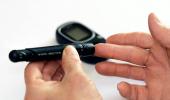
For self-monitoring, use glucose meters 2-3 times weekly combined with basic hematologic screening (hemoglobin, blood smear).
There is variance in various test costs, the study found.
While glucose meter cost around Rs 500-1500, glucose testing strips cost between Rs 15-25, basic complete blood count (CBC) in labs is between Rs 150-400, while an HbA1c test is between Rs 300-600.
The study has recommended that for diagnosis of prediabetes, standardised oral glucose tolerance test should remain the gold standard for diagnosis.
HbA1c may be used to corroborate this diagnosis but should not serve as the sole diagnostic tool.
The study has obviously not sugarcoated this illness.
Key Points
- A Lancet study warns that the HbA1c test can give misleading results in Indians with anemia, hemoglobin disorders and G6PD deficiency.
- Relying only on HbA1c may delay or wrongly classify diabetes and prediabetes in India.
- India’s high burden of anemia makes HbA1c less reliable for a large section of the population.
- The study recommends using oral glucose tolerance test (OGTT) and glucose monitoring along with HbA1c, not HbA1c alone.
- Poor standardisation of HbA1c testing across Indian laboratories further affects accuracy.
Shobha John is a senior journalist.
Feature Presentation: Ashish Narsale/Rediff









 © 2026