
Now a multi-dimensional rate structure has been created for CGHS cardholders in all categories based on four different parameters, with semi-private rooms forming the base for package rates.
In a first major revamp since 2014, the Union health ministry has announced revised rates for nearly 2,000 medical procedures under the Central Government Health Services (CGHS) scheme. These rates come into effect from October 13.
They have been rationalised based on accreditation status, hospital type, city classification and ward entitlement. This was not the case earlier. It comes at a time when the scheme's working has been a point of contention for both patients and hospitals.
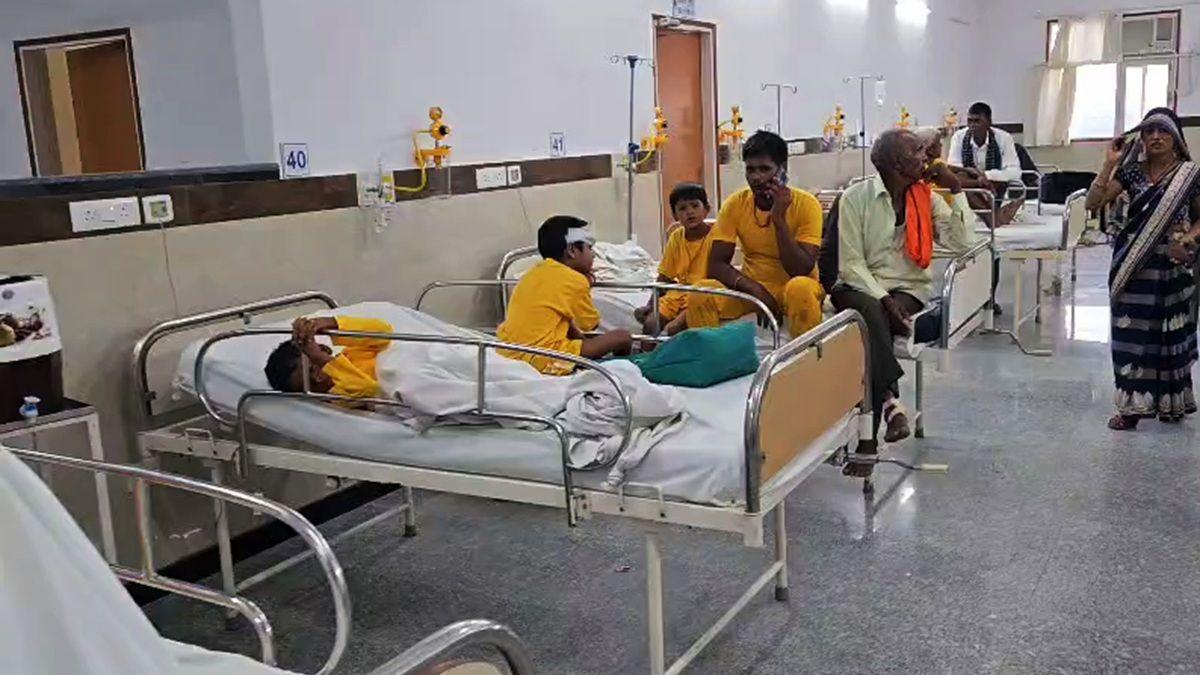
A major complaint from central government employees and pensioners has been that CGHS-empanelled hospitals often refuse to provide cashless treatment.
"Patients were forced to pay from their pocket for treatment and had to wait for months for reimbursement," a CGHS beneficiary said.
On the other hand, hospitals argued that the government-set package rates were outdated, low and did not account for the rise in medical inflation since 2014.
While small updates in the rate list were being done from time to time, the industry had regularly asked the government to update the CGHS rates in line with medical inflation.
Under the earlier system, CGHS rates were primarily different for National Accreditation Board for Hospitals (NABH) and non-NABH accredited hospitals.
Consultation fees were uniformly set for both outpatient department (OPD) and inpatient department (IPD) consultations across cities and wards.
Now, a multi-dimensional rate structure has been created based on four different parameters. The revised framework applies to CGHS cardholders in all categories, with semi-private rooms forming the base for package rates.
"If the beneficiary is entitled to a general ward, there will be a decrease of 5 per cent in the rates. However, for private ward entitlement, there will be an increase of 5 per cent," the office memorandum dated October 5 stated.
Adding another layer, any consultation at NABH or NABL accredited healthcare organisations (HCOs) would be treated at a standard base rate and rates in non-accredited HCOs will be 15 per cent less than the rate for accredited hospitals.
On the other hand, any consultation in CGHS empanelled super speciality hospitals would see a 15 per cent higher rate.
Similarly, rates would also differ for CGHS-empanelled hospitals in Tier I, II and III cities.
While facilities in Tier-I cities would have standard base rates, procedures in hospitals in Tier II and III cities will have a 10 per cent and 20 per cent lower rates, respectively, than Tier-I cities. For example, a procedure costing Rs 1,000 in a NABH-accredited facility of a Tier-I city would cost Rs 850 in a non-NABH facility in the same city.
The same procedure in a Tier-II city NABH facility would cost Rs 900, while the price would be Rs 800 in a Tier-III NABH facility.
While such variations have been introduced in the revamped version, rates for radiotherapy, investigations, day-care procedures, and minor procedures not requiring admission would remain uniform, irrespective of ward entitlement.
CGHS primarily caters to central government employees and pensioners, as well as their dependent family members. As of October 5, around 4.26 million beneficiaries are covered by CGHS in 80 cities all over India, according to data from the CGHS portal.
CGHS hospitals must accept new rates by Oct 13.
The Union health ministry has asked all healthcare organisations to submit an undertaking confirming acceptance of the terms and conditions of new rates by October 13.
In case a healthcare organisation fails to submit the undertaking, it shall be deemed to be de-panelled, the ministry said. All existing memoranda of agreements (MoAs) executed with private empanelled hospitals will cease to be valid from October 13.
As a result, all healthcare organisations would be required to seek fresh empanelment through the revised Hospital Engagement Module on the CGHS portal.







 © 2025