


Proposals for acquiring military weapons and equipment worth over ₹3.84 trillion were approved by the government in calendar year 2025, the ministry of defence (MoD) said.
These capital acquisition proposals were approved by the Defence Acquisition Council (DAC), chaired by Defence Minister Rajnath Singh, 'to enhance the country's defence readiness, with a focus on modernisation through indigenisation', said the MoD.

The largest tranche came in July, in the wake of Operation Sindoor, with the DAC according acceptance of necessity (AoN) -- or initial approval -- for 10 capital acquisition proposals amounting to approximately ₹1.05 trillion through indigenous sourcing.
These included proposals for armoured recovery vehicles, electronic warfare systems, an integrated common inventory management system for the tri-services, and surface-to-air missiles.
'These procurements will provide higher mobility, more effective air defence, improved supply chain management, and will augment the operational preparedness of the armed forces,' said the MoD.
AoNs were also accorded for the procurement of moored mines, mine countermeasure vessels, a super rapid gun mount, and submersible autonomous vessels.
Two tranches, each worth about ₹79,000 crore, were approved in December and October.

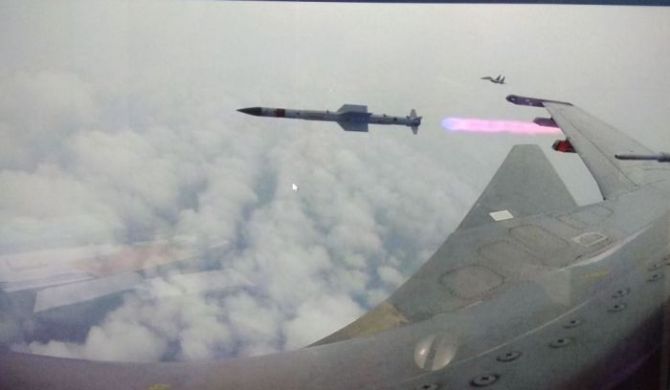
Proposals cleared in December included loiter munition systems for artillery regiments, low-level lightweight radars, long-range guided rocket ammunition for the Pinaka multiple launch rocket system, and an integrated drone detection and interdiction system for the Indian Army; bollard pull tugs, high-frequency software-defined radio manpacks, and the leasing of high-altitude long-range remotely piloted aircraft systems for the Indian Navy; and an automatic take-off and landing recording system, indigenous Astra Mk-II missiles, mission simulators, and Israeli SPICE-1000 long-range guidance kits for the Indian Air Force.
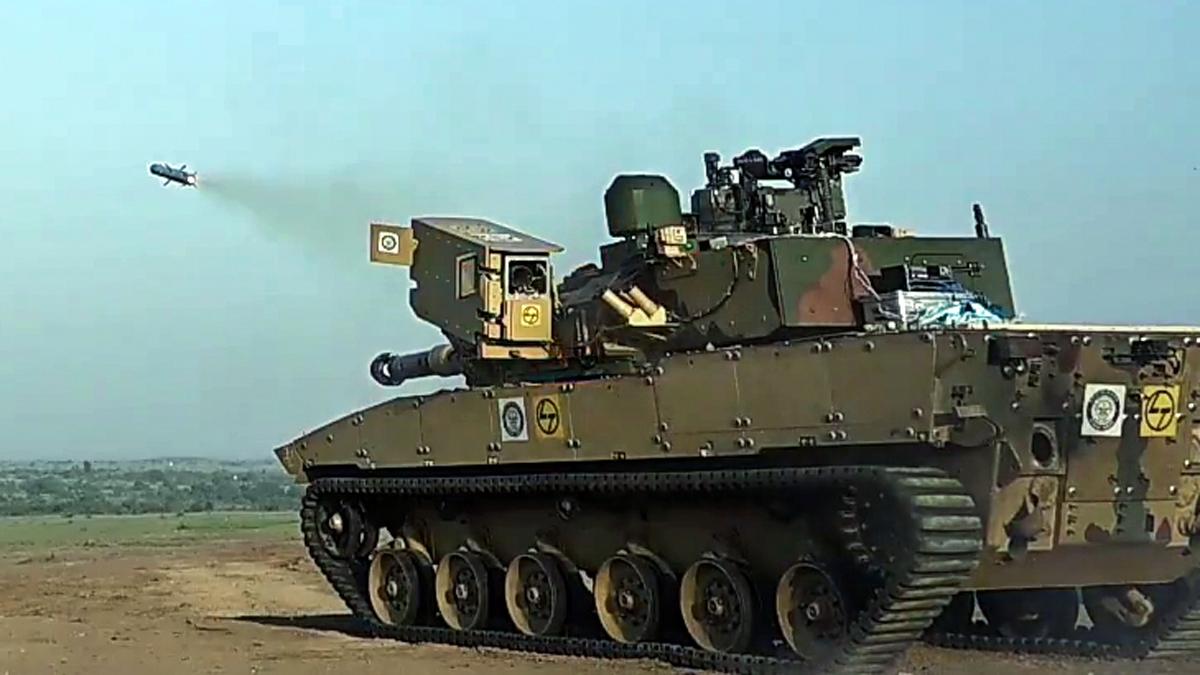
Proposals cleared in October included the indigenous Nag missile system Mk-II and a ground-based mobile ELINT system for the Indian Army; landing platform docks, a 30 mm naval surface gun, advanced lightweight torpedoes, an electro-optical infrared search and track system, and smart ammunition for the Indian Navy; and a collaborative long-range target saturation and destruction system, along with other proposals, for the Indian Air Force.

In August, the DAC cleared various proposals amounting to a total cost of about ₹67,000 crore. These included a thermal imager-based driver night sight for BMP infantry combat vehicles for the Indian Army; compact autonomous surface craft, the BrahMos fire control system and launchers, and the upgradation of the Barak-1 point defence missile system for the Indian Navy; mountain radars and the upgradation of the Saksham/Spyder weapon system for the Indian Air Force; and medium-altitude long-endurance remotely piloted aircraft for the three services.
This tranche also covered the sustenance of the C-17 and C-130J transport aircraft fleets, along with a comprehensive annual maintenance contract for the Russian-origin S-400 long-range air defence missile system.
The first tranche of approvals came in March, when the DAC gave its nod for eight capital acquisition proposals amounting to over ₹54,000 crore.
These included more powerful engines for the Indian Army's frontline Russian-origin T-90 tanks, indigenous torpedoes for the Indian Navy, and airborne early warning and control aircraft for the IAF.
While AoNs represent only the initial step in the acquisition process, the speed with which they have been accorded and the scale of the approvals signal an emphasis on accelerating the modernisation of the armed forces, particularly in the aftermath of Operation Sindoor and amid a turbulent global geopolitical environment.
Bhaswar Kumar adds:
Contracts worth ₹1.82 trillion have been signed in nine months through December to acquire weapons and equipment for the armed forces, the government said on Thursday.
During the period under review, till the third quarter ending December, 80 per cent -- approximately ₹1.2 trillion -- of the ₹1.49 trillion capital acquisition, or modernisation, budget for the financial year 2026 (FY26) had also been utilised.
This puts the MoD on track to match — or potentially exceed -- the record ₹2.1 trillion worth of contracts inked in FY25, and strengthens its case for doubling the rate of growth in the modernisation component of the defence allocation to 20 per cent in the upcoming Union Budget.
The modernisation budget finances the capital acquisition requirements of the army, navy and air force, covering new aircraft, ships, tanks, weapons, missiles, and other modernisation needs.
An MoD release on Thursday said that these capital contracts and expenditures were intended to ensure the 'modernisation of the armed forces', an imperative that has acquired greater significance following Operation Sindoor in May 2025 and the geopolitical turmoil in other parts of the world.
'The overall capital expenditure of the MoD has also reached up to 76 per cent, which includes expenditure on infrastructure, land, research and development, etc., in addition to capital acquisition,' said the MoD.
The total budgetary allocation for the MoD in FY26 stood at ₹6.81 trillion, of which ₹1.8 trillion -- accounting for over 26 per cent -- was earmarked for capital outlay on defence services. The armed forces' modernisation budget forms part of this capital outlay.
At an industry event in November, Defence Secretary Rajesh Kumar Singh had said the MoD would seek an increase of about 20 per cent in the modernisation component of the FY27 defence budget -- roughly double the usual 10 per cent increase seen in previous years. This could translate into a modernisation outlay of approximately ₹1.79 trillion in FY27.
Singh stated that he did not anticipate difficulties in securing such an allocation from the ministry of finance.








 © 2026