
The Galwan clashes indicate to the limitations in relations if they do not address border stability, points out Srikanth Kondapalli.
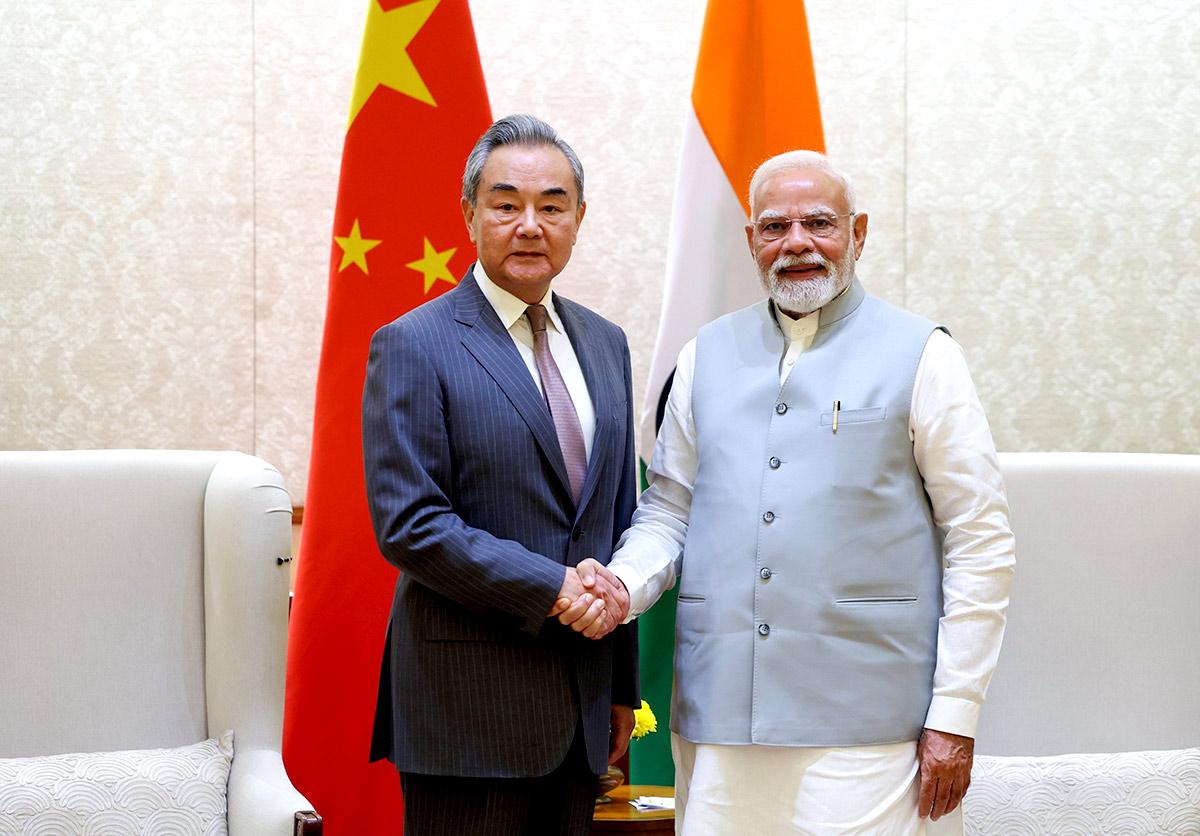
China's Foreign Minister Wang Yi's visit to New Delhi on August 18 to 19 has set the tone for future institutionalisation of bilateral relations.
This is a follow up to the two leaders in October last year at Kazan, directing the officials to mend fences.
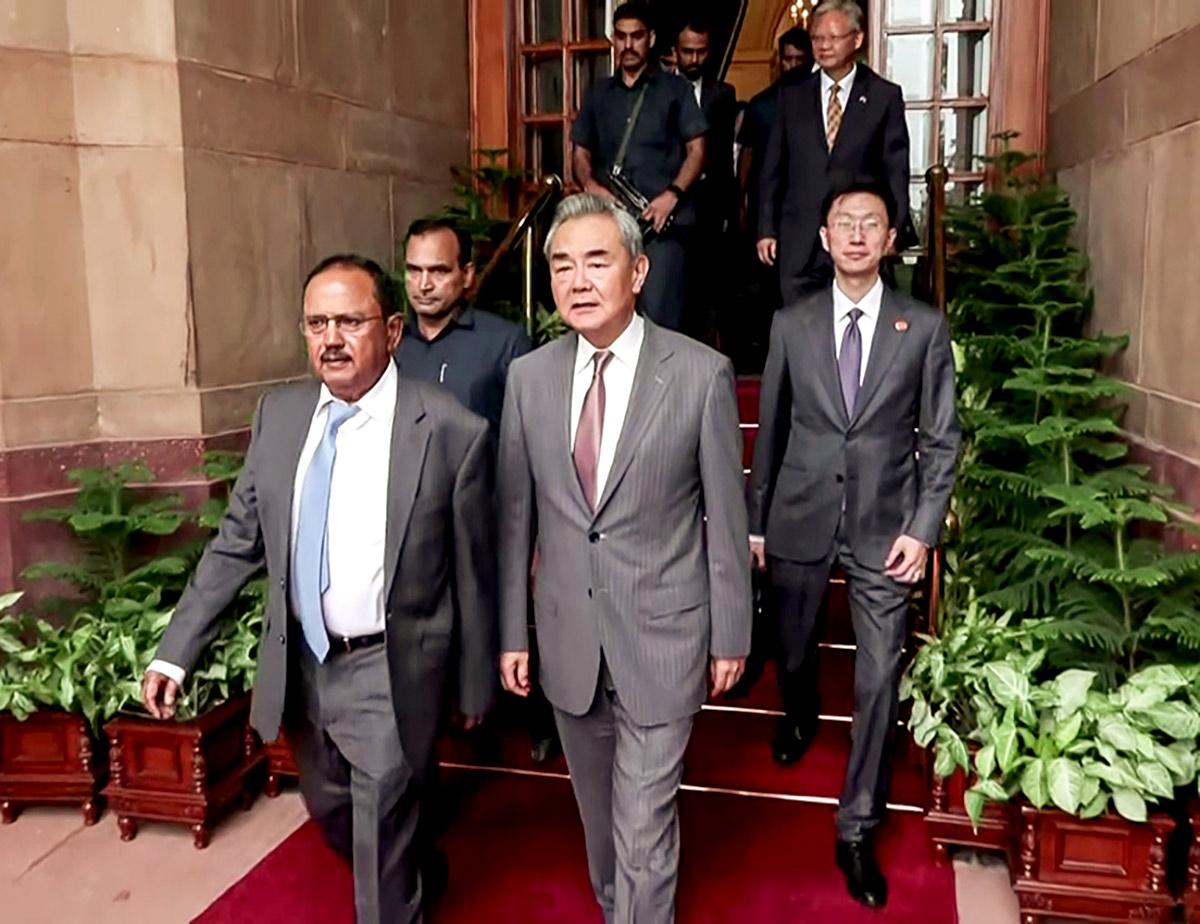
The concrete outcome of the visit is the issuance of a ten point consensus by National Security Advisor Ajit Doval and Wang Yi at the 24th Special Representative meeting.
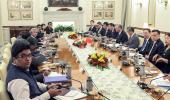
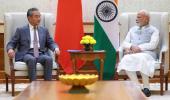
Wang met with Prime Minister Narendra D Modi, External Affairs Minister Dr S Jaishankar and National Security Advisor Ajit Doval.
The Indian side had made several trips to China in the past nine months and the PM is expected to visit Tianjin to attend the Shanghai Cooperation Organisation summit meeting.
Modi suggested that both should evolve 'stable, predictable and constructive' relations. These meetings have built up momentum in bilateral relations, stalled since the bloody clashes between the troops at Galwan in June 2020.
Many 'red lines' in the bilateral relations have been repeated again this time by the Indian side, while the Chinese side, in its inimitable style, asked New Delhi to adopt 'correct strategic perception' and 'view each other as partners and opportunities rather than rivals or threats'.
Wang, however, acknowledged that the 'setbacks that we faced in the last few years were not in our interest'.
Acknowledging that bilateral relations remained a 'difficult period in our relationship', Dr S Jaishankar reminded Wang of the unfinished job of de-escalation on the borders, multi-polar Asia, countering terrorism and other issues that bogged down the bilateral relations for the past five years and complicated further by the active Chinese support to Pakistan recently in Operation Sindoor.
Bilateral discussions focused on economic and trade issues, pilgrimages, tourism, river data sharing, border trade, connectivity and bilateral exchanges.
Wang agreed to lift the restrictions on rare earth metals, tunnel boring machines and others, even though these are offensive actions in the first place.
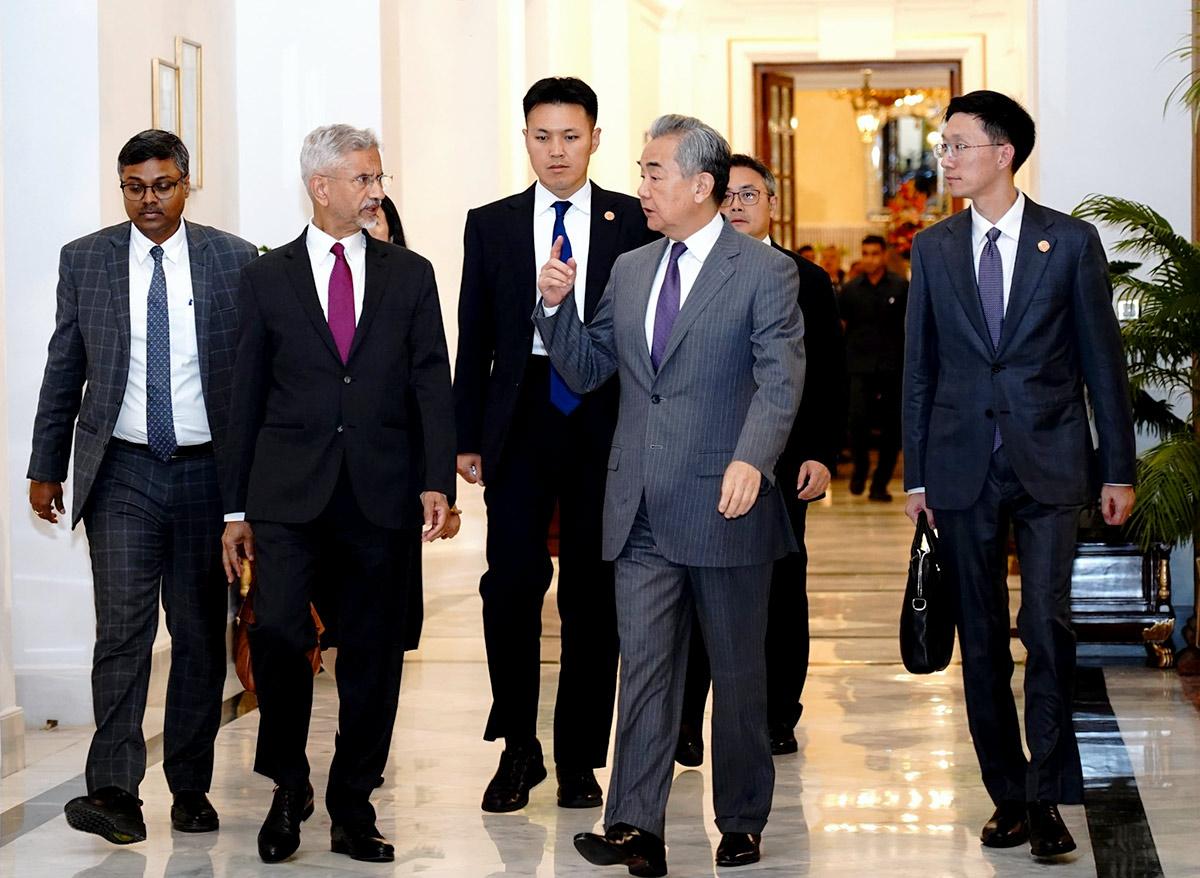
More concrete outcomes of these meetings are the formation of an Expert Group to explore 'early harvest' of boundary delimitation, a Working Group to advance effective border management, corps commanders meetings in all the three sectors of the border, hydrological data exchange, re-opening the three border trading posts that were shut down following the Galwan clashes.
While no specific details are provided, 'early harvest' was proposed by the Chinese side more than a decade ago for the Sikkim sector as it was least disputed and had the 1890 treaty between the then Sikkim kingdom and Qing dynasty, even though it was not ratified.
However, "delimitation of the boundary" implied the processes related to definition of the Line of Actual Control (LAC) and demarcation on the ground.
Originally the Special Representative mechanism was tasked to clarify the LAC.
This change in focus suggests to either advanced nature of the talks or coming to a grind halt on the boundary issue later.
After the Doklam incident in 2017, India proposed, at the sidelines of the BRICS summit meeting at Xiamen, that new and effective confidence building measures should be explored to fix the gaps in the five main agreements signed since 1993.
This was again reiterated in subsequent defence ministerial meetings but no progress was made.
With Galwan clashes, all talk about border management have been jettisoned as the primary focus was on how to address the border situation.
The corps commanders meetings addressed this issue in the western sector.
Now, both agreed to introduce corps commanders meetings to address the situation in the other remaining eastern and middle sectors of the border as well.
Whether these new groups will become effective and deliver stability to the borders or remain 'talking shops' is any one's guess, given the irredentist agenda of China's military.
The fact that China is balancing India at every step of the dialogue process indicates to the tough times ahead.
For instance, the 23rd Special Representative meeting in December last coincided with China announcing formation of two new counties in the disputed Aksai Chin region, renaming of places in Arunachal Pradesh a fourth time and announcement of the construction of the biggest dam on the environmentally fragile borders with India.
The elephant in the room, however, is the looming tariffs of the United States government on these two countries. President Donald Trump's tariffs loomed over Wang's visit.
While the Geneva, London and Stockholm talks between the US and China resulted in a 90-day reprieve, 30 percent legacy tariffs are still imposed on China.
The US relented on China due to the latter's restriction of magnets and rare earth minerals crucial for the American defence industry, electronics and automobile sector. But not so on India.
President Trump had imposed 25 percent tariffs on Indian exports, in addition to 25 percent more for importing Russian energy and weapons.
India and China intend to resuscitate bilateral relations in the backdrop of the tough situation emerging globally.
They reiterated multipolarity and suggested to exploring new forms of multilateralism.
The Galwan clashes, however, indicate to the limitations in bilateral relations if they do not address border stability.
Srikanth Kondapalli is Professor in Chinese Studies at Jawaharlal Nehru University.
Photographs curated by Manisha Kotian/Rediff
Feature Presentation: Aslam Hunani/Rediff






 © 2026