
'You don't have to lose your identity to be part of the Congress. You can be who you are as long as you believe in the core principle of strong citizenry and nation-building through that concept.'
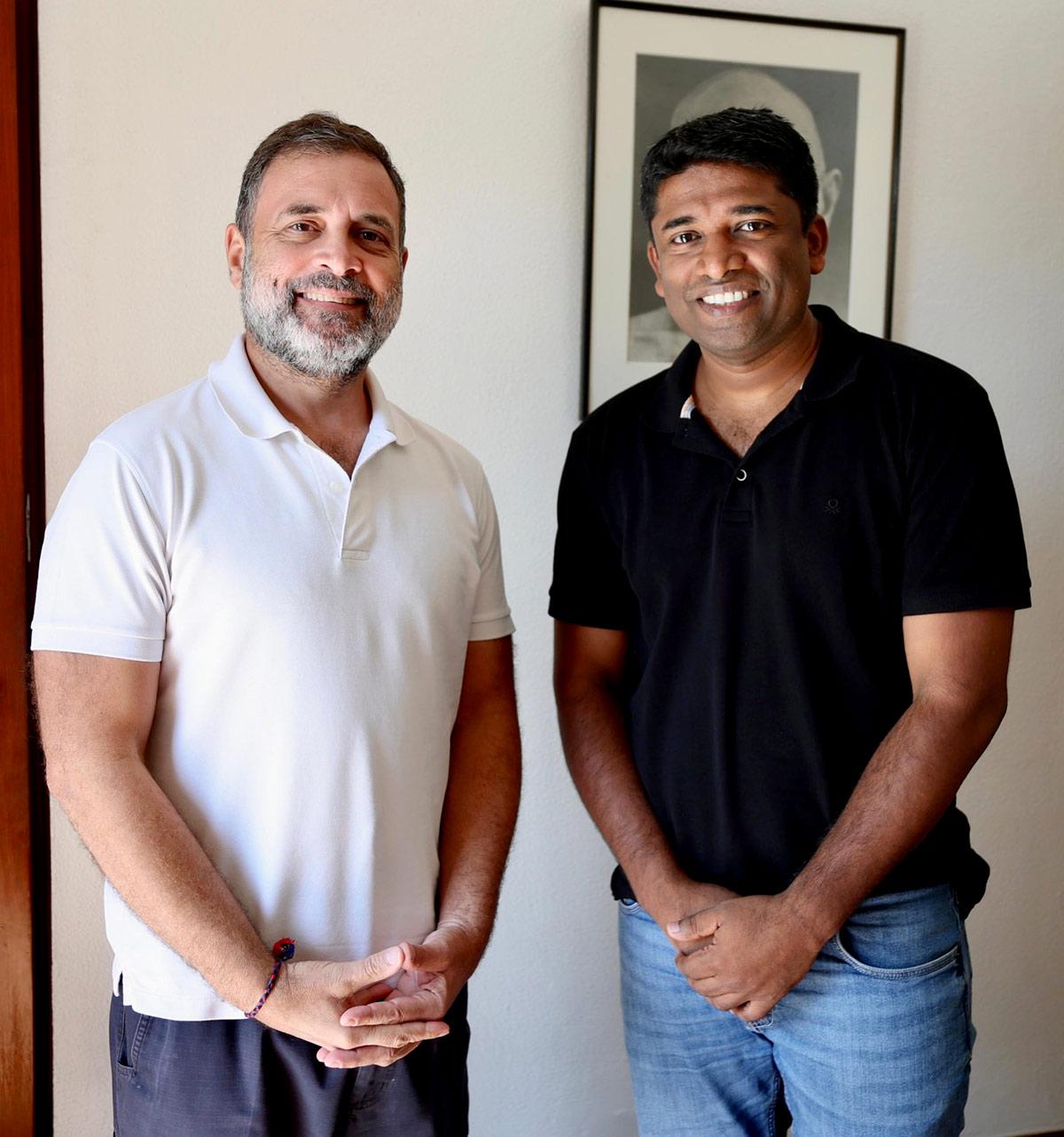
Former IAS officer Kannan Gopinathan, who resigned over abrogation of Article 370 in Kashmir and became a leading voice against the CAA-NRC, explains why he chose to join the Indian National Congress and his commitment to empowered citizenship in his new avatar as a politician.
Six years after his dramatic resignation from the Indian Administrative Service to protest the restrictions imposed in Kashmir following the abrogation of Article 370, Gopinathan has taken his next decisive step: Joining the Congress party.
In this two-part extensive interview with Prasanna D Zore/Rediff, Gopinathan reveals his three-year journey of political self-discovery, his concerns about losing his independent voice within an organised party structure, and what convinced him that the Congress offered space for individuality.
Why Congress? What led you to join the party?
When I resigned, I was very clear about what I was fighting against -- a bullying government that was brazenly curtailing citizens' rights. It was clear whom to fight against, but not whom to fight with, or which platform espoused the ideas I believed in.
I don't come from a politically exposed family. We come from the typical 'study well, get a job, get married, get settled' kind of background. So this was a journey of discovery for myself: Understanding what I believe in ideologically and which party represents those values.
The ideology closest to my heart is the agency of citizens, their rights, their ability to dream and achieve those dreams. More importantly, it's about citizens' assertion when they feel the government is wrong, and their right to speak out and ask questions.
Throughout our history, we've mostly been subjects -- regardless of whether we had good kings or bad kings. The journey from subject to citizen started with our independence movement. That was the first time, in a massive way, that we asked questions.
That, in essence, is what the Congress represented then as a political party that was in the forefront of India's independence movement: an empowered citizenry.
A strong nation values the dignity of its citizens, as enshrined in our preamble. Through that, you build a strong and unique, unified nation. Strong citizenry is the foundation for a strong nation.
Once I realised this was the Congress ideology, the decision became easier, though it took time.
What went through your mind when you decided to join a political party after resigning in 2019?
My resignation wasn't specifically about Article 370. It was about the restrictions that were imposed and how brazenly the government was curtailing citizens' rights.
How can you shut down an entire state, put everyone behind bars or under house arrest, suspend transportation and the Internet, and act as if nothing has happened? That cannot be accepted.
But I had concerns about joining an organised party. In the IAS, you get to serve, but you don't have your voice -- you can't speak up. I had to resign to regain my voice. So the question was: By joining an organised party, would I lose that voice again? Would there be space for my thoughts as an individual? What happens if there are genuine differences of opinion?
I had extensive conversations with people of a similar age group in the Congress, and they assured me there was enough space. You don't have to lose your identity to be part of the Congress. You can be who you are, as long as you believe in the core principle of strong citizenry and nation-building through that concept.
How did this happen? Did you approach the Congress, or did someone play a key role?

Not any particular person. I had multiple conversations with people like Sachin Rao, Jignesh Mewani, Kanhaiya Kumar, K C Venugopal, Malikarjun Kharge sahab (Congress president) and others.
Of course, I had conversations with Rahul Gandhi, where he articulated what the Congress is, how it has existed in various forms for years together, espousing this ideology, and why there's a need to be part of the Congress and strengthen it.
He said something very interesting: 'This is my understanding of the Congress. Now it's for you to discover what the Congress is for you.' Even at that level, I felt that freedom of space.
These were all people who were supportive, telling me, 'We're all there for you. Politics isn't like the IAS. This is a struggle, and until you reach your target, keep struggling.'
Did you tell them you are forthright and would point out problems within the Congress?
The understanding is that if I have space to express my opinion, then it is given. I don't have to poke them by asking, 'Can I criticise you?' For me, it's not about telling the Congress how it should be run.
My conversations were more about my indecision and confusion. It wasn't like I was going and telling them, 'Congress has this issue or that issue.'
What I'm saying today is the culmination of my decision-making process.
How long did this process take?
The active discussions about joining took maybe two or three weeks. But conversations had been ongoing for at least two or three years -- not with the Congress party per se, but with individuals I respect and speak with regularly. This includes people in civil society and other parties as well. We discussed all these things over that period.
After Sasikanth Senthil, you are the second former IAS officer to join the Congress. How do you see your role within the party?
I haven't given it complete thought in terms of what my specific role will be. I derive happiness from interactions with the public. That service angle is very important to me. If I'm able to bring a few smiles, that makes my day. I hope I'll find a way to continue that.
Beyond that, it's about whatever is needed and whatever strengthens the party. It's a two-way process. I need to understand as well -- I haven't come from another political party. This is my first political party, my entry into organised party politics. I need to learn and engage more as a politician.
What message do you hope to send to civil servants and young Indians through your political journey?
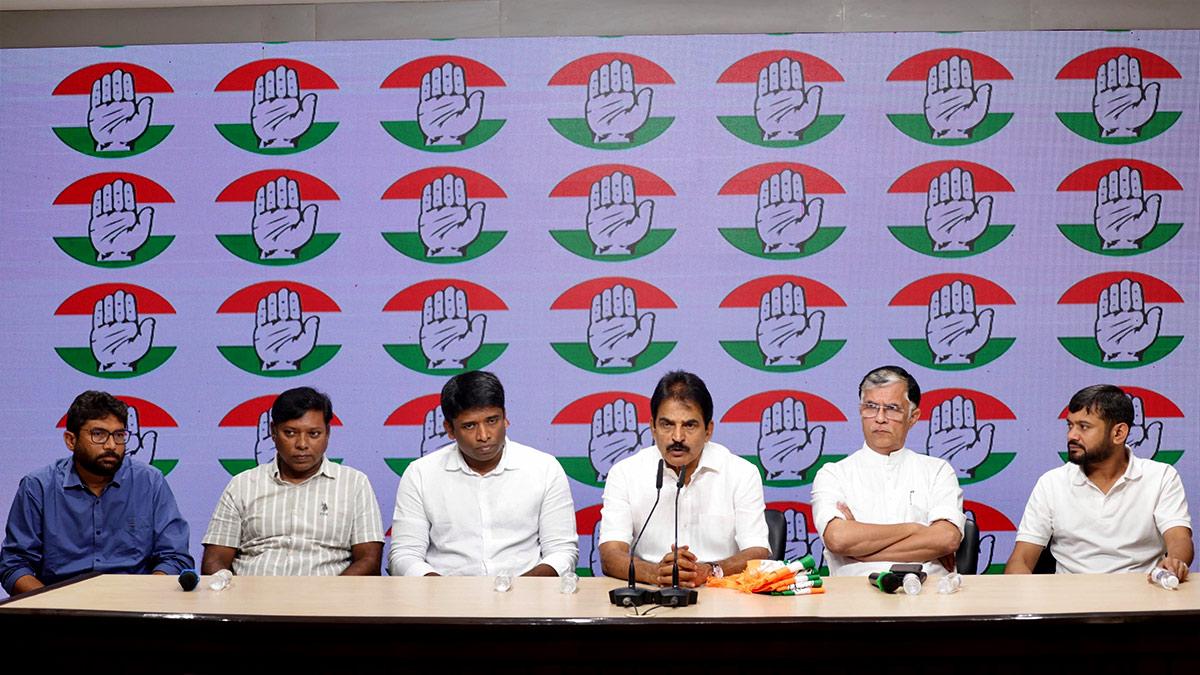
My message isn't specifically to civil servants -- it's to everyone. Over the last six years, I've found there are millions of people ideologically aligned with the Congress party. Initially, I thought they were just against the current government, but now I clearly see they're actually aligned with Congress values, even if it took them time to realise it.
Each person will have their own journey. I'm not saying everyone should immediately jump into politics. But from what I've learned: There is space and opportunity without having to surrender your identity. The party will augment who you are.
If you're convinced this is your ideology, don't get distracted by the behaviour of a particular leader or a specific incident -- those are peripheral things. They don't define a political party. The core principles, the ideology, what it espouses and tries to achieve -- that defines the party.
Many times we judge things by their wrapper rather than what's inside. If you're aligned with what's inside, consider being part of this journey in the Congress.
By joining the Congress, some might say you're aligning with a party that has its own governance and corruption challenges. How do you justify this?
There will always be space for improvement and correction in every organisation. Even during the freedom movement, there were allegations and inquiries. Whenever there's an organisation, there will be instances that need correction.
The question is: Are these your essential core issues, or are these anomalies and abnormalities that will be rectified? Is there an attempt to rectify them? That's what matters.
I don't believe that because there's a challenge to citizenship or diversity in this country, we should ignore corruption. You can't put this difficult choice before people -- that they have to choose between one or the other.
Corruption is something we shouldn't let go. But the question is: Where are we today, and are we moving towards a better tomorrow? That's how I see it.
Do you believe Indian political parties are genuinely open to reform, or do they co-opt dissenters for optics?
That's something for me to explore. What I can see from Sasikanth Senthil's journey is that it's not just optics. He has actually worked and made an impact.
How will you ensure your voice doesn't get muted in a big political party?
By being me. I don't need anybody or anything else for that.
Photographs curated by Manisha Kotian/Rediff





 © 2025