
'I noticed a nine-year-old child hugging another child every few minutes.'
'The two were sisters and were playing in their village when an armed gang attacked their village and set fire to it.'
'They hid together, only to witness their mother and father being killed.'
'Now, the older child is constantly comforting the younger one.'
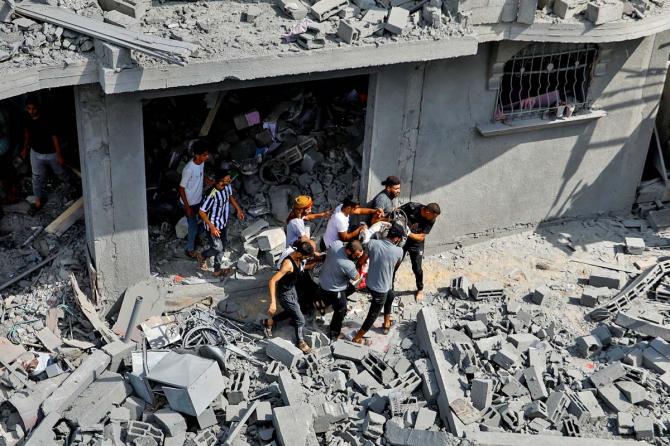
In a world where headlines about war and hunger blur into statistics, we are often forced to wonder why there is so much hatred and cruelty all around as innocents die every single day.
Many of them are children who have not even tasted the fruits of life. We go about our lives as if nothing has happened.
The war in Gaza has seen over 18,430 children dying due to missile attacks, bombing and systematic starvation.
As many as 62,895 Palestinians have been reportedly killed in Gaza, and 158,927 have been injured.
As these figures, which increase every day, haunt us, some voices remind us of the uselessness of war.
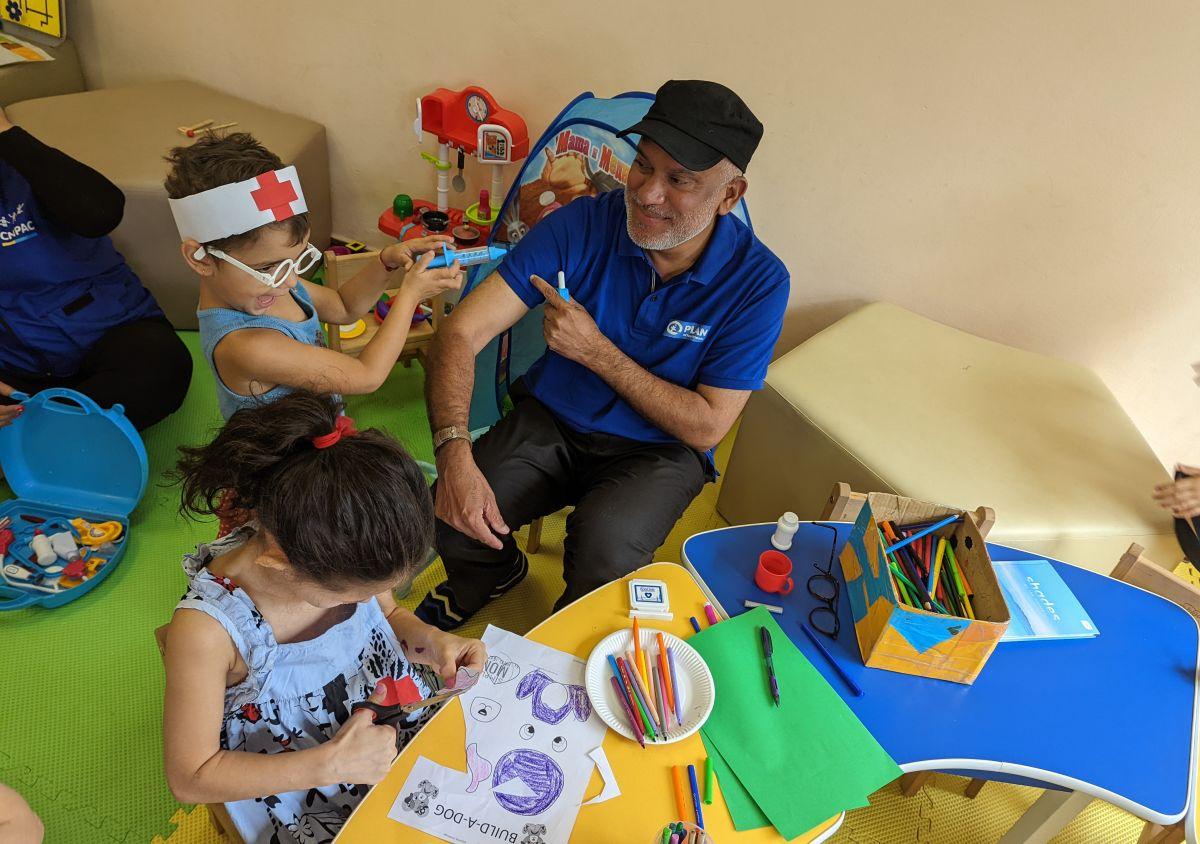
One of them is Dr Unni Krishnan, Global Humanitarian Director, Plan International, who has, for more than 25 years, worked on health and humanitarian issues on the frontlines of war, disasters, famine, hunger, and human rights violations on helpless populations.
Dr Unni Krishnan has walked through the rubble of Gaza, stood amid the ruins of Haiti's earthquakes, worked at the border town of Adre, where Sudanese refugee children arrive sick, hungry and traumatised, and witnessed the heartbreak of hungry orphans and children in Gaza and Ukraine.
His mission is not to just save lives, but to lend a quiet dignity and hope where it seems to have vanished.
As Dr Unni Krishnan moves from one conflict zone to another, steeling himself to encounter stark realities, he reveals a grim and terrifying account to Rediff Senior Contributor Ramesh Menon, saying that the man-made tragedy has to stop.
- Part 1 of the Interview: 'Israel Is Weaponising Hunger'
What about collateral damage? Most of it would be permanent in nature, as societies and communities will get divided and live with feelings of hatred and revenge.
Wars do not travel in a linear way. It goes around in circles. The targeting of children, women and innocent civilians should never be accepted as collateral damage.
You mark a hospital with a cross to keep it safe, but instead, it gets targeted. It is not collateral damage, but a deliberate act of cruelty.
Can you share some experiences that will always stay with you?
In early 2014, I was with a team from Plan International in South Sudan when nearly 2,000 people were killed in strife.
So, there was a space created exclusively for children to feel that they were safe and could do what they wanted, like playing.
I noticed that there was a nine-year-old child who was hugging another child every few minutes, who was around four.
I asked around and found that the two were sisters and were playing in their village when an armed gang came and attacked their village and set fire to it.
They ran away and hid together, only to witness their mother and father being dragged away from their house and killed in front of them.
Now, they have been rescued, but the older child is constantly comforting the younger one.
The war may be over one day, but the suffering never ends.
In Afghanistan, a child had lost his limbs to landmines. The wounds had not healed. He was sad he could not play football, but had absolutely no sense of self-pity.
His mother said that war was a funeral in slow motion. I experienced it everywhere I went. The pattern is the same. Anyone can start a war.
It is the children who suffer the most. We are also witnessing disrespect for the Geneva Conventions and the rules of war. This is a dark spot on humanity.
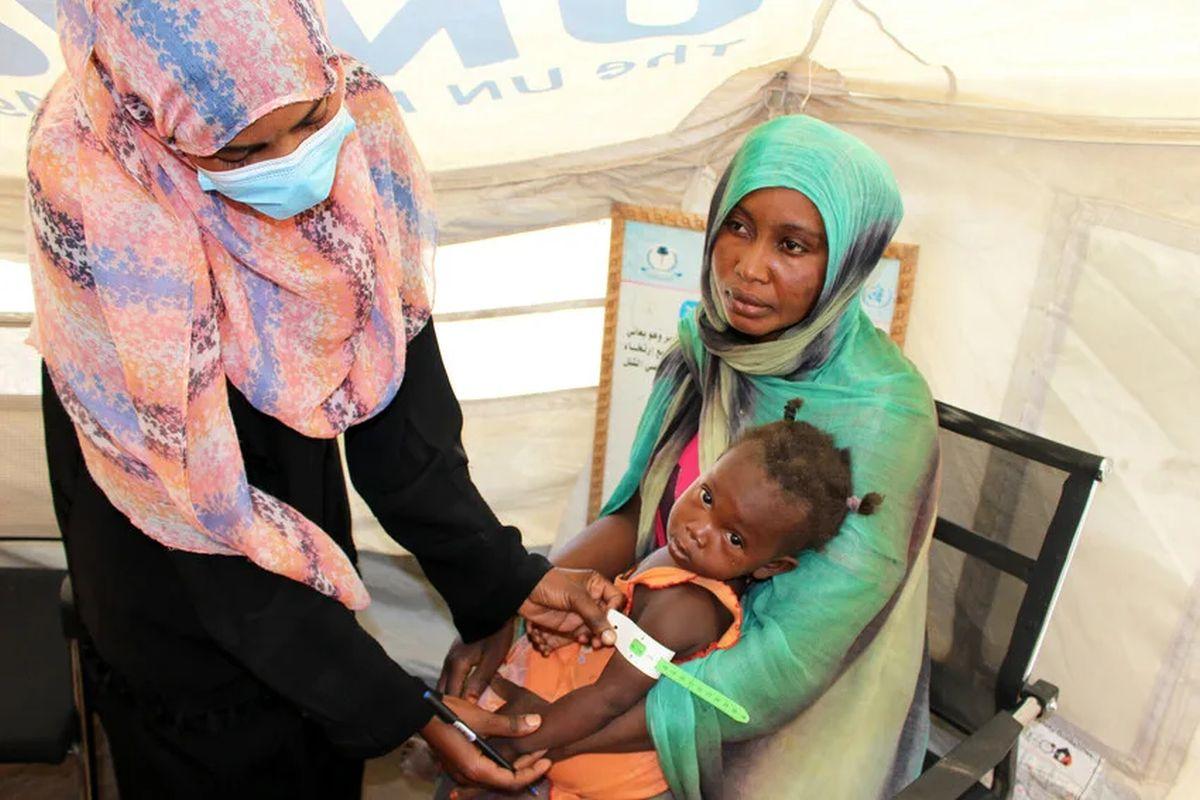
In Haiti, gang violence and political instability have led to kidnappings and unsafe conditions for women and children.
In Haiti, natural disasters like floods, storms, hurricanes and landslides occur in the face of poverty and armed groups, making it one of the worst places for children.
We were running a child protection programme. Once, when I was there in early 2024, armed groups broke open two prisons and over 4,000 inmates escaped.
Some of them joined other armed groups and took over the country.
It was really brutal. The prime minister, who was attending a conference abroad, couldn't return.
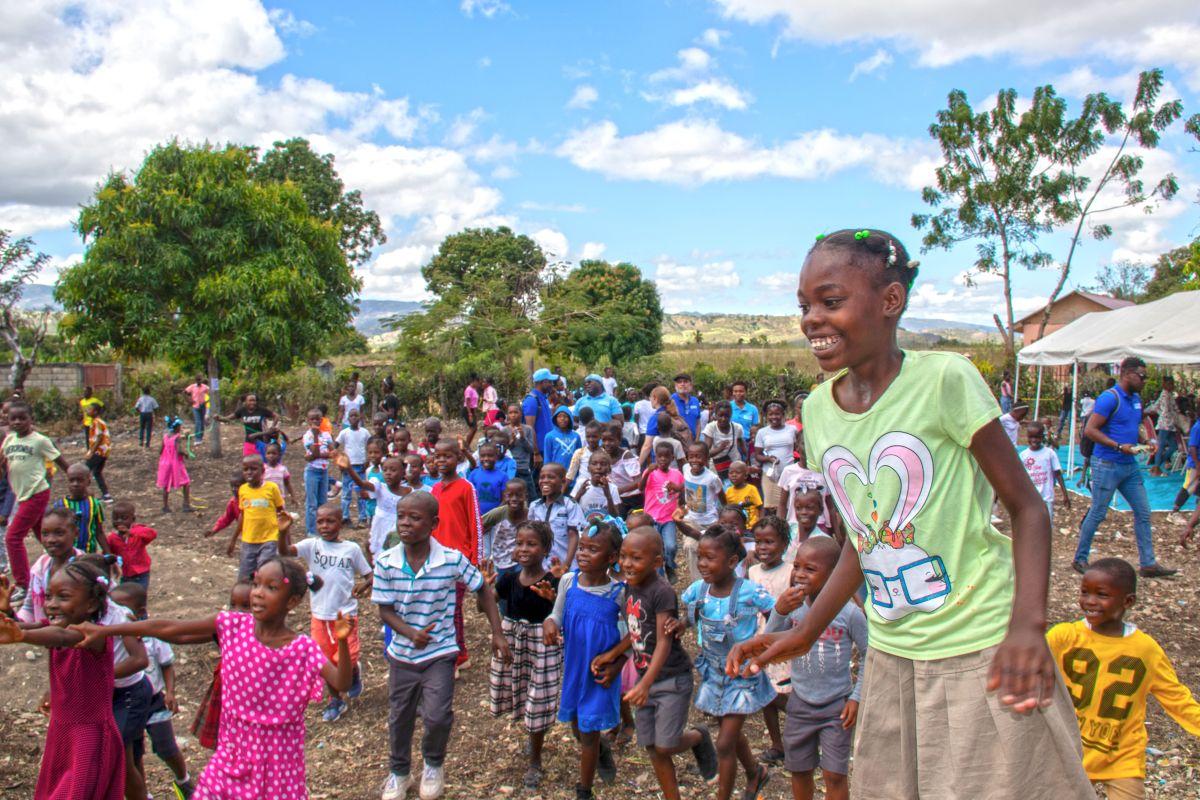
We had a temporary shelter for children where they could play. I met a 16 year old who had two children. They were from two men who she thought would protect her from armed groups.
Children are being recruited to fight by armed groups. But children do not want to fight.
Can you describe a typical day in the life of a humanitarian worker in these conflict areas?
Every day is unpredictable. Our priorities suddenly change, and so do the locations. We have to be absolutely flexible.
It can be frustrating as there are so many surprising changes.
We must act urgently, as if there is no tomorrow. Progress feels like one step forward and three back, and we often wonder -- why has the world come to this?
Wars may be started by generals, but they can't stop the trauma they will generate.
As humanitarian workers, we have to focus on hope and not be pessimistic, working on possibilities to offer relief and find solutions.
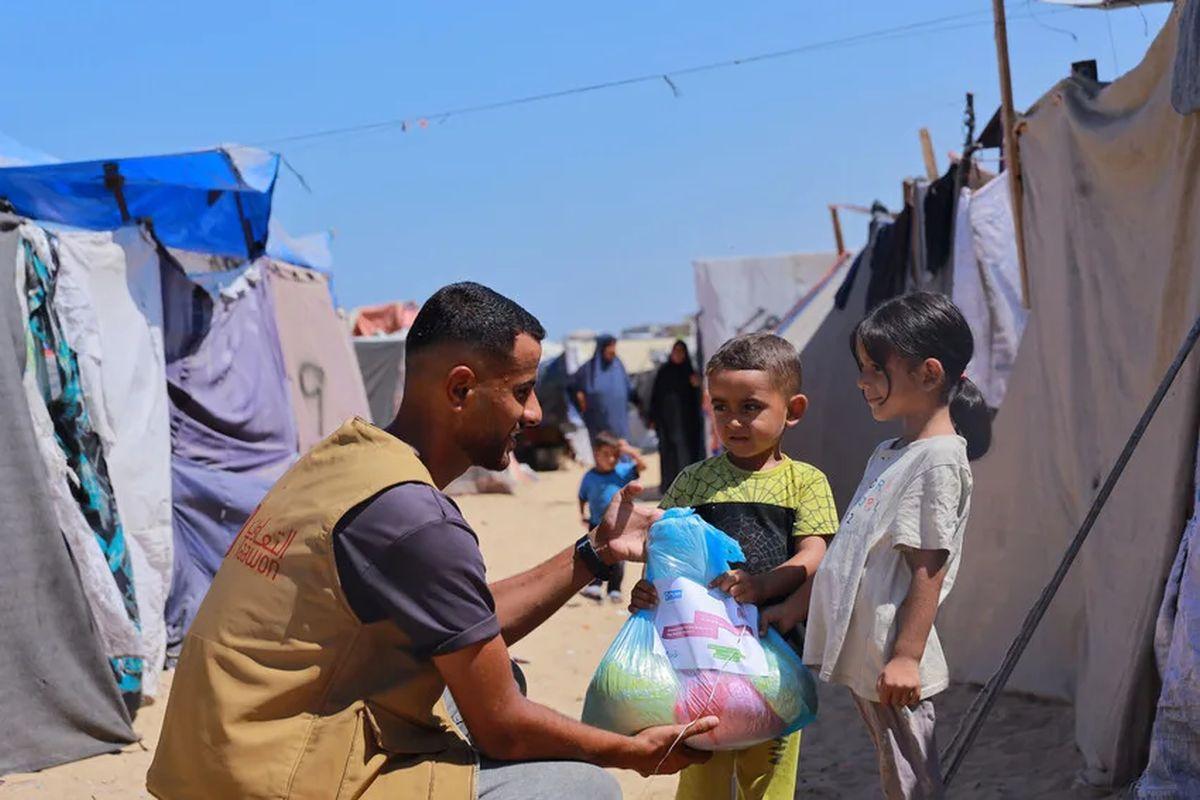
Children, journalists, and humanitarian workers are being specifically targeted by Israeli forces.
Fatma Hassouna, 24, a Palestinian photojournalist, who courageously documented daily life in Gaza for 18 months, was killed in an Israeli airstrike with her entire family of nine on 16th April, 2025.
In Put Your Soul on Your Hand and Walk, a documentary on her work, she said she would always see Gaza as her home, even if everything and everyone is destroyed.
'You have many options to die in Gaza. It can come from bombing, fear, or starvation,' she said.
I have colleagues who don't know if they will be alive to talk to me tomorrow. So many humanitarian workers have been killed and injured.
Last year, the highest number of relief workers died while working in conflict areas.
What does the world need to lessen the pain and tragedy of millions in these conflict zones?
Wars must stop.
War has no winners; it only has losers.
Global leaders must come together to end all the wars. So many innocent people are dying every single day.
Relief assistance must strictly follow humanitarian principles and must be imparted impartially without looking at colour or creed.
Our work should not be influenced by armies, governments or anyone, for that matter.
Supplies have to be allowed unhindered to war zones.
Relief workers should not be targeted.
We must respect humanitarian laws.
Journalists need to be vigilant and never targeted.
Even if we are sitting thousands of miles away, we can do a lot to stop the war by voicing concern and shock at what is happening.
There are some positive signals with people on the street asking that arms transfers to Israel must be stopped.
No one wants children to die.
Conflicted areas badly need funds. The US government's fund cuts came at a time when the unmet humanitarian needs are at record levels.
Those impacted by war have a right to receive relief and assistance, and the rest of the world has a responsibility to provide it.
Around 800 million people will go to bed hungry tonight, and 473 million children are now living in or fleeing from conflict zones. This should worry all of us.
Feature Presentation: Aslam Hunani/Rediff





 © 2025