

'Anybody who says one critical word can be branded as somebody who's glorifying terrorism.'
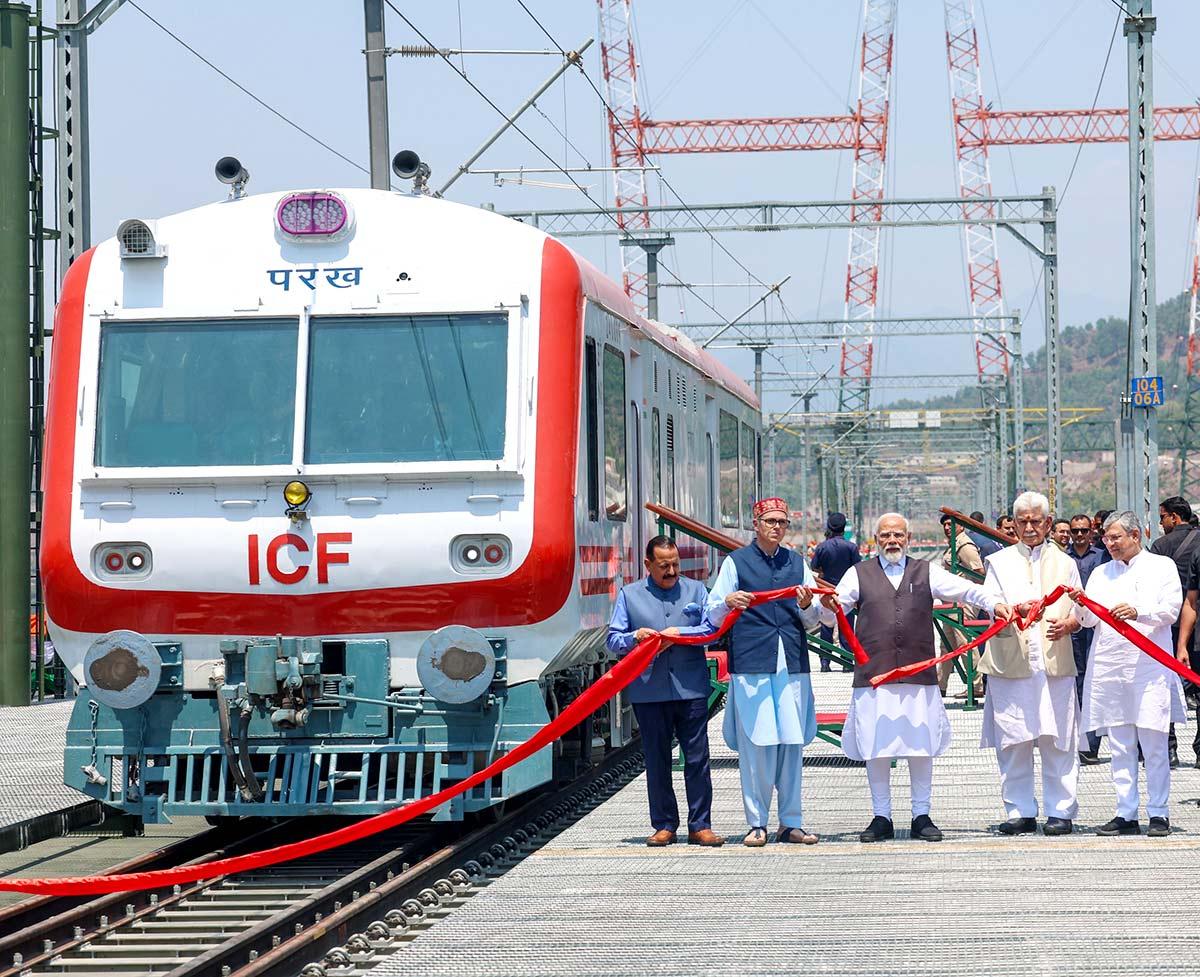
In the concluding part of her interview with Prasanna D Zore/Rediff, journalist and author Anuradha Bhasin offers a stark warning: India's democracy is becoming "bizarre and dystopian".
Her book, A Dismantled State: The Untold Story of Kashmir After Article 370, was one of 25 titles banned by the Jammu and Kashmir administration last week -- a move she likens to authoritarian censorship in Pakistan and China.
While the government talks about empowering Kashmiri voices, your book -- a first-hand account by a local journalist -- is now banned. Who decides which Kashmiri voices are legitimate, and what does that say about India's democracy?
It is apparent that the government decides who is a legitimate voice in Kashmir.
For them, the only legitimate voices are the yes men and yes women. Anybody who questions, anybody who raises a question, anybody who says one critical word can be branded as somebody who's glorifying terrorism or peddling false narratives.
They are the ones who are peddling false narratives. They are the ones who are misleading. They are the ones whose claims are completely contradictory.
India often accuses Pakistan, and rightly so, of suppressing free speech. How do you view India banning books while projecting itself as the world's largest democracy?
Definitely, we shouldn't be helping that model. It happens in Pakistan -- even last year they banned some books in Pakistan-administered Kashmir, and that has been going on for some time. China does that too, and those countries don't even brag about democracy.
India was a country in the global south that other countries looked up to because of its democratic content, because ordinary citizens enjoyed more liberty and freedom of expression. Of course, it comes with several riders -- it's never been absolute -- but it's getting more and more bizarre and dystopian.
Lieutenant Governor Manoj Sinha states Kashmiris have been freed from decades of exploitation. Yet banning your book suggests fear of alternative narratives. What does the administration want to hide?
They are even scared of a word -- a word spoken by any person, a word that is written, a word that is in print.
When the government is scared of dissenting citizens, when the government makes all-out efforts to erase any kind of literature or voices that are dissenting or providing counter-narratives, it ultimately has long-term repercussions.
This will impact generations of citizens who will grow up without reading, without knowledge, without information, and without the ability to think and reason.
These things don't make a nation great -- they only lead to regression.
Is the crackdown part of a broader attempt to erase Kashmiri lived memory and manufacture a State-sponsored version of history?
If that is the purpose, it is a silly idea because Kashmiris have been resisting even before they started reading books. There wasn't much education in the 1930s when they started agitating against the monarch (Maharaja Hari Singh).
As I have known and seen Kashmiri society, their memory travels through stories that are passed on from generation to generation. That is probably their first experience of memory.
They don't need books to keep memory alive -- they have ways of keeping it alive. Any society has that. It becomes even more dangerous because these are books based on research that are well-authenticated.
Instead of having authentic history about the place, memories passed on orally may not be that well-researched and will always risk being more one-sided and insulated.
The government says development, not dissent, is its focus. If development is truly happening, why is the government insecure about a journalist's critique?
In my book, there are two chapters that talk about the government's development model post-2019. It mentions that instead of being an inclusive model of development, there has been no process of consultation.
Some policies are disempowering people in various ways -- for instance, massive construction of roads has evacuated people from their lands.
Land laws have been brought in whereby people are losing possession of lands they earlier owned.
The government's development narrative is extremely false and misleading. It's probably an attempt to ensure that no questions are raised about the development model and that only the happy picture is presented in the public domain.
Do you have data on how much Kashmiri land has been bought by people from outside the former state of Jammmu and Kashmir after abrogation of Article 370?
I really don't have data on that, but I don't think the numbers are very high. There isn't much in the public domain -- there's a lot of obscurity about information from the government. It's very difficult to get information.
Only last year they gave some numbers, and that was very less. Have those numbers increased? I don't know. But there are investments by different business houses -- these are merely anecdotal, I don't have numbers -- but I keep hearing about massive real estate investments in the Jammu region and even in Kashmir.
Most contracts, whether government or private, are now going more to business people from outside who have deeper pockets than businessmen in Jammu and Kashmir, so they have an edge over locals. That is happening now.
Any anecdotal evidence about locals benefiting from the abrogation as far as development is concerned?
I don't think so. Even in Jammu, which is ironically very pro-BJP, much before Article 370 was abrogated, people were always wary that if Article 370 were to be abrogated, they would lose their lands and businesses and jobs. But at the same time, there are their own local interests.
I remember two or three years before that (abrogation of Article 370 on August 5, 2019), there was a major agitation by pharmacists of the Jammu region who were protesting against giving contracts to pharmacists from outside.
There was this whole conflict over business contracts between locals and outsiders, and it was always resisted internally.






 © 2026