

'From every point of view, they have faced an extremely difficult couple of years, and the setback they have suffered is irreversible.'
'This reality has begun to set in even amongst the top-level cadres. That is why, in recent times, we have witnessed a huge number of senior-level cadres emerging from the jungle and deciding to renounce violence and join the mainstream.'

"Terrorist organisations can operate in isolation -- they can hide somewhere, conduct a terror attack, and then retreat. But a Maoist movement cannot survive without local support and a strong base."
"In the Dandakarnya region there are today not more than 100 to 150 full time regular armed Maoist cadres, plus a few village militia members who do not possess any ideological commitment. They have no understanding of the functioning of the party. They have been forcefully nominated by the Maoist leadership."
2025 has marked a watershed moment in India's protracted struggle against Left-wing extremism, with 256 Maoists neutralised and over 1,500 cadres surrendering in Chhattisgarh's Bastar region alone.
At the forefront of this unprecedented campaign stands Inspector General of Police Sundarraj P, who has overseen operations that have systematically dismantled the Maoist command structure.
In May 2025, security forces neutralised Nambala Keshava Rao alias Basava Raju, general secretary of the CPI (Maoist), marking the first time in the outlawed outfit's over-four-decade history that its top-most leader was eliminated in an encounter.
Sundarraj P, who took over as the inspector general of police, Bastar range on November 11, 2019, in a two-part interview with Prasanna D Zore/Rediff, discusses the operations that brought the insurgency to the brink of collapse and assesses whether Union Home Minister Amit A Shah's deadline of March 31, 2026 can be met.
2025 has witnessed an extraordinary number of both surrenders and neutralisations across the entire Bastar range. How do you assess the overall impact on Maoist strength in the region?
The past two years have been decisive for us.
During this period, we achieved a major breakthrough, particularly regarding the top leadership of the Maoists. Their strength has been decimated.
As on today only a couple of top-level cadres are left out, whereas if you compare the situation 10 to 15 years ago, there used to be approximately 40 to 45 central committee and politburo members within the CPI (Maoist) organisation. That strength declined over time, and by early 2025, they were down to approximately 22 central committee and politburo members.
In the current year alone, 11 of these senior leaders have been neutralised in various encounters. Six were neutralised in Chhattisgarh, and five more in other Left-wing extremism-affected states.
This includes their general secretary (Basava Raju alias Nambala Kesava Rao), who was the topmost leader of the outfit. Additionally, five of them decided to join the mainstream and have surrendered. They are now left with only five to six central committee members, most of them have crossed their prime age.
If you examine their age profile, they are not in a position to provide leadership or hope to the outfit.
The leadership has been completely decimated, and they have effectively become leaderless. Even the lower-level formations and middle-level cadres tell a similar story -- they have either joined the mainstream or have been neutralised in encounters, been arrested, or fled from the camps.
Their area of influence has also shrunk considerably. They are now left with very few safe shelters compared to what they had previously.
All these factors together give us hope that this organisation is facing extinction. In another couple of months, it will be completely broken.
Will you meet the deadline set by Home Minister Amit A Shah of March 31, 2026 to completely eliminate Maoism from India?
We are hopeful, because the facts and figures are indicating progress in that direction. We believe this armed extremism will come to an end by March 2026.
The cadres left behind have only one option: To surrender and join the mainstream. This option is still available to them, but it is not an endless offer.
They have a very limited time period, so they should make use of this opportunity and join the mainstream as early as possible, before the security forces compel them to do so through operational means.
We remain committed to bringing an end to this mindless violent extremism mounted by the CPI (Maoist) outfit.
Operation Black Forest played a significant role in the neutralisation of the Maoist leadership. What made this operation different from earlier ones?
Would you agree that Operation Black Forest completely broke the backbone of the Maoists in Bastar?
That was one of our most important and decisive operations. Each and every operation we undertake is pursued with utmost sincerity and care, but Operation Black Forest was different in several respects.
Firstly, it continued for almost three weeks, making it one of the longest operations we have conducted. Ordinarily, we undertake cyclic operations, with each lasting approximately four to five days before another begins. However, this operation (Black Forest) lasted for 21 continuous days.
Despite very adverse climatic conditions and the tough terrain, our forces remained committed. Despite suffering injuries from improvised explosive devices, they did not withdraw.
The end result was that the Maoists were forced to abandon the safe hideout they had been establishing along the interstate border.
As I mentioned earlier, 2024 and 2025 shattered the myth that the CPI (Maoist) and their People's Liberation Guerrilla Army formations were invincible. That was the prevailing perception previously, but it has been broken.
Our forces have now been able to reach every corner of the region (the Dandakaranya zone -- an expansive, forested and hilly tract spanning parts of southern Chhattisgarh, northern Telangana, eastern Maharashtra, western Odisha and northern Andhra Pradesh, long projected by the Maoists as a 'liberated zone' and used for decades as their primary operational, training and logistical base), whether it is the Indravati national park area or the Abujhmarh region. They have been committed to operating in these areas, and the results have been very encouraging.
We recovered a large number of weapons, including AK-47 rifles, INSAS rifles, SLR rifles and BGL (barrel grenade launchers) -- all weapons that the Maoists had relied upon.
Essentially, the Maoists lost their base areas, their recruitment base, their corridors were blocked, and their sources of levy collection diminished.
From every point of view, they have faced an extremely difficult couple of years, and the setback they have suffered is irreversible.
This reality has begun to set in even amongst the top-level cadres. That is why, in recent times, we have witnessed a huge number of senior-level cadres emerging from the jungle and deciding to renounce violence and join the mainstream.
These two years have been critical, and operations such as Black Forest and others conducted in the forested areas have been crucial to this overall strategy.
Was Operation Black Forest the most decisive setback for the Maoist movement? How did that affect the command structure of the Maoists?

In Operation Black Forest, we recovered 31 dead bodies, most of them were People's Liberation Guerrilla Army battalion members and core cadres. Maoists had previously considered the inter-district and inter-state borders as safe zones.
Whenever an operation was launched from a particular area or state, they would attempt to flee to neighbouring areas, exploiting the grey areas created by administrative and security vacuums along these borders.
These interstate and inter-district boundaries used to be highly conducive for them.
Nowadays, however, we are operating seamlessly. Whether it is an inter-district border or an inter-state border, we coordinate with the concerned agencies and are able to operate strongly and deliver results. That is how we have changed the dynamics.
Previously, they would leave one area, take shelter elsewhere, go into hibernation, and then, after identifying conducive period, bounce back. Now we are not affording them that choice. We are not providing them with that option.
We operate round the clock, 24 hours a day, seven days a week. Our main objective is to safeguard the lives and properties of the local population.
To that end, our security forces are carrying out intensified operations so that we do not give the Maoists any breathing space to reorganise and plan conspiracies against the security forces or the local population. That opportunity is not being provided to them at present.
In that respect, Black Forest was also a very important operation, as were many other operations during this period in which we achieved major breakthroughs.
In your assessment, based on your intelligence, what kind of strength is still left with the Maoists?
The Telangana director general of police stated that there are only 17 Maoists operating there; Maharashtra too claims there are only 10 Maoist cadres operating out of Gadchiroli now and the area of dominance has also come down hugely.
So, in your assessment, what is the strength of the Maoists after all the surrenders and neutralisations in Chhattisgarh?
In the Dandakarnya region there are today not more than 100 to 150 full time regular armed Maoist cadres. In the recent times, majority of their People's Liberation Guerrilla Army formations and other regular party cadres have either joined the mainstream, had their bodies recovered, been arrested, or fled from the Naxal camps.
They are left with hardly another 100 to 150 regular, full-time armed cadres, plus a few village militia members who do not possess any ideological commitment. They have no understanding of the functioning of the party. They have been forcefully nominated by the Maoist leadership.
Now, since the leadership itself has been decimated, the remaining functionaries -- the village militia and other such elements -- have become defunct. They will naturally become extinct as the party's operations come to an end.
Our main concern is regarding these 150-plus armed cadres who are still associated with Maoist activities. Hopefully, they will also take the right decision at the right time, renounce violence, and join the mainstream.
Have you noticed any significant trend in how the Maoists -- or whatever strength is left presently -- are now organising themselves?
There is only Ganpati, there is Devji, and Misir Besra, who operates from Jharkhand.
Are the Maoists now shifting to smaller, fragmented units? Are you seeing any major trend in how the Maoists have changed their tactics?
In the prevailing circumstances, the Maoist base areas have eroded, the cadres have been depleted, and the leadership has been decimated. Only small groups are left in a few pockets, and they may also be contemplating abandoning this violent path and joining the mainstream. Otherwise, we will take lawful action against them as well.
We do not foresee any reason for their resistance to continue, because they do not have the kind of conducive environment that they once had. The local population has also realised the real and ugly face of the Maoists. They are not going to support Maoist cause any longer, because the local population was the biggest victims during this entire period.
The Maoists, who claimed to be well-wishers of the tribal population, turned out to be the ones who targeted innocent tribal people -- men, women, and children -- on allegations of being police informers or on other false pretexts.
More than 2,000 tribal people have been killed in the past 24 years.
The local population will not support the violent cause of the Maoists. The Maoists are left with no leadership capable of carrying this movement forward to the next generation.
All the remaining cadres are elderly, and there is no younger generation with the ideological conviction or attraction to carry this movement forward. That is why the Maoist movement is breathing its last and their extinction would be witnessed in couple of months.
Would you believe that the elimination of Madvi Hidma broke down the People's Liberation Guerrilla Army's strength?
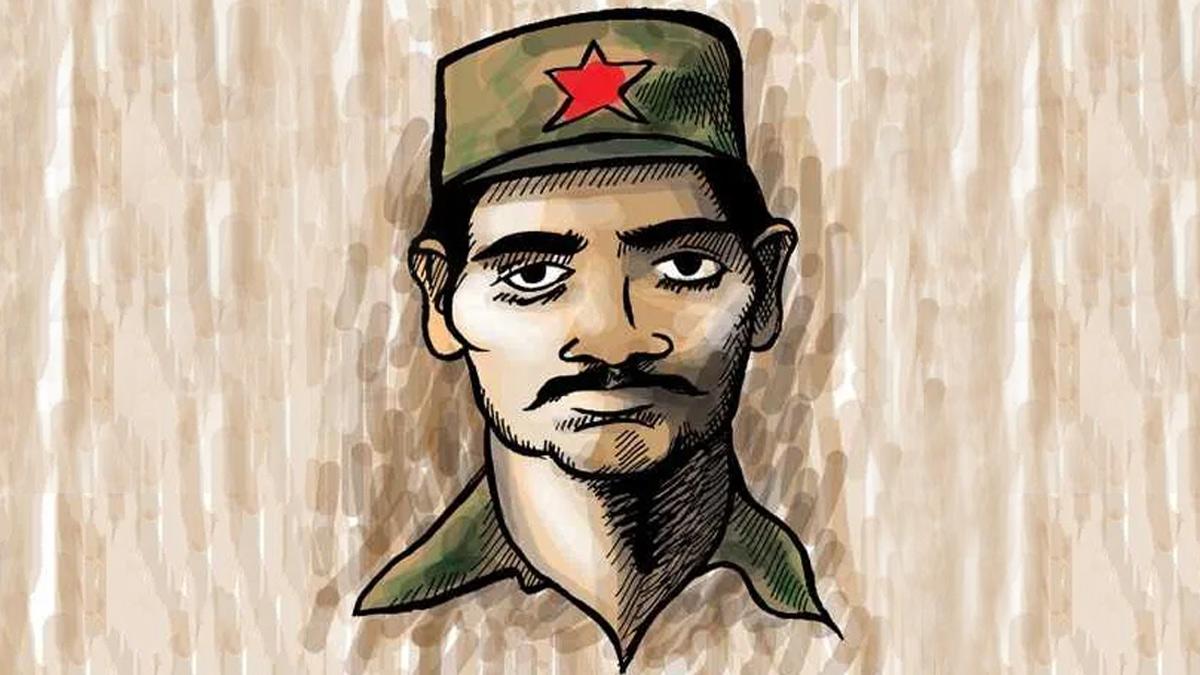
Apart from Madvi, many other top-level cadres, including Basava Raju and others, have been eliminated. The CPI (Maoist) party has become totally directionless, clueless and leaderless, particularly the People's Liberation Guerrilla Army's formations.
When Madvi Hidma died in an exchange of fire with security forces, he was a central committee member. Madvi Hidma handed over the activities of PLGA batallion number 1 to Barse Deva and was active as secretary of the Dandakarnya special zonal committee area, few months prior to his neutralisation.
Nevertheless, Madvi Hidma's neutralisation was a very decisive turning point.
Many other active Maoist leaders have also been neutralised in the past couple of years. It is a combination of many factors. Not only the elimination of individual leaders, but a combination of many other elements has brought us to this decisive point.
For any Maoist movement to survive, unlike other terrorist outfits, they require a huge base area and mass contact. Terrorist organisations can operate in isolation -- they can hide somewhere, conduct a terror attack, and then retreat.
But a Maoist movement cannot survive without local support and a strong base. They need to be visible to the public; they need to conduct numerous meetings. Once that is no longer happening, the movement cannot survive.
In that respect, all these factors together have essentially brought this outfit to the point of extinction.
Photographs curated by Manisha Kotian/Rediff









 © 2026