

'There is a clear relationship between the Char Dham road widening and these landslides.'
'The situation has further worsened with the massive influx of tourists whose number are running into several lakhs per month.'
'No parameters have been laid down to control tourist inflow and the result is that the Char Dham yatra has seen a sharp escalation in accidents and loss of lives.'
As a member of the citizen forum Ganga Avhaan, activist Mallika Bhanot has spent the last two decades fighting for the conservation of the Ganga river as also of the Himalayas.
A member of the Bhagirathi Eco-Sensitive Zone (BESZ) monitoring committee, she along with other activists have ensured that no new hydro-power projects will be constructed in the BESZ.
"The latest scientific studies shows that at a distance of every 10 kilometres, a landslide is taking place in the Garhwal hills," Mallika Bhanot tells Rediff Senior Contributor Rashme Sehgal.
The upper Himalayas have been hit by yet another major calamity.
The higher Himalayas are sensitive to different natural events.
This is especially true of the upper reaches of the Bhagirathi river valley.
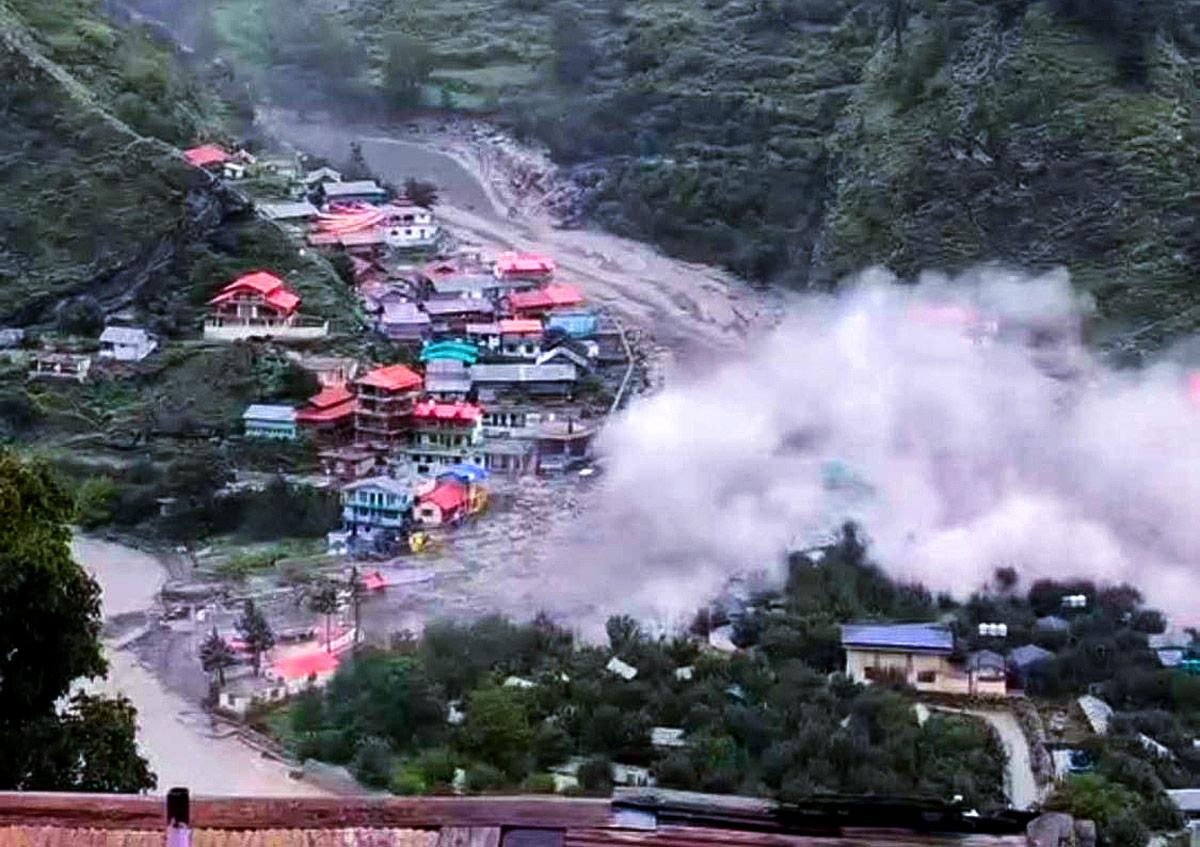
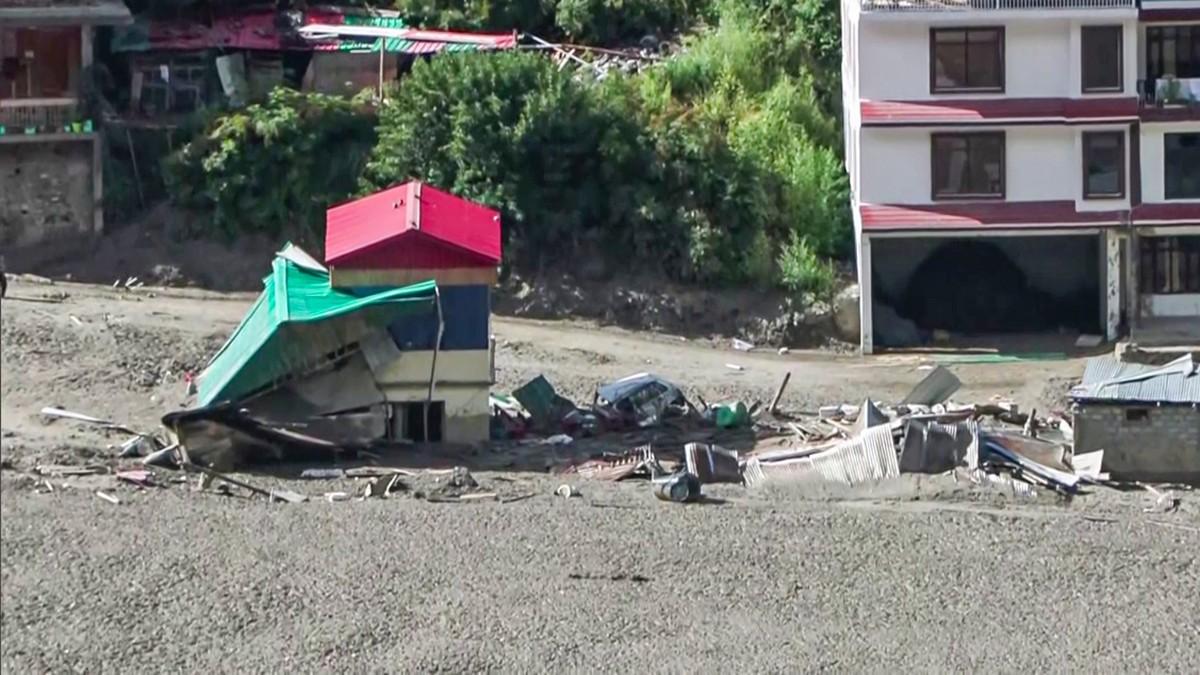
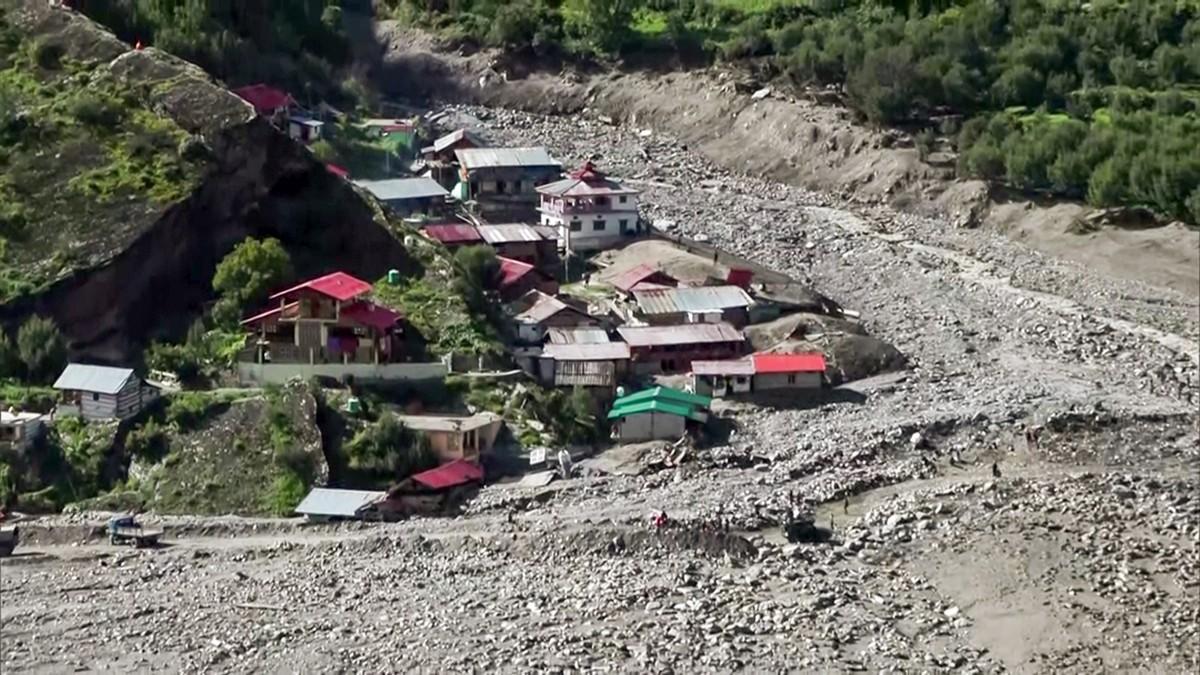
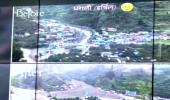
The picturesque town of Dharali is located below a hanging glacier from which flows the Kheer Ganga.
Several experts had predicted that this glacier, like most other Himalayan glaciers, was melting and this would result in floods and this is exactly what happened when this river swept down carrying ice, rain water, and glacial moraine.
Geologist Dr Navin Juyal had in 2023 given a complete recreation about how rising temperatures were likely to make this glacier metamorphose into a devastating avalanche and how the town of Dharali could be destroyed by this debris.
This is precisely what happened two years later. Another apple-growing town, Harshil, located six kilometres away, was hit by a similar avalanche.
Why are disaster-related warnings being ignored one after another?
The Himalayas are prone to sensitive climate related events whose frequency and intensity is going to increase. And we need to be proactive in conserving this area.
The problem is that we have a warped sense of development. We cannot follow a model of development that is 40 years old which involves wide roads and excessive tree cutting.
We need to change this mindset. With climate change, such catastrophes will only worsen.
As part of the Char Dham Pariyojana, the Bhagirathi road widening is now going to start.
This will involve the cutting down of 6,000 deodar trees in this mountainous region.
These precious deodar trees are the only saviour from arresting the small avalanches which keep occurring in this region.
Once the trees are cut, these avalanches will only increase in intensity.
The government claims these roads are being widened to facilitate troop movement to the India-China border.
But the late General Bipin Rawat had gone on record to state troops would be flown to these border regions and therefore he did not favour the road widening project.
General Rawat backtracked on this earlier statement. He then took refuge in the statement that this was required for security reasons.
The ministry of road transport had been reprimanded by Justice (Rohinton) Nariman asking why the earlier demand for a 5.5 metre wide road was being expanded to a breadth of 10 to 12 metres.
But the ministry of road transport brought in the ministry of defence into the picture, insisting we need wide roads to facilitate the transportation of our troops and defence equipment on all the roads leading to the border.
All this was done with zero application of mind because by doing so, you endangered the lives of thousands of people.
Road expansion in these ecologically sensitive hills has proved a complete disaster.
Scientists and experts have been proved right at every step.
The latest scientific studies shows that at a distance of every 10 kilometre, a landslide is taking place in the Garhwal hills.
The most recent report released in June 2025 shows that there are 811 landslide zones all along the Char Dham highway whose length is 900 kilometres.
There is a clear relationship between the Char Dham road widening and these landslides.
The situation has further worsened with the massive influx of tourists whose number are running into several lakhs per month.
No parameters have been laid down to control tourist inflow and the result is that the Char Dham yatra has seen a sharp escalation in accidents and loss of lives.
Have we crossed the tipping point?
To some extent yes, especially when we look at places like Dharali and Harsil.
I am aghast at the arrogance of the engineering model being practised today.
The Himalayas cannot sustain such practises but the government has shown no learning curve despite this region facing successive landslides and floods.
We are continuing to practise unsustainable infrastructural practises in an ecologically sensitive region.
What is worse is that the scientific community has been silenced or else completely sidelined.
Nobody is listening to these warnings.
What is the kind of mitigation being practised? Along the Kheer Ganga river, where an entire market place had developed in Dharali, the local residents had put up bunds on both sides of the river believing that this would keep their houses safe.
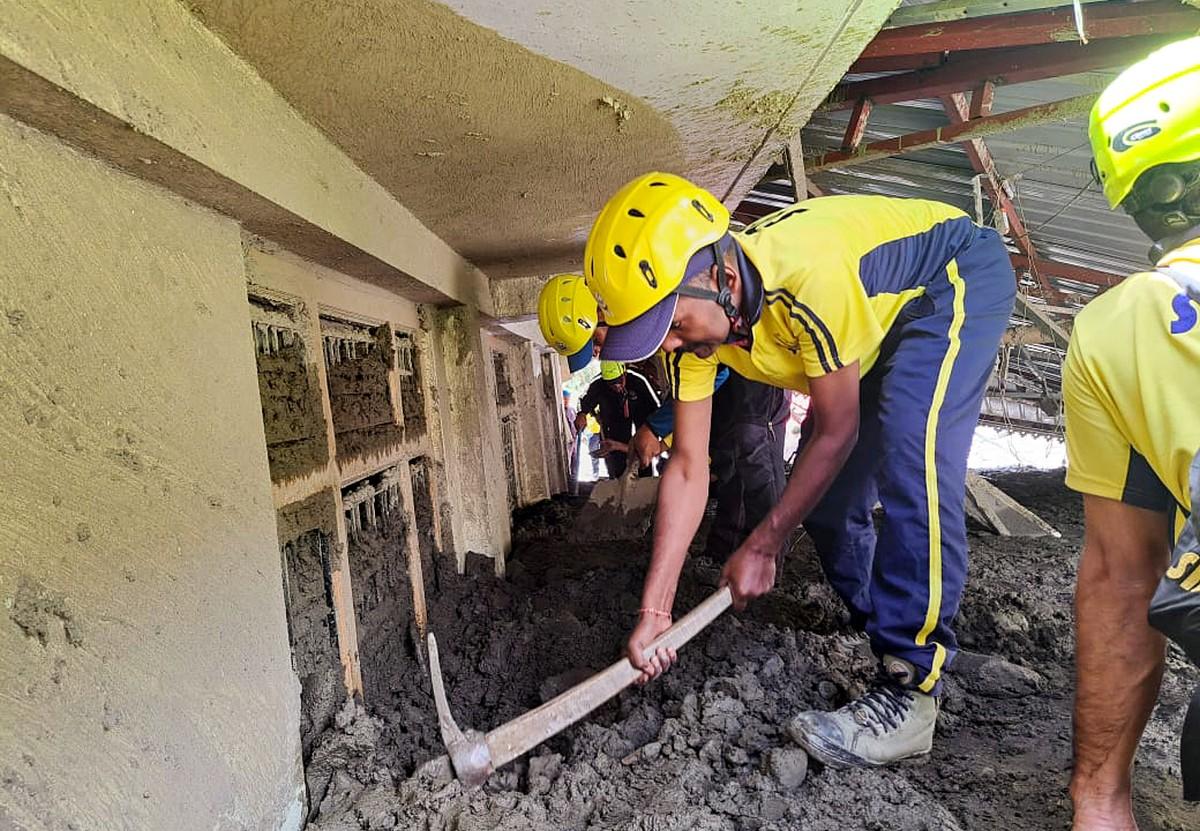
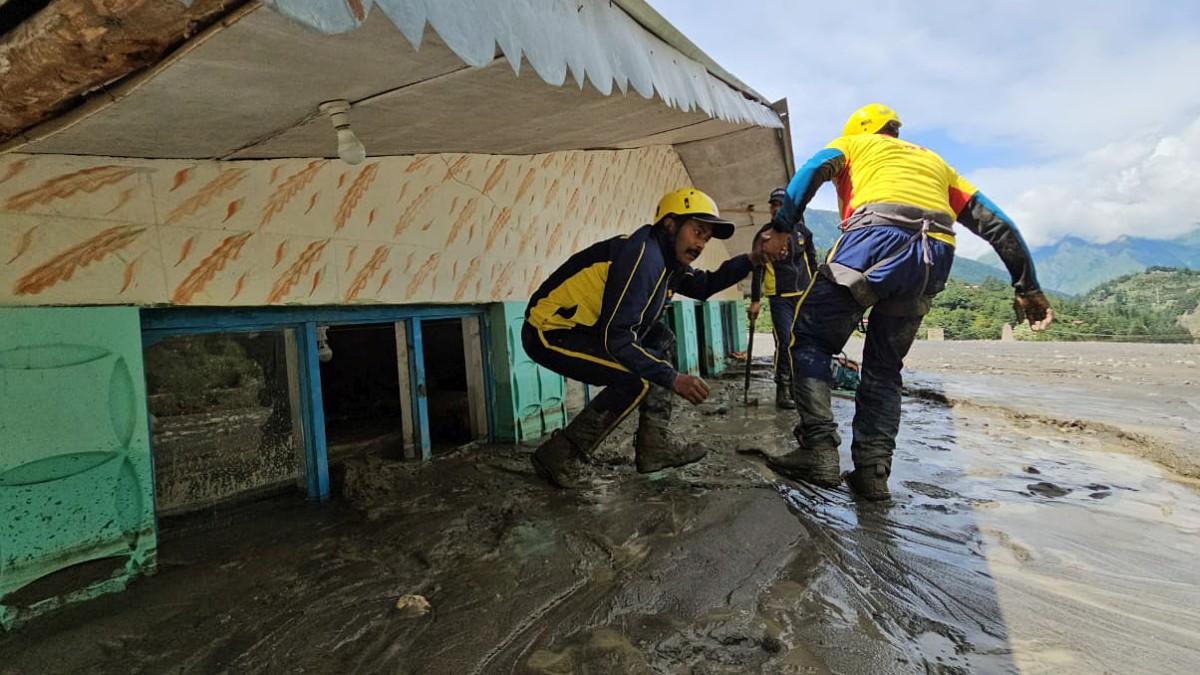
Look at the kind of mud slides and boulders that came down destroying everything in the river's path.
Can any bund survive the force of these raging waters and mud slips? Why was construction permitted in the river catchment area?
It is basic common sense that the river will at some point reclaim its flood plain. We have to allow the river to flow and trees are the only thing that hold the soil together to prevent avalanches from occurring.
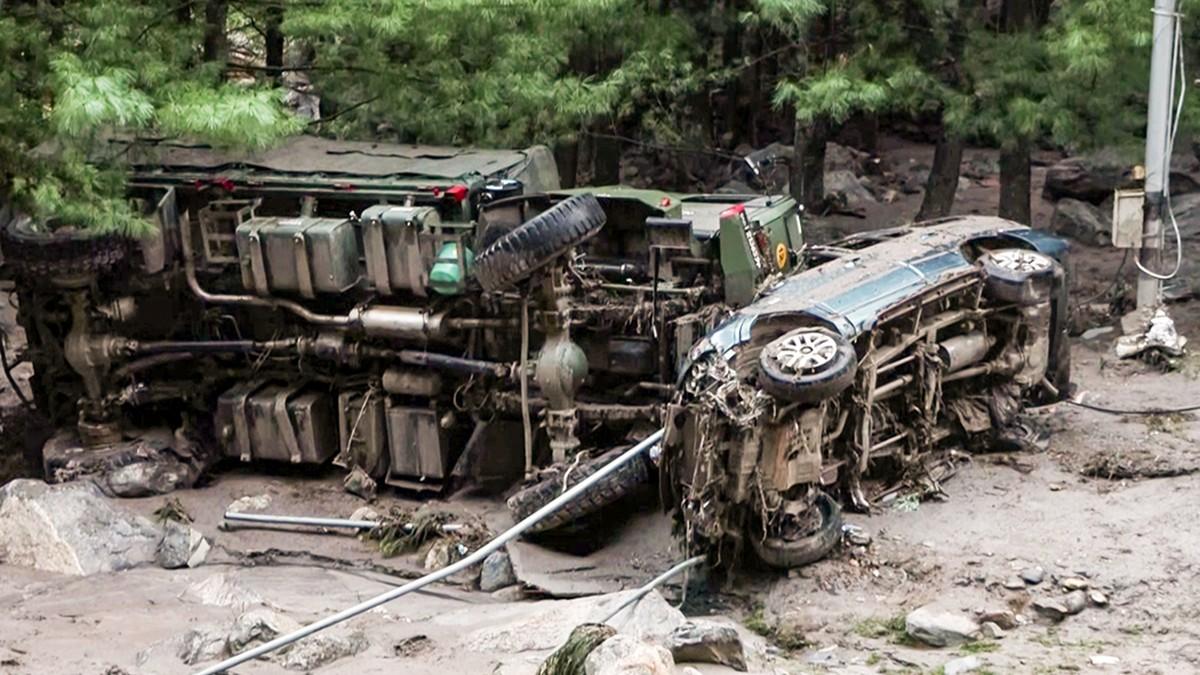
The upper Himalayas have faced a huge amount of deforestation.
We are witnessing a huge amount of deforestation.
Data provided by the forest department shows that the state has lost over 50,000 hectares of its forests due to 'development' activities which include mining and road widening in the last two decades.
These are 2020 stats and forest destruction has only intensified in the last five years.
My question is how was permission granted to construct on the river flood plain? If we look at the commercial centre which came up in Dharali, we realised everything was illegal and yet the construction was permitted.
What is the consequence of this illegal and legal construction? Roads, bridges, shops, houses -- so much infrastructure destroyed.
The state government receives huge sums of money for construction purposes and then receives a huge amount of money when a disaster occurs.
Dharali is in the eco-sensitive zone, cannot construct near rivers. The state government is to blame.
We cannot forget that this over-arching development model is predominant across the country.
The public needs development and protection. But the question is what model is being put before them? They have been forcefully illusioned to accept this point of view.
Nobody is against development or the construction of an all-weather road. But the project should be truly sustainable and feasible.
To cite an example, the Supreme Court high powered committee to monitor the Char Dham highway had suggested that the Dharali deodar trees could be saved by constructing an elevated highway instead of expanding the present highway but the government has chosen to ignore this suggestion.
Leading geologist Navin Juyal had been issuing repeated warnings on the need to create alternate roads in order to avoid tree cutting.
The question to ask the government is what alternative pathways have not been permitted. There has to be political will to adopt an environment friendly approach.
But there is no movement against this development paradigm as was witnessed when women launched the Chipko movement against tree cutting in the 1970s.
A movement will develop sooner than later. As a member of the BESZ, I receive hundreds of letters from the public protesting against this mindless development.
In 2012, the government had notified the Gaumukh to Uttarkashi watershed area of the Bhagirathi as the Bhagirathi Eco Sensitive Zone (BESZ) in order to preserve its pristine nature. But this seems to have been flouted as has been the case with Dharali.
I am a member of the BESZ and it is because of our efforts that the PMO issued a directive halting the construction of any new hydro-power projects in this region.
Only those under construction are being allowed. The case regarding new hydro projects in in the Supreme Court but at least all new constructions have been stopped.
Feature Presentation: Rajesh Alva/Rediff






 © 2026