
'Can a nuclear-armed nation sustain itself indefinitely under overt military rule without catastrophic consequences for itself and the region? History suggests otherwise.'
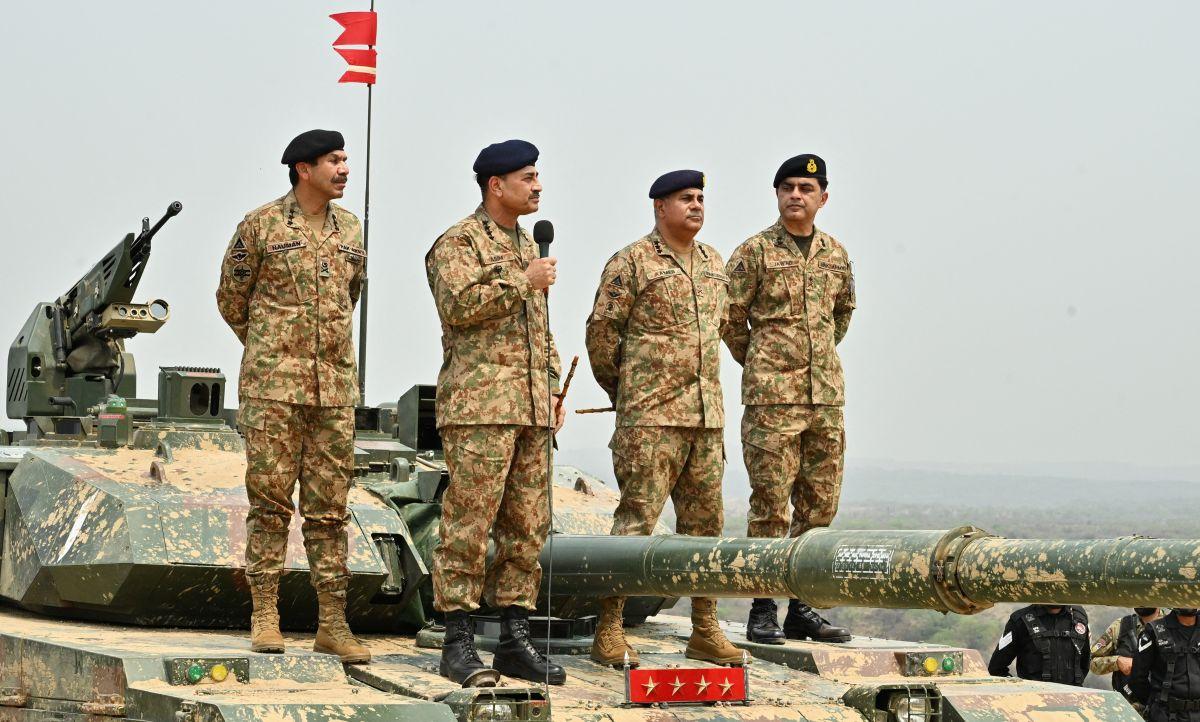
In the concluding part of this exclusive interview with Prasanna D Zore/Rediff, Avinash Mohananey, a retired Intelligence Bureau officer who spent a considerable time in Pakistan on security assignments, outlines India's strategic imperatives in response to Pakistan's unprecedented military consolidation under the 27th constitutional amendment.
Mohananey argues that while Pakistan's internal power struggles might appear to present opportunities, India must exercise strategic caution and maintain traditional diplomatic channels.
From India's perspective, how should New Delhi be reading the developments in Pakistan? Do Pakistan's internal power struggles make it more unpredictable, or do they weaken its ability to pursue aggressive posturing against India?
Firstly, Pakistan coming under complete army control -- or moving overtly towards army control -- is not good news for India. Previously, it was covertly under army control; now they are attempting to give it a civilian façade (through the 27th constitutional amendment).
The problem is that civilian governments utilise diplomatic channels to convey messages. They do not necessarily deploy military might to deal with neighbours or the wider world.
The moment the army becomes powerful, the foreign office becomes weak. The foreign office is obviously the major input provider to the prime minister.
My point is this: If there is no political control over the army's ambitions, the political leadership will find it exceedingly difficult to negotiate its foreign relations with Iran, China, Afghanistan, India -- all regional and international relationships -- because the leadership will perpetually be looking over its shoulders to ascertain whether the army chief is smiling or displeased.
It is a profoundly distressing situation in which things are moving, and it is not good for us either. We want civilian leadership to maintain control so that at least there exists a channel of communication, a possibility of dialogue between the two countries.
How could these power shifts affect India's counter-terror and intelligence strategies, particularly if control of Pakistan's nuclear or strategic assets becomes more centralised under the army chief?
That is precisely why I stated that a country with the army ruling sits upon a small spark. Without comprehending the long-term and short-term consequences of the army's actions, it may venture into something which causes trouble in the neighbourhood.
Let me provide a recent example.
In October, the Pakistan air force bombed Kabul in retaliation for the killing of their army personnel in Orakzai Agency (district in Pakistan). You (Pakistani army) bombed Kabul without realising that Kabul is the capital of a sovereign nation.
Neither the Americans nor the Russians ever bombed Kabul during their respective interventions. It is equivalent to the Taliban bombing Islamabad -- Kabul holds symbolic value.
No political leadership would have permitted this type of action. I am uncertain whether (Pakistan prime minister) Shehbaz Sharif even comprehended the implications or was taken into confidence before this bombing occurred, but it aggravated the situation considerably.
The Taliban are now unwilling to negotiate. They are demanding first a guarantee that there will be no overflights -- that Pakistani drones will not traverse Afghan airspace. This has become a precondition because they felt humiliated by the manner in which Pakistan conducted itself.
That is why they organised a procession displaying Pakistan army uniforms captured from soldiers detained by the Taliban, parading them through Kabul to demonstrate: 'Look, you bombed us, but we remain in control.'
Do these divisions within Pakistan's defence forces present any opportunities for India diplomatically?
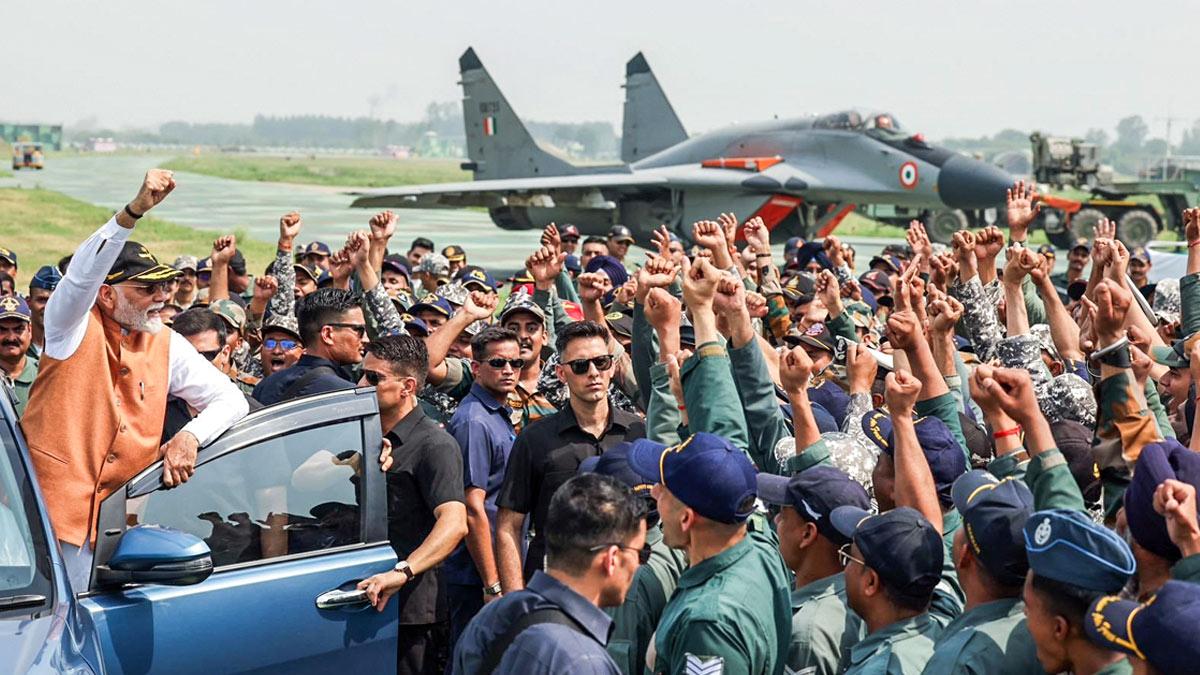
No. We should not be venturing into such matters. We should maintain communication with the foreign office and, through the foreign office, with the prime minister of Pakistan -- whoever holds that position. We do not need to communicate with Field Marshal Asim Munir directly.
What lessons should India's defence planners and policymakers draw from Pakistan's military structure and its current struggle to balance power politics?
We have a clearly delineated system which has functioned since 1947: The defence forces operate under political leadership, and that should continue in India.
Even though we now have a chief of defence staff (General Anil Chauhan), it has not caused any imbalance in the political-military relationship. That equilibrium should be maintained.
Pakistan is an extraordinarily fragile country in that sense -- economically it is very vulnerable. Religious extremism is another issue causing problems in Pakistan. There are multiple layers of threats within Pakistan, but at present, I do not believe anything is going to spill onto the streets.
Otherwise, nobody can predict with certainty, because these are organic developments. It could happen at any time -- it may not occur for the next two years, or it may transpire within two days. Nobody knows.
So it is smooth sailing for Asim Munir as the chief of defence forces?
He will be chief of defence forces. He will be decorated accordingly, and he will receive a five-year extension.
What are your final thoughts on the implications for regional stability?
The consolidation of military power in Pakistan under a single commander with unprecedented constitutional protections and lifetime immunity represents a significant shift in South Asian geopolitics.
For India, this development necessitates a recalibration of our engagement strategy -- not towards exploitation of Pakistan's internal contradictions, but towards ensuring that functional diplomatic channels and crisis communication mechanisms remain intact.
The danger lies not merely in Pakistan's military dominance, but in the absence of political oversight that might otherwise temper impulsive military adventurism.
We have already witnessed this with the Kabul bombing -- an action that no prudent civilian government would have sanctioned. As Pakistan's economic fragility deepens and its international isolation grows, the risk of miscalculation increases proportionately.
India must maintain vigilance while simultaneously keeping diplomatic doors open. We should neither celebrate Pakistan's internal turmoil nor seek to exacerbate it.
Our national interest lies in a stable, if not friendly, Pakistan -- one where civilian institutions possess sufficient authority to engage in meaningful dialogue and exercise restraint over military impulses.
The fundamental question remains: Can a nuclear-armed nation sustain itself indefinitely under overt military rule without catastrophic consequences for itself and the region?
History suggests otherwise, and prudent statesmanship demands we prepare for all eventualities while working to prevent the worst outcomes.










 © 2025