
'As one former Indian diplomat put it to me, Delhi has access to the White House, but Islamabad has access to Mar-a-Lago.'
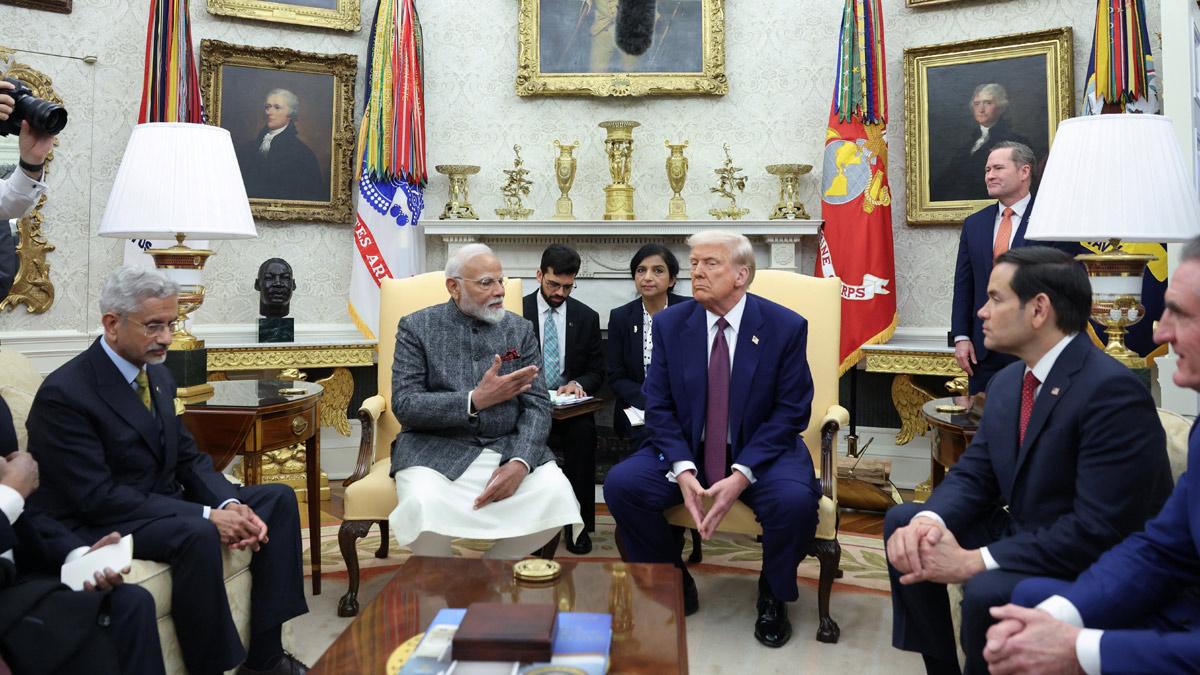
"Washington is showing itself to be an unreliable partner. So, there is every incentive for Modi to come to an understanding with China and to keep Russia close," says Milan Vaishnav, Senior Fellow and Director South Asia Programme at the Carnegie Endowment for International Peace.
Dr Vaishnav is an incisive observer of India-US relations, Indian politics, economy, society and hosts the popular weekly podcast Grand Tamasha. He holds a PhD, MA, MPhil in political science from Columbia University.
"Whether India and China can actually work out some of their disagreements depends more on Beijing than New Delhi given the former's intransigence. But India will want to double down on its strategy of cultivating multiple partners," Dr Vaishnav tells Rediff's Archana Masih on the rising India-US tensions over Trump's 50% tariffs and India's options.
Where does the slapping of 50 per cent tariff by President Trump leave India-US relations?
The 50 per cent tariff leaves US-India relations in their worst spot since the 1998 nuclear tests and the subsequent US sanctions.
The big difference this time is the volatility and unpredictability.
From one day to the next, no one knows what Trump will do.
I think there is still a way for the two sides to strike a deal, but there will be massive trust deficit now -- one that the US and India have spent a quarter-century trying to remedy.
Quite simply, this is not how one treats a strategic partner, no matter how big the policy differences might be on issue A or B.
What has irked Trump so much? Is it personal because Prime Minister Modi refused to endorse Trump's claims of bringing about the India-Pakistan ceasefire?
It is impossible to get inside of Trump's head, but the factors seem both personal as well as structural.
Trump is frustrated by his inability to bring Putin to the negotiating table and has linked India (through its oil purchases) to the Russian war effort.
At the same time, there is no coherent China policy in Washington today, and it is the collective anxiety shared by Delhi and Washington vis-a-vis China which has often acted as the glue bringing the two sides together.
On a personal level, yes, I think Trump feels betrayed by India's refusal to acknowledge his personal role in the ceasefire.
He often touts his record as a 'peacemaker', and it is not a coincidence that he mentions his role in the India-Pakistan ceasefire on what seems like a daily basis.

Are India-US relations back to the cold freeze of the late 1990s?
I don't think we're back to the cold freeze, but we're moving in that direction.
The big difference is that there are a robust set of interactions, engagements, modes of cooperation in place now that did not exist in 1998.
These span science, defence, technology, education, and development.
The two countries have built a pretty wide set of bilateral connections that I do not believe will switch off overnight.
What is the significance of Prime Minister Modi's visit to China for the Shanghai Corporation Organisation summit in view of the rising tensions over US tariffs?
Will his interactions with Xi Jinping and Vladimir Putin incite Trump more?
Given the turn in US-India relations, there is ever more reason for India to hedge its bets.
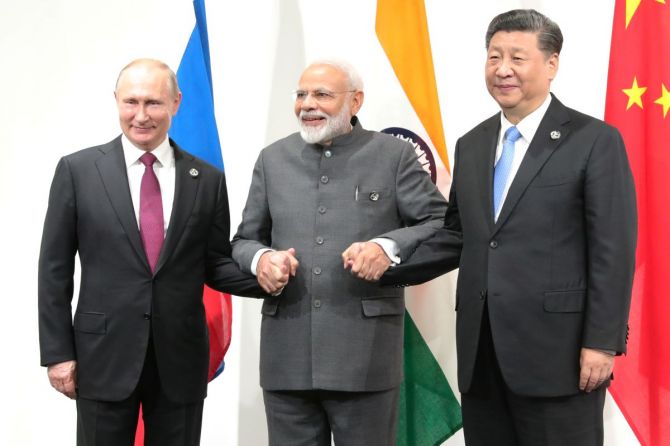
Washington is showing itself to be an unreliable partner. So, there is every incentive for Modi to come to an understanding with China and to keep Russia close.
Whether India and China can actually work out some of their disagreements depends more on Beijing than New Delhi given the former's intransigence. But India will want to double down on its strategy of cultivating multiple partners.
Pakistan army chief Field Marshal Asim Munir is reportedly going to make a second visit to the US in two months. What is the import of this development?
Is it connected with Pakistan's playing go between with Iran?
The whiplash in US-Pakistan relations is something to behold. I certainly could not have predicted it. While Iran could be a part of it, I also think that Pakistan has very deftly used personal diplomacy to connect with Trump, his family, and his inner circle.
As one former Indian diplomat put it to me, Delhi has access to the White House, but Islamabad has access to Mar-a-Lago.
Feature Presentation: Aslam Hunani/Rediff







 © 2025