

'New Delhi is not naive about its foreign policy choices.'
"As far as trust [with China] is concerned, that's the million yuan question. Lest we forget, who would have predicted that we would be discussing how 25 years of the US-India partnership have unravelled in the past 25 days?" asks Akshobh Giridharadas, the geopolitical commentator based in Washington, DC.
"New Delhi has always followed its robust, unshakable belief of 'strategic autonomy', so friends with everyone and allies with no one. There is an economic incentive to reset ties with the second largest economy and increase cross-border flow of goods, especially at a time when the global economy seems to be upended by tariffs," Giridharadas tells Rediff's Archana Masih.
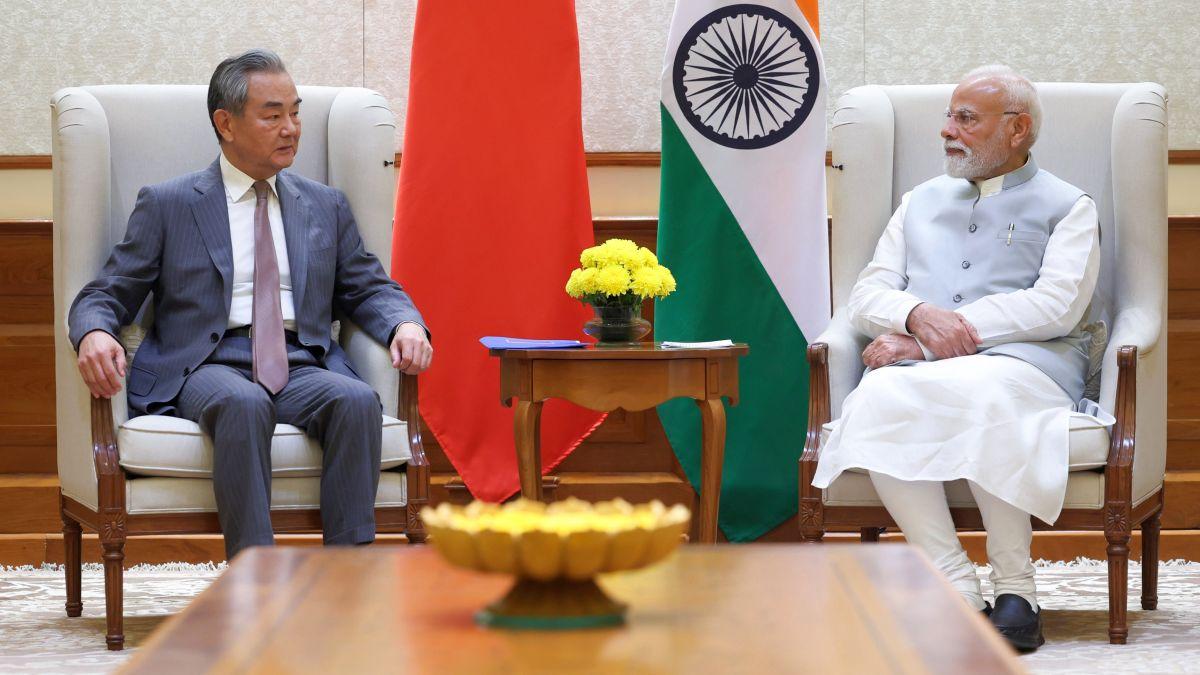
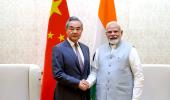
What are the primary takeaways from Wang Yi's India visit and his meetings with the prime minister, foreign minister, and national security advisor?
Wang Yi's visit was seen as a potential thaw in the frosty ties between New Delhi and Beijing since the deadly Galwan Valley clashes, the worst border skirmish between the two Asian giants since 1962.
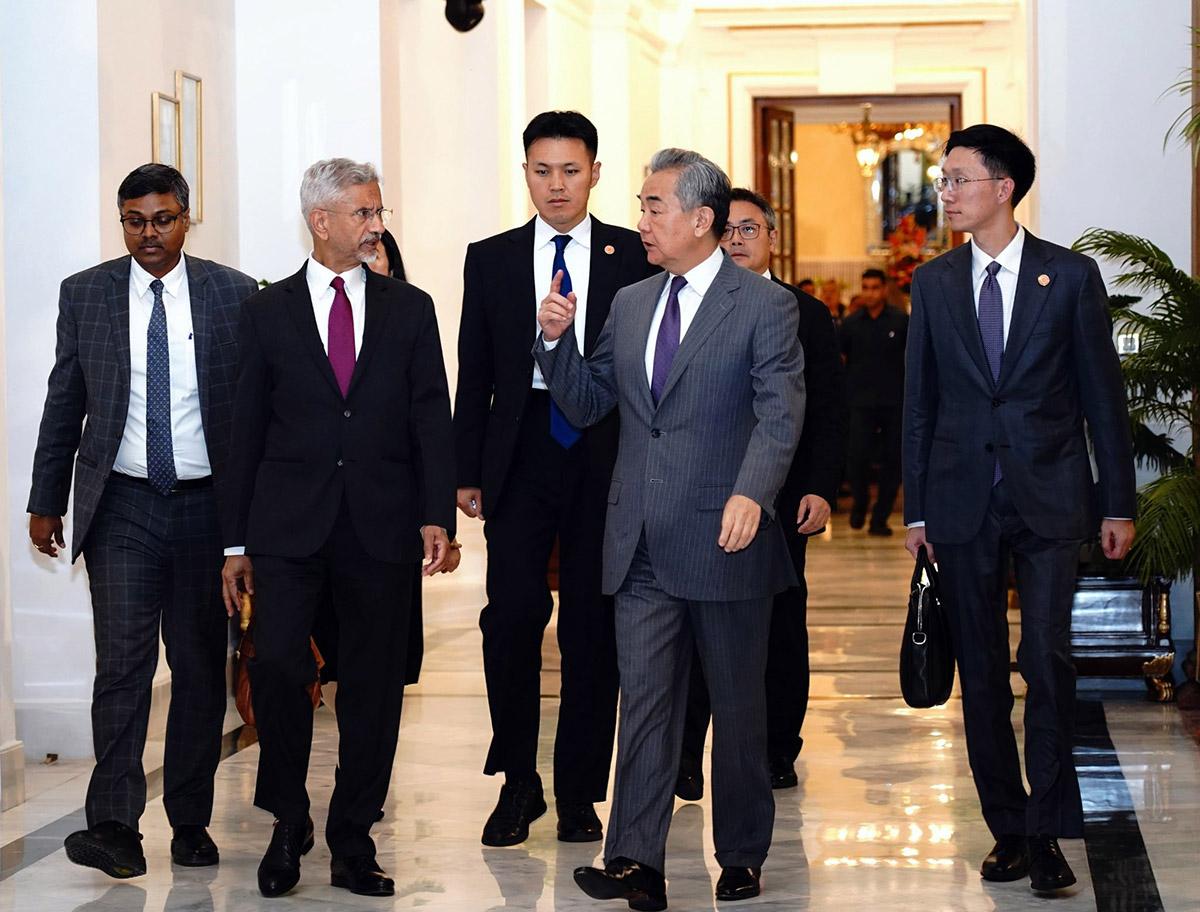
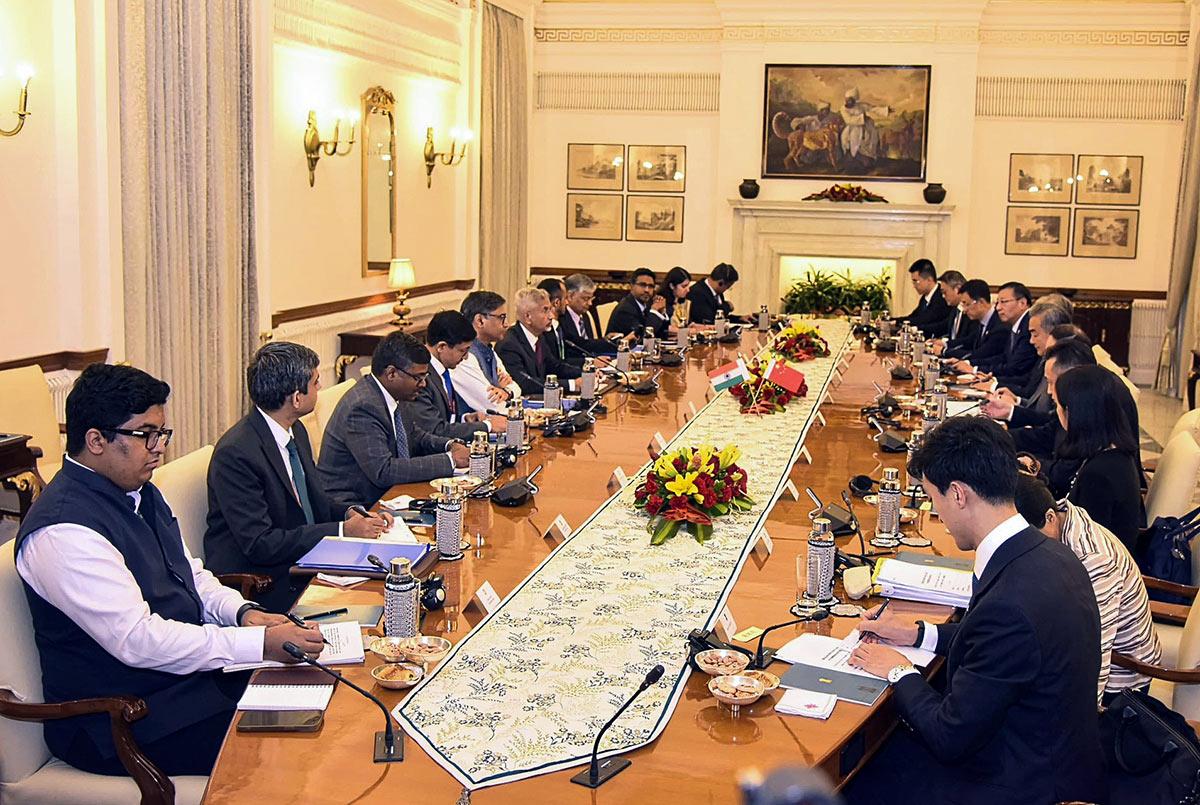
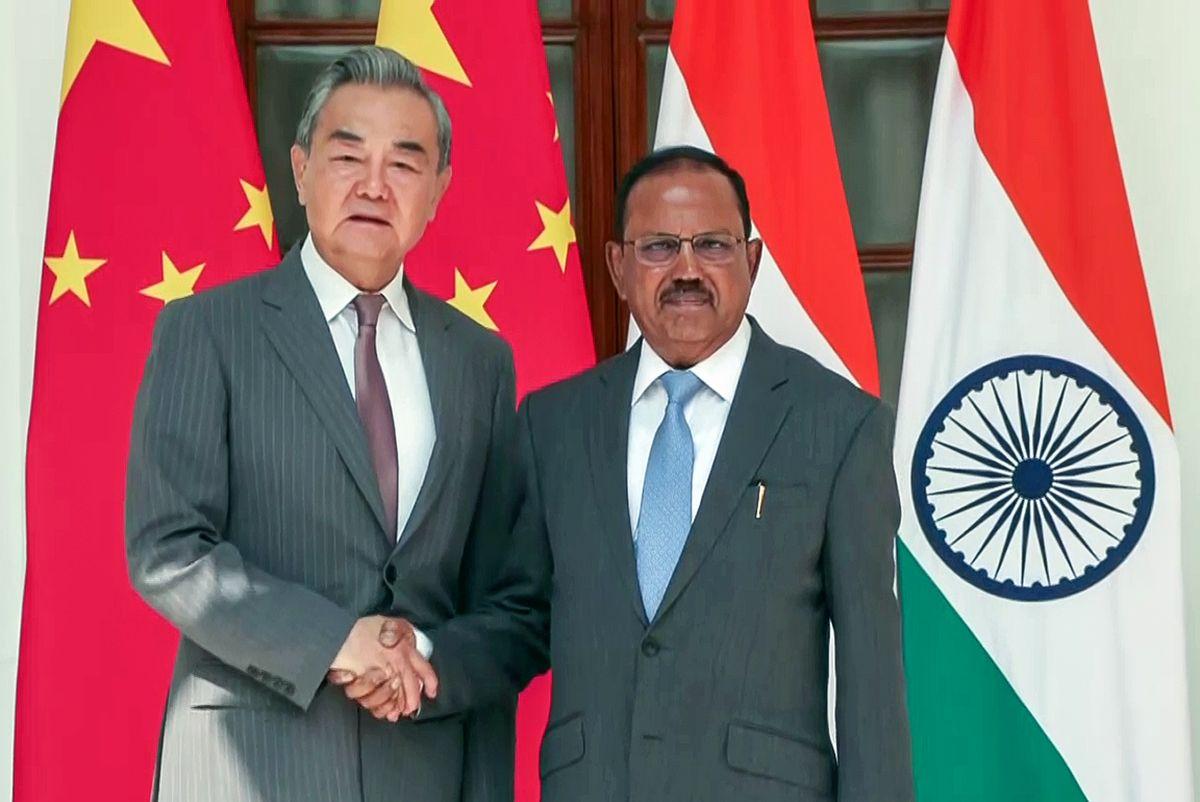
Key bilateral meetings between Prime Minister Modi, EAM Jaishankar and NSA Doval -- both to de-escalate border tensions and sort out outstanding issues on the Line of Actual Control (LAC).
This is the 24th round of the Special Representatives' Dialogue on the Boundary since 2020.
Wang Yi also wanted to personally invite Prime Minister Modi for the SCO Summit, which would mark PM Modi's first trip to China in 7 years (2018), marking a detente in ties and discourse around critical minerals, which China has the largest reserves for.
Is an India-China rapprochement on the cards after a cold freeze of five years since the Galwan conflict in 2020? Can India trust China?
It does seem to be some sort of inverse proportionality as ties with Washington have hit a bit of a nadir amid trade, tirade, and tariffs.
As you point out that Beijing and New Delhi have had frosty ties since the Galwan Valley incident in 2020.
For years, they were spoken about in some sort of complementary Asian tigers, under the BRICS umbrella, with their fast-growing economies, with China 5X the size and speed of growth.
But since tensions on the border, even trade ties have dwindled, with India banning several key Chinese apps such as Byte Dance's TikTok and Chinese mobile phones, a strong consumer base for the price-sensitive Indian market.
Since Galwan, New Delhi, which may have been hesitant to go 'all in' on the Quad, doubled down with Washington, Tokyo, and Canberra, and while far from a security alliance, the 'elephant in the room' was the dragon -- a China containment strategy in the Indo-Pacific, even through economic initiatives.
New Delhi and Washington even took some of the initiatives to West Asia with the I2U2 (with Israel and UAE) as a la West Asia Quad and the India-Middle East-Europe-Economic Corridor (IMEC) seen as the new Spice Route to counter Beijing's new Silk Road.
As far as trust is concerned, that's the million yuan question. Lest we forget, who would have predicted that we would be discussing how 25 years of the US-India partnership have unravelled in the past 25 days?
So, New Delhi is not naive about its foreign policy choices, the facile analogy here is when it comes to Beijing, New Delhi will sleep with one eye open.
New Delhi has always followed its robust, unshakable belief of 'strategic autonomy', so friends with everyone and allies with no one, to give both the geopolitical and economic mileage in its belief of a unipolar world.
There is an economic incentive to reset ties with the second-largest economy and increase cross-border flow of goods, especially at a time when the global economy seems to be upended by tariffs.
What 'give and take' will this thaw entail for both sides? What leverage does India have? Can a thaw be sustainable in view of the deep mistrust that exists between the two countries?
The devil is certainly in the details, but as mentioned, there is an economic incentive to reset ties with the second-largest economy, as China, along with the US, forms India's largest trading partners.
In the immediate thaw, you are seeing visa restrictions being eased, Chinese nationals can apply for visas to India, Beijing has resumed access for Indian pilgrims to Tibet, there are plans to resume direct flights between the two, which were halted, and perhaps lifting the restrictions on Chinese imports.
There was a sense of mistrust before even the skirmish of 2020, given that Beijing and Islamabad share a strong bonhomie, are seen as natural allies and security partners, and India even backed out of the RCEP in late 2019, circumspect of China flooding the market with cheap Chinese goods, impacting the Indian retailer.
India's leverage right now is an economic one. As Washington's tariffs hit, the economy finds alternative sources to trade and continue an economic relationship, which shouldn't be confused with all-weather friends.
The two countries have agreed to explore an 'early harvest' in boundary limitation. What are the implications of such a proposal, especially in the Sikkim sector?
India's ministry of external affairs has said it would create an 'expert group' to explore the 'early harvest' to boundary delimitation in the disputed areas.
Some see this as a change from New Delhi's stated position in rejecting 'early harvest' and its earlier stated preference to tackle the border dispute in a more comprehensive settlement.
On the flipside this approach allows for a faster staged resolution process and perhaps can build incentive to tackle broader complex issues.
Early harvest means a now more flexible approach, as Beijing has prioritised the Sikkim junction, which was in the eye of the storm with the Doklam junction stand-off -- between India, Bhutan and China along the Sikkim Corridor back in 2017.
Early harvest for this sector without a broader border dispute settlement could perhaps favour Beijing's expansionist strategy.
How does this thaw play out, considering China's past misadventures - 1. Galwan aggression and 2. aiding Pakistan with military equipment and expertise during Op Sindoor?
An Indian diplomat once mentioned to me 'that in India, being in Quad prevents it from looking as anti-China, and India in BRICS prevents it from not looking like an anti-West' bloc.
This was back in 2018, long before the Galwan clashes.
The takeaway here is clear -- India always had a placating factor, something from the non-aligned days to the strategic autonomy days.
This credo has NOT always been understood or perhaps misunderstood in a 'bipolar, with us or against us world', but it says that New Delhi's view is that of a multipolar world, where it has multiple involvements, across economic, geopolitical, defence, and security, and can create its bespoke system.
Pakistan has always said its relationship with China is 'higher than the Himalayas, deeper than the oceans, sweeter than honey'. That relationship was further accentuated during Operation Sindoor, when the Pakistan air force used Chinese-made fighter jets in J-10s and stealth technology.
But Pakistan also has a large arsenal of F-16s. A thaw is not a substitute for complete trust, but just an open road to progress further in diplomatic discourse.
Those who forget history are doomed to repeat it, and New Delhi hasn't forgotten 1962 and the subsequent frosty ties along the contested border.
Is Donald Trump's mercurial nature and capricious policies the reason for the two countries seeking to repair their ruptured relationship?
I normally don't believe geopolitics is straight forward, but sometimes one would have to say Occam's Razor -- perhaps the simplest answers are the ones most likely to be correct.
Trump 1.0 and Trump 2.0 are different, except President Trump is using the same playbook of tariffs as a key instrument of foreign policy.
In a lot of ways, India has been hit worse than others, with a 25% reciprocal tariff rate and 25% penalty for procurement of Russian oil, while China imports the same. Both are the world's leading energy importers for their billion plus domestic audience.
So in the short run, it does seem like the state of economic turbulence has brought about an unusual thaw, it's still too early to say, but unpredictability seems to be the only predictability for now.
Feature Presentation: Aslam Hunani/Rediff







 © 2026