

'What is going on is the under counting of the migration population in urban areas. It has been going on in the last few censuses.'

Now that the massive exercise of conducting Census 2027 has started, there has been a lot of debate and discussions on how it should collect the data and what the government should do with the data.
It was in 2011 that the last census took place, and a lot has changed in these 14 years.
Will the data reveal some unexpected and shocking results?
"We expect a lot more information from Census 2027 like housing, age group composition, religious composition, educational level, etc. This makes the exercise very complex with a certain degree of uncertain outcomes," P C Mohanan, former acting chairman, National Statistical Commission, tells Rediff's Shobha Warrier.
The first of a two-part interview:
After 14 years, a census is happening in India. What kind of data can we expect?
By the time we get the data in 2027, it will be 16 years since the last census happened! 16 years is very long for any country to have its population counted.
Except perhaps for countries like Afghanistan, which has not done a census for the last 40 years, all the other countries have census regularly.
In India, right from 1861, it was considered the sacrosanct duty of every government to have its population counted at regular intervals.
This time, people have been clamouring for a census for a long time. Initially, the pandemic was cited as a reason for the postponement of the census. Afterwards, there was no such reason to delay it.
So, the kind of findings Census 2027 will come out with, should have a lot of interesting features.
For example, many of the schemes started by the government were relying on Census 2011 data. Based on the same data, the government has been making projections which incidentally is quite different from what the UN has been projecting.
Our understanding of urbanisation is also constrained by the delay in the census.
In this background, the numbers that will come from this census will be of great interest. We do not know whether it will be more than what we expect or less than what we expect.
And the inter-state variations also will be quite high. So also the difference between regions.
That's why the outcome of the census is highly anticipated by everybody.
Then, many of the claims by the government -- whether it is employment growth or toilet coverage or drinking water availability -- are based on the numbers from the 2011 population or its projections. These claims will be verified once the data comes out.
So, we look forward to this census data with great interest.
You said the outcome of Census 2027 will be interesting...
All the projections we see today are based on assumptions. So, it is very difficult to say whether the outcome will be shocking or satisfactory or interesting.
One thing is sure, the numbers will answer a lot of questions, and it will also put to rest many of the recent data controversies, especially the government claims.
Whenever international agencies come out with indices like the hunger index or the high inequality in society or unemployment rate or lack of press freedom, the government brushes it aside saying it was aimed to tarnish the image of the country.
Do you think once the census figures come out, a lot of vagueness will disappear?
It may not disappear fully as many of these figures are not based on any official data. For example, the hunger index. It is based on some random survey which the international agencies entrust to some private bodies to do. So, they are not based on any official data.
But it is a fact that the very same government has been over-enthusiastic whenever any index shows us in good light!
And they become very critical the moment the indices are not flattering. Like there was big news when the ease of doing business index by the World Bank showed some improvement.
I am not very much interested in these global indices as they are not based on real data.
Our system should produce numbers so that we would know where we stand. For that, the census is the most vital element as it answers a lot of questions.
In the last 14 years, Indian society has changed dramatically. What should the administration be concerned about while conducting the census?
Because of the changes in society, the census process and also the results will change dramatically.
If it was just a count of people during British times, with numbers based on religion and caste added to it, we have moved way beyond now.
We expect a lot more information from Census 2027 like housing, age group composition, religious composition, educational level, etc. This makes the exercise very complex with a certain degree of uncertain outcomes also.
Uncertain?
Yes. It was much easier to just count the number. But when you want to not just count the number but assess the living standards of people in terms of housing, sanitation facilities, education, jobs, etc, it becomes a complex exercise.
In fact, there is pressure to add more items.
The fact is you are depending on 3 million enumerators to find answers to all these questions. It means you have to ensure the quality and comparability of the data.
More than that is the issue of migration or migrants. There are a large number of migrants from Bihar, UP, Bengal and Odisha in states like Kerala, Tamil Nadu and Karnataka.
It was not a big issue earlier. Now, for example, there are supposed to be around 30 lakh (3 million) migrants in a small state like Kerala the population of which is 3.5 crore (35 million).
Will they be called as the people of Kerala? In fact, they should be as they live and work in Kerala.
So, the number may not give the correct impression of the resident population or floating population.
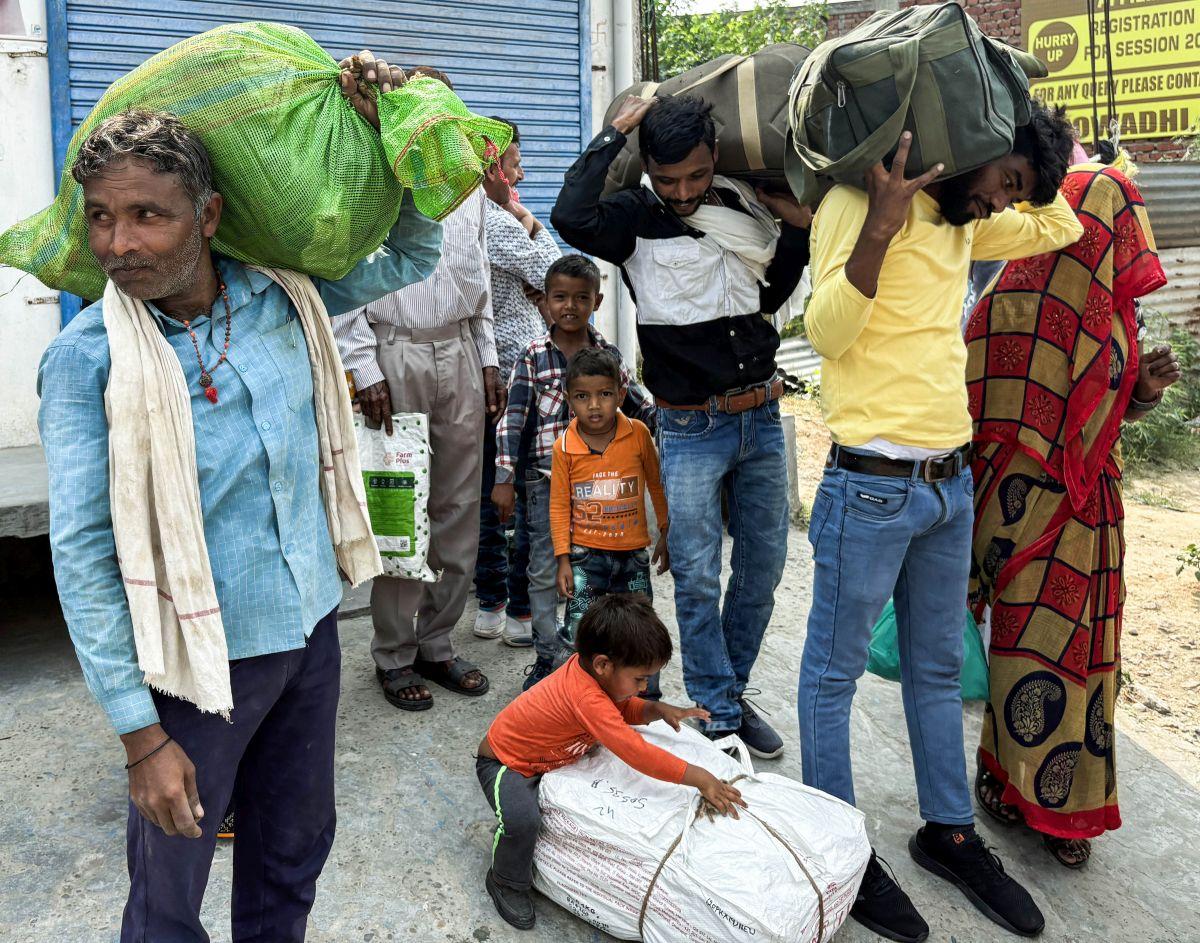
Is this not a problem in big cities like Delhi, Mumbai, Chennai and Bangalore? If migration was to these big cities earlier, now migration is happening to the entire southern states...
Will we get a true picture?
It is possible to give the migration status and count the migrants. But what is going on is the under counting of the migration population in the urban areas. It has been going on in the last few censuses.
In places like Delhi, 60 out of 1,000 people are under-counted. For every 1,000 people you count, around 60 people are not counted.
That's because the migrants live in temporary accommodation or may be homeless, or they move around.
I feel this under-counting number may go further up this time.
So, the census has a lot of daunting issues given the size of the population.
It shows there are a lot of limitations and challenges in counting people correctly. So, we have to keep this in mind when we look at the numbers to make claims and counter claims.
To me, migration is going to be the most problematic and challenging aspect of the census.
Yes, there was a talk of a National Population Register initially.
Is it possible to have a National Population Register in a country like India?
It is simply not possible from the census.
It is impossible to prepare a population register in a country like India.
They say, they will update it. In 2011, I was counted in Delhi. Now, I live in Kerala. How are they going to update my details?
Fortunately, the government is not talking about NPR now.
I feel they would have given up the idea.
Even after the detailed work in Assam, it is found that it is impossible to prepare the NPR. Thousands of people were on the job but nothing has come out so far.
But then, now you have the new headache of the caste census.
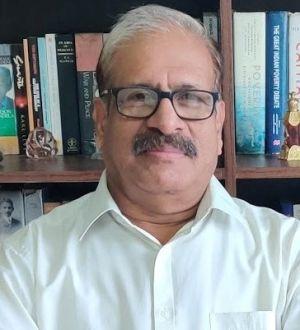 IMAGE: P C Mohanan
Many experts say that the caste census will not work nationally as the names of some castes fall under different categories in different states.
For example, a backward caste name in one state may not be backward at all in another state.
If this is the situation, how can you have a national caste census?
If you go back to British times, there was no national list at that time. Every province used to prepare a list of caste names for their province. And the reports used to be published by the states.
So, preparing a list of caste names nationally is extremely difficult.
Recently, Bihar and Telangana had caste census done and they prepared a list for their states.
Feature Presentation: Aslam Hunani/Rediff








 © 2026