

'New announcements are made every day which brings tremendous amount of instability and uncertainty.'
'Relying on America has become a big problem.'
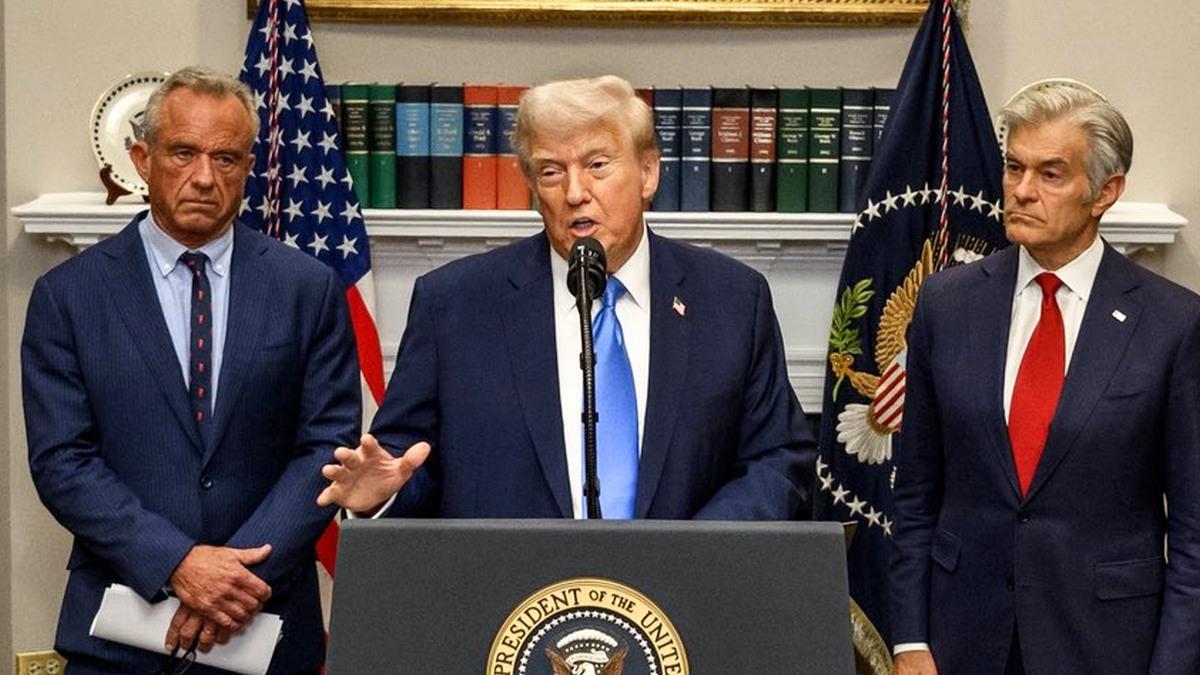
Uncertainty, nervousness and fear.
This is how every single day dawns for Indian companies that work with the US and have offices in the US.
Suresh Sambandam, founder-CEO of Kissflow, a product-based SaaS (Software as a Service) company says, more than the $100,000 fee imposed by the Trump administration as H1B visa fee, it is the uncertainty that is affecting most Indian IT companies.
"Large US firms like Google or Microsoft won't suffer, but Indian IT services companies like Infosys, Wipro, TCS and HCL will." Mr Sambandam tells Rediff's Shobha Warrier.
As the CEO of a company that has offices in the US, how do you look at Trump's new H1B visa fee of $100,000? Are you worried?
Definitely. If we had to face a lot of challenges in getting H1B visas earlier, we now face a lot of fear and uncertainty.
And a fee of $100,000 is a huge amount!
Instead of fixing the problem that was there in the visa programme, they have made it more complicated.
For example, there are gaps in H1B, and it is fair to fix it.
H1B is supposed to be a highly skilled migrant program. But many IT services companies have misused H1B to send low quality, low pay grade people to the US.
What the US government could have done was to fix the minimum salary limit to say, $150,000.
That is, if a company wants to bring in someone from India, the minimum salary has to be $150,000. Then, you don't need a processing fee of $100,000 for the visa.
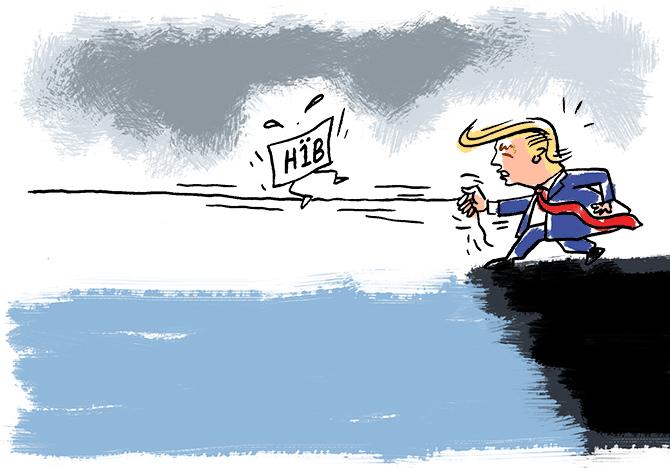
You mean, the accusation that many Indian companies have misused H1B to bring in Indian workers who are paid less than a local person, is true?
It is true. And there is no doubt this problem has to be fixed.
If there is local talent available, they should get the opportunity, and also get paid.
But if there is no local talent available for advanced skills and advanced capabilities, the advancement needs to reflect in the compensation that you pay.
So, you can't pay somebody $70,000 or $80,000 and call them highly skilled migrant worker.
If s/he is a highly skilled person, he needs to be paid $150,000-200,000. I would say, the pay has to be more than $200,000!
Is it only for cheap labour that these companies take Indians to the US under H1B?
See, it is all about making money.
It is a well-known fact that India has talent. A company may charge its customer only $25 per hour for the Indian talent while they have to charge $100 an hour if they use the resources present in America. It is four times more.
What they do is, they take someone from India for $70,000-$80,000 and charge the customer $250,000. In the process, they make so much margin.
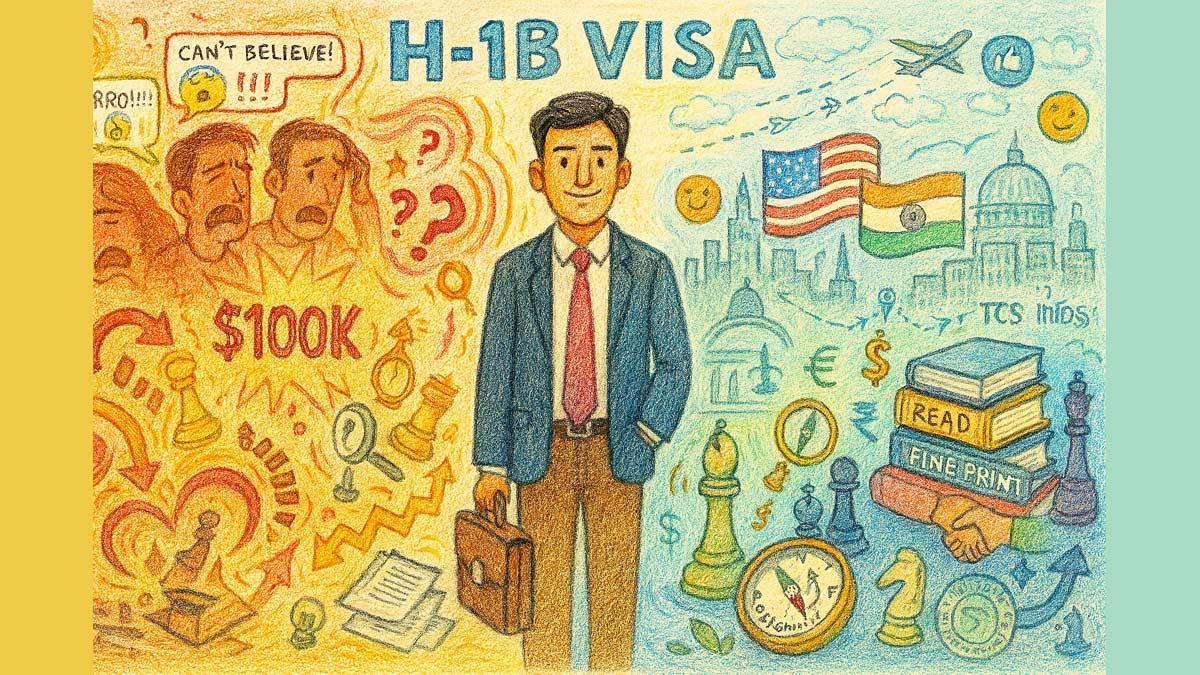
It is said that Indians are in demand because there are not enough highly skilled people available locally. Is it true? How do you rate the local talent in the US?
There is no doubt that Indians are far better in advanced IT skills.
And that is the reason why people like Satya Nadella or Sundar Pichai hold such powerful positions in American companies.
Basically, what works in favour of Indians is a combination of skills and hardworking attitude.
I think in the last 30-35 years, the American culture is built on being cool and giving more importance to work-life balance and not working hard.
In the process, they have lost the edge to stay competitive.
If you take a class of 50 in Stanford, there will be 2 Americans who will outshine everybody else but that is a very small percentage.
The rest of the Americans will do very badly compared to the Indians or the Chinese. This is the advantage Indians have.
There are more hardworking Indians and Chinese than the vast majority of Americans.
Because of this that more Indians and Chinese are getting the jobs.
I would say the Chinese are better than Indians in IT skills.
Now that the H1B is going to cost a lot, will you be happy to recruit local talent? Do you see enough talent available locally?
Our American offices are heavily focussed on sales, marketing and business development. So, we hire local talent and 50% of our workers are Americans.
But when it comes to hardcore solutions design, solution architecture, system program, etc, there is not enough local talent available. Indians do this kind of work better.
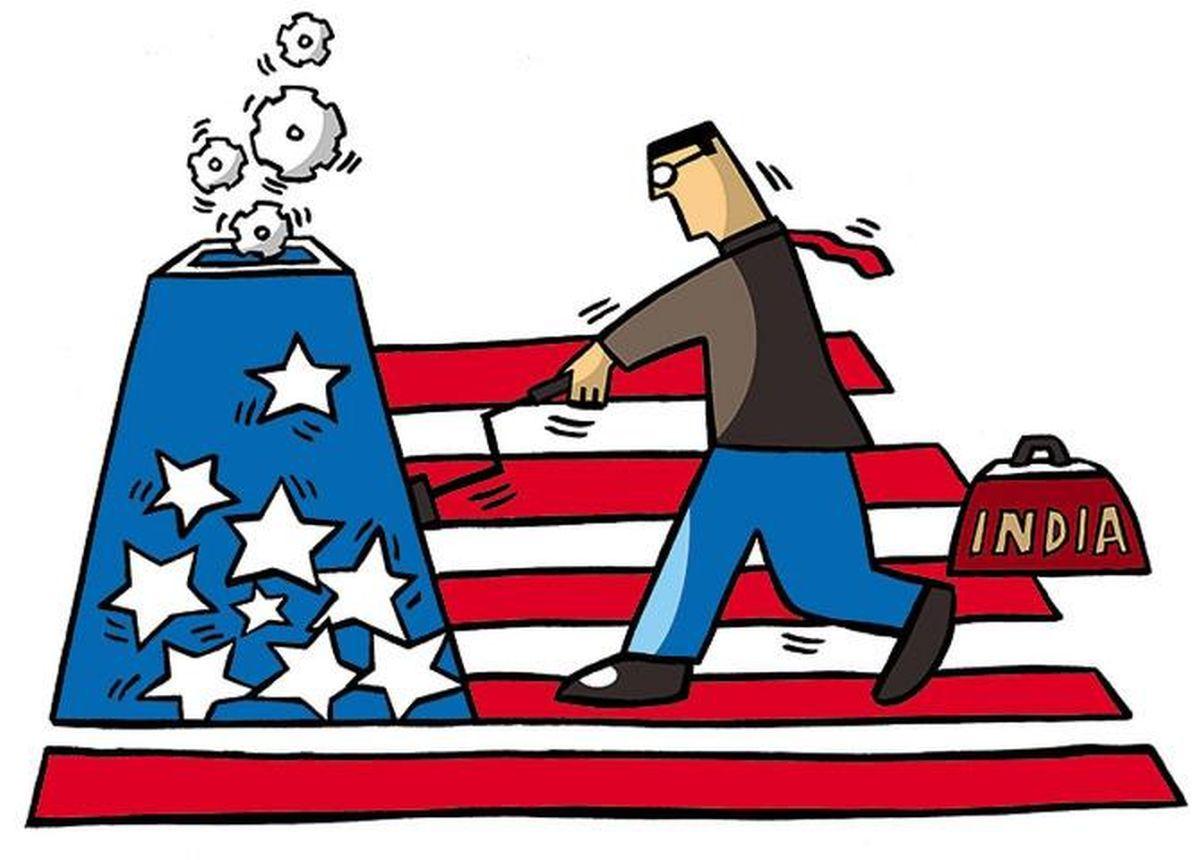
So, you prefer taking Indian talent even by paying a fee of $100,000?
$100,000 is a severe barrier.
Now, companies will pay this high fee only if they are able to sell this to the customer. The customers will have to pay at least 50% of the cost.
It is like trade tariff. Who will pay the tariff ultimately? The customers.
So, since highly skiled talent is not available in America, whoever needs this talent will have to pay for it.
Do you think this will result in more of offshoring?
It is quite possible. What is going to take off because of this are the GCCs (Global Capability Centres).
Now the companies in the US will start thinking in terms of, why do we need to bring in people here paying such a huge fee? Why don't we do offshore so that the cost also will come down?
That's why I see a lot of growth for the GCCs.
You mean, the fear that Indian IT industry will get affected because of the hike in the visa, will not happen? Will it be like, instead of people going to the US, work will come to India?
I think more GCCs will happen. It is a possibility.
Right now, people are still groping in the dark.
There is no doubt that India is the talent hub for IT, and we supply talent.
If somebody wants to hire 500 software testers, there is no other place in the world that can supply that many people.

IMAGE: Suresh Sambandam, founder-CEO, Kissflow.
Will you say, those who will get affected because of the H1B fee are young Indians with the American dream?
People with the American dream will definitely be affected but then most of these people are those who study at the IITs and IIMs.
It is the elite, the highly educated and highly skilled people who go to America. Yes, their prospects will be very tough now.
You just came back from the US. What is the mood over there?
We are all worried because America is a big market for us, for most of the IT companies in India.
The biggest concern all of us have is, there is some sort of announcement, some sort of punishment, some sort of policy change, some sort of crisis every day.
We are constantly facing crisis and uncertainty that we can't plan anything.
For example, if we can't rely on H1B, we look at other options. But when we plan something else, there will a different announcement.
With announcements after announcements coming every day, it is becoming very difficult to deal with America.
Who will get affected because of this?
Large American companies like Google or Microsoft will not get affected.
Those who will get affected are the Indian companies like HCL, Wipro, Infosys, TCS, etc. that provide services.
Since we do not provide services and are a product company, we are fairly isolated from this now.
Even though we are isolated, we are worried because new announcements are made every day which brings tremendous amount of instability and uncertainty.
Relying on America has become a big problem. The advantage we had about America was in making plans, assuming stability in the environment. We have lost that now.
H1B is not a big problem for us, it is the uncertainty.
Because of the uncertainty, will you be looking at other markets now?
For companies like ours, 50% of the market is the US while only 25% of the market is Europe.
The Middle East, the South East Asia and Africa form 15% of the market. Only 10% of our market is India.
Since 50% of our market is the US, the impact on the revenue due to the uncertainty will be very high.
Feature Presentation: Rajesh Alva/Rediff









 © 2026