
'Don't look at Russia only as a place to earn quickly and then leave.'
'Try to build experience in serious companies, skills and certifications that will serve you anywhere in the world.'
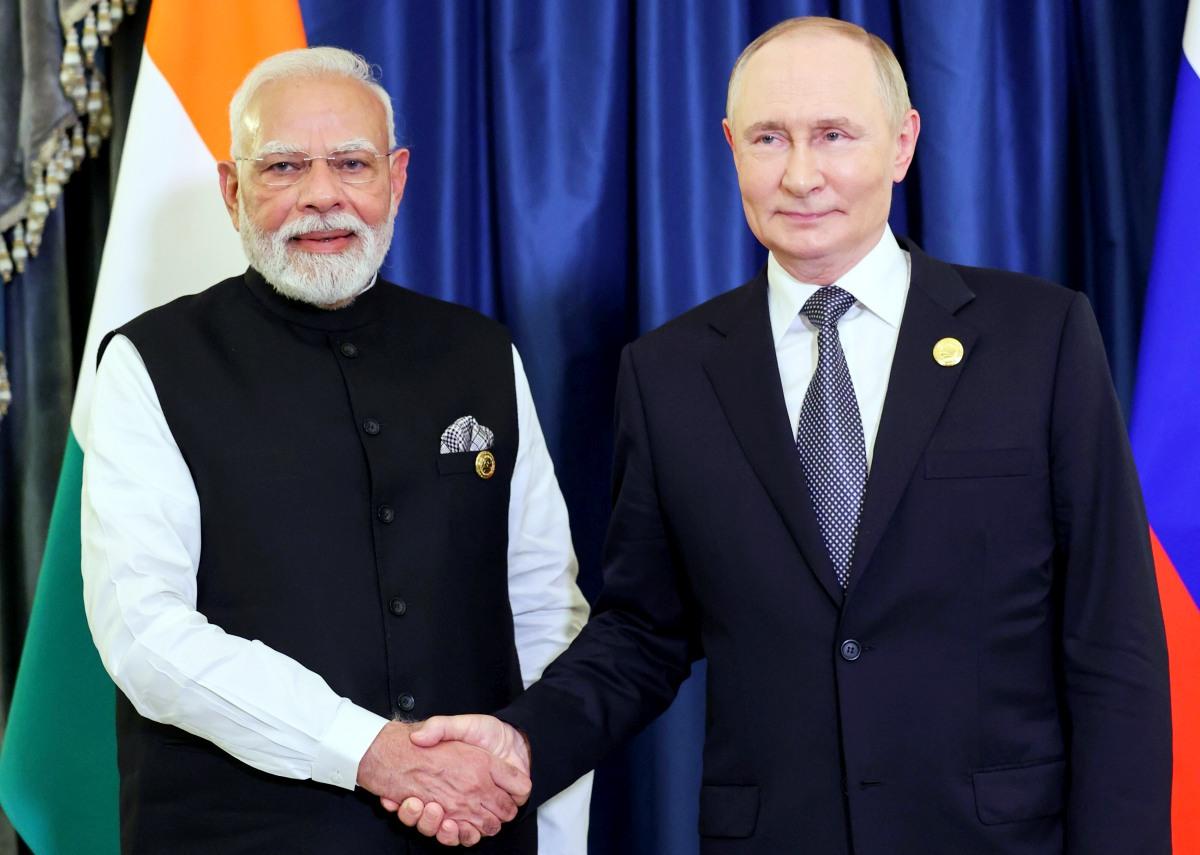
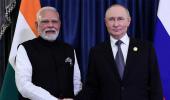
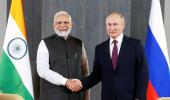
Russian President Vladimir Putin arrives in India today. The State visit is happening when the American president is threatening all countries, mainly India, with trade tariffs that trades with Russia and buys oil from Moscow.
In October, India continued to be the second-biggest buyer of Russian oil, having spent €2.5 billion to purchase crude oil from Moscow.
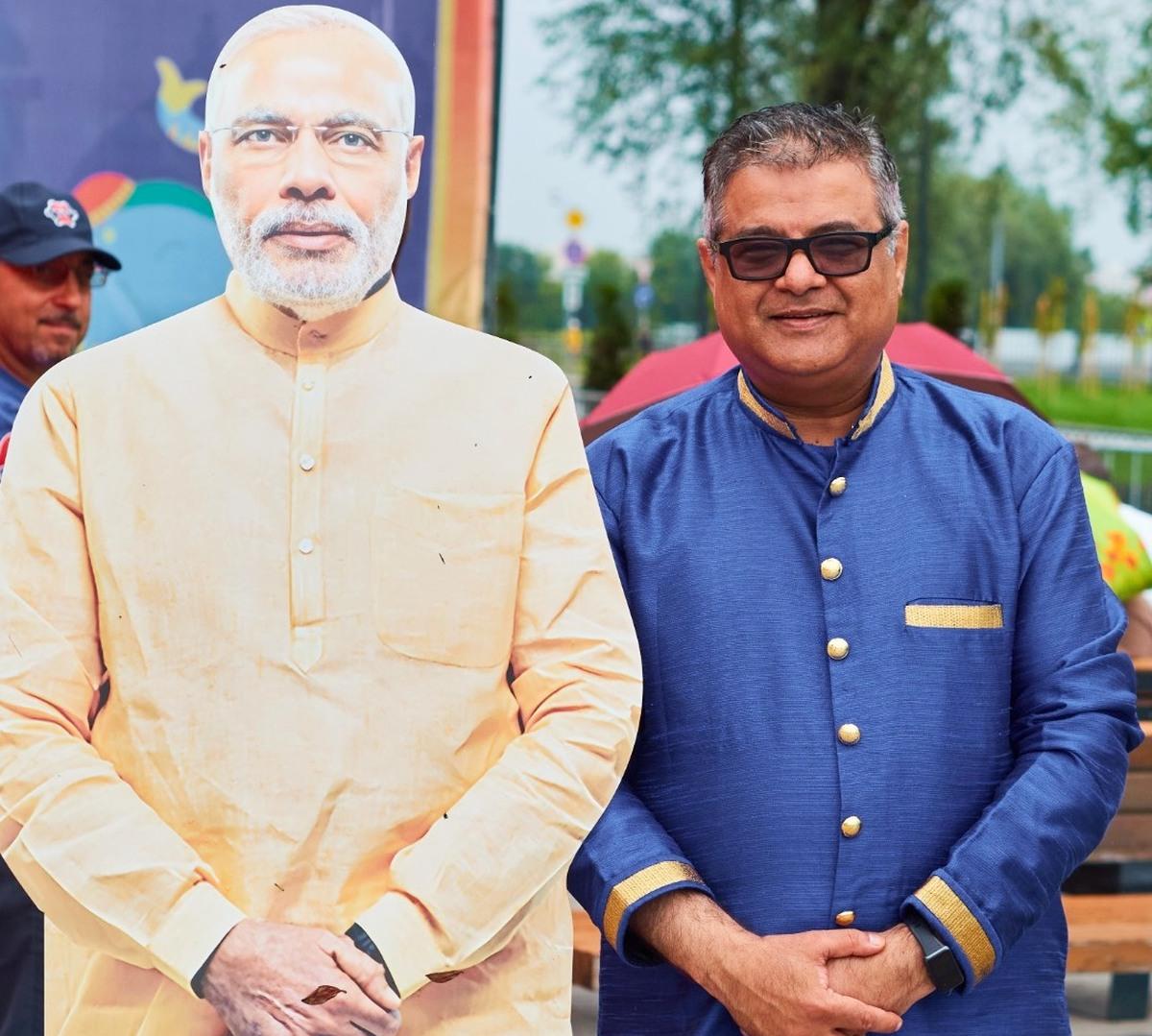
Sammy Kotwani, a businessman based in Moscow, is part of the business delegation as President of the India Business Alliance that will arrive in India ahead of Putin's arrival.
Kotwani's textile firm The Imperial Tailoring company moved to Moscow in 1990.
Incidentally, after Narendra Modi visited his office in 2008, he had dressed him from 2008 to 2011.
In an interview to Shobha Warrier/Rediff, Kotwani discusses the expectations the business delegation has, especially the bilateral labour mobility agreement that will be signed during Putin's visit.
"Our vision is not to import cheap labour, but to build joint value creation which is Indian expertise working with Russian technology and resources to serve both domestic and third-country markets."
At a time when Donald Trump is asking India to stop buying oil from Russia and doing business with Russia, India and Russia are going to sign a bilateral labour mobility agreement when Putin comes to India. You are coming to India as part of the Russian business delegation. What are your expectations?
As a senior member of the Russian business delegation, I see this labour mobility agreement as a strategic, long-term investment in the future architecture of India-Russia relations.
Our expectations are threefold:
1. A stable, rules-based channel for manpower.
We want a formal, government-to-government framework that clearly defines recruitment procedures, sets minimum standards for wages, contracts, insurance, and living conditions and establishes transparent mechanisms for dispute resolution.
This is not about ad hoc hiring; it's about building a predictable pipeline of Indian professionals and workers for Russian industry.
2. Mutual strategic autonomy.
In a world of geopolitical turbulence and external pressure, both India and Russia value strategic autonomy. This agreement should reduce both the countries' dependence on any single market or political bloc, deepen our economic interdependence in a way that is aligned with our own national interests, not those of third countries and demonstrate that India–Russia cooperation is pragmatic, peaceful, and development-oriented
3. Technology, skills, and knowledge sharing.
We do not see Indian labour merely as a headcount. We expect skills partnerships: joint training, certification, and upskilling programs.
Indian specialists can bring global experience in IT, digital services, engineering, healthcare, and modern management to Russia.
In return, Russian companies can provide exposure to large-scale industrial projects, advanced engineering, and R&D environments.
From this visit, we aim to identify sector-wise partners -- Indian recruitment agencies, training institutions, and state governments -- who are ready to build long-term corridors of talent, not one-off placements.
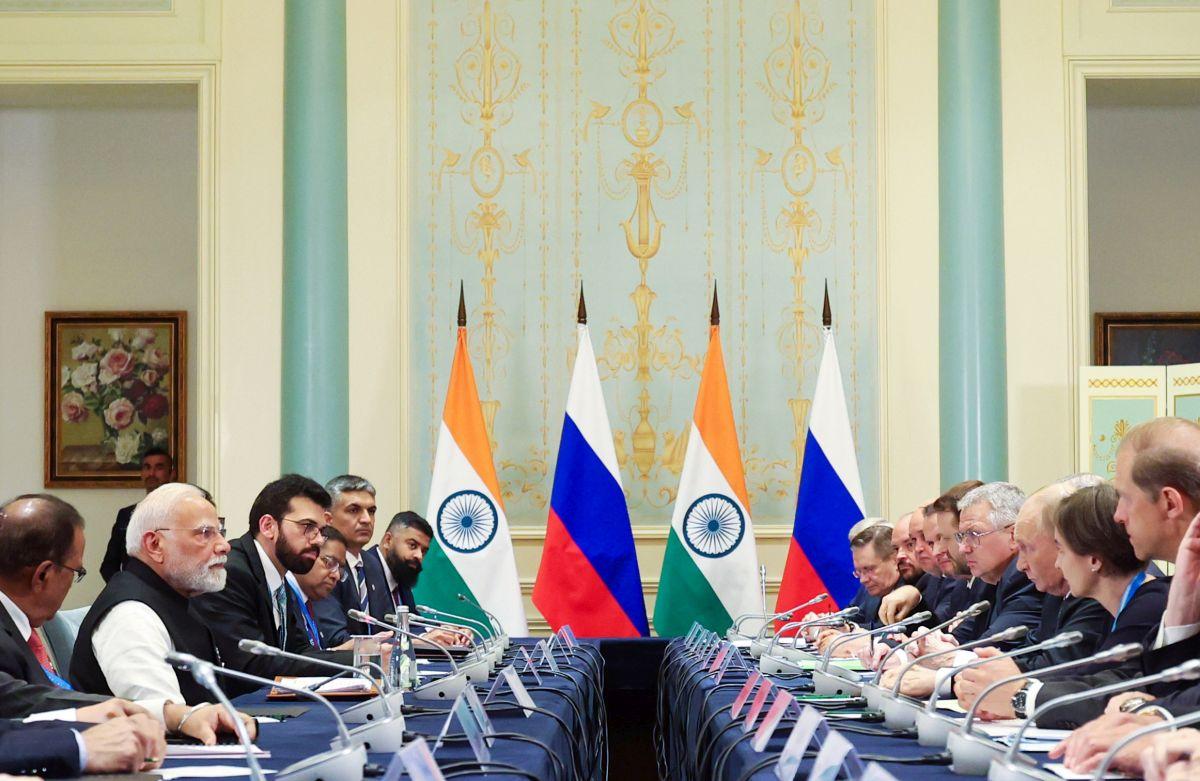
Like Japan, Germany, Italy, the population in Russia is ageing. Reports say 30% of the population is old. Will this be an opportunity for India's young population as Russia suffers from an acute shortage of qualified and skilled workers?
Russia, like many developed and upper-middle-income economies, is grappling with an ageing population, regional disparities in workforce availability and a shortage of both blue-collar and high-skilled labour.
India, with its young and rapidly upskilling workforce, is naturally positioned to be part of the solution.
This can happen in several ways:
1. Structured inflow of workers, not spontaneous migration.
Instead of unregulated, informal flows, we want government-approved recruitment channels, workers matched to real, verified vacancies, joint vetting to ensure both skill and integrity and joint skill-development ecosystems.
We can design Russia-specific training modules in India, in Russian language basics, orientation on Russian labour law and workplace culture and Industry-specific skills.
This means Indian youth arrive in Russia prepared, employable, and protected.
Many Russian regions -- Far East, Siberia, industrial belts -- need workforce support. So, deployment of Indian workers can revitalise the local economies, support infrastructure and manufacturing, and fill critical gaps without displacing Russian citizens.
In short, India's demographic dividend can help stabilise Russia's demographic deficit, provided it is managed responsibly and with respect for local societies and laws.
Is it in sectors like construction, textiles, engineering and electronics that there are a lot of opportunities?
We see a broad spectrum of opportunities, both in traditional and advanced sectors.
I will categorise them as Immediate/Near-term sectors and Medium- to long-term
Immediate/Near-term sectors
These are areas where demand is strong and ongoing, like construction & Infrastructure, roads, rail, housing, logistics hubs, industrial parks, and energy projects.
Then, there is Manufacturing & Textiles, Logistics & Warehousing Ports, rail-linked terminals, cold storage, e-commerce logistics, Hospitality & Services, Hotels, tourism projects, food services in major cities and tourist routes.
Medium to long-term
We are very clearly not restricting this to low-skilled work.
In fact, our strategic interest lies heavily in Engineering & Industrial Design, Mechanical, electrical, civil, and process engineers for industrial modernisation, Information Technology & Digital Services, Software development, cybersecurity, data analytics, fintech, and AI-driven solutions, Electronics & Advanced Manufacturing, Components, assembly, quality control, and process automation, Pharmaceuticals & Healthcare, R&D collaboration, API manufacturing, hospital management, and specialised medical staff, Renewable Energy & Green Tech. Solar, wind, energy efficiency, and circular economy solutions.
Yes, the list is very long.
Our vision is not to import cheap labour, but to build joint value creation which is Indian expertise working with Russian technology and resources to serve both domestic and third-country markets.
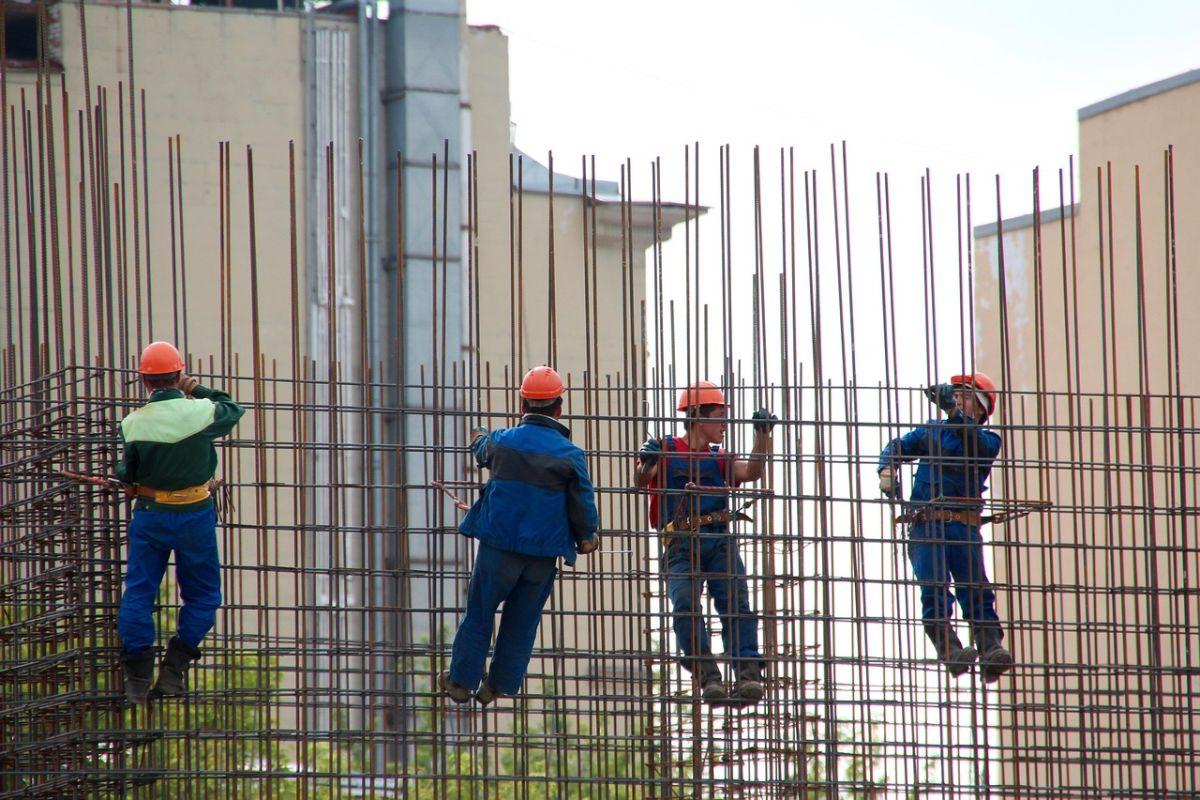
Under the bilateral labour mobility agreement, what can the youth of India expect?
Indian youth can expect rights, remuneration, and career growth.
Under a properly negotiated labour mobility framework, they should expect:
- Legally protected rights, written contracts in a language they understand, clear terms on wages, working hours, overtime, leave, housing, and social insurance, access to legal recourse and grievance mechanisms in case of abuse.
- Transparent remuneration and social protections. It means competitive wages relative to Russian market standards for that sector, employer contributions to social insurance schemes as per Russian law, clear information on taxation so that they know their net take-home income. Also, coverage for workplace accidents and basic medical needs.
- Pathways for professional growth. There are opportunities to renew contracts, move to higher positions, or shift into supervisory/technical roles, access to structured upskilling programs -- language, technical certification, management training, experience in large-scale industrial or technology projects, which enhances their global employability.
- When we say dignity and safety, it means Indian workers should feel that they are guests and partners, not expendable labour and their presence is part of a respected bilateral partnership, not a risky individual gamble.
If we implement all these properly, working in Russia can become a prestigious and safe career path for Indian youth, especially those from technical and vocational backgrounds.
There are many stories that are floating around here about young people from India getting lured to Russia under the pretext of jobs, and then made to fight in the Russia-Ukraine war. Do you feel under this agreement, these kinds of issues would be avoided?
The reports of Indian nationals being misled into conflict zones are deeply troubling.
As a serious business delegation, we unequivocally condemn such practices.
That is why a bilateral labour mobility agreement can help create official, government-backed channels.
For that, only registered, vetted recruitment agencies should be allowed to send workers to Russia under this framework.
And there should be direct coordination between Indian and Russian labour, migration, and foreign affairs ministries can ensure real-time verification of job offers.
There should be a strict separation between civilian jobs and any military engagement.
The agreement should clearly state that labour mobility is strictly for civilian, economic sectors, not for combat roles. And any attempt to blur this line should trigger joint investigation and sanctions against those involved.
There also should be a pre-departure orientation and mandatory briefing where Indian workers must receive a mandatory briefing in India explaining their legal status in Russia, their rights, emergency contacts, and embassy hotlines and clear warnings about illegal recruiters and false promises.
Also, a secure, shared digital database of workers sent under the agreement can help authorities track their location and employer and allow quick intervention if red flags arise. This way, workers should be able to verify their job offer and employer online before departure.
There should be strong criminal and financial penalties for human traffickers, fraudulent recruiters and employers using deception or coercion.
In other words, this agreement should convert today's vulnerable, informal flows into a formal, protected, and traceable corridor, making exploitation significantly harder.
What will your advice be to the young people of India who are looking for opportunities to work in Russia?
To Indian youth looking at Russia as a potential destination, my advice as IBA President is both encouraging and cautious:
- Use only official channels. Apply through government-approved portals, registered recruitment agencies, or directly through employers listed by the Embassy or recognized business bodies like IBA.
- Never hand over your passport or large sums of money to unverified agents.
- Before you travel, make sure you have a written contract that mentions salary, job role, location, working hours, holidays, and accommodation. A clear understanding of who your employer is, not just the agent.
Verified contacts of the Indian embassy/consulate, IBA, and any local support organisations.
- Prepare yourself with skills and language. Focus on real, marketable skills like engineering, IT, construction trades, machine operation, welding, nursing, logistics, etc.
- Invest time in learning basic Russian language and local etiquette. Even simple phrases will make your life easier and safer.
- Know your rights and responsibilities.
- You must respect Russian laws, culture, and local regulations. At the same time, you have the right to be paid as agreed, work in safe conditions.
- Keep your passport with you and seek help from authorities and the Embassy if something is wrong.
- Stay connected and informed. Once in Russia, register with the Indian embassy or consulate and share your contact details.
Stay in touch with your family and avoid isolation.
Connect with recognised Indian community organisations and professional networks; they are your first line of support in a foreign country. - Think long-term. Don't look at Russia only as a place to earn quickly and then leave. Try to build experience in serious companies, skills and certifications that will serve you anywhere in the world.
- If you approach opportunities in Russia with preparation, caution, and ambition, Russia can be a valuable chapter in your global career.
Feature Presentation: Rajesh Alva/Rediff








 © 2025