
'The (Maoist) organisation is in visible decline. Their senior leaders are ageing. Forest life is unforgiving -- older leaders simply cannot cope physically.'
'Earlier, they attracted educated youth from cities. That stream has dried up. Today's recruits largely come from poor village backgrounds and lack ideological depth.'
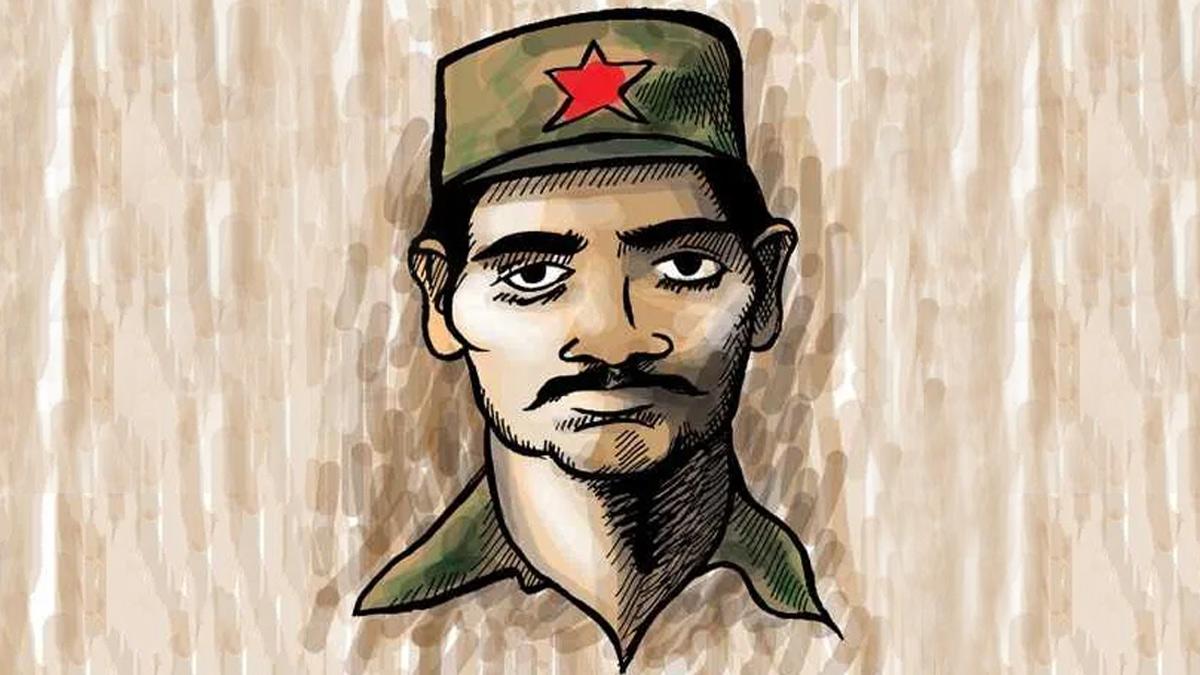
On November 18, 2025, at around 6.30 am, security forces achieved one of the most consequential counter-insurgency breakthroughs in recent years.
In the deep forests of Maredumilli in Andhra Pradesh's Alluri Sitarama Raju district, the Andhra Pradesh police neutralised Madvi Hidma, commander of the CPI (Maoist)'s People's Liberation Guerilla Army Battalion No 1, the most feared military formation in the organisation. Hidma's wife, senior cadre Madakam Raje, and four other Maoists were also killed.
Hidma had been responsible for some of the most devastating attacks on the security forces in two decades, including the 2013 Jhiram Valley attack and the 2017 Burkapal ambush. Born in Puvarti village in Sukma district, he rose from a Bal Sangham recruit to the Maoists' most lethal operational commander.
His death followed coordinated multi-state operations that began on November 17, when 50 cadres -- including special zonal committee members, divisional committee members, platoon members, and area committee members -- were arrested across several districts.
On November 19, further engagements eliminated seven more Maoists, including technical specialist Meturi Jokha Rao alias Tech Shankar.
The operation reflects a sustained 'surround and squeeze' strategy pursued over six years by the Union home ministry and the stakeholder states of Chhattisgarh, Odisha, Maharashtra, Andhra Pradesh and Telangana.
Persistent pressure in Chhattisgarh's Abujhmad forests (a no-go for security forces till about two-three years ago) forced Hidma southward into Andhra Pradesh, where coordinated intelligence sharing enabled forces to seal his movement corridor and trap him.
The impact is historic. Over 1,600 Maoist cadres surrendered in 2025 alone. Maoist-affected districts have shrunk from 180 in 2010 to about 45 in 2025. Only three districts in Chhattisgarh remain significantly affected: Bijapur, Sukma, and Narayanpur.
Retired Central Reserve Police Force director general K Durga Prasad, with decades of experience leading the Greyhounds and later CoBRA (the two specialised security units established to contain the Maoist insurgency), in this interview with Prasanna D Zore/Rediff offers his take on Hidma's death, its impact on the already dwindling Maoist movement and the road ahead.
You have followed Maoist operations closely during and after your tenure. How significant is Hidma's elimination?
Enormously significant. For more than ten years, Hidma projected an aura of invincibility -- partly myth, partly built on his operational successes. His ability to evade security forces created psychological dominance within the Maoist ranks. Neutralising him dismantles that myth. It sends an unmistakable message to remaining cadres: No one is beyond the reach of the State.
Hidma's death is not just a tactical success -- it is a huge strategic turning point; it alters the very psychology of the insurgency. It (Hidma's death) is as good as the death of Maoist insurgency.
One can now safely believe that with Hidma's death, the Maoist insurgency too will soon breathe its last.
What made Hidma so difficult to neutralise all these years?
Several unique factors. His terrain knowledge and ability to vanish into civilian life made him extraordinarily difficult to track.
He was a tribal from Sukma and understood the forests of Dandakaranya like few others. His fluency in tribal languages gave him seamless access to local populations. He could move rapidly through forest routes that even seasoned security personnel took months to understand.
His personal tradecraft was exceptional -- discard the weapon, change attire, blend in instantly. That made identification extremely difficult. He could move through villages appearing like any ordinary tribal youth. These combined elements made him the toughest Maoist commander to locate, let alone eliminate.
The operation succeeded because forces waited for the perfect moment -- and struck instantly.
Despite this advantage, what enabled his final neutralisation?
The key was patience, intelligence, and coordination. The Andhra police followed a doctrine perfected by the Greyhounds -- long-term surveillance, not premature action.
About six weeks before the encounter, intelligence indicated that Hidma's team had entered the Alluri Sitarama Raju district region. But instead of rushing in, the police maintained discreet watch.
They built a complete intelligence picture: His movements, aides, rest locations, and communication channels. Acting too early would have only pushed him back into deeper jungle. They waited until he felt safe enough to linger.
When confirmation came that he had crossed into Andhra territory, the local police acted immediately -- at dawn -- without waiting for elite units. That speed was critical because Maoists get warning even from minor movements. Instant mobilisation prevented leakage and ensured success.
The operation involved security agencies from the states of Chhattisgarh, Telangana, and Andhra Pradesh. How has intelligence coordination evolved?

This was the result of years of multi-state coordination.
What you're seeing is the outcome of years of institutional strengthening. In 2024-2025, Chhattisgarh's intensified pressure forced Hidma into unfamiliar territory. He believed Andhra Pradesh would offer safer ground -- it didn't.
Simultaneously, the arrests of 50 cadres across ranks -- including the big fish -- were not random. They were the result of persistent surveillance across multiple states. Intelligence was shared continuously, networks were mapped, and movement corridors were monitored.
This is exactly how coordinated counter-insurgency should work: even if one operation falters, parallel ones continue independently.
Hidma's wife, Madakam Raje, was also eliminated. How significant was her role?
Extremely significant. Raje was not a mere consort -- she was a co-commander.
Raje was deeply involved in planning and executing major operations. She functioned as an operational co-equal. Her loss is as damaging as Hidma's. Combined with the arrest of dozens of area committee members (ACMs) and above, the Maoists have effectively lost their middle-level leadership -- the backbone of operations.
It will take years for the organisation to rebuild that cadre.
What trajectory do you foresee for Maoist operations?
The movement is suffering from generational collapse.
The (Maoist) organisation is in visible decline. Their senior leaders are ageing. Forest life is unforgiving -- older leaders simply cannot cope physically. Earlier, they attracted educated youth from cities. That stream has dried up. Today's recruits largely come from poor village backgrounds and lack ideological depth.
Ideology itself has weakened. Earlier leaders could articulate political theory. Today's leaders mostly talk of militarism without intellectual renewal.
Most importantly, socio-economic conditions have improved across tribal regions. Roads, connectivity, markets, and education have changed aspirations. Young tribal women riding motorbikes to school represent the biggest blow to Maoist propaganda. The material grievances of the 1970s and 1980s no longer hold the same force.
Are these socio-economic improvements permanent?
Development is now irreversible. They appear deeply embedded. You cannot roll back 14,600 km of roads or 7,700 telecom towers. Over a thousand banks now operate in these areas. Schools function. Youth have access to information.
When populations personally benefit from governance, they don't want to return to insurgency. The developmental shift is structural, not temporary.
Maoists historically enjoyed strong local support. How have these networks weakened?
Maoist 'support' was often coerced, not voluntary.
Much of that 'support' was fear-driven. People offered food and shelter because refusal meant punishment. Once security forces established permanent presence, villages realised they could defy Maoists without being abandoned.
The government's surrender and rehabilitation schemes (for Maoists) provided safe exits. This reshaped psychology.
In 2024, 881 cadres surrendered; by early 2025, another 164. Surrenders have always exceeded kills in my experience. For every five killed, ten to fifteen are arrested, and thirty to forty surrender.
When a figure like Hidma is eliminated -- someone believed to be invincible -- the morale shock is immense. Many prefer surrender to hopeless struggle.
What role has technology played in these operations?
A major role, but not a standalone one. Drones expanded surveillance, especially in difficult terrain. Communications interception improved. But technology is only a force multiplier.
The real foundation is human intelligence -- local informants who know where Maoist groups move, rest, and reorganise.
Technology improved operations -- but human intelligence remains indispensable.
Technology plus human intelligence, combined with disciplined tactical units, is what delivered these recent breakthroughs.
Do you expect retaliation to avenge Hidma's killing?
Retaliation may occur -- but not at battalion level anymore.
Small-scale attacks are possible -- desperate cadres targeting informants or isolated police posts. But coordinated, large attacks like those Hidma masterminded are unlikely. Such operations require organisational coherence, logistics, and senior leadership -- all of which the Maoists have now lost.
Psychologically, cadres are shaken. They've seen their strongest commander fall. Many will either melt away or surrender.
The Union home ministry aims to eliminate Maoism by March 2026. Is this realistic now with Hidma's death?

More realistic now than ever before. The elimination of top leaders -- including General Secretary Nambala Keshava Rao earlier in 2025 -- has hollowed the command structure. Multi-state operations launched by security forces have become far more sophisticated. Given the current trajectory, organised Maoist insurgency could indeed be dismantled by 2026.
The 2026 elimination target is realistic.
However, isolated violence will continue for years, as with any insurgency's tail end. And governments must continue addressing socio-economic grievances so that the vacuum is not filled again (by neo Maoists).
How do you assess the Andhra Pradesh Police's performance?
The Andhra Police showed exceptional readiness. Outstanding.
They acted on their own initiative, without waiting for specialised forces. That reflects years of training reforms. During my tenure, we ensured all constabulary personnel underwent basic jungle warfare training, not just elite units. The Greyhounds legacy continues to shape the state police. Their swift mobilisation and coordinated intelligence work were key to this success.
What are the broader implications for the Red Corridor?
This is the terminal phase of organised Maoism. We are witnessing the final phase of organised Maoist insurgency in India. Leadership has been wiped out or aged beyond operational relevance.
Middle-level command structures are gutted. Recruitment is weak. Development has transformed society. And most importantly, tribal communities now increasingly see their future in governance, not insurgency.
The Red Corridor, once spanning multiple states, has been reduced to isolated pockets. The movement has shifted from a national security threat to a manageable law and order issue.
The real victory is not just in killing or capturing Maoists, but in reshaping the socio-economic conditions that once fed the insurgency. That is the legacy of this moment.







 © 2025