
'Pakistan has found itself in a favourable position after Operation Sindoor by appreciating the mediation as claimed by Trump and recommending him for the Nobel Peace Prize.'
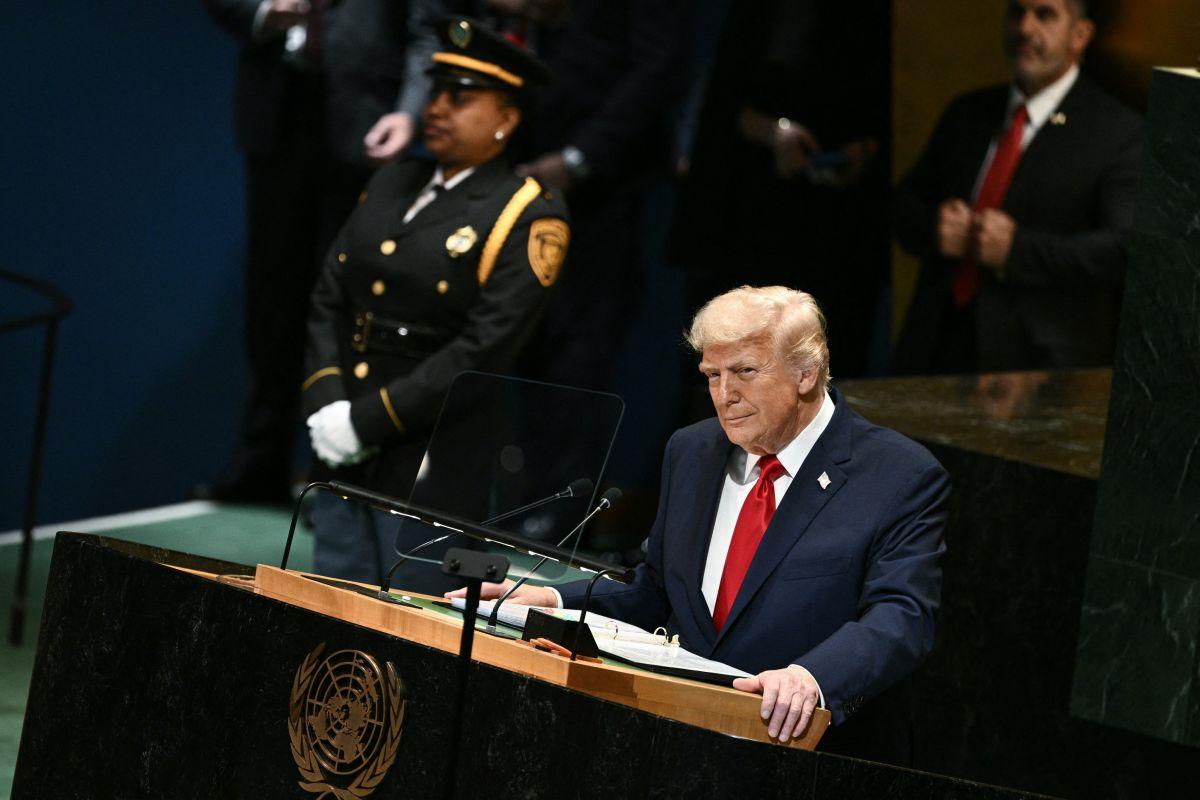
"Pakistan has a history of providing military personal and support to Gulf States and former Pakistan army chief General Raheel Sharif was appointed to lead the Saudi-led military coalition in Yemen," says Dinakar Peri, Fellow, Security Studies at the think-tank Carnegie India.
"The agreement is more to do with Pakistan supporting Saudi Arabia than the other way around. Nonetheless, the language and the timing has surely raised apprehension in New Delhi and one can expect some backend diplomacy with Riyadh to ally the concerns," Mr Peri tells Rediff's Archana Masih about the implications of the Saudi Arabia-Pakistan defence pact for India.
The defence pact between Saudi Arabia and nuclear-armed Pakistan states that any attack on either nation will be considered an attack on both. How worrying is this for India? What fresh challenges does it throw?
What strategic factors prompted Saudi Arabia to sign this pact with Pakistan announced a week after Israel's attack on Hamas leaders in Doha?
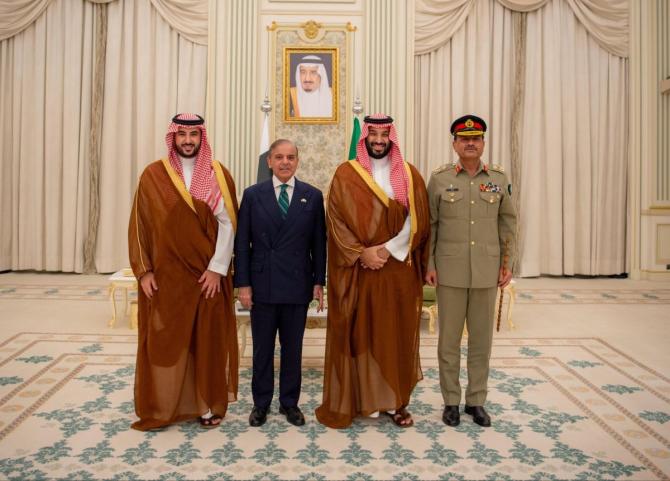
Technically, from the wording, the pact does raise significant concern in India and it is also surprising. Especially, coming just months after Operation Sindoor and also because India-Saudi relations have seen significant transformation over the last decade.
However, that same relationship also should be a reassuring point that the agreement is more to do with Pakistan supporting Saudi Arabia than the other way around.
This is particularly so given the recent developments in West Asia -- the Iran-Israel conflict, Israel's military offensive across the region and in particular the uncertainty of the US security guarantees which is being felt most acutely by its allies, treaty partners and partners.
Pakistan has a history of providing military personal and support to Gulf States and former Pakistani army chief General Raheel Sharif was appointed to lead the Saudi-led military coalition in Yemen.
So, this agreement is likely more of Saudi Arabia requisitioning Pakistani forces and support when required in the region.
Nonetheless, the language and the timing has surely raised apprehension in New Delhi and one can expect some backend diplomacy with Riyadh to ally the concerns.
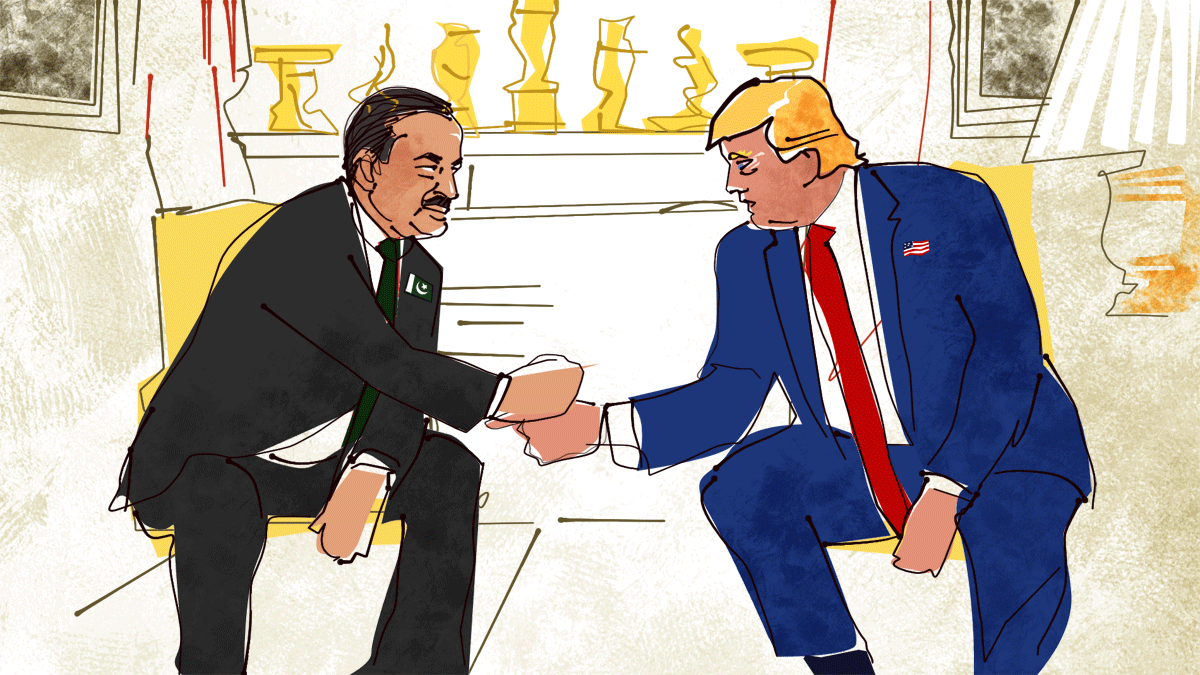
With strong support from China and Turkey during Operation Sindoor -- and Asim Munir's two successful trips to the US thereafter, what does this defence agreement mean for Pakistan?
I think the two aspects shouldn't be seen as interconnected.
Pakistan has gotten into a sweet spot with the US post Operation Sindoor by appreciating the mediation as claimed by Trump and recommending him for the Nobel Peace Prize. Several crypto and mineral deals also followed.
However, that probably is unconnected with the agreement which is more to do with the developments in the Middle East.
What is your assessment of Pakistan's foreign policy post-Op Sindoor under Asim Munir, widely seen as the de facto leader of the country? Has it manouvered its diplomatic moves adroitly which could, in turn, harm India's interests?
There is no doubt that Pakistan had gone away with the narrative in the initial days of Operation Sindoor. India suffered some losses on May 6 as it launched strikes on terror infrastructure across Pakistan and Pakistan Occupied Kashmir, which it did not acknowledge. Pakistan used this to further its misinformation and disinformation campaigns to seize the global narrative which initially got fixated on the number and type of Indian losses.
However, as the conflict progressed and as pictures and visuals of Indian retaliation against Pakistani military targets -- air bases, radars, air defences and command and control centers -- surfaced the world had to acknowledge the military asymmetry that was established.
But yes, Pakistan did take a lead in the larger narrative management.
Will this enable Pakistan to purchase US-made fighter jets and missiles from Saudi Arabia?
That's highly unlikely as all weapon sales by US are strictly regulated with stringent end-use monitoring agreement. However, given the state of Pakistan's economy it may seek access to funds and oil from Saudi.
Given the good relations between India and Saudi Arabia, do you think Riyadh will act cautiously to avoid undermining India's strategic interests?
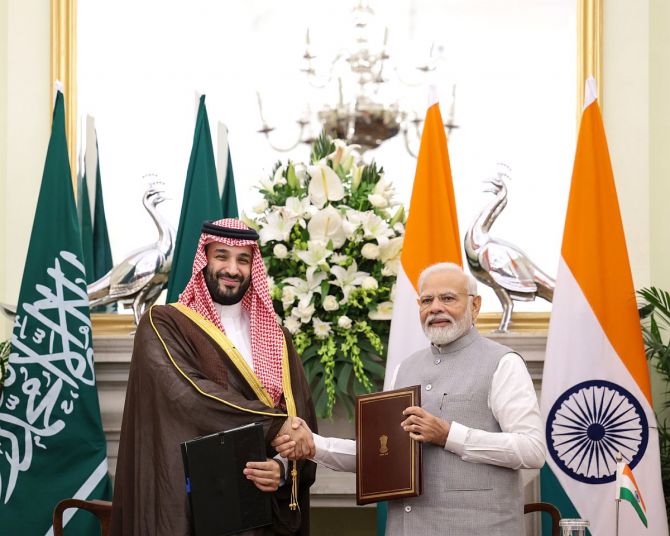
Absolutely. There is no reason to believe Saudi Arabia would take any major step to harm the burgeoning bilateral relationship, especially amid the turbulent geopolitical situation all around.
Is this agreement likely to extend to other Gulf countries, and how might it recalibrate the balance of power in the region?
That has to be seen as it plays out. While extension to other Gulf countries is possible and there has been past military cooperation minus an agreement, it would be wise to exercise caution in the extrapolation in the immediate future given the extent of uncertainties and dynamic developments.

How will the US withdrawal of waiver of sanctions on Chabahar port impact India and India-Iran relations?
The withdrawal of sanctions waiver for Chabahar port is definitely a cause of serious concern as it has significant bearing on India's bilateral, multilateral and trade engagements.
The immediate fallout is reduction in trade through the port as traders and insurers may stay away. That would make the investments and ongoing expansion unviable.
Another is India's bilateral relationship with Iran which has seen some ups and downs in recent years especially as India zeroed oil purchases after pressure from past American administrations.
For India, Chabahar is the gateway to Afghanistan and Central Asia bypassing Pakistan and is to be linked to the International North South Transport Corridor. The latest measure puts all that into question.
Feature Presentation: Aslam Hunani/Rediff










 © 2025