
'Pakistan will also try to turn Bangladesh into a base for terrorist attacks on India.'
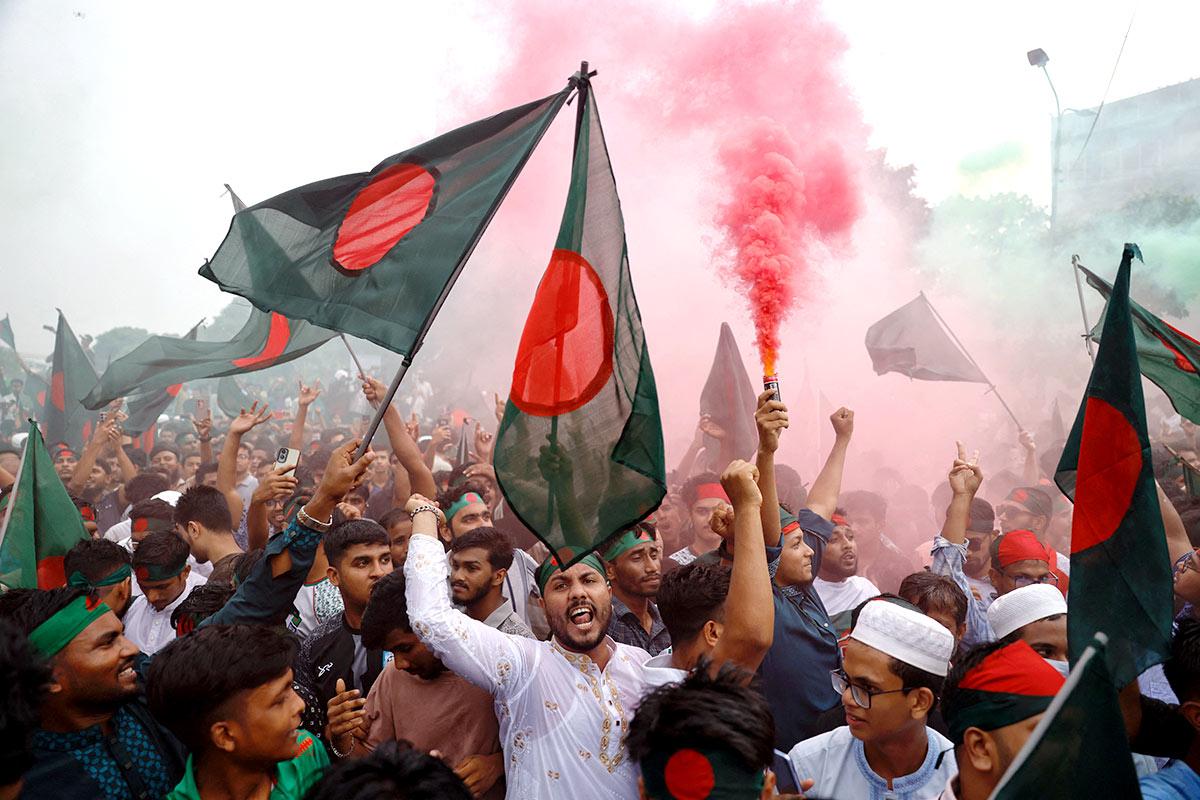
"China and Pakistan will try to reduce India's influence, but that's easily said than done," says Indian's former high commissioner to Bangladesh Pinak Ranjan Chakravarty.
The ambassador served two tenures in Dhaka, first as deputy chief of mission and then high commissioner.
He was also India's ambassador to Thailand and served in Cairo, Karachi, Jeddah, London and Tel Aviv.
In an interview to Rediff's Archana Masih, Ambassador Chakravarty discusses the testy India-Bangladesh relations in the year since the fall of Sheikh Hasina's government amidst violent student protests, her exile in India and what India needs to watch out for in the neighbourhood.
What are the top five warning signs India needs to watch out on the Bangladesh front in the next five, six months?
- Economic performance which directly impacts people.
- Free and fair elections to elect a democratic government. The present interim government is unconstitutional.
- Observe Bangladesh's alignment with Pakistan. The Jamat-e-Islami, a pro-Pakistani organisation, is supporting the present government. It had opposed the creation of Bangladesh and continues to espouse Islamist ideals, like an Islamic republic with Sharia law.
- The situation of minorities, particularly the Hindus who have suffered a lot under this regime.
- The trade factor because business and investment between the two countries is severely curtailed.
- Travel connectivity had improved over the decades and it has to be seen whether it will be restored.
- Illegal migration has to be dealt with.
What happens to India-Bangladesh relations if India refuses to extradite Sheikh Hasina?
India hasn't made any statement so far.
Sheikh Hasina is facing trial in absentia for crimes against humanity, whatever that means, and cases are being built against her.
It's an amorphous situation.
Since partisan judges and lawyers have been appointed, I would expect Sheikh Hasina will be convicted and debarred from participating in the election next year.
Then, of course, other Awami League leaders will also be put on trial with the intention to decimate the party.
They might even ban the Awami League from contesting the next election, but that would invite the charge that there is no level playing field as it is a party with a long history that fought for independence.
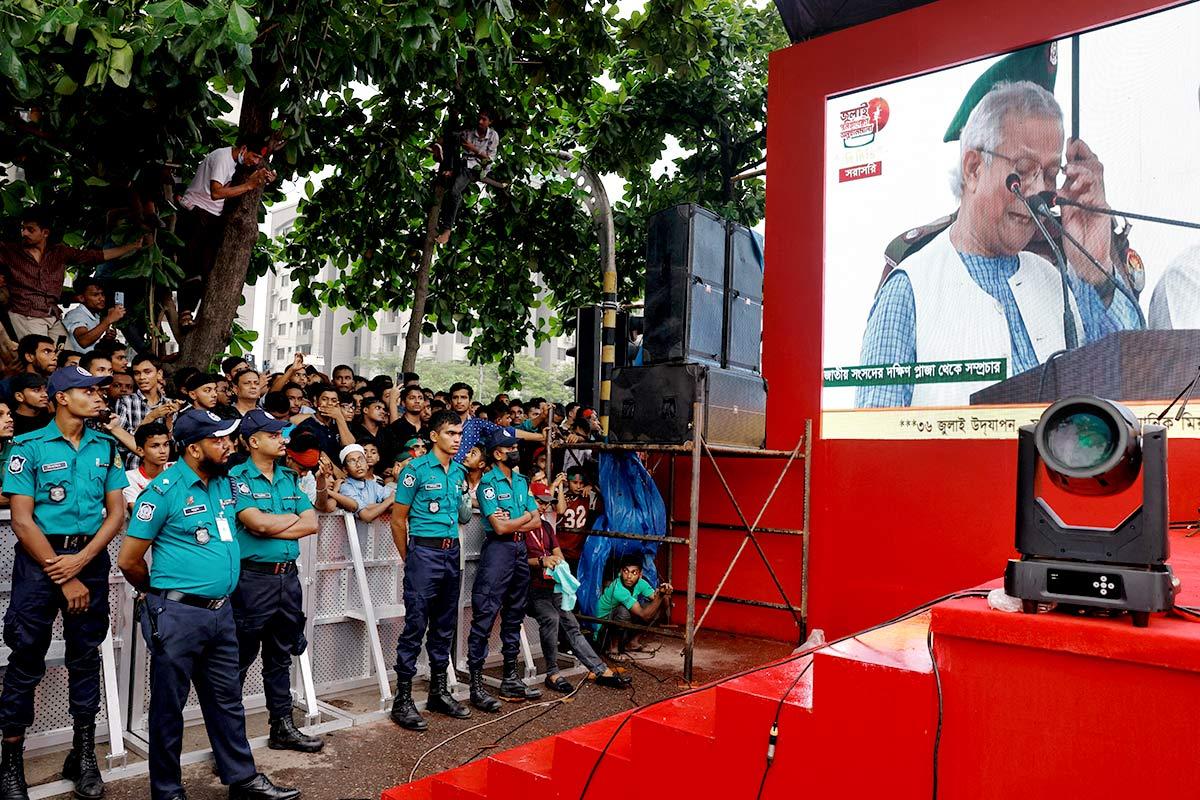
Can Sheikh Hasina's extradition be a 'make or break' issue in India-Bangladesh relations?
I don't think so. After all, we are still maintaining relations with Bangladesh, though at a much lower key.
As neighbours, one cannot hang one's relations on one peg. Relations cannot be simply cut away based on one issue. There are a lot of areas of mutual cooperation. A stable and democratic Bangladesh is good for our neighbourhood.
Should India extradite Sheikh Hasina? Can she stay here as long as she wants?
The Bangladesh government will have to go through a legal process for extradition.
It has to be understood that extradition is different from deportation.
India-Bangladesh have an extradition treaty. The judicial process might go right up to the Supreme Court.
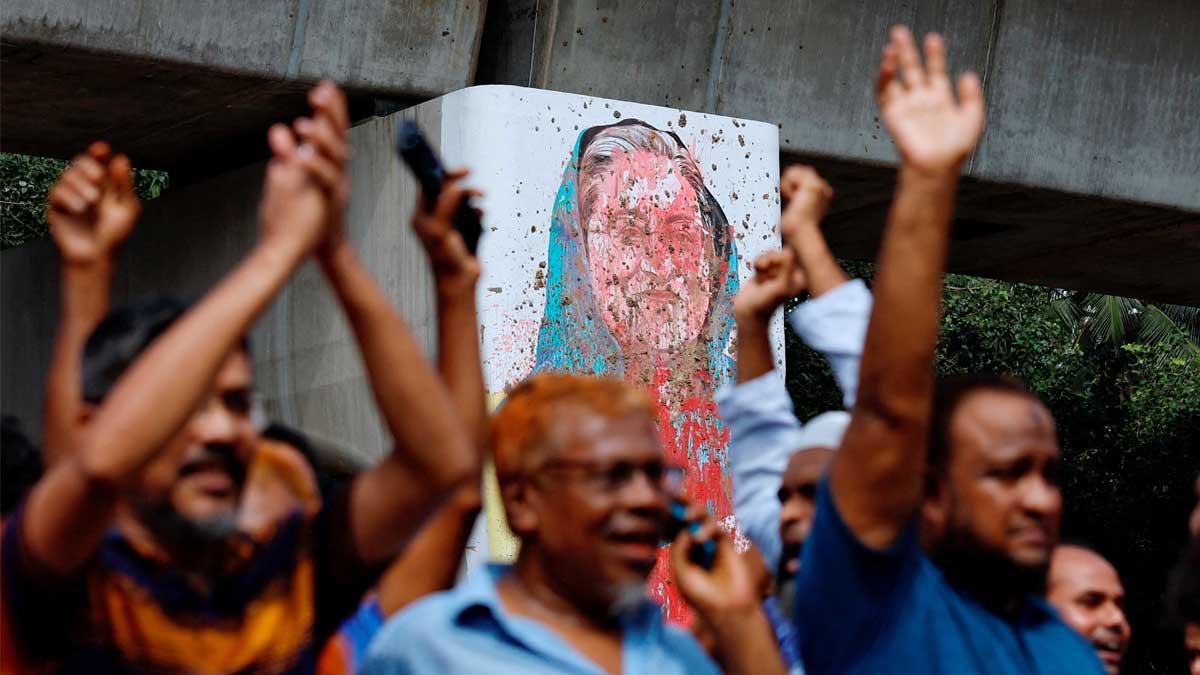
Is there a possibility for the Awami League to return to prominence in the next five or ten years?
The Awami League is a grassroots party. It still has support among the people. It cannot be simply wished away or wiped out.
Bangladesh has a bloody history of coups and violent politics. Sometimes street mobs tend to rule political spaces. But it is not possible for any government, howsoever much they wish, to wipe out the Awami League.
And the possibility of the Awami League's return?
You never know. The Awami League has been kept out of power earlier also, but it came back.
At the moment, all political activities by the Awami League are banned. If Bangladesh wants to have a free and free and fair election, it will have to include the Awami League.
If the Bangladesh Nationalist Party wins the next election, how will it change Bangladesh? Do you see the country turning more hardline and Islamist?
No, I don't think so. The BNP is a mainstream party. It is not a hardline Islamist party. It is a motley group with some Islamist sympathisers within their ranks.
India has dealt with them. We know the BNP and their leaders who have visited India several times.
If they win the election, they are likely to become more mainstream. I don't think they will embark on the extremist route.
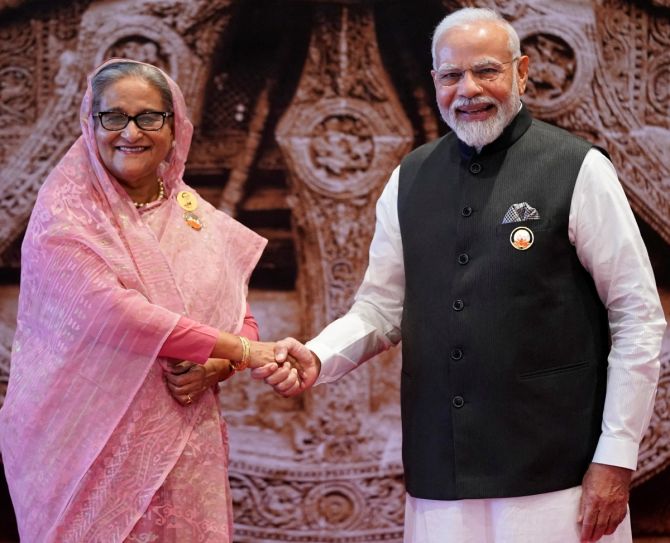
What calibrations will be needed in India's Bangladesh policy if the BNP comes to power?
India has been in touch with all political parties in Bangladesh, perhaps not the Jamaat-e-Islami or the Islamist groups. Even there also, there has been some contact.
The BNP has been democratically elected to power in the past. So if they come to power again, India will deal with them like any other time.
The present interim government poses a problem because it does not have constitutional status which makes it a challenge to establish long-term arrangements with them.
Some observers are concerned about the alignment between China, Pakistan and Bangladesh. What threat does this partnership pose for India?
China and Pakistan will try their best to turn Bangladesh against India.
They will try to reduce India's influence or footprint, but that's easily said than done.
After all, Bangladesh does a large quantum of trade with India, while their trade with Pakistan is much less.
Pakistan itself is a debt-ridden country and cannot offer much, apart from selling maybe rice or arms to Bangladesh.
Pakistan will also try to turn Bangladesh into a base for terrorist attacks on India or provide refuge for militants in the North East like it has done in the past.
If Bangladesh goes down that road under an elected government, which I doubt they will, then India will have to react, like we have done in the past.
Bangladesh will have to factor in the consequences of such anti-India actions.

One year after Sheikh Hasina's fall, how do you view India-Bangladesh relations at the present moment?
We are maintaining relations, although there are quite a few roadblocks.
We have downgraded the relationship, but have continued with normal day-to-day activities. After all, there are so many areas in which our countries work together.
But one year later, Bangladesh is not in a good place.
It is best that they conduct free and fair elections as soon as possible.
There are many forces within Bangladesh that don't want elections and want the continuation of the regime which does not have the mandate of the people.
Turkiye is expanding its influence in Bangladesh. Is Turkiye's entry making the neighbourhood messier?
Turkiye is a close ally of Pakistan. Turkiye was a secular country, but has become more Islamist under President Recep Erdogan.
India has fairly stable relations with Turkiye, but Turkiye may be interested in helping Pakistan by indulging in activities in Bangladesh or by selling weapons, drones etc.
It may be a combination of commercial interest and the Islamic bond with Pakistan which may be encouraging Turkiye.
Turkiye is not in our immediate or extended neighbourhood. Its ambitions are nurtured by the current leadership of Turkiye.
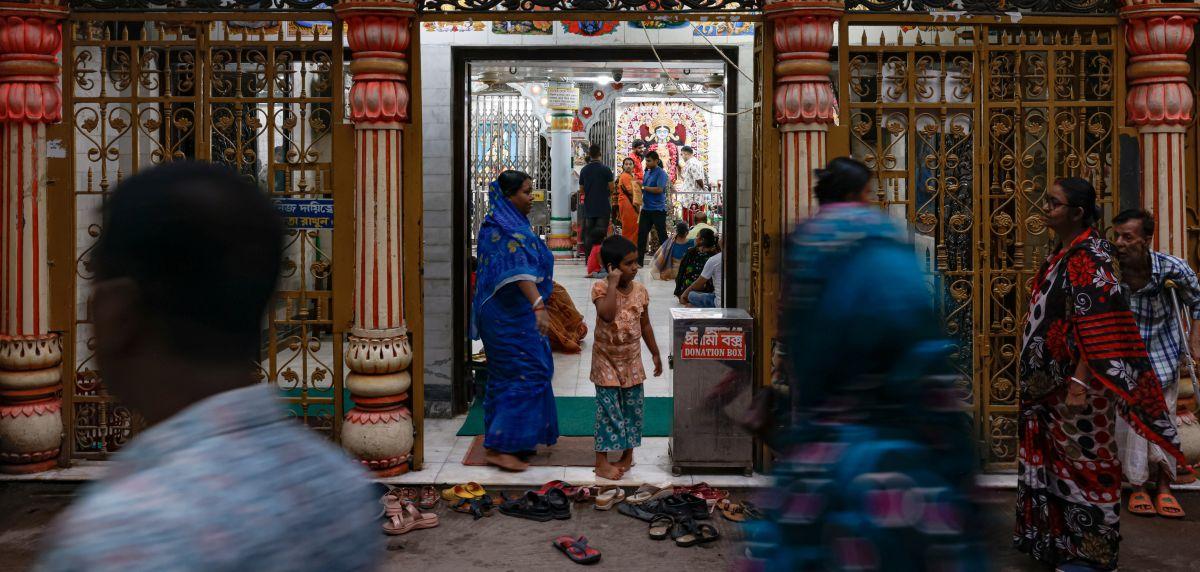
Hindus have been attacked since the regime change and their homes, businesses and temples targeted. Do you see the anti-Hindu sentiment abating in the months ahead?
Anti-Hindu sentiment is a legacy of Partition.
The Hindus have suffered a lot in Bangladesh. The Hindu population is down to about 8% from about 30% in 1947.
The Hindus have been at the receiving end of Islamist violence to deprive them of property and rights in Bangladesh.
Bangladesh has become much more Islamist over the years. It is a much different country from what it was 10 years ago.
For example, if you were to see a picture of Dhaka University from the 1950s and 1960s, you would notice that women mostly wore saris, even in the then East Pakistan.
But today the situation is different. More women have taken to the burqa or hijab which signals a deeper engagement with Islamic identity.
Islam's presence as a social and religious expression is more visible in public spaces.
It reminds me of what General Zia-ul Haq of Pakistan once said, 'If we are not Islamic, then we are Indians.'
Feature Presentation: Aslam Hunani/Rediff






 © 2025