

'If they can be duplicitous, we can be equally duplicitous.'
'If they offer friendship, we reciprocate.'
' If they choose hostility, we respond with equal hostility.'
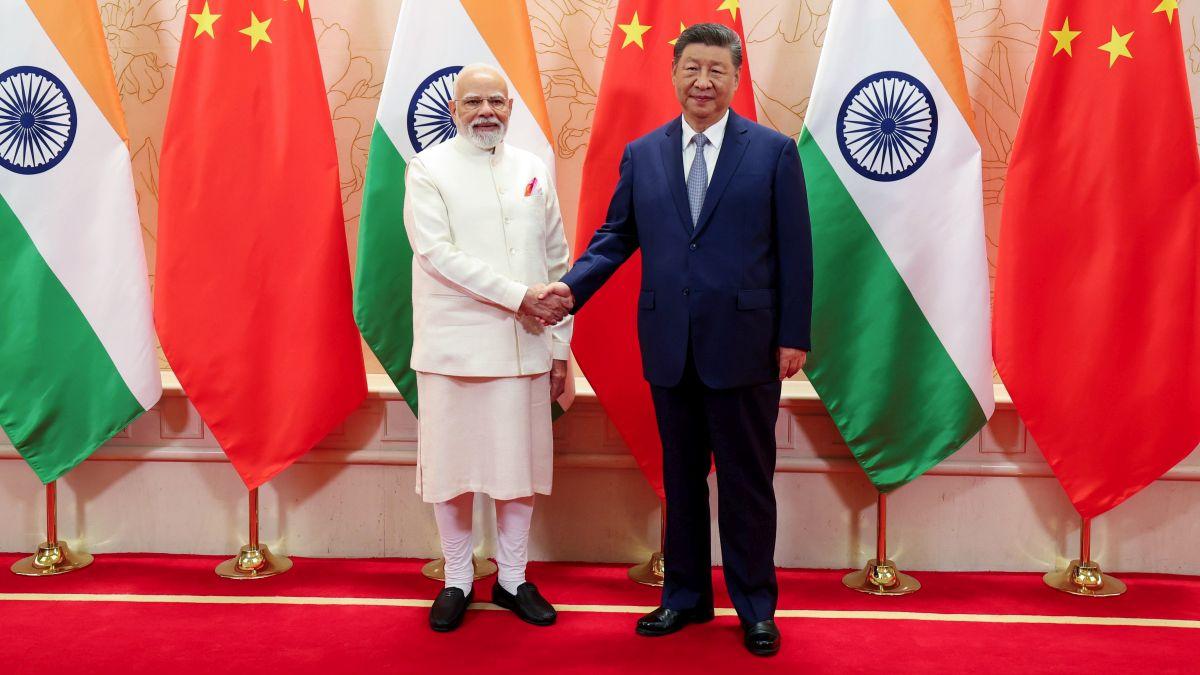
"We must evaluate relationships based on actions, not rhetoric. If (Chinese) actions prove hostile -- such as attempts to create instability in our north east or establish bases in the Bay of Bengal -- we cannot maintain friendly relations."
In the concluding part of a two-part interview with Prasanna D Zore/Rediff, Major General G D Bakshi (retd) elaborates on India's strategic doctrine emerging from the Galwan tragedy.
Building upon the analysis of China's costly miscalculations, the general advocates a precise 'mirror image' approach that honours our fallen heroes of Galwan through calculated reciprocity rather than emotional responses.
The general's framework, shaped by the sacrifice of twenty brave soldiers, emphasises that while India cannot trust China, India must respond to Beijing's overtures -- including rare earth supplies and tunnel boring equipment offers -- based purely on national interest calculations.
- Part 1 of the interview: 'We Cannot Trust China'
Are current Indian military deployments along the LAC adequate deterrence against future Chinese aggression post-Galwan?
Our present posture has proven adequate for deterring China.
Consider the strategic burden we have imposed: they have maintained troops at high altitude for the past four to five years. Chinese soldiers serve two-year terms and prefer not to spend this period in Tibet experiencing altitude hypoxia -- this creates significant morale challenges.
Geo-strategically, China operates on the principle of focusing on one strategic direction at a time. Currently, their primary focus remains Taiwan. They have no desire to engage in a two-front war, which provides India with strategic advantages.
Eighty percent of Pakistan's weapons systems are of Chinese origin. Using leverage we should convince China to reconsider their support for Pakistan, particularly given Pakistan's recent alignment with the United States despite China's 86 billion dollar loan investment and extensive China-Pakistan Economic Corridor development.
Doesn't Beijing need Islamabad for its Belt and Road Initiative and Washington needs Islamabad to keep Iran in check?
Certainly, China requires Pakistan for their BRI objectives. However, the critical question remains: Is Pakistan reciprocating this partnership faithfully? This uncertainty creates opportunities for India to exploit.
The broader context remains the multipolar world order. Both World Wars occurred within multipolar systems characterised by rapid alignments and realignments due to multiple actors requiring dynamic rather than static balance maintenance.
Should India prioritise addressing US hostility before engaging with Beijing regarding Pakistan?
We need not declare war against the United States. We simply must communicate clearly: 'If you cannot offer genuine partnership, we have alternative options. We can align with the Russia-China axis. Do you prefer that outcome?'
Within four to five years, geostrategic analysts in the United States will be asking, 'Who lost India?' This is how diplomatic signalling functions effectively.
We demonstrate that if they adopt hostile positions, we can respond accordingly. We have been attempting friendship -- why do they persistently undermine our interests?
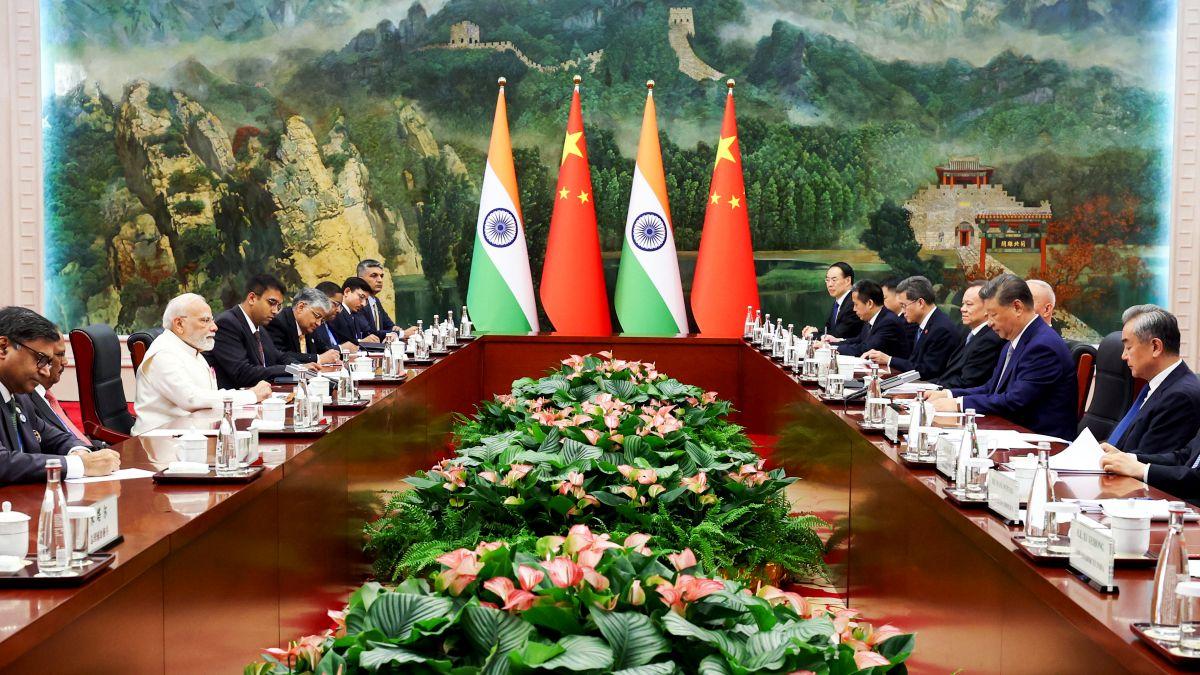
Beijing often mixes military coercion with economic enticement. How should India balance trade needs with national security imperatives when engaging China?
The fundamental principle remains mirror-image reciprocity. I (India) will respond exactly as they (the Chinese) treat us.
If they can be duplicitous, we can be equally duplicitous. If they offer friendship, we reciprocate. If they choose hostility, we respond with equal hostility.
We have not entered into permanent marriages with either the United States or China. Russia, however, has demonstrated decades of consistent support -- I personally witnessed their assistance during the 1971 War. Russia represents a relationship we can depend upon substantially.
With China, we can attempt tentative engagement. If they cooperate meaningfully, we proceed accordingly. If not, we respond in kind.
During a television debate with Chinese officials during Operation Sindoor, I stated unequivocally: 'We will treat you exactly the same way you treat us. If you intervene in this conflict, rest assured that when you are fighting with Taiwan, we will intervene.'
I believe that message was clearly received and understood.
This exemplifies our mirror-image response policy.
If China offers benefits -- such as rare earth materials they have blocked for us or tunnel boring equipment we require for Himalayan infrastructure development -- we will accept such offerings.
What concrete steps should India take to ensure China treats India as a peer competitor rather than a subordinate neighbour?

China learned crucial lessons during 2020 when they adopted aggressive postures in Ladakh, Arunachal Pradesh, and Sikkim.
Pakistan had convinced them that India's abrogation of Articles 370 and 35A would impact the China-Pakistan Economic Corridor passing through Gilgit-Baltistan -- territory in Jammu and Kashmir which belongs to India but has been occupied by Pakistan.
To placate Pakistan following our surgical strikes, Balakot air strikes, and Operation Sindoor, China attempted to divert Indian military resources by creating border tensions. However, they discovered that India was prepared to match their deployment man-for-man, gun-for-gun, tank-for-tank.
Consequently, China had to divert substantial resources intended for Taiwan toward India, deploying them in high-altitude Tibet environments. This proved extremely costly in terms of finances, equipment maintenance, and troop morale. Chinese personnel are not accustomed to such altitudes, while Indians have adapted far more effectively.
China is discovering that maintaining hostility with India is prohibitively expensive, particularly when undertaken merely to appease Pakistan -- a nation simultaneously betraying their interests by aligning with the United States despite massive Chinese investments.
Nations prioritise self-interest. When China recognises that Pakistan is exploiting their relationship, they will recalibrate accordingly. We must be prepared to capitalise on such developments.
The fundamental principle remains: We must evaluate relationships based on actions, not rhetoric. If (Chinese) actions prove hostile -- such as attempts to create instability in our north east or establish bases in the Bay of Bengal -- we cannot maintain friendly relations.
We must maintain national self-respect, sovereignty, and pride. There exists a segment of Indian diplomats who argue we cannot abandon thirty years of relationship-building with America -- they advocate continued submission despite repeated hostile actions. As an Indian, I am not prepared to crawl back repeatedly.
America's anger stems partly from Operation Sindoor, where we struck air bases hosting joint American-Pakistani command posts, including nuclear and drone command facilities in Muridke, the Nur Khan air base in Chaklala and other important Pakistani air bases.
The imposition of fifty percent tariffs following these actions reveals their true intentions rather than diplomatic niceties.
It is the Deep State in the United States that ultimately determines friendship and enmity classifications. If they consider us a forthcoming threat, we must safeguard our national interests accordingly while exploring all available strategic options.








 © 2026