

'Even if it is defeated and the Speaker remains, the Opposition parties that have lost faith in his impartiality will continue to have that feeling.'
'If the Speaker reflects on this and tries to be more neutral, more impartial, more objective in his conduct -- then one can say the resolution had a salutary effect. That would be the best outcome.'

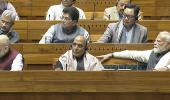
When the Lok Sabha reconvenes today, March 9, for the second half of the Budget session, it will be doing something it has not done since 1987 -- debating the removal of the Speaker.
The Opposition INDIA bloc, with 118 MPs signing a notice under Article 94(c) of the Constitution, has moved a resolution seeking to remove Speaker Om Birla over four specific charges of alleged partisan conduct.
Key Points
- Unlike a government no-confidence motion, a Speaker's removal resolution must cite specific, clearly worded charges; the Speaker must then personally answer each one on the floor.
- If 50 members stand in the House on March 9, leave is granted; debate is expected the same day, with a vote decided by simple majority.
- With no Deputy Speaker since 2019, a panel chairman -- selected by incumbent Speaker Om Birla from senior cross-party MPs -- will preside over the proceedings to remove him.
- The motion is widely expected to fail but it will affect the perceived neutrality of the Speaker's office regardless.
These include: refusing Rahul Gandhi the floor to raise former army chief General M M Naravane's memoir on the 2020 Galwan clash; suspending eight Opposition MPs; permitting a BJP MP to make personal remarks against Gandhi; claiming that the prime minister faced threats from within the House.
In an extraordinary gesture that has drawn both praise and scepticism, Birla stepped away from the Chair voluntarily on 'moral grounds' pending resolution of the matter.
Both the Bharatiya Janata Party and Congress have issued three-line whips to their Lok Sabha MPs to be present when proceedings begin.
With the NDA's numerical majority, the motion is widely expected to fail -- but its political and institutional significance is considerable.
In this interview with Prasanna D Zore/Rediff, P D T Achary -- former secretary general of the Lok Sabha and one of India's foremost Constitutional authorities -- walks through the precise procedural mechanism, the Constitutional protections afforded to the Speaker, the absent Deputy Speaker problem in the current Lok Sabha and what these rare motions ultimately achieve even when they lose.
'Charges cannot be vague. The Speaker must be in a position to reply to them'
The Opposition has filed a resolution for Lok Sabha Speaker Om Birla's removal. How exactly does this Constitutional provision work, and how is it different from a conventional no-confidence motion against a government?
This is a resolution which seeks to remove the Speaker from his office on certain charges. A no-confidence motion against the government is a different matter altogether -- it is a simple motion, not a resolution, simply saying that the House lacks confidence in this government. No specific charges need to be stated in that case.
Here, for the Speaker's removal, the rules require that charges against him be specific and clearly stated. The reason is that the Speaker has to reply to those charges on the floor of the House. He has to answer them. That is the crucial difference.
On what grounds can a Speaker be removed? Is impartiality the only charge, or are there others?

The Speaker is supposed to be impartial. He must conduct proceedings as per the rules and the Constitution. If a section of the House feels he has not been impartial -- that he has favoured the government and denied opportunities to the opposition in a blatant manner -- that gives them grounds to move against him.
But impartiality is not the only possible charge. Years ago, I believe it was Jyotirmoy Basu (the four-time CPI-M MP from Diamond Harbour, West Bengal), who moved a resolution on the ground that the Speaker (in December 1970, a resolution was directed against Dr Gurdial Singh Dhillon, who was then the Speaker of the fourth Lok Sabha) had made a statement favouring one-party rule in India -- effectively a pitch for dictatorship.
That motion had to be withdrawn eventually after persuasion, but the point is that there can be other circumstances too.
In the House, however, the most relevant charge is usually a blatant display of favouritism for the government and a blatant denial of opportunity to the Opposition.
Once a notice is submitted, what are the precise procedural steps -- from the 14-day notice period through to an actual debate in the House?
Once the notice is given, the first thing examined is whether the charges are specific and clearly stated. Charges cannot be vague. The Speaker must be in a position to reply to them, so they need to be very precisely worded. That is the condition.
After the 14-day period lapses, the resolution comes before the House -- in this case, on Monday, March 9, when the Lok Sabha reconvenes for the Budget session.
If 50 members stand up when the matter is placed before the House, it means the House has granted leave for the resolution to proceed.
Who decides whether the charges meet the threshold? And what happens if fewer than 50 members stand?
It is not a legal authority that decides -- it is the House itself that grants or withholds permission. The member who has given notice stands up and calls upon others to support.
If 50 members rise, leave is granted.
If fewer than 50 rise, whoever is presiding over the sitting will declare that the House has not granted permission, and the matter ends there.
'We are still to find a Speaker who is absolutely impartial'
During the debate, the Speaker does not preside but retains the right to participate and vote as an ordinary member. How significant is this right to defend himself on the floor?
It is very significant. Normally the Speaker sits in the Chair and no one can question his rulings. No one can attribute partiality to him. He is entirely protected -- even courts cannot be approached on the ground that he gave a wrong decision. He functions in an almost untouchable position.
But this is the one occasion when the Speaker is stripped of that protection. Charges have been made against him personally. He has to come down and sit in the House like any other member -- listen to the entire discussion and then reply to each and every charge. That is what the Constitution requires. He has to explain himself so that the House can decide whether to remove him or retain him.
In Constitutional terms, does he participate as an ordinary member of Parliament, or does the office of Speaker carry special privileges even in this situation?

No special privileges whatsoever. He participates as an ordinary member of the House. He comes in, sits down, listens to everything, and when the time comes, he is asked to reply to the charges. He has to address each one. That is the most significant thing.
The Speaker is a person who, when seated in the Chair, cannot be questioned about his conduct by anyone. That is the rule. This is the only occasion when that rule does not apply.
This Lok Sabha has no Deputy Speaker -- a vacancy that has continued since 2019. When the Speaker cannot preside over his own removal proceedings, who takes the chair?
There is a panel of chairmen for exactly this purpose. When the Speaker is first elected at the start of a Lok Sabha, she/he selects three to four senior members from various political parties to serve on this panel. They have all the powers of the Speaker to conduct proceedings in his absence. These are the people who will preside.
The Speaker chooses them -- it is his prerogative. He considers seniority and experience in the House. They serve for a year or two and are then renewed. One of these panel members will preside over Monday's proceedings.
Since the Speaker selects these chairmen from across parties, is there not an inherent risk of partisanship? These are politicians, after all.
Politicians are all partisan, basically. I have not seen a single politician who is not partisan. They come from political parties. They owe their allegiance to their party's ideology and political stance. We are still to find a person (Speaker) who is absolutely impartial -- much less in the Indian legislature. But that is the system we have.
Three Speakers before Birla -- G V Mavalankar in 1954, Hukam Singh in 1966, and Balram Jakhar in 1987 -- faced similar motions and survived. What lessons do these precedents hold for incumbent Speaker Om Birla?
It comes down to how well he addresses the specific charges. If the resolution says, for instance, that he denied the Opposition opportunities to raise certain matters, or that he did not apply his mind impartially, the Speaker has to explain precisely why he did not allow particular issues to be debated -- give reasons, cite rules.
He can also point to the Business Advisory Committee, which is headed by the Speaker but includes ministers and leaders of various parties. The committee collectively decides which items to take up. So the Speaker can legitimately say, look, it was not solely my decision -- we sat together and reached a consensus.
But we should be clear about something. In reality, it is the government that denies opportunities, not merely the Speaker. The government decides what it will allow or not.
The Galwan issue, for instance -- the government never allowed it to be discussed. If the government does not allow something, how is the Speaker to permit it? That is how things work in the House.
Can the government still block this resolution from coming to the floor now that the notice has been admitted?
No. The government has no say in this at all. The motion has been admitted. It must come before the House. That process has to be completed. The government cannot do anything to prevent it.
When exactly will the resolution be moved and voted upon? The House sits until April 2.
Most probably on March 9 itself. Normally what has happened in similar situations is that on the very day the House grants leave, the debate takes place the same day -- perhaps two, two and a half, or three hours -- and is disposed of.
Within 10 days of leave being granted, the discussion can happen on any day, but in practice it tends to happen immediately. There is no great scope for a very lengthy debate on this. The issue is limited: Should the Speaker be removed? The Speaker has to answer the charges. That is really all.
What majority is required to remove the Speaker? Is there a special threshold?
A simple majority. There is no other condition. The Speaker was elected by a simple majority, so naturally he can also be removed by a simple majority.
'A Speaker who belongs to a political party cannot always cross a certain line. He has to protect the government's interests'
The Constitution expects the Speaker to be neutral once elected, yet here we are. How do you think it tries to balance accountability with the independence of the Chair?
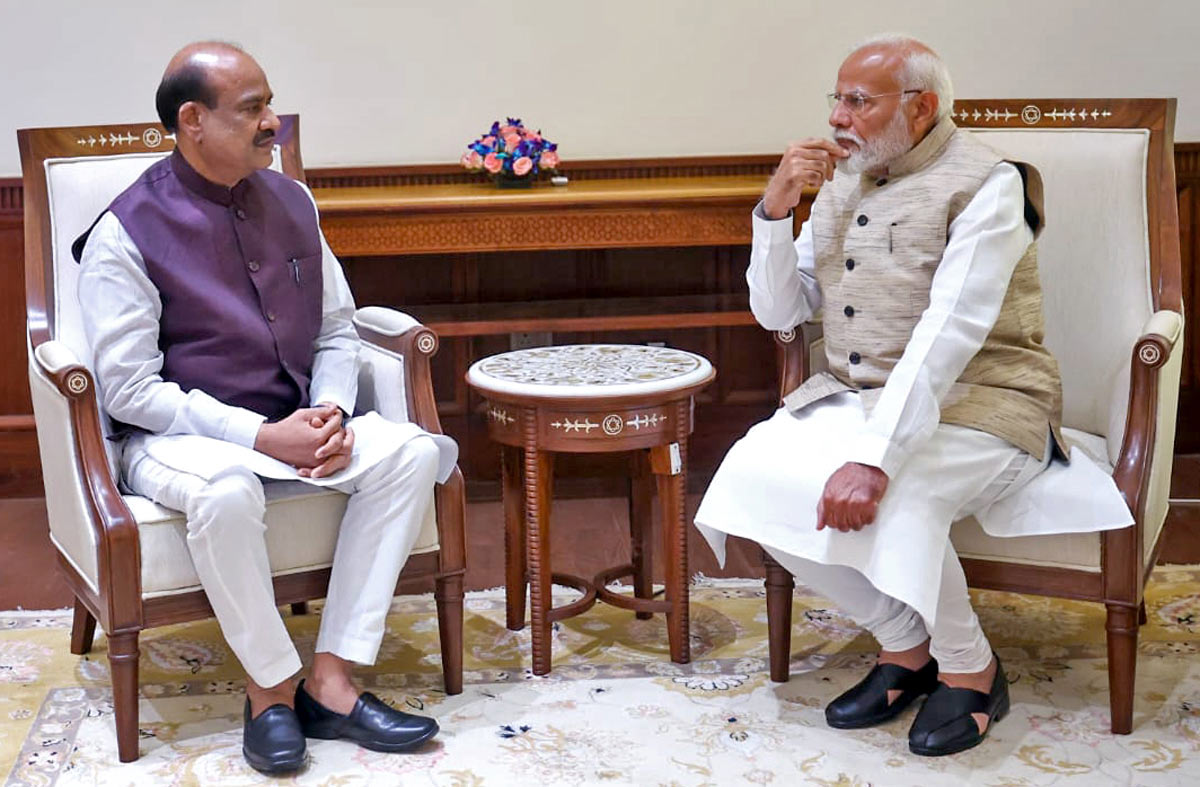
The office has a great history -- it originated in England, and we adopted the system. Once elected, a Speaker may well come from the ruling party, but from that moment he should remain impartial in all his dealings. He should go by the rules.
The Speaker also has a duty to see that the government's legislative business -- bills, budget, and so on -- is conducted. But beyond that, he should remain scrupulously impartial and give fair opportunities to all members, including those in opposition.
What happened during the first part of the Budget Session is instructive. When Rahul Gandhi tried to refer to General Naravane's memoir during the debate on the President's Address, there was a point of order from the treasury benches -- not particularly well founded, in my view -- and the Speaker agreed with the ministers who objected.
The rule in question says a member cannot quote a book or article if it is not related to the business of the House. Now, the contrapositive is equally clear: If it is related, you can.
The debate on the President's Address covers a very wide canvas -- defence, security, the valour of the armed forces, everything. And by tradition, a debate on the motion of thanks is so broad in scope that members can discuss almost anything.
Members cannot be prevented from speaking on a subject unless it is defamatory, and even defamatory references can sometimes be made if the member gives advance notice to the Speaker and the minister concerned.
The additional argument that the book was 'unpublished' also does not quite hold. Gandhi was not quoting from the book itself but from a magazine article in the public domain that carried excerpts. The question of whether the book was published or not was beside the point entirely.
An article in a magazine is in the public domain -- what is the point in hiding it from the House? The Speaker could have allowed him to proceed, and asked the minister to refute it. That is how a debate should work. That was the occasion, I think, that gave the opposition the material for this resolution.
Even if the motion fails numerically -- the BJP holds a comfortable majority -- can such proceedings still carry institutional consequences?
The perceived neutrality of the Speaker's office will be affected. That is precisely why the resolution was brought in the first place. Even if it is defeated and the Speaker remains, the Opposition parties that have lost faith in his impartiality will continue to have that feeling. What else can be done?
If the Speaker reflects on this and tries to be more neutral, more impartial, more objective in his conduct -- then one can say the resolution had a salutary effect. That would be the best outcome.
After the previous three no confidence motions were defeated, was there any perceptible change in conduct of the respective Speakers after the failed motion?
About Mavalankar and Hukam Singh, I cannot speak -- I was not there. But I was present during the Jakhar motion. There was no dramatic change, but at times one felt that he was a little subdued, trying in some way to moderate his approach. Whether that constituted a genuine shift is difficult to say.
The truth is, there are very complex factors at work. A Speaker who belongs to a political party cannot always cross a certain line. He has to protect the government's interests.
We can say in theory that the Speaker should remain neutral, should not look one way or the other, should go strictly by the rules. But in practice, in reality, the opposite tends to happen. That is the fundamental problem.






 © 2026