

'Even as the Supreme Court's anti-punitive demolition judgment nears its first anniversary, no formal contempt proceedings have been initiated either by the Supreme Court or any high court against officers or demolition squads who have acted in violation of it.'

One year after the Supreme Court of India's landmark ruling on November 13, 2024, that declared punitive demolitions illegal and reaffirmed that no home or property could be razed without due process of law, questions continue to loom large over its implementation.
Despite the apex court's categorical ban and detailed procedural safeguards, reports of politically motivated or retaliatory demolitions have persisted across several states, raising concerns about the erosion of judicial authority and the rule of law.
M Huzaifa, advocate practising at the Supreme Court of India, speaks to Syed Firdaus Ashraf/Rediff about the persistence of so-called 'bulldozer justice', the gaps in the enforcement of the court's directives, and the continuing challenges faced by citizens seeking legal protection against arbitrary State action.
If the Supreme Court has explicitly ruled that demolitions cannot be punitive and must follow due process, what legal remedies are available when state authorities still carry out bulldozing operations under other pretext?
The Supreme Court, through a reasoned and comprehensive judgment last year, categorically banned punitive demolitions and laid down a set of mandatory guidelines as a pre-emptive safeguard against the arbitrary misuse of demolition powers by executive authorities.
This judgment itself serves as a strong source of legal authority for citizens to invoke their right to procedure established by law whenever authorities attempt demolition which is patently illegal or without following due process.
In case of any kind of demolition, be it punitive or otherwise and demolition notice has been served or there is a looming threat, the citizen should communicate in writing with the concerned authorities.
Such communication whether in the form of replies to notices or representations to higher officials of the government reflects the bona fide intent to resolve the issue lawfully and helps place the matter within the framework of due process.
However, when arbitrary or coercive action persists, judicial recourse becomes the most effective remedy.
A civil court can grant an injunction or stay order against demolition, but in recent times the most practical and efficacious remedy has been to file a writ petition to seek stay on demolition before the concerned high court, or before the Supreme Court based on circumstances.
Matters involving life, liberty, and property are treated as urgent, and one can seek urgent listing even on holidays to prevent illegal demolition action.
If the demolition has already been carried out in defiance of the Supreme Court's judgment, the appropriate course is to file a contempt petition against the officials responsible, before the concerned high court to seek restitution of the demolished structure and compensation for the illegal demolition.
In addition, complaints can be made before the National or state Human Rights Commission, and depending on the circumstances, a police complaint can also be filed against the erring officials for acting in violation of due process and established legal jurisprudence.
How many bulldozer demolitions have taken place after the Supreme Court order? Is there a number or any examples you can give?
Demolitions are a regular administrative phenomenon in India, carried out under development and municipal by-laws in cases of unauthorised constructions, encroachments, or violations of land use and building norms. Such actions, in their lawful form, are purely civil in nature and have no bearing on the criminal antecedents of the occupants.
However, over the past decade, we have seen a concerning intersection between these civil powers and the criminal justice system where demolitions have been used punitively against individuals or communities accused of offences.
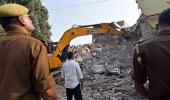
This practice, popularly termed 'bulldozer justice', represents a distortion of administrative authority into a tool of retribution rather than regulation.
Following the Supreme Court's landmark judgment that expressly banned punitive demolitions and laid down procedural safeguards and a workflow for government authorities, one would have expected this practice to diminish. Yet, in reality, state agencies have found ways to delay or circumvent compliance playing with exception carved out by the Supreme Court.
As per my media research, over a hundred incidents of punitive or retaliatory demolitions have been recorded across India since the Supreme Court's ruling. These actions, directly or indirectly, have resulted in the demolition of thousands of homes and commercial properties, disproportionately impacting marginalised communities. The focus now has been shifted from private properties towards the properties which are in dispute of ownership.
One of the most notable examples occurred around Chandola Lake in Ahmedabad, Gujarat, where tens of thousands of families, predominantly Muslims, were evicted following a government drive ostensibly aimed at identifying illegal Bangladeshi and Rohingya immigrants.
Detentions were carried out first, and demolitions followed soon after with political spectate of hundreds of bulldozers shown with drone footage on the social media.
The Supreme Court judgment carved out limited exceptions such as demolitions on public roads, water bodies, railway tracks, or those carried out pursuant to a specific court order. However, it also made it abundantly clear that punitive demolitions have no place within the Constitutional setup. Despite this, many executive authorities continue to turn a blind eye to the dictum of the Supreme Court.
Unfortunately, several state governments have devised ways to bypass these guidelines through partial symbolic demolitions, maintaining the coercive symbolism of the bulldozer as an instrument of control.
Recent instances in Sambhal, Nagpur, Kashipur, and Meerut illustrate how this practice continues often in the aftermath of protests, communal tensions, or law-and-order incidents thereby reinforcing its punitive character despite the court's clear prohibition.
Did any of the aggrieved parties go to the Supreme Court and tell the judges that their order is not being implemented on the ground and the so-called bulldozer justice is still going on?
Yes, several affected individuals have approached courts seeking relief against continuing instances of punitive demolitions. However, the response from the judiciary has often been muted and delayed, with courts showing a degree of reluctance to engage with these matters in a timely manner or to advance the jurisprudence further and order strict penalties for contempt.
The hostile circumstances under which these demolitions occur make it extremely difficult for victims to pursue legal remedies. Typically, these actions are preceded by a criminal crackdown involving arrests, police raids, and allegations of serious offences.
In such an environment, the victims are rendered highly vulnerable to administrative reprisals -- such as the demolition of an entire property when only a portion was alleged to be illegal, the implication of family members in false criminal cases, or even threats of custodial torture and extra-judicial violence.
In one of our client's cases, concerning the demolition of a rented house and shop belonging to a migrant labourer in Malvan, Maharashtra, in February 2025, a contempt petition was filed before the Supreme Court. Unfortunately, the matter has not seen much effective hearing to date.
Another similar case, relating to the demolition of the property of the main accused in the Nagpur violence, remains pending before the Bombay high court.
According to information obtained through RTI reports, several states have been slow or inconsistent in implementing the Supreme Court judgment. Most have merely circulated internal letters for compliance, but no robust enforcement mechanism has been established to ensure that the court's directives are treated as binding law of the land.
That said, activist and media reports suggest there has been a noticeable reduction in the outright demolition of private residential properties of accused persons after the judgment. Instead, the focus appears to have shifted towards accused properties allegedly in dispute with the government or situated on public land assuming them to be exempted from the judgment. However, this trend is based on observation rather than any concrete evidence, as no comparative database exists to conclusively establish it.
Interestingly, it is the ordinary demolition cases those unrelated to punitive or criminal contexts are now more frequently reaching the Constitutional courts and successfully invoking the Supreme Court's 'demolition guidelines'. This reflects a partial but significant shift in how the judgment is being operationalised on the ground.
Would such actions by state governments amount to contempt of court? If yes, who can be held accountable -- the officers executing the demolition or the political leadership ordering it?
And has the Supreme Court taken action against any police officer or demolition squad who have gone and taken action in violation of its November 2024 ruling?
Yes, such actions by state governments can indeed amount to contempt of court. The judgments of the Supreme Court and high courts carry the force of law under Article 141 and Article 144 of the Constitution, and are binding on all executive authorities across the country.
The executive branch and not the legislature is responsible for implementing these judicial directions 'in letter and spirit'. Therefore, any action or inaction that undermines or violates a judicial order is deemed contempt of court by the concerned government officials.
In principle, both the officers executing the demolition and the political leadership directing or approving such actions should be held accountable, depending on the evidence of intent and the chain of command.
However, the Supreme Court has specifically fixed personal liability on the officials who directly order and execute illegal demolitions in violation of its demolition judgement and guidelines to caution them of acting under political motivations and not rule of law.
I recall one incident from Madhya Pradesh soon after the Supreme Court judgment, where a local MLA was detained and booked for attempting to carry out a demolition using his private bulldozer, after local authorities had refused to act, citing the embargo imposed by the Supreme Court's guidelines. This case illustrated how even elected representatives can be restrained when they overstep judicial mandates.
However, to my knowledge, even as the Supreme Court's anti-punitive demolition judgment nears its first anniversary, no formal contempt proceedings have been initiated either by the Supreme Court or any high court against officers or demolition squads who have acted in violation of it.
Unfortunately, despite continuing reports of such actions, institutional accountability has yet to catch up, and the practice of punitive demolitions continues in several parts of the country under various pretexts.
What does this disregard for the Supreme Court ruling indicate about the rule of law and judicial authority in India today?
The current state of affairs in our country reflects a deeply troubling phase for the rule of law. We are witnessing a period where the executive has begun to openly disregard judicial orders, treating them as if they carry no binding force, and instead choosing to submit to the political imperatives of those in power.
This regression marks a dangerous departure from Constitutional governance where the 'rule of law' is increasingly being replaced by either a 'rule by law' or, worse, 'rule by lawlessness'.
This trend exposes a serious erosion of judicial authority and signals how judicial silence, procedural delays, and growing pendency have normalised contemptuous conduct by state authorities. The lack of timely intervention or accountability has allowed the contempt of court to become disturbingly routine.
What we are seeing now is the encroachment of the judiciary's adjudicatory and punitive role by the executive, acting with impunity under the shield of political majoritarianism. This form of governance, rooted in coercion and retribution, stands in stark contrast to the principles of fairness, restraint, and due process that underpin India's criminal jurisprudence.
Unfortunately, the judiciary's loss of public confidence, stemming from delayed or denied justice, has fostered a societal shift toward accepting executive-led, instant, and retributive forms of 'justice'.
This normalisation of bulldozer politics and administrative overreach not only weakens Constitutional institutions but also strikes at the very foundation of India's democratic ethos.









 © 2026