

'Humanly impossible for the switches to turn from on to off at rapid succession within one second.'
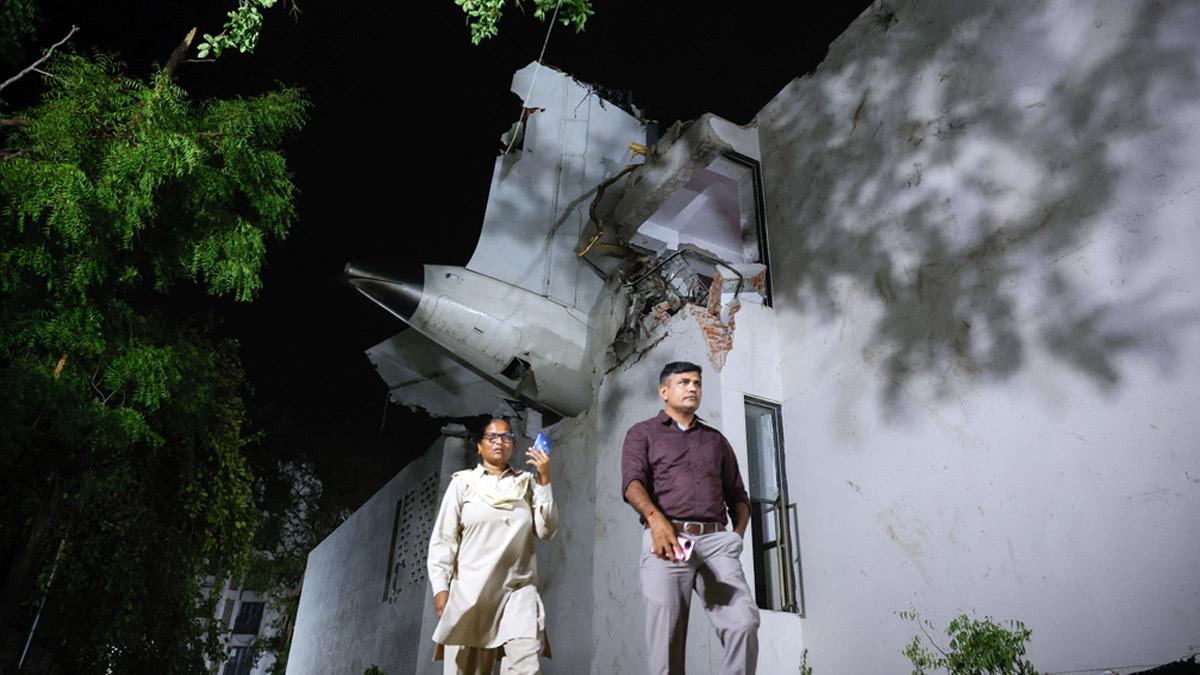
"We do not know the tone and tenor of the voice recording, the statements released in the report have led to a lot of speculation because they have only released one sentence."
"What you speak, what you hear and what you conclude can be different," says Captain Ehsan Khalid, aviation expert and former Indian Air Force flying instructor.
"There are lot of contradictions in the whole theory of the pilot willingly putting the switch off," Captain Khalid tells Rediff's Archana Masih in the first part of an interview discussing the AAIB preliminary report on the AI 171 crash that took the lives of 260 people on June 12.
What happened in the cockpit seems to have become a topic of discussion and speculation.
Your thoughts on the preliminary report and the questions it has raised rather than the answers given.
A lot of information in the AAIB report is garbled even for them.
The timeline is inconsistent. They have been able to give timelines for some actions and not given for the others.
The sentences are severely paraphrased. So, we do not know how much of data was actually decipherable or deciphered, how much was decided not to be shared and how much data they could not retrieve at all.
The fact remains that the AAIB is also trying to find out a fact from something which may not be very easily discernible.

There is much discussion on what the pilots said to each other in the cockpit.
We do not know the tone and tenor of the voice recording, the statements released in the report have led to a lot of speculation because they have only released one sentence.
What you speak, what you hear and what you conclude can be different.
There are lot of contradictions in the whole theory of the pilot willingly putting the switch off.
The discussion since then is whether it was a technical error or did the pilot do it or not.
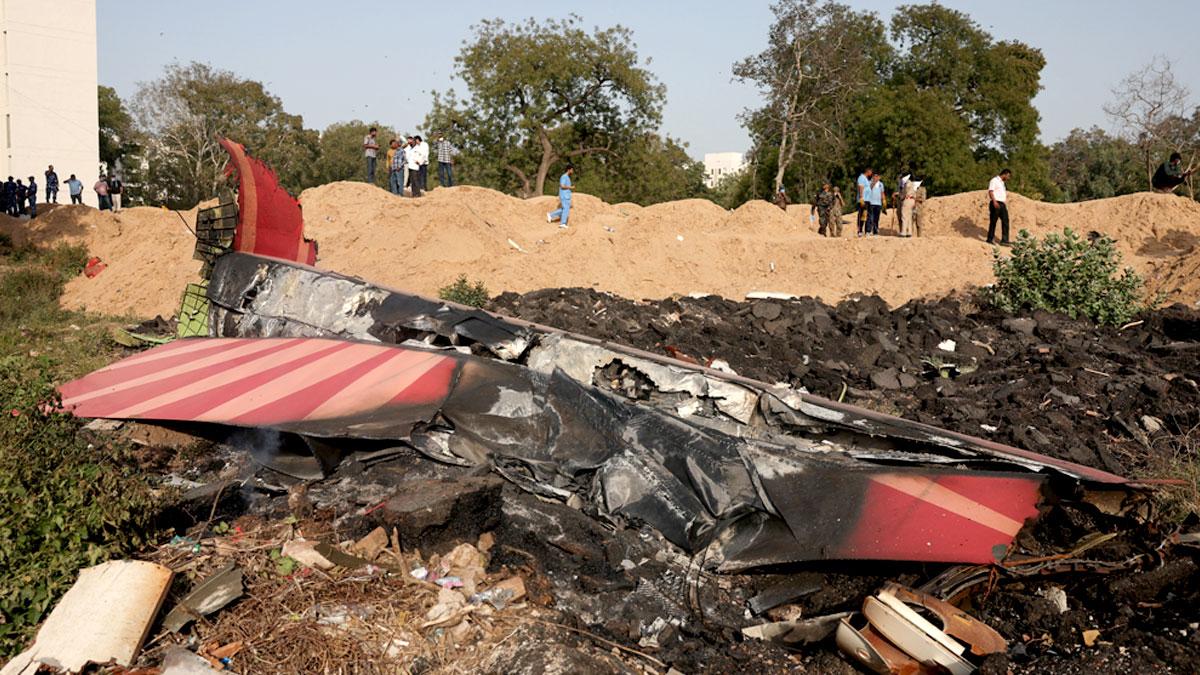
What are some aspects that need more attention in the report according to you?
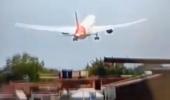
There is CCTV footage which shows the aircraft from the rear as it gets airborne and then crashes.
The AAIB report says that the wait on wheel switches transition to air modes in 3 seconds [08:08:39].
But what you see is lot of dust being thrown up. That has never been explained.
Whenever the aircraft gets airborne, the dust is not thrown around the way it is as shown in the CCTV.
If you see 10 aircraft taking off, none of them would throw that kind of dust.
The report says that RAT is already deployed almost at the liftoff.
So, if the RAT was already deployed at liftoff, and fuel switches transitioned 08:08:42 which according to the report was a pilot-induced activity -- why did the RAT deploy four seconds before it?
Proper thought has not been given to why the RAT deployed at rotation, not just after rotation or just after liftoff.
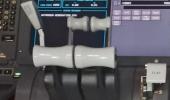
What about the switches being transitioned within a second?
One of the pilots said why did you cut off? As per the AAIB report that activity took place at 08:08:42 timestamp.
Why would he wait for 10 seconds at 08:08:52 to reverse the switch and be super slow to reverse the second switch at 08:08:56?
This is the contradiction.
It is humanly impossible for the switches to turn from on to off at a rapid succession within one second.
However, if there was an electrical event, a sequence of failures that prompted the RAT to be deployed three seconds before and an ensuing cascading effect could have changed the polarity of the switches from run to cutoff. Now that will happen at the same moment.
However, these two switches, share the same data bus and two separate events sharing the same data bus cannot have the same timestamp.
Hence, they will appear in the next refresh cycle. That is called sample latency.
It does not mean that the switches have been transitioned in two different seconds. It is just that the timestamp cannot happen to an event on a same data bus at the same time.
Thereafter, it took five seconds for both the engines to wind down.
It does not say that one engine wound down at 08:08:46, the second one at 08:08:47. Both the engines passed below minimum idle speed at time 08:08:47.
At 08:08:47 the aircraft system knew that both engines have failed.
If the RAT was to deploy because of dual engine failure, it will be given the impetus to deploy at the 47th second.
Not six seconds or eight seconds prior to at rotation. So, it is self-contradictory.
We know that the RAT deployed before the fuel switches transitioned.
The pilots would have been presented with engine failure symptoms at the 47th second, not before it. They would take four to five seconds to realise what has happened.
Then at 08:08:52, they moved the two switches from run to cut off and then back to run -- four switch movements in four seconds.
That corresponds to 08:08:52 to 08:08: 56 seconds.
The RAT deployment at the wrong time resulted in the fuel switches doing a polarity change, and by moving the switches, the pilot gave a second impetus to restart the engines.
These are some of the many points that need to be explained by the investigators.
- Part 2 of the Interview: 'Pilots Fought Till The End'
Feature Presentation: Aslam Hunani/Rediff





 © 2026