

'It's absolutely absurd to suggest pilots intentionally shut off fuel.'

In the first of a two-part interview with Prasanna D Zore/Rediff, Air Marshal Sanjeev Kapoor (retd) challenges the findings in the Aircraft Accident Investigation Bureau (AAIB)'s preliminary report, raising serious questions about regulatory oversight and technical analysis.
The air marshal reveals critical gaps in the investigation process, including absence of experienced pilots on the investigating team and partial analysis of the 18-second emergency that unfolded after takeoff.
With both engines failing simultaneously -- an extremely rare occurrence -- the pilots faced an impossible situation while operating a fully loaded aircraft in hot weather conditions. He emphasises that modern aircraft switches are deliberately designed with safety mechanisms, making accidental activation nearly impossible.
The AAIB's preliminary report did not find evidence of a broader technical failure, so it stopped short of recommending immediate directives for Boeing or GE.
In your view, is this an appropriately cautious approach or a missed opportunity?
In my opinion, this report raises more questions than it provides answers.
The CVR (cockpit voice recorder which records all cockpit sounds: Pilot conversations, radio transmissions, cockpit alarms (aural warnings), automated voice alerts, and ambient sounds (like engine noise, switch clicks during the last 2 hours of flight on a continuous loop such that data older than 2 hours gets overwritten.
This helps understand pilot decision-making, crew coordination, communication with ATC (air traffic control) and responses to cockpit warnings.
FDR (flight data recorder, which logs quantitative data such as airspeed, altitude, engine performance, control surface positions, and system status for the last 25 hours of flights) were collected by June 15, and the report was released last night (July 11) -- adequate time for much better analysis.
There appears to be a limited presence of professionals with directly relevant expertise on the investigating team. Some people from the civil aviation ministry, some from HAL, National Safety Board (an independent US agency which investigates civil transportation accidents to improve safety and issue recommendations) and AAIB, but accident investigation is a scientific process that's extremely time-consuming because every parameter must be plotted.
The analysis states that the fuel shut-off was moved in the air.
No sane pilot would do this. This switch is located behind the pilot. During takeoff, when he's holding the stick (control stick or control column or yoke -- the primary device pilots use to control the aircraft's nose up/down (pitch) and side-to-side bank (roll)) with both hands controlling a fully loaded aircraft from Ahmedabad -- why would anyone turn around and perform such a suicidal action?
There was an FAA (Federal Aviation Administration is US aviation regulator overseeing aircraft certification, safety standards, and airspace within US jurisdiction, influencing global practices) advisory bulletin in 2018, and a similar incident occurred in Japan in January 2019, where a Nippon Airways aircraft had both engines fail upon landing in a similar manner -- fuel cut-off.
Fortunately, that aircraft had already landed, thrust reversers were operated, both engines shut down, but the aircraft stopped on the runway and was towed back for rectification.
This is what the AAIB Preliminary Report says: The FAA issued Special Airworthiness Information Bulletin (SAIB) No. NM-18-33 on December 17, 2018, regarding the potential disengagement of the fuel control switch locking feature. This SAIB was issued based on reports from operators of Model 737 airplanes that the fuel control switches were installed with the locking feature disengaged.
The airworthiness concern was not considered an unsafe condition that would warrant airworthiness directive (AD) by the FAA.
The fuel control switch design, including the locking feature, is similar on various Boeing airplane models including part number 4TL837-3D which is fitted in B787-8 aircraft VT-ANB.
As per the information from Air India, the suggested inspections were not carried out as the SAIB was advisory and not mandatory.However, the reason for the replacement was not linked to the fuel control switch. There has been no defect reported pertaining to the fuel control switch since 2023 on VT-ANB.
Modern airplanes are software-driven and totally electrically operated. The issue is that increasing reliance on technology, simulator training and more reliance on automation, while beneficial, is taking pilots away from basic flying skills.
You become totally dependent on machine inputs. In this case, immediately after takeoff, the engines failed and the pilot issued a Mayday call -- which the preliminary report inadequately addresses.
What's the significance of the Mayday call?
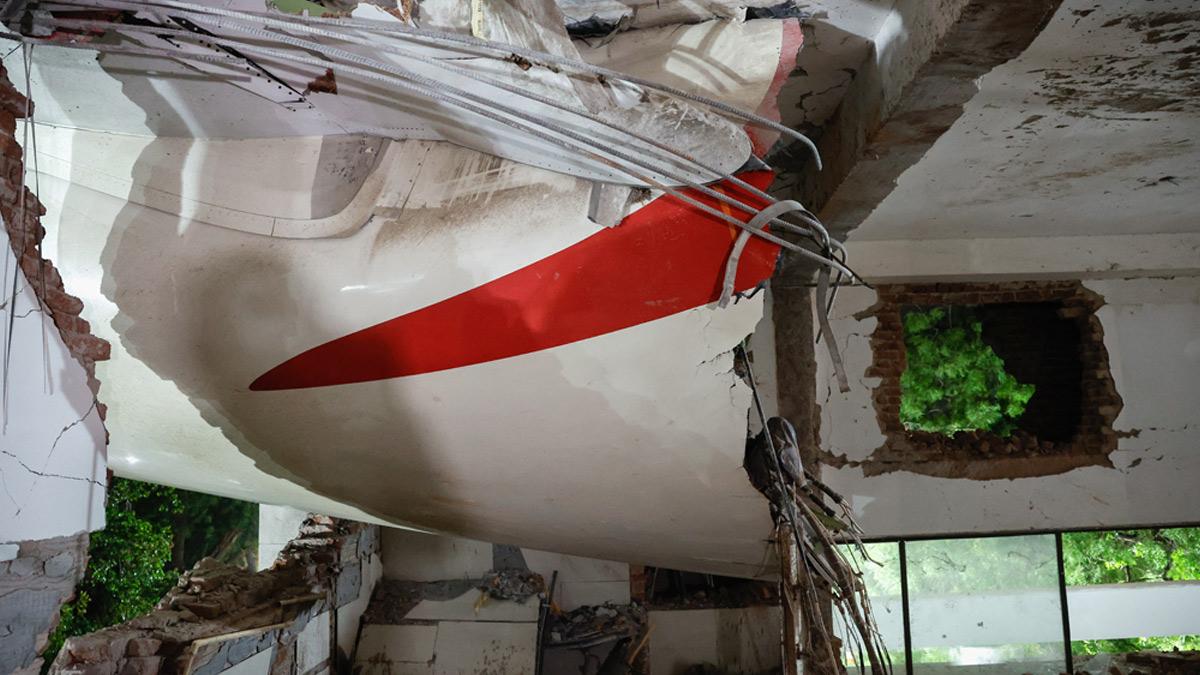
A Mayday call is the gravest emergency that can occur in aviation.
It's very rarely used because it tells everyone monitoring radio communications that something catastrophic is about to happen.
If the pilot issued a Mayday call within two to three seconds of getting airborne, it indicates both engines had failed. This is my analysis of what happened that day (when the AI 171 crashed on June 12, 2025 outside Ahmedabad airport).
The FAA only issued an advisory bulletin, not a binding safety order Air India didn't act since it wasn't mandatory. Does this expose a troubling regulatory gap?
Airlines have commercial interest. The longer aircraft remain grounded, the greater the revenue loss.
Generally, airlines defer advisory bulletin implementation until scheduled major maintenance checks. This is standard procedure -- when incidents occur globally, whether in Bermuda, China, or Europe, the original equipment manufacturer sends advisories to all operators.
It's the airline's maintenance team's and regulator's responsibility to convert advisories into mandatory orders.
Think of it like a Mercedes advisory: 'If rainfall exceeds 50mm, don't exceed 60 km/h for aquaplaning. (Aquaplaning occurs when tires ride on a thin water layer, losing contact with the road or runway. This causes dangerous loss of steering and braking control. It's critical for drivers and pilots, risking skidding or overruns. That's why speed limits like 60 km/h in heavy rain help reduce aquaplaning risk)'.
It's guidance, but enforcement depends on local authorities (and also on the driver). However, your point about more stringent orders for life-threatening notices is valid.
 IMAGE: Air Marshal Sanjeev Kapoor (retd). Photograph: Kind courtesy Air Marshal Sanjeev Kapoor/Linkedin
Would you define this fuel switch locking system as critically sensitive?
Absolutely. These fuel shut-off switches in the Boeing 787 aren't ordinary switches. They are spring-loaded and cavity-locked. If you inadvertently touch them, nothing happens. They're housed in slots and must be pulled out against spring tension, moved to another position, and leveraged up or down. It requires deliberate action.
I reviewed the 787 manual page which clearly states that for double engine failure, the first action is recycling these fuel control switches.
What likely happened: Both engines failed at takeoff. The preliminary report doesn't explain why both engines failed initially, their status before fuel cut-off, or the timeline between the Mayday call and fuel interruption.
The pilot would have attempted to recycle the switches. From the video, the aircraft gained maximum altitude of 620 to 650 feet and had precisely 18 to 19 seconds before impact.
In those 18 seconds, the pilot issued a Mayday call, attempted engine restart -- the report confirms the left engine partially relit while the right didn't -- and the cockpit crew tried controlling a powerless, heavy aircraft descending toward the ground.
Visualise the cockpit chaos. It's absolutely absurd to suggest pilots intentionally shut off fuel.
In multi-pilot operations, no critical switch can be moved without the other pilot's consent -- it's called challenge and response procedure.
If I move a switch, I announce: 'Co-pilot, moving fuel shut-off from off to on.' The co-pilot confirms: 'Confirmed, moving from off to on,' then visually verifies. This is standard procedure.
Having said that, there is a possibility that the fuel switch off could have happened due to a software glitch or electrical malfunctioning.
The idea that a switch was casually flicked off simply doesn't happen.
There are multiple safety protocols preventing accidental activation?
Absolutely. These actions are deliberate, never involuntary.




 © 2026