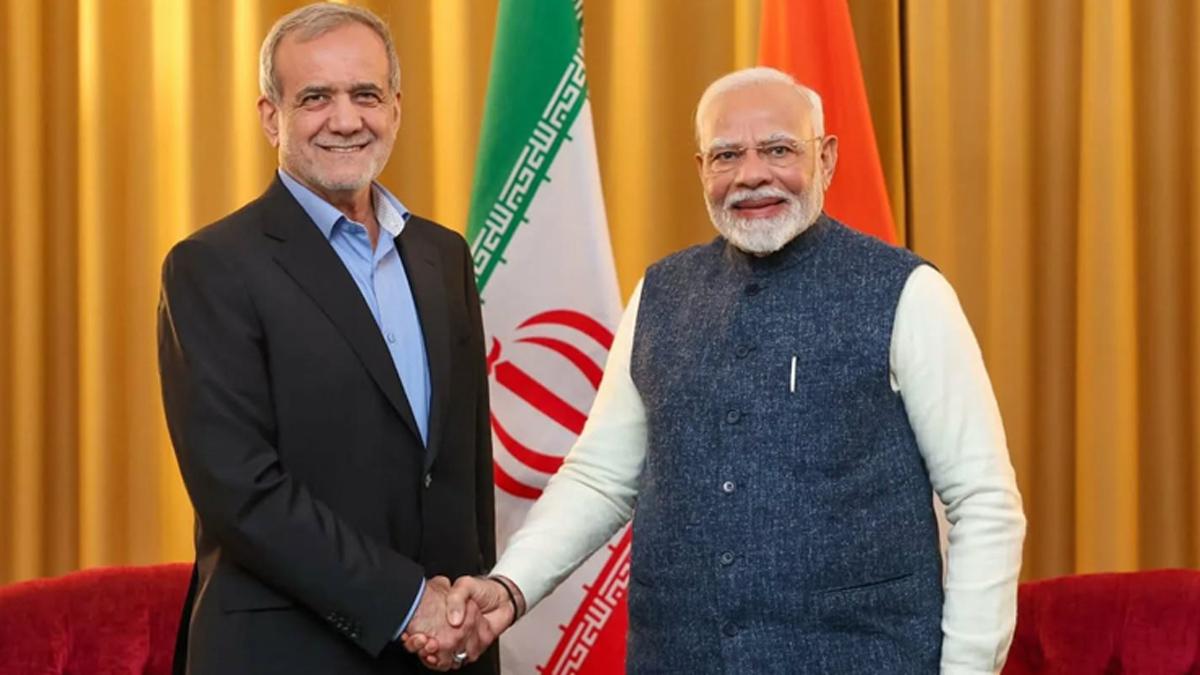
When the United States and Israel launched coordinated strikes on Iran on February 28 2026 -- killing Ayatollah Ali Khamenei, senior Revolutionary Guard commanders, and hundreds of civilians -- India's response was, at best, a whisper.
Prime Minister Narendra Modi had addressed the Knesset -- the Israeli parliament -- just 48 hours earlier, declaring India stood with Israel 'firmly, with full conviction.
India's ten million-strong diaspora across the Gulf, the Chabahar port agreement, and energy ties worth billions suddenly hang in uncertain air.
Few are better placed to read what this moment means than Mohammad Hamid Ansari -- India's former vice president, one-time ambassador to Iran, the UAE, and Saudi Arabia, and a career diplomat who spent decades carefully building relationships that he now watches being quietly dismantled.
Mr Ansari spoke to Prasanna D Zore/Rediff about why the strikes amount to naked aggression under international law, what America's unbroken record of military failure from Vietnam to Afghanistan reveals about Washington's judgment, whether any diplomatic off-ramp remains, India's conspicuous silence as Tehran burned, and why decades of carefully cultivated ties with Iran should not be junked overnight.