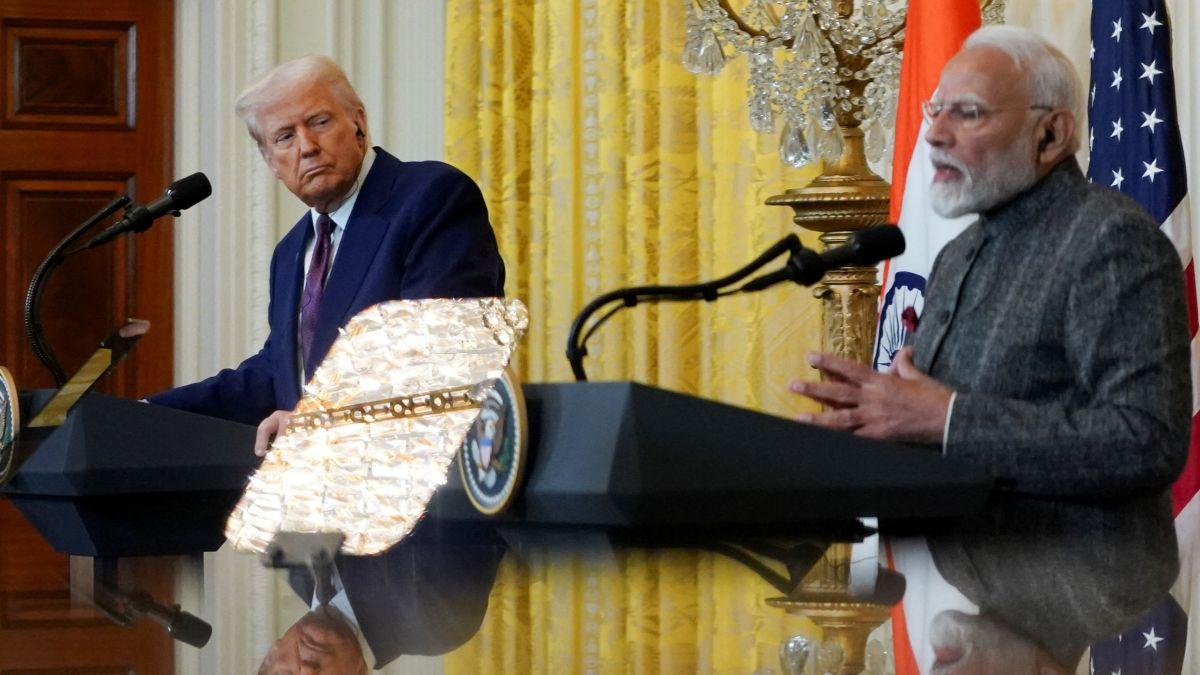
"Ever since the Trump administration claimed victory after designing a framework trade deal to steer India away from Russian oil, the Modi government has remained conspicuously silent. Now the cat is out of the bag." writes Professor and columnist Brahma Chellaney.
"With the Strait of Hormuz all but closed, Washington has granted India a temporary 30-day waiver to buy Russian crude in order to stabilize global oil prices amid the escalating U.S.-Israeli war against Iran. The waiver applies only to Russian cargoes already stranded at sea -- specifically vessels loaded by March 5 -- and allows Indian refiners to take delivery through April 3, 2026.
"In high-stakes diplomacy, silence can be as revealing as speech. New Delhi has said nothing, but the waiver speaks volumes: Indian energy-import policy has quietly shifted under U.S. pressure. A waiver is an exemption from a restriction. If India were still free to buy from whoever offers the best price, it would not need a 30-day license from the U.S. Treasury to receive Russian oil. By seeking the waiver, the Modi government tacitly acknowledges the new constraints created by the U.S.-India framework trade deal.
"As U.S. Treasury Secretary Scott Bessent put it, Washington expects New Delhi to "ramp up purchases of U.S. oil." The Modi government has aligned India more closely with the U.S.-Israel axis against Iran. Yet the irony is stark: India now requires U.S. permission to buy Russian energy even during an emergency triggered by American military action.