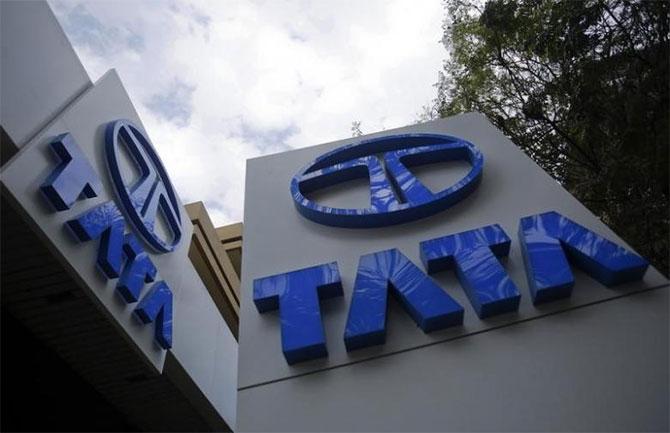
The Tata Capital stock gained 1.6 per cent in debut trade on Monday, touching a high of Rs 333 and a low of Rs 326 before closing at Rs 331.1 on the National Stock Exchange where shares worth nearly Rs 3,900 crore changed hands. The company had priced its shares at Rs 326 apiece in its Rs 15,512 crore IPO, the largest this year.
The IPO, subscribed less than two times overall, was buoyed by institutional demand from investors like Life Insurance Corporation of India, Morgan Stanley and Goldman Sachs.
The issue comprised a fresh fundraise of Rs 6,846 crore to strengthen the companys capital base, while promoter Tata Sons and the International Finance Corporation sold shares worth Rs 8,666 crore.
At the close of Mondays trading, Tata Capital had a market capitalisation of Rs 1.4 trillion, valuing the company at nearly four times its book value, broadly in line with listed peers.
'Tata Capital appears fairly valued when compared with industry averages,' said Deven Choksey Research in its IPO note, which assigned the stock a 'neutral' rating.
'Its valuation and return profile of 4.1x price-to-book (P/B) and 1.9 per cent return on assets (RoA), versus the peer average of 3.7x P/B and 3.0 per cent RoA, suggest limited near-term upsides. However, its strong parentage and omnichannel presence should help scale its loan book at a healthy pace,' the brokerage added.
Following the IPO, promoter shareholding in Tata Capital declined from 95.6 per cent to 84.6 per cent. The offering marked the Tata groups largest ever public issue and only its second listing in nearly two decades -- the other one being Tata Technologies, which debuted in November 2023.
Classified by the Reserve Bank of India as an 'upper layer' non-banking financial company (NBFC), Tata Capital was mandated to go public under regulatory norms.
Founded in 2007, Tata Capital is now India's third-largest NBFC with a loan book of Rs 2.33 trillion as of June 2025. Its portfolio is diversified across segments, with retail loans accounting for 61.3 per cent, small and medium enterprises 26.2 per cent, and corporate loans 12.5 per cent.
-- Business Standard
 © 2025 Rediff.com - Investor Information - Advertise with us - Disclaimer - Privacy Policy - Sitemap - Feedback - About us - Terms of use - Grievances


