
Prime Minister Shigeru Ishiba's sudden resignation after only a year in office has thrown Japan into political turmoil, raising doubts about how the country will handle economic and regional challenges, observes Dr Rajaram Panda.
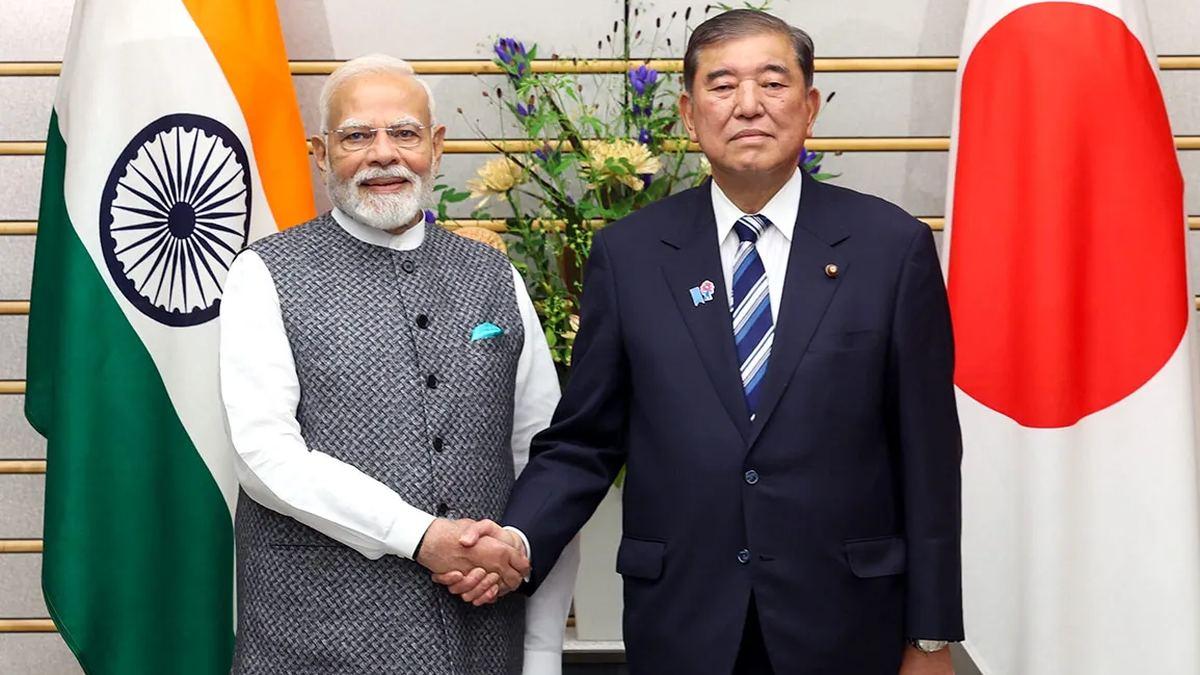
Japanese politics plunged into another phase of political instability following Prime Minister Shigeru Ishiba's announcement of his resignation from the presidency of the Liberal Democratic Party (LDP) and stepping down as prime minister once his successor is elected.
Ishiba instructed the LDP, which has governed Japan for almost all of the post-World War II era, to hold an emergency leadership race, saying that he would continue his duties until his successor was elected.
Ishiba's announcement thus brought an abrupt end to a premiership that lasted just one year in office.
This also ushers a potentially lengthy period of policy paralysis at a shaky moment for the world's fourth-largest economy.
Ishiba was clearly undone by electoral defeat, party fractures and drifts. Ishiba's position was already shaky leading to growing calls from his party to take responsibility for a historic defeat in the July 2025 Upper House elections.
Ishiba's ruling coalition failed to secure a majority in the 248-seat Upper House. That shook his government's stability.
The loss added to an earlier election defeat in the Lower House in 2024, where the party-led coalition also had lost a majority.
That left the LDP in the unprecedented position of holding minority status in both chambers of the Diet.
Since that defeat, Ishiba continued to resist the demand from mostly right-wing opponents within his party for more than a month, saying such a step would cause a political vacuum when Japan faces key challenges, including US tariffs and their impact on the economy, rising prices, rice policy reforms and growing tension in the region.
Ishiba pre-empted that he would face humiliation if an early leadership election was held and the motion went against him.
A vote against him would have been a virtual no-confidence motion. Had Ishiba remained defiant and stayed on, he could not possibly have managed to hold a divided house based on factional politics and saved the minority government.
Though Ishiba clung to power after the July election defeat, he was compelled to think that further governance was impossible and thus preferred an honourable exit.
This marked not only the collapse of his administration but also meant a sobering lesson for the LDP on the risk of weak leadership and internal fracture.

The question that begs an answer is, where did Ishiba err? Critics of Ishiba's style of governance said he abandoned his pledges of careful deliberation.
During the 2024 leadership race, he had promised to hold thorough debate in the budget committee before calling a snap election. But he succumbed to pressure from pro-dissolution voices within his party and forced to reverse course, dissolving the Lower House without deliberations.
The outcome was shocking, eroding Ishiba's credibility. The loss in the Upper House election further proved to be a nail in the coffin.
While the snap election was mired by revelations of questionable funding allocations to candidates linked to scandal-tainted factions, the crushing defeat in July led further loss of public confidence in Ishiba's leadership and governance style.
Hiroyuki Kishi of Keio University feels Ishiba's greatest failing was not simply scandal management, but negligence in governance itself.
Ishiba left policymaking to bureaucrats and was found wanting in showing directions. His failings were on the issues of cost-of-living measures, oversight on controversial foreign labour initiatives and inaction on party scandals.
Despite that Japan's population has been steadily declining, necessitating a liberal immigration policy allowing entry of a foreign labour force and nursing care-givers for the growing elderly population, political parties still want to keep a strict and restrictive immigration regime so that the existing social equilibrium is not unduly disturbed.
No political leadership can find this easy to handle and Ishiba was trapped in the quagmire.
From all his decisions, Ishiba was seen as a weak leader unable to assert his authority. For example, he failed to create a Fire and Disaster Management Agency or re-launch the regional revitalisation programme.
Even on the issue of cutting the consumption tax he was found wavering. Therefore, his decision to resign was not surprising.
In particular, he lost the confidence of his influential Minister of Agriculture Shinjiro Koizumi.
Ishiba was advised by LDP Vice President and former prime minister Yoshihide Suga and Koizumi to step down voluntarily to avoid ignominy if he lost the LDP leadership race.
Ishiba showed vulnerability by making frequent concessions under Opposition pressure on critical issues such as pensions and health care reforms, thereby creating an image of indecisiveness.
Ishiba had long been a perennial candidate in LDP leadership contests, losing four times before finally capturing the presidency in September 2024. After losing the first ballot to Sanae Takaichi, Ishiba won in the runoff.
At the time, Ishiba's strong standing in public opinion polls made him appear the right figure to revive the LDP after a series of funding scandals. As it transpired soon, that was soon undone.
From the outset, Ishiba's administration was hobbled by personnel choices. He bypassed strong rivals like Takaichi and Takayuki Kobayashi in favour of close allies such as Minister for Foreign Affairs Takeshi Iwaya and Internal Affairs and Communications Minister Seiichiro Murakami.
Shinjiro Koizumi was also drafted as a cabinet member, later becoming minister for agriculture.
Ishiba should have appointed rivals and members of other factions to broaden support, but instead, he filled top posts with close allies. That proved to be his undoing.
Conservative heavyweight Taro Aso, known for his anti-Ishiba stance, and several deputy ministers requested an early vote, prompting others to follow suit.
With Ishiba stepping down as party leader, the LDP is expected to set a date for its party presidential election, likely to be held in early October.

Who can be the likely successor?
There are several names doing the round to be Ishiba's successor. However, there is no guarantee that the next LDP president could be guaranteed to become prime minister as the ruling coalition has lost its majorities in both chambers of the Diet, the Japanese prime minister.
There is also the slim possibility that an opposition party leader could take the helm at the world's fourth largest economy.
Shinjiro Koizumi is emerging as a central player in the next race, backed by party veteran Yoshihide Suga.
Whoever succeeds Ishiba must demonstrate robust leadership quality and carry a clear vision.
The person who succeeds Ishiba must avoid the mistake of inaction and act as true masters of the Kantei, rather than caretakers for the bureaucrats.
Besides Koizumir, the ultra-conservative former economic security minister Sanae Takaichi and Chief Cabinet Secretary Yoshimasa Hayashi a moderate and a protege of former prime minister Fumio Kishida are strong contenders.
Whoever succeeds Ishiba will have to work with the main Opposition parties to get bills passed, or else face constant risks of no-confidence motions since the LDP lacks a majority in both chambers of the Diet.
But the Opposition parties are too splintered to form a big coalition to topple the government.
Whoever succeeds Ishiba would benefit from his successful negotiations with US President Donald Trump to lower the tariff imposed on Japan from 25 per cent to 15 per cent.
To his credit, Ishiba ironed out details of a trade deal with the US on tariffs, which have roiled Japan's critical automotive industry and cast a shadow over weak growth.
Ishiba sent his chief trade negotiator Ryosei Akazawa to deliver his letter personally to Trump wherein he stated his wish to work with him to create the 'golden era' of the Japan-US alliance and invited Trump to visit Japan. This feel-good factor shall help Ishiba's successor in some measure.
So, who could replace Ishiba as Japan's prime minister?
Former LDP secretary-general Toshimitsu Motegi became the first to enter the race to replace Ishiba.
If chosen, Takaichi will be Japan's first female prime minister.
Takaichi is known for conservative positions such as revising the pacifist post-War constitution and is a regular visitor to the controversial Yasukuni shrine that honours Japan's war dead, viewed by some Asian neighbours as a symbol of past Japanese militarism.
She also stands for her vocal opposition to the Bank of Japan's interest rate hikes and her calls to ramp up spending to boost the fragile economy.
Shinjiro is the son of former prime minister Junichiro Koizumi; the Columbia University-educated politician is an heir to a political dynasty.
He presents himself as a reformer and wants to restore public trust in a scandal-hit party. If elected, he would be Japan's youngest prime minister in the modern era.
Others in the fray are Yoshimasa Hayashi, Takayuki Kobayashi, who worked as an economic security minister under Kishida, Yoshihiko Noda, the former prime minister and leader of the biggest Opposition group, the centre-left Constitutional Democrats, and Yuichiro Tamaki, leader of the Democratic Party for the People, the centre-right party and one of the fastest-growing in recent elections.
Given the volatility in Japanese politics, it is difficult to say who could be Ishiba's likely successor.
As things stand now, it could be a race between Takaichi and Koizumi. While Koizumi is not expected to bring major changes, Takaichi's stance on expansionary fiscal policy and her cautious approach to interest rate hikes could draw scrutiny from gthe financial markets.

Impact of Japan's political volatility on India-Japan ties
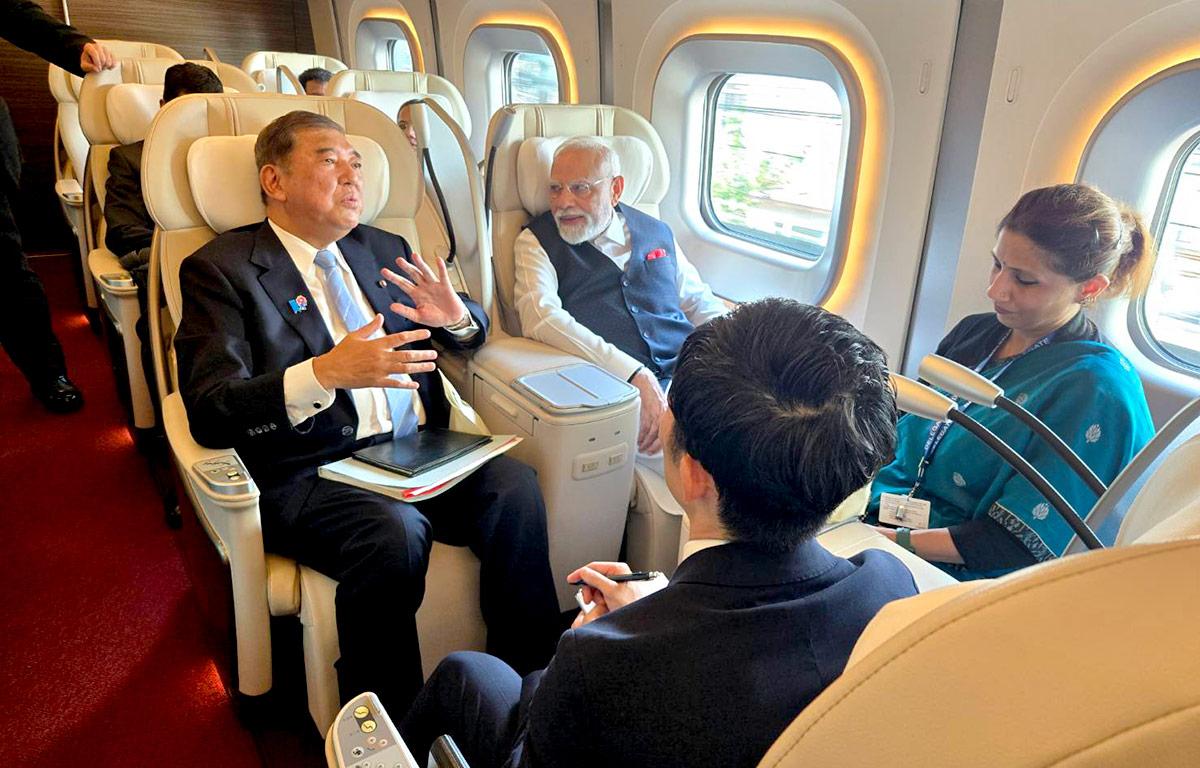
In August, Minister Narendra Modi visited Japan for a summit meeting with his Japanese counterpart during which both countries adopted a 10-year roadmap to deepen the India-Japan Special Strategic and Global Partnership, which also included Japan committing to double its investment in India to 10 trillion yen (around Rs 594 lakh crore) during the next decade and expanding bilateral trade under India-Japan Comprehensive Economic Cooperation Agreement .
It is feared in some quarters that Ishiba's resignation could impact the projects under the purview of the agreement between the two countries.
The deal included promoting industrial cooperation through Make in India and enhancing financial, SME, agri-business and ICT collaboration between the two nations.
The two countries promised to work jointly on high-speed rail, metro systems, smart cities, clean fuel-based transport, cold-chain logistics and disaster-resilient infrastructure.
The countries also adopted an action plan to exchange over 500,000 personnel over five years, expanding language and training exchange, boosting tourism, and strengthening cultural ties.
Given the resilience and complementarities between the two economies, any political changes in the domestic front in either country is unlikely to negatively impact on the robustness of the existing ties between the two countries.
Dr Rajaram Panda is a former Senior Fellow at the Pradhanmantri Memorial Museum and Library and MP-IDSA, New Delhi. He is also a former ICCR Chair Professor at Reitaku University, Japan.
Photographs curated by Manisha Kotian/Rediff
Feature Presentation: Rajesh Alva/Rediff









 © 2025