
The mass of voters chose Kejriwal and Mamdani for the simple reason that they were sick and tired of the stale promises and repetitive speeches belted out for long by mainstream political personalities, notes M R Narayan Swamy.

The two cities and the two unlikely politicians are separated by thousands of miles but there is something incredibly similar between the politics of Zohran Mamdani and Arvind Kejriwal.
True, Mamdani's victory in New York's mayoral race between a Democrat-turned-independent and a Republican opponent may not look as emphatic numerically as the Aam Aadmi Party leader's win in 2015 but it is probably much more significant politically, and not just for himself.
And unlike Prime Minister Narendra Modi who, despite being shocked by the scale of his BJP's 2015 rout, did congratulate Kejriwal after the AAP scooped an astounding 67 of the 70 seats in the Delhi assembly, US President Donald Trump has already declared war on Mamdani.
There are many remarkable similarities in the manner Mamdani, 34, and Kejriwal, who was 46 when he took oath as chief minister, pursued political power.
Both began as virtual nobodies -- Mamdani at the start of the election campaign for New York's top post (despite a political past) and Kejriwal in 2013 when he became chief minister for the first time, albeit only for 49 days.
Shedding the normal talking points in electoral battles, both scripted a new and bold political path, focussing primarily (but not solely) on the day-to-day issues affecting the common man.
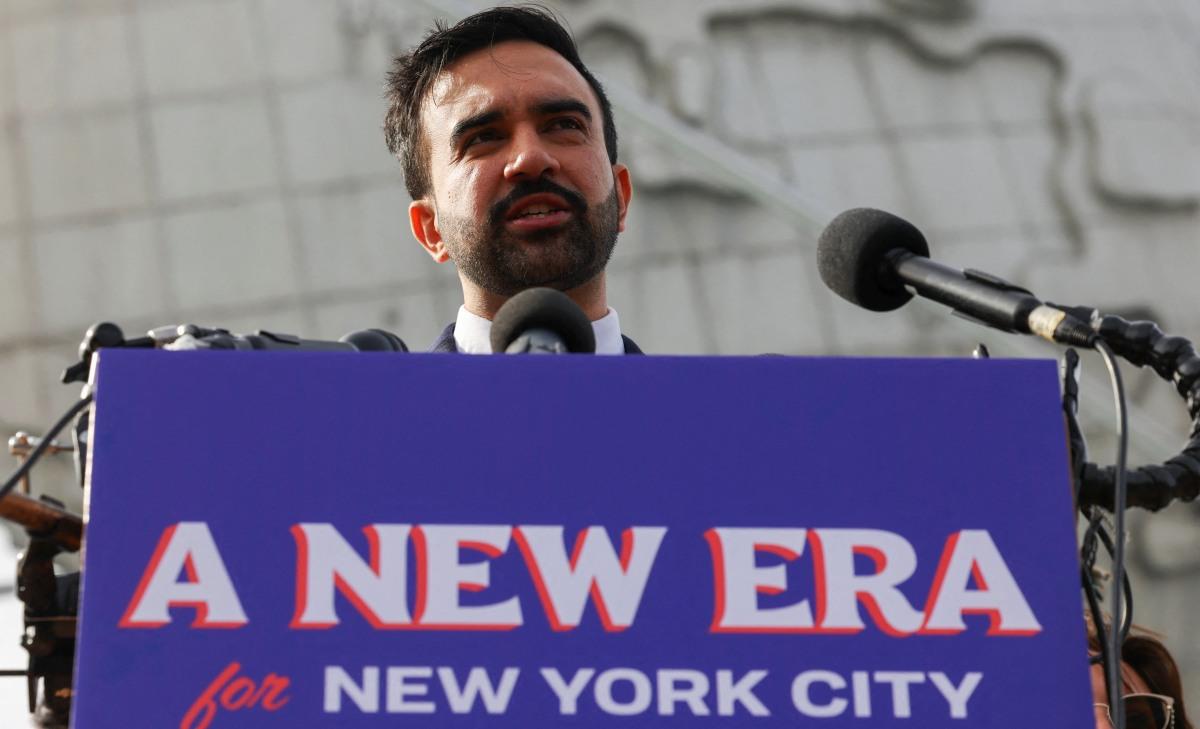
Mamdani's populist agenda focussed on improving the affordability and quality of life for working and middle class New Yorkers.
His specific promises include rent control, tenant protection, building new affordable housing units, government-run grocery stores, free bus rides and free childcare facilities.
Kejriwal too pledged to make a difference to the people of Delhi. He promised subsidised water and electricity which could even be free depending on the usage, vastly improved government schools, better health and transport facilities, and an end to endemic corruption.
Like Kejriwal a decade earlier, Mamdani kept his campaign theme concentrated on the bread-and-butter issues, making it clear that his aim was to clean up the system within a democratic framework and not focus on specific individuals.
Trump dubbed Mamdani a 'communist' (which he is not). Modi called Kejriwal a 'Naxalite' (which he was certainly not).
But unlike Kejriwal who refused to get into a right-versus-left narrative, Mamdani proudly calls himself a socialist -- a daring and politically risky thing to do in America, more so in in New York, a hub of global capitalism.
Both in New York and New Delhi, the voters had to choose between an untested Kejriwal and an equally inexperienced Mamdani. This was the main talking point of their well-established and far richer opponents.
Yet, in both cases, the mass of voters chose Kejriwal and Mamdani for the simple reason that they were sick and tired of the stale promises and repetitive speeches belted out for long by mainstream political personalities.
In both cities, the mass of voters, more so the underprivileged, wanted a new experiment and a fresh face at the helm of affairs. They hungered for direct benefits that would, even if marginally, improve the lives of their families.
Forgetting for a moment all that happened later (and how), Kejriwal delivered remarkably well.
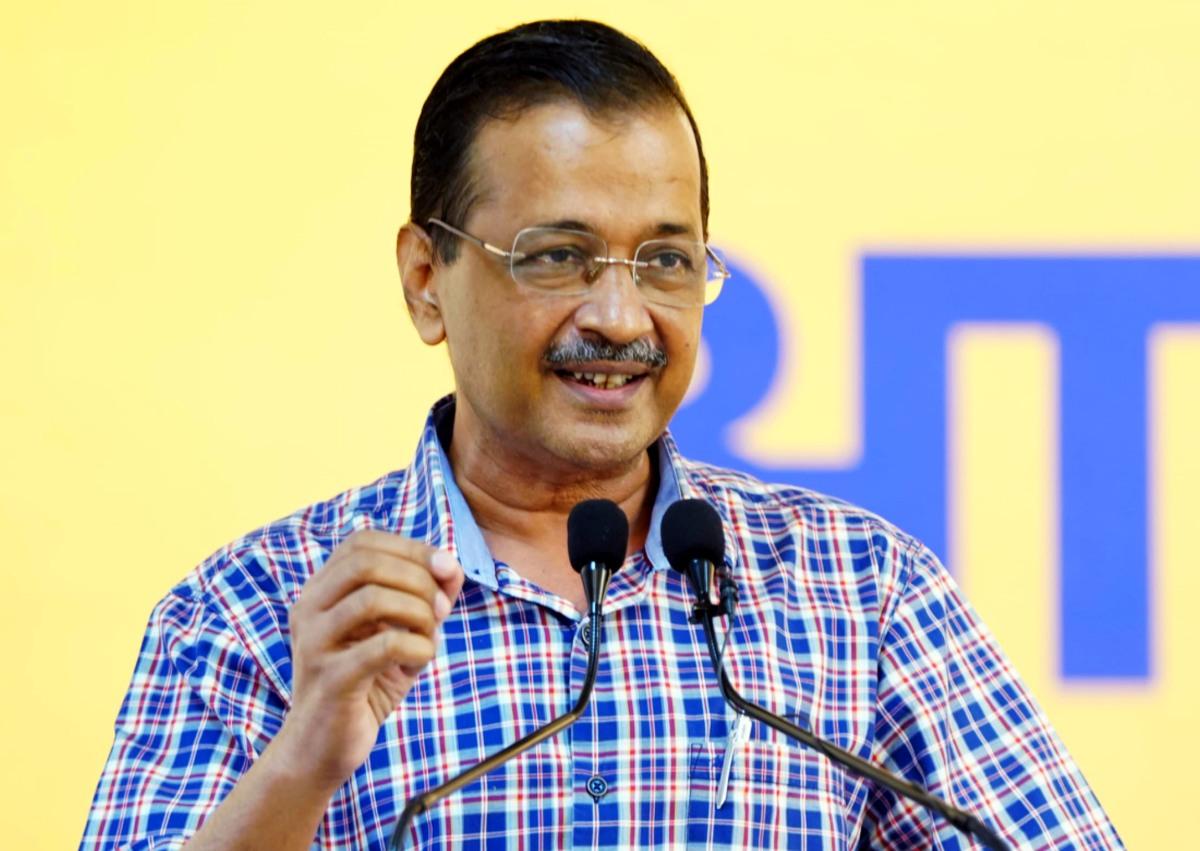
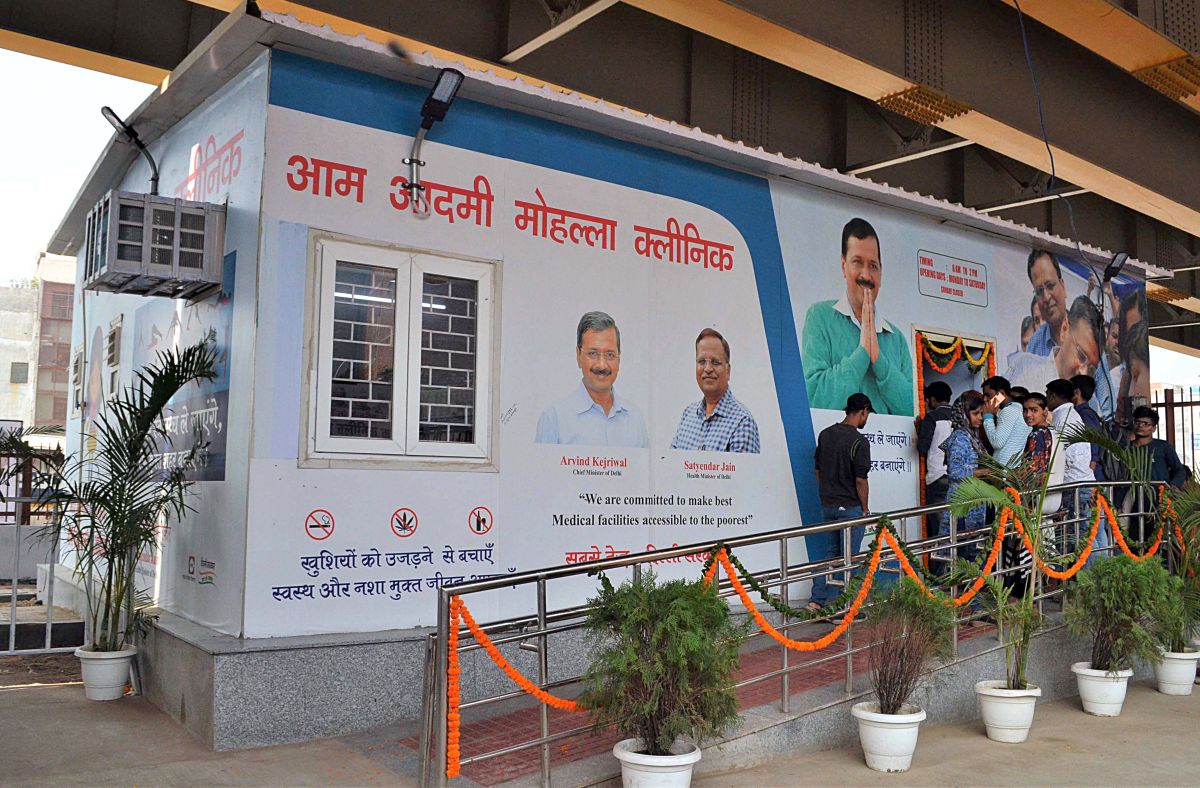
Millions in Delhi got free or virtually free potable water, subsidized electricity that was the cheapest in India (and free for a large number of families), a dramatic overhaul of the widely despised government schools to the extent that they began to outperforming private schools, the widely appreciated Mohalla Clinics where one got basic medicines free, Delhi government-run hospitals where treatment was free, cheaper compressed natural gas for vehicles, curbing industrial emissions, a majorly improved bus transport, and free bus ride for women.
I know for a fact that the Aam Aadmi Party government wanted to eventually make bus ride free for everyone in the city -- a promise Mamdani has made in New York.
The aim was to make a U-turn, transforming the trickle-down economics to trickle-up economics.
Like in New York today, there were any number of sceptics in India who warned that Kejriwal would never be able to implement his promises because these would cost money which the Delhi chief minister would not be able to generate.
But the Kejriwal government's budgets were deficit-free, year after year, despite the various promises being implemented almost simultaneously.
Such was the popular perception that Kejriwal rode to another thumping victory in 2020, bagging 62 of the 70 assembly seats.
What was the most important message of Delhi in 2015 -- and of New York in 2025?
The most unknown, untested and supposedly inexperienced political actor can put established giants in their place if the promises they make carry a touch of honesty -- and people believe the men making the promises can be trusted.
This is why despite Trump's threats and Republican insinuation of a Muslim taking over New York, both Muslims and non-Muslims voted for Mamdani.
Even sections of Jews (notwithstanding Mamdani's pro-Palestine noises) and the corporate world became soft towards him by the time the campaign ended.
And this is why despite an aggressive Hindutva at play, both Hindus and Muslims (and others) voted en masse for Kejriwal.
It is only after Kejriwal's 2020 enviable triumph that the Bharatiya Janata Party brass concluded that the AAP had cemented itself so much in Delhi that it could never be defeated in the normal course of play.
What happened later and how the Modi government unleashed all its might against Kejriwal is another story.
So, will Mamdani succeed in New York?
For one, he has already defeated Trump politically in New York, America's most important city.
Recall that the US president has expressed his admiration for the North Korean dictator Kim Jong Un and says he too wants Americans to salute him similarly. Yet the majority of voters in New York rejected Trump and embraced Mamdani.
A lot will depend on how Mamdani lives down some of his radical past (he has already apologised for some of his comments about the New York Police Department), how he manages to keep the business class on his side, and how he negotiates the contradictions between Trump and his own politics.
Like Kejriwal in 2015, Mamdani has promised that he will work for everyone, including those who did not vote for him.
Having seen Kejriwal from close quarters during his political journey, I am sure he would have watched the hip-hop-musician-turned-activist Mamdani closely even if the New Yorker may not have paid much attention to the Indian bureaucrat-turned-politician.
Feature Presentation: Rajesh Alva/Rediff










 © 2025