

The Chinese see no need to fight directly. They have an able and willing proxy in Pakistan, points out Shekhar Gupta.

History gives every war a name. Officially, there's a pause, but the fighting lasted about 87 hours. Will it suffice for the future generations for it to be listed merely as the 87-hour war?
I would, however, suggest a description, if not a sharp, hashtag-worthy name. What we've seen is the opening move in a two-front war.
You could call it a trailer. It's just the early moves in a long-drawn war of wits, nerve, and military muscle. How do I explain this more succinctly?
For once, I would avoid the temptation of the usual trope -- a cricketing analogy. I'd leapfrog to chess instead.
Since the Pakistanis started this with Pahalgam and fought with Chinese equipment, technology and guidance, think of them as holding the white pieces.
And since the side with the white pieces makes the opening move, see this as that familiar move called PK4 in the past, and e4 now.
This means moving the pawn in front of the king two squares ahead, inviting the rival to counter the move.
This move can lead to several different strategies, some with names as exotic-sounding as the Italian Game, Scotch Game, and Ruy Lopez.
The description I find more suitable is The King's Gambit, since it's more aggressive and can lead to multiple tactical options.
The two of them, Pakistan and China, are playing this together. And they have moved a pawn forward.
Pakistan is in the front, the pawn, powered by the king and the queen, their cavalry and counsels in the back, read China. They wait for India's move now.
Complacency is no plan. The clock is running.
The flurry of stories (in the newspapers; you'd never catch us citing any TV channel on this) inform us that now the armed forces have also been following the practice of setting up a 'Red Team' -- a group of sharp officers tasked with thinking and responding like the enemy.
Think for a moment like your Red Team. What will it do next?
Our basic premise is that while we have fretted over our two-front predicament, we never really thought it would come to pass at the same time.
In 1962, the Pakistanis stayed out, although not unconditionally. They demanded negotiations on Kashmir, which duly began under United States-British pressure.
And in 1965, 1971, Kargil and onwards, the Chinese mostly kept away. This first move of the pawn -- two squares ahead of the king -- shows this has now changed.
A two-front war is on. Except, the Chinese see no need to fight it directly. They have an able and willing proxy in Pakistan.
They will keep selling it enough cutting-edge hardware to keep it on a par with India -- if not ahead in some specific areas, like possibly fifth-generation fighters within a year.
Their satellites and other ISR (intelligence, surveillance, reconnaissance) resources will be at their ward's disposal, and real-time advice on tap.
The next provocation from Pakistan may not take the usual five to six years. It is likely to come earlier, before the field marshal begins to lose his political capital.
Logically, the Red Team will conclude that China no longer has any need to fight India directly.
All it needs to do is keep equipping Pakistan adequately to do it on its behalf.
If you read any coverage of Operation Sindoor, an important strategic pointer jumps out at you.
In the entire series of exchanges, you never heard of any American equipment being used, not even the F-16s.
The Swedish SAAB Erieye AEW&C (Airborne Early Warning & Control) aircraft are bristling with Chinese electronics.
See it as China versus India, but with the Pakistani military in front.

For decades, we have known that the Chinese use Pakistan as a cheap instrument to triangulate us between them. This strategy has now moved two steps ahead.
The first was the Chinese moving up to eastern Ladakh and tying down a significant section of our strike forces usually earmarked for Pakistan.
The second is the direct military challenge from Pakistan.
India's aggressive response to this PK4 or e4 move set the two partners back.
They might have believed, as Chief of Defence Staff Gen Anil Chauhan said in his Pune lecture, that their rocket/missile assault beginning the night of May 9/10 will 'bring India to its knees'.
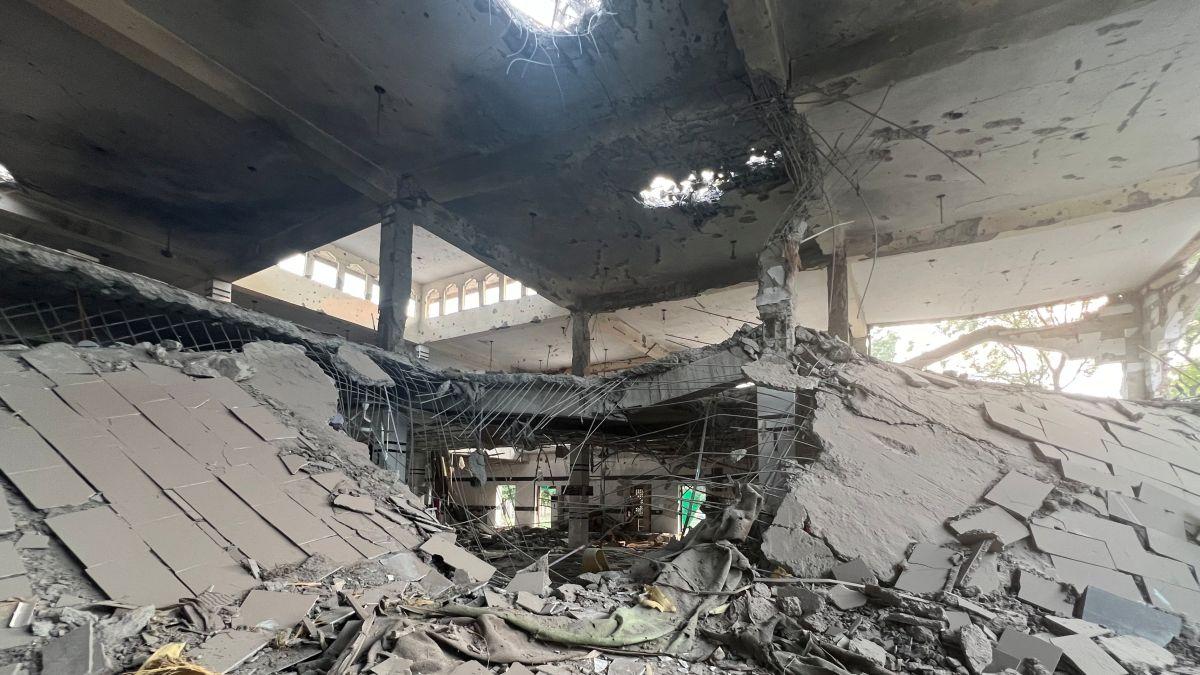
Once this gambit failed -- with almost all projectiles intercepted and the withering Indian response having the Pakistan air force grounded and its bases mauled -- a ceasefire was the wise option.
The Red Team is now thinking what went wrong, and how to prepare for the next round.
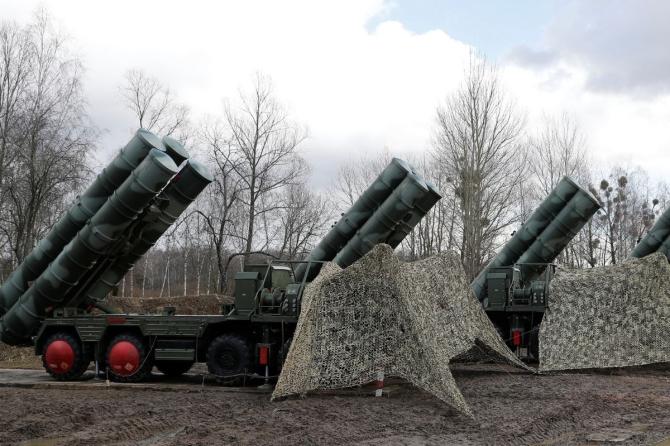
The four things they will worry about: India's multi-layer air defence led by S-400, Brahmos missiles, especially when launched by Su-30Mki's from a distance far beyond the reach of any PAF missiles; the inadequacy of its own air defences, including Chinese HQ-9s, and India's ability to suppress or destroy these using its anti-radiation drones.
Be sure the Chinese are working with the Pakistanis to address these. They have the S-400 too -- and boy, can they reverse-engineer.
They will try to encash some IOUs with the Russians to find an answer to the Brahmos.
A next-generation fighter, the FC-31 with a longer-range missile will be on its way soon. I am only wargaming the Red Team.
It's safer to presume that China now sees Pakistan as an extension of their India-focused western theatre command.
I would go so far as to say that the Chinese PLA would see Pakistan as their newest, the sixth theatre command.
If it keeps India bogged down, their own western theatre command can chill.
There are several books and academic papers written on Pakistan-China relations. For our limited purpose, we only need to run our eye backwards over some important dates.
The India-China border situation deteriorates after Zhou Enlai's visit in 1960.
On March 28, 1961, Pakistan sends a note to China seeking demarcation of their boundary, which they only share by virtue of their illegal occupation over a part of Kashmir.
In February 1962, as the crisis with India is heating up, Sir Mohammed Zafrullah Khan, speaking for Pakistan at the UN, admitted that Islamabad was committed to withdrawing its forces from its borders with China in PoK.
Two months later, on May 3, the two issue a joint communique to start negotiations. India meanwhile keeps protesting.
On October 12, Pakistan and China have direct negotiations on border demarcation. Eight days later, the Chinese PLA begins its attack. This is moving at warp speed.
Just four months after the India-China fighting stops, then Pakistan foreign minister Zulfikar Ali Bhutto makes a dramatic visit to Beijing where a landmark agreement is signed which involves the ceding of 5,180 sq km of PoK territory (Shaksgam Valley and around) to China while getting some grazing grounds across Hunza in return. India, of course, rejects this.
This super-short 150-word history explains the single-pylon China-Pakistan relationship. The shared hostility to India is the solitary pylon.
The Pakistan-China embrace came even though one was a formal US, anti-Communism ally and the other still a 'brother' of the Soviet Union.
This deal has strengthened over the intervening six decades. The difference now is that China is the world's second superpower and India is much stronger too.
That's why China and Pakistan need each other more than they did in the 1960s.
And if the Chinese can enable the Pakistanis to fight India as their proxies, it is value for money. We've seen only the first moves in this game yet.
By special arrangement with The Print
Feature Presentation: Aslam Hunani/Rediff.com









 © 2026