
The enduring relationship between the two countries have survived the disintegration of the erstwhile USSR in 1991, the end of the Cold War and the regime change in both countries, points out Rup Narayan Das.
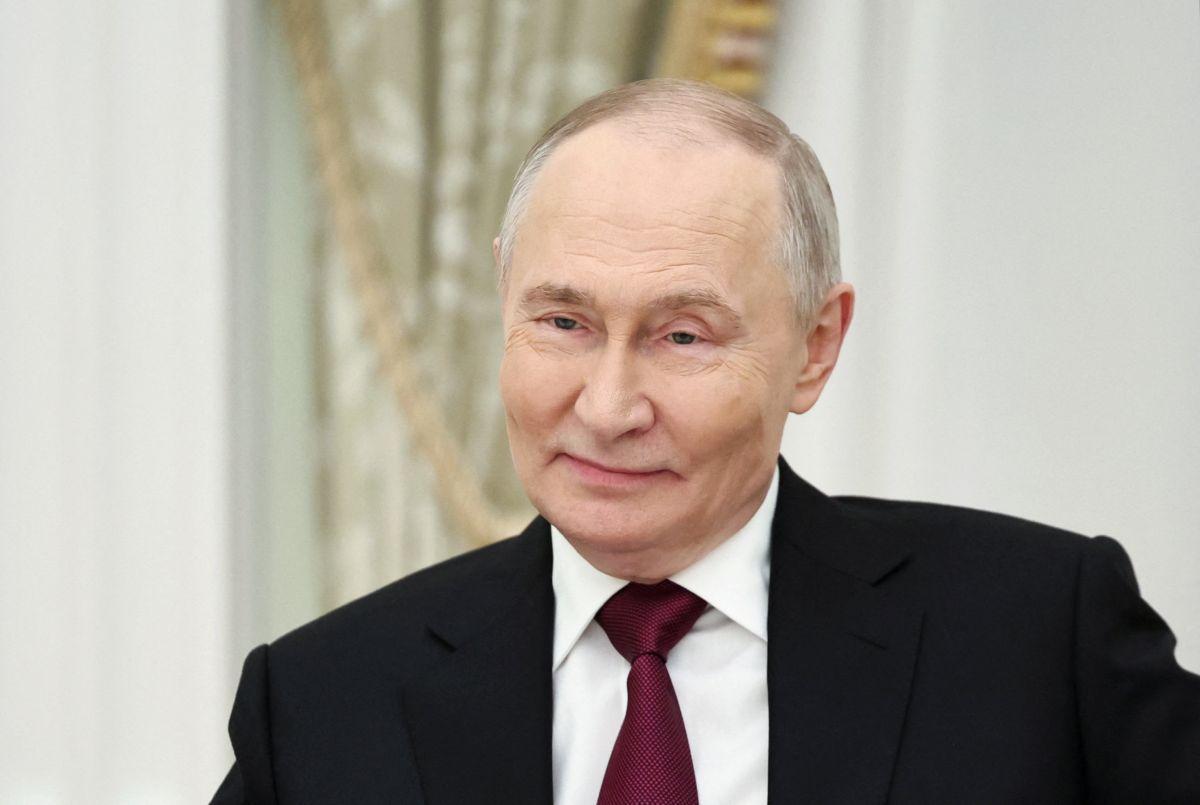
Russian President Putin's two day visit to India commencing from today needs to be seen in the context of the geo-political churn in the wake of US President Donald Trump's second innings that begun in January.
Trump's unilateralism and tirade of trade deals with US allies and friends have unsettled the applecart of the global economy including the relationship with India so assiduously built over recent decades.
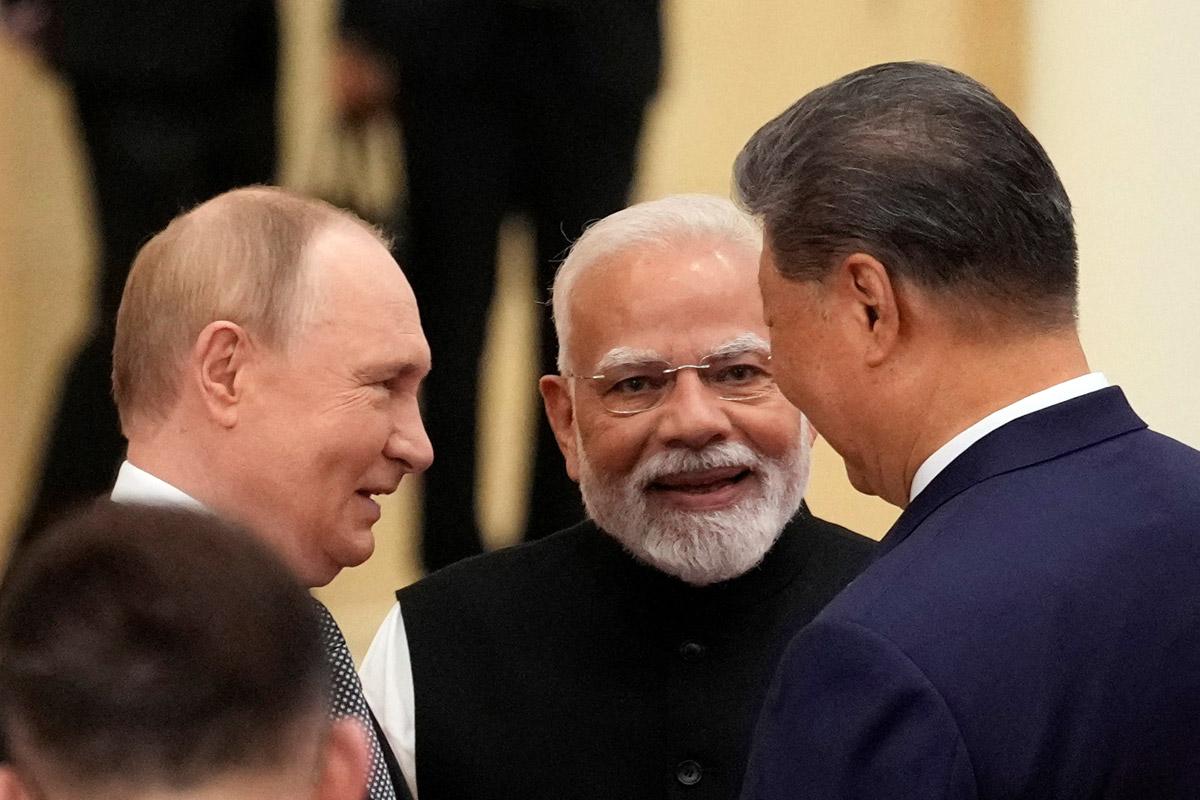
Further, the telephonic conversation between Trump and Chinese President Xi Jinping and the prospect of a meeting between the two leaders early next year has given grist to the figment of G-2, which resonates in the triangular India-US-Russia relations with China in the backdrop.
India is navigating a fine balance.
New Delhi is cognisant of the fact that a reining power (the USA) cannot 'fathom a rising power like India which is now the fastest growing economy and is poised' to become the third largest economy sooner than later.
A democratic India and its fastest growing economy continues to be anathema to Communist China.
The world, particularly the Global South, reckons that between the 'Washington Consensus' and the 'Beijing Consensus', there is a shade of grey in the Indian model of 'Delhi Consensus'.
Not to be forgotten that when Japan, a close ally of the US, emerged as the second largest economy, the US attempted to stifle its economy, and when Communist China was born the US tried to contain its rise with its containment policy earlier and is now trying to co-opt India in its Indo-Pacific stratagem.
Knowing the US intent and in deference to Chinese sensitivity, India calibrates a nuanced approach to the Indo-Pacific which was evident in Prime Minister Narendra Modi's Shangri-La address in June 2018.
Referring to the Indo-Pacific with a clear message to China, he said '...India does not see the Indo-Pacific as a strategy or as a club of limited members. Nor as a grouping that seeks to dominate and by no means do we consider it as directed against any country...'
India is also trying to reset its ties with China without compromising its legitimate concerns and without conceding to Chinese demands to penetrate the Indian market beyond a point.
However, the persistent security dilemma and trust deficit continues to stymie the relationship between the two Asian giants.
Incidents like the recent ill treatment of an Arunachal Pradesh born and Indian passport holder expatriate based in London at Shanghai airport by the Chinese authorities puts a brake on the reset of ties between the two countries.
India-Russia relations has to be seen in this complex matrix of evolving geo-strategic dynamics.
Although major events in recent past have changed the trajectory of geopolitics and the equation between and among nations, India-Russia relations have not only withstood the test of time, but have also grown from strength to strength.
In the initial years of India's industrialisation, the USSR supported setting up key industries in the country.
In the late 1950s, India and Russia signed agreements for the construction of major industrial facilities that became the fulcrum of India's economy and industry.
Russia provided technical assistance in the construction of steel plants in Bhilai, Bokaro, and Visakhapatnam, and the aluminium plant in Korba, a heavy duty electrical equipment plant in Haridwar, an engineering plant in Ranchi, a mining equipment plant in Durgapur, refineries in Barauni and Mathura, and a series of hydro and thermal plants.

The defence cooperation between the two countries includes among others, the fighter aircraft MiG29K.
Russia also upgraded the MiG-29 aircraft for the Indian Air Force. It has also provided Sukhoi-300 MKIs and also the aircraft career Gorshkov, renamed as INS Vikramaditya.
It is instructive to recall that in the 1962 War, Russia even being a Communist country not only maintained neutrality, but also provided military support to India for the defence of the country.
On the contrary while the USA agreed to provide military support to India in response to Prime Minister Jawaharlal Nehru's request, its assistance was half-hearted.
The friendship treaty with Russia in 1971 was a potential deterrence to US meddling in the war.
Russia also extended diplomatic support to India in the United Nations on the Kashmir issue and also on the Western sponsored UN resolution on Goa.
BrahMos Aerospace is yet another outstanding example of trust, achievement and friendship between the two countries.
The joint venture was formed through an inter-governmental agreement signed between both sides in 1998 which envisaged design, development and production of the BrahMos weapon system for India and Russia and also for export to friendly countries.
The company within a span of less than a decade designed and developed a formidable weapon system which is far superior in performance as compared with existing weapon systems.
India and the Philippines recently signed an agreement for supply of the BrahMos and media reports mentioned Indonesia evincing interest for the weapon system during the Indonesian defence minister's recent visit to India.
There is also talks that Vietnam is also interested in the BrahMos, but considering Chinese sensitivity there is some restraint.
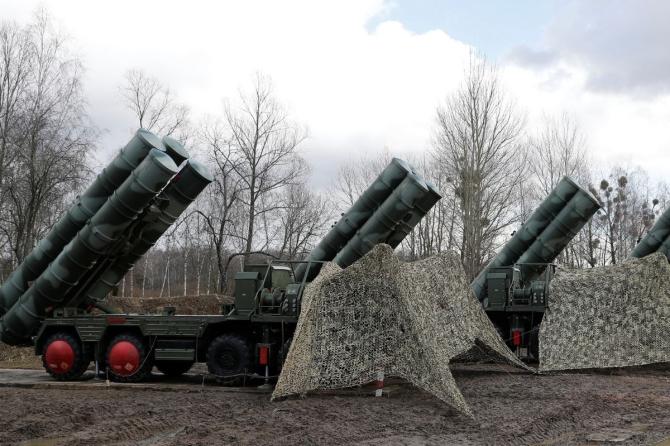
India's commitment to honour and implement the $2 billion agreement to buy the S-400 missile system in spite of the US threat to impose sanctions under the Countering American Adversaries Through Sanction (CAASTA) is an instance of India's strategic autonomy.
The S-400 air defence system was contracted for by India and the five squadrons have been procured from Russia. During Operation Sindoor in May its efficacy and prowess was amply demonstrated.
An improved and improvised version of the S-400 missile system is likely to be clinched during President Putin's visit.
The recent signing of an agreement between the Hindustan Aeronautics Limited and Russia's United Aircraft orporation for production of civilian commuter aircraft will be a game changer in the relationship between the two countries.
The deal envisages manufacturing of an 100-seater regional jet for domestic aviation.
Nuclear cooperation is yet another important facet of the strategic partnership between the two countries.
Moscow's commitment to enable India to produce nuclear energy was evident from the fact that when the fuel levels at the Tarapur atomic plant was at dangerously low levels and India was trying very hard for fuel after the agreement with the USA Russia supplied 60 tonnes of uranium to safeguard Tarapur 1 and 2 reactors enabling the Tarapur plant to provide nuclear power to the western grid.
The Russian decision was a welcome relief to the country.
Russia informed the Nuclear Supplier Group that it intended to supply fuel immediately to Tarapur under its safety exception clause.
The NSG guidelines permit export of nuclear fuel to countries without UN approval safeguard on reactors only if they are needed to prevent or correct a radiological hazard to public health and safety which cannot reasonably be met by other means.
The safety exception clause in the NSG guidelines was resorted to by Russia in 2001 to supply fuel to Tarapur.
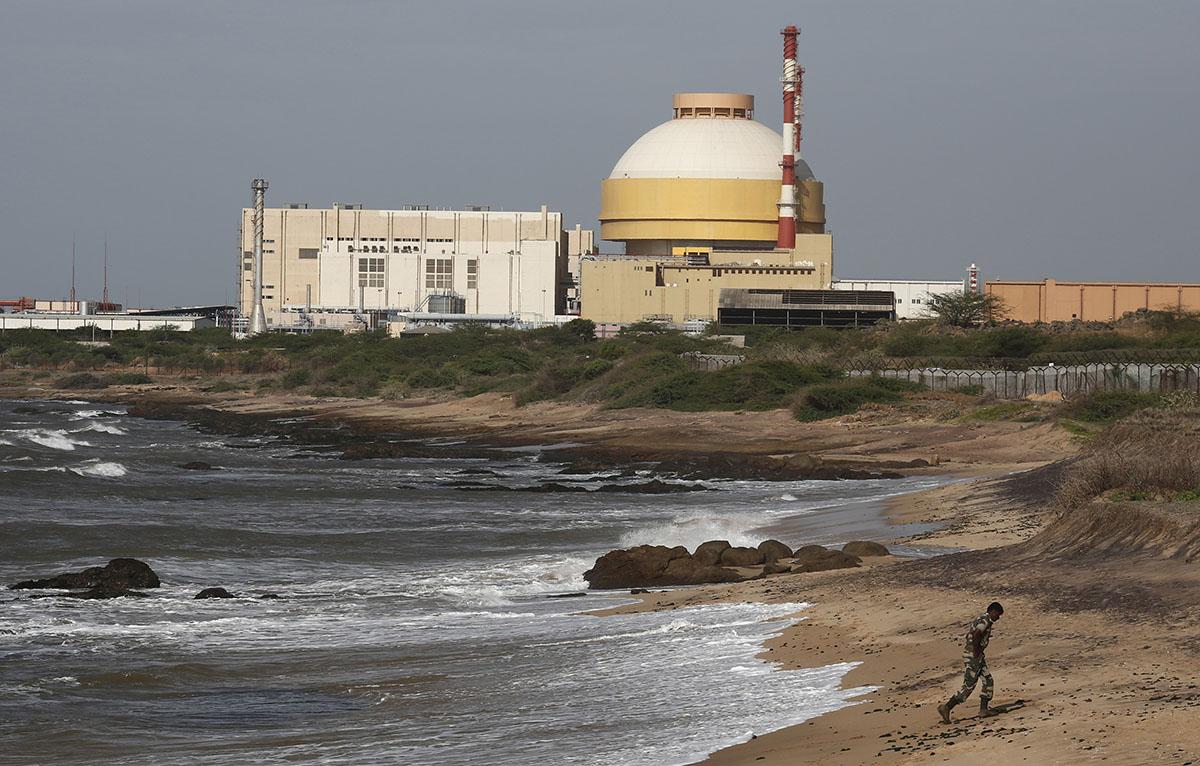
It was during Putin's visit to India in 2007 as the chief guest at the Republic Day celebration that the memorandum of intent to add four units to the nuclear power plants under construction at Kudankulam in Tamil Nadu was signed.
It was decided that both countries would work together to expand civilian nuclear power and energy in a self-sustained manner.
Subsequently the nuclear agreement was signed during then Russian president Dimitri Medvedev's visit in December 2008.
Besides civilian nuclear cooperation yet another significant outcome of Medvedev's visit was the deal with Russia to buy 80 Mi17 V-5 helicopters for the Indian Air Force.
It is likely that nuclear cooperation between the two countries will be further strengthened during Putin's current visit.
India's crude oil imports from Russia which created consternation in India-US relations and which continues to be an irritant in India-US relations, is yet another aspect of the enduring relationship between the two countries.
India has strongly defended its decision to import oil from Russia and exposed the double standards of the US and the West.
Although India's oil imports from Russia of late have slumped, New Delhi has consistently maintained its stance on the issue and has not buckled down under pressure.
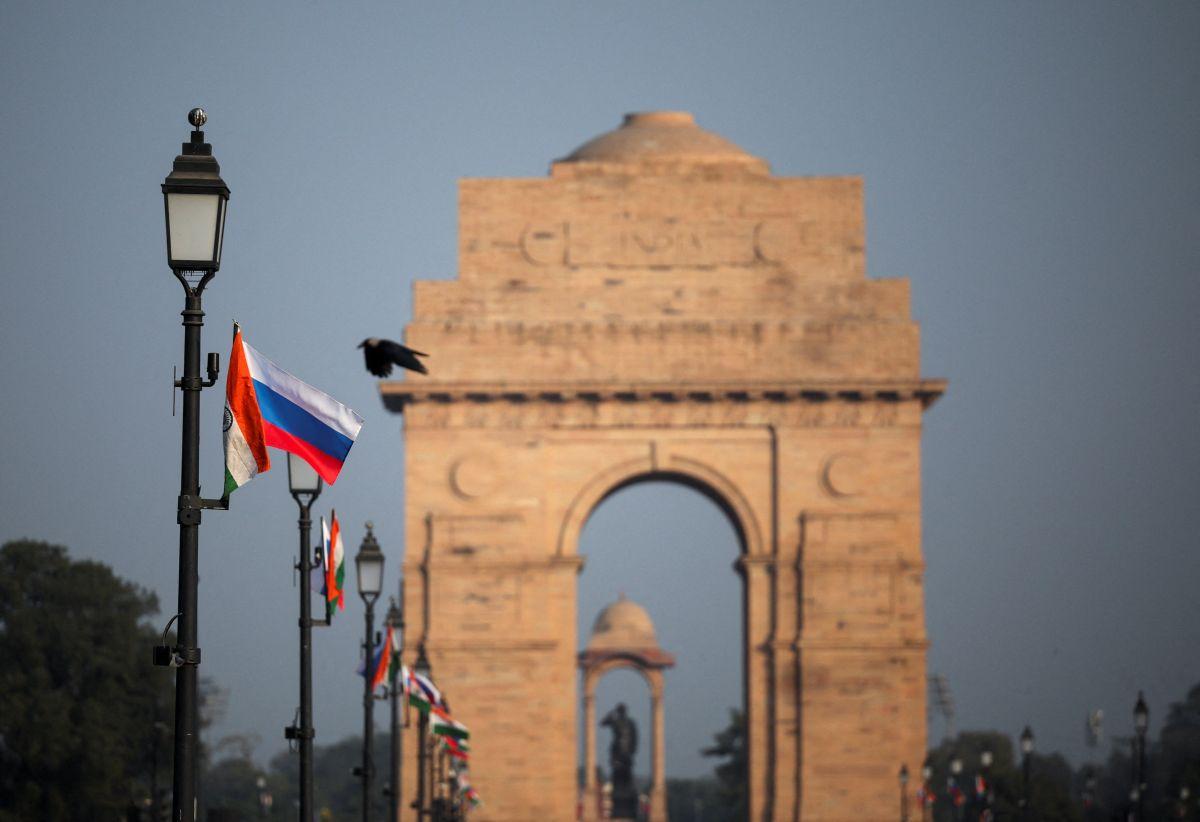
The enduring relationship between the two countries have survived the disintegration of the erstwhile USSR in 1991, the end of the Cold War and the regime change in both countries.
On the contrary there is a perceptible erosion of trust in India-US relations and the claims of 'shared values' have been reduced to mere rhetoric.
While a possible G-2 between the US and China is a matter of anxiety, a G-3 among Russia, China and India, which may be farfetched, can be a nightmare to the USA.
Rup Narayan Das, a former senior fellow at the Manohar Parrikar Institute for Defence Studies and Analyses, is currently Consulting Editor, Journal of Parliamentary Information. The views expressed are personal.
Feature Presentation: Aslam Hunani/Rediff







 © 2025